Category: Wellness

  • Produce & Pesticides

    Produce & Pesticides

    It’s what we’ve all been waiting for— the results of the Environmental Working Group (EWG) annual produce study. Each year, EWG analyzes thousands of fruit and vegetable samples for pesticide residues. The most recent EWG report ranks 48 different fruits and vegetables by the total number of pesticides found on them. We have listed the 15 most contaminated fruits and vegetables here, as well as the 15 varieties of conventional fruits and vegetables that are least likely to contain pesticides.Produce and Pesticides

    Why is this so important to consider, you may ask? Well, pesticides are chemicals that exist for the purpose of killing “pests”, such as insects, mold, bacteria and weeds that interfere with the growing process. It is a known fact that some pesticides, such as organophosphates and carbamates, affect the nervous system. Other pesticides can cause skin irritation, lead to cancer, or affect the endocrine system.

    While you should take some comfort in knowing that the Environmental Protection Agency determines how much of a pesticide can remain on food that you buy, we believe that it still pays to be an informed consumer and to make your own decisions about the food you choose to ingest.

    Ideally, all of our fruits and vegetables would be grown locally and organically. Practically speaking, we do not all live in areas with supermarkets that carry vast varieties of organic produce, nor do we all have financial budgets that allow a fully organic diet. We believe that the EWG list is a helpful shopping tool if you’d like to limit pesticide exposure.

    Please note that the words “clean” and “dirty” are specifically referring to pesticides, not the quality of the produce, whether it is genetically modified, or whether it is grown locally or thousands of miles away.  Pesticides ONLY.  It is up to YOU to determine which factors are most important to consider before purchasing food.

    Here are some general guidelines:

    -If a fruit or vegetable is on the “dirty” list, make an effort to buy the organic version.

    -If you consume a particular fruit or vegetable on a frequent basis, buy organic—especially if it’s on the “dirty” list.

    -The EWG study found that although leafy greens, such as kale and collard greens did not make the “dirty” list, they tend to be treated with particularly toxic pesticides. If you frequently purchase conventional greens, cook them. Pesticide levels typically diminish when food is cooked.

    -Use organic greens for juicing.

    -Go ahead and make that guacamole with conventional avocados. Only 1% of avocados tested showed any detectable levels of pesticides!

    -Remember to thoroughly wash your produce before eating. I know it’s tempting to just wipe that apple on the edge of your shirt. Without washing your produce, your risk of ingesting pesticides is greater.
     

  • Beginners’ Tips to Start a Meditation Practice

    Beginners’ Tips to Start a Meditation Practice

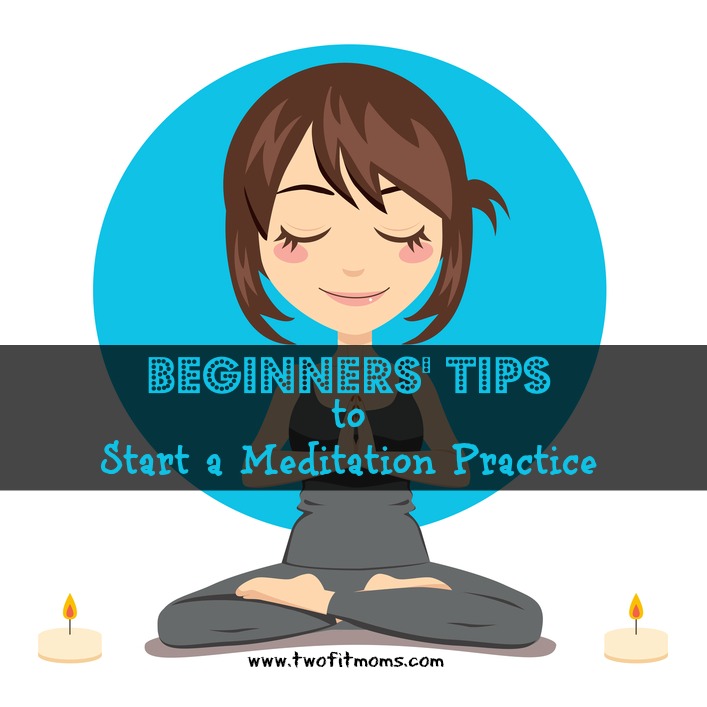
    According to yogic philosophy, it takes 40 days to break a destructive habit or to develop a new, healthy habit.  Today marks day 27 of my 40-day meditation journey.  I’m more than half way through to my 40-day goal, and at the end of it all, there is no end.  The end of 40 days will just mark a new beginning.Meditation

    Ultimately, my hope is to have a meditation practice that is engrained into my daily life.  I want it to feel as natural as brushing my teeth or making my morning tea.  Why am I so set on developing a lifelong meditation practice?  Well, meditation, I’ve heard, has incredible powers—the power to reduce stress, promote deeper sleep—even cure physical ailments and lessen physical pain.  If any of this is true, I need a piece of it.  You probably do, too.

    This is not a post to teach you how to meditate.  Rather, this is just my list of observations based on my own experience.  My journey is just beginning, but I am eager to share what I’ve learned so far: 

    There is no “right” time to meditate.  Originally, I thought the “right” time was at the crack of dawn.  I reasoned that the early morning stillness of my household would be conducive to a peaceful, meditative atmosphere.  I also figured that my mind wouldn’t be racing with work and family obligations so early in the day.  In theory, this all made sense, and I thought I had it figured out.  I didn’t.

    I quickly realized that my body just hurt too much in the morning to meditate.  As a newbie, it’s hard enough to enter a meditative state when all conditions are perfect.  Just imagine how difficult it is if you’re focusing on your arthritic knee the entire time!  Ultimately, I moved my meditation practice to the evening when my joints were generally happier and my body felt pretty good.  I highly recommend that you try meditating early in the morning when your mind tends to be clear, and adjust the time of day if necessary.

    Moving your body first makes a BIG difference.  It is MUCH easier to sit in stillness if your muscles are warm and loose.  If you can’t fit an entire workout prior to your meditation, you will still feel much more comfortable if you stretch for even just a few minutes.  A few rounds of sun salutations and some gentle hip openers should do the trick.

    Your meditation space may not be the most obvious choice in your house.  The most peaceful place in my home happens to be in my living room next to a large set of windows overlooking my backyard.  I assumed this was the ideal spot to feel enlightened and grounded.  It wasn’t.  Winters in New Jersey are cold, and even with a good heating system, I was freezing my ass off by the windows.  I moved from room to room in my house, and surprisingly, I ended up on the floor of my bedroom closet.  It was the perfect meditation spot.  Go figure.  Start your meditation practice in the most peaceful spot in your house.  Maybe it will work out just fine, but don’t be too surprised if you test out a number of different rooms and then end up in an unlikely location.

    A pillow and a blanket work wonders.  No, it’s not bedtime, but you will probably find use for your pillow and blanket.  I’m not sure if this is typical, but as soon as I close my eyes to meditate, I become hypersensitive and aware of every ache and pain in my body.  My back aches.  My hip suddenly hurts.  My feet feel cold, and I can’t concentrate.  I’ve learned from experience to keep a pillow close by to sit on or to use as a bolster.  Sometimes, I use the blanket across my lap or around my shoulders.  I’m not always cold, and I don’t always use the blanket, but I can pretty much guarantee that I would be freezing if I didn’t choose to have a blanket close by.  That’s just the way life works.

    You will think you suck at meditating, and that’s okay.  At the end of each day, my teacher would send me a text and ask about my meditation.  For the first couple of weeks, my answer was the same.  “Yes, I meditated, but I really sucked at it.  I’m not sure if it’s even fair to call it meditation.”  That’s when my teacher enlightened me.  She said everybody thinks that they suck at meditation.  No one walks around claiming to be excellent at meditation.  It’s an evolving practice.  Some days, you will easily enter the zone, and other days, you will be making grocery lists in your head and thinking about the dry cleaning that you need to drop off.  Don’t beat yourself up.  Everyone who is new to meditation is going through the same thing.

    There is no one-size-fits-all approach to meditation.  I experimented a ton.  One day, I meditated while holding my hands in a strengthening mudra.  The next day, I meditated while practicing a forceful breathing technique.  Then I tried using music in the background.  Then I tried breathing normally while focusing on my third eye.  And then there was this one time that I tried to meditate with my eyes open…while counting backwards in my head.  Each time I tried a new technique, I learned what worked and what didn’t.  Don’t be afraid of trying something new.  Keep experimenting until you find a routine that works for you.

    Your attitude towards meditation matters.  The first few times that I meditated, I felt very antsy.  I had a lot to accomplish, and sitting around doing nothing was a difficult concept for me to swallow.  I’m glad it didn’t take me long to come to this realization—meditation is not “sitting around and doing nothing.”  Well…let me rephrase that.  Meditation IS sitting around and doing nothing, but the effects of meditation are FAR from “nothing”.  Meditation is a form of therapy.  It’s free, it’s available to everyone, and you can perform it on yourself.  Reconsider your attitude if you are concerned about wasting your time “doing nothing”.  I assure you that your mental and physical well being is not a waste.

    The way to get better at meditating is to meditate.  And here is the most important thing I’ve learned so far on my journey:  You can read books about meditation, analyze all sorts of different techniques, and ask for advice from your friends/yoga teacher, but at the end of the day, the way to get better at meditating is to just meditate.  It’s as simple as that.


  • 10 Wellness Tips for the New Year

    10 Wellness Tips for the New Year

    The New Year seems to imply that we need to make a change, but we like to think of it as an opportunity to refocus on ourselves and concentrate on adopting some healthy habits.
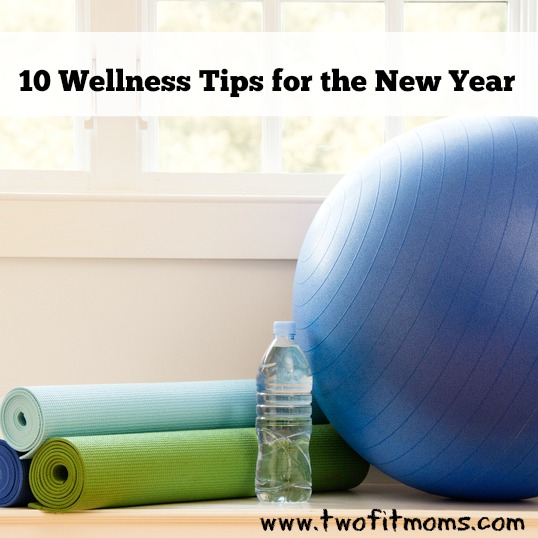
    Balance ball, exercise mats and bottled water at gym by window.
    We are firm believers that small steps and changes can make a very big difference. Starting small will help ease you into a new routine and work towards adopting a revitalized mindset.  Once you start making some incremental changes, you will see, and feel, a difference.

    So, in an attempt to inspire some healthy habits, we have jotted down ten that we think are worth considering.  They are not only focused on yoga, fitness and nutrition — but overall wellness. We hope they become a part of your routine!

    Here’s our list of top ten wellness tips for 2015:

    1. Wake up earlystart your day early enough that you can accomplish a few things before the day actually gets started.  Generally mornings are rushed, making lunches, racing to get dressed and out of the house and off to work and school.  Get up early, even if it’s only 15 minutes earlier than usual.  Take a moment, have a cup of tea and ease into your day.  These few moment of peace are all yours.
    2. Set a daily intention — since you will be up early, take the time to set an intention for your day.  Find a quiet place to sit and think — think about what you will conquer during the day and how you will achieve your goals.
    3. Find time for exercise (morning, noon, or night – whenever it’s best for you). If carving out some time early in the morning or late at night doesn’t work for you, do something active during your lunch break, or while at your desk.  Even taking a walk and stretching your legs counts!
    4. Take care of your skin — suncreen, skincare, etc. Wash your face. Moisturize it and protect it with SPF.  We are not beauty consultants, but we all need to take care and protect our skin.
    5. Do something for you.  Pencil some “me time” into your calendar.  That may mean finding time for a pedicure, or having tea with a friend.  Do something for you — maybe not every day — but as often as possible.
    6. Cook more, take-out less. Eating healthy is so important, and we really do believe that cooking your own meals inspires healthy eating — a healthier lifestyle.  Of course, you can find healthy food options at restaurants and in cafeterias, but your own kitchen is the best place to start. Take a few extra minutes to make something homemade versus buying a pre-made, likely preservative-laden, option.  That doesn’t mean you can’t take short cuts — like buying pre-cut and washed veggies — but, focus on preparing your food versus choosing something from a freezer case.
    7. Read — a newspaper, a magazine or a book.  It doesn’t matter if it’s fiction or non-fiction.  Reading sparks creativity, and it’s just different from being fed information from the television.  You are an active participant in receiving knowledge!
    8. Go outside, and do something active. Even in the dead of winter, a quick walk around the block can invigorate you.  Take a moment and go outside — breathe in some fresh air.  Even better, participate in an outdoor activity.  Riding a bike, an outdoor yoga class, a run — whatever suits your fancy! Just get outside!
    9. Put your phone down, or your laptop — whatever device you are attached to these days.  Isn’t it the worst when you are trying to have a conversation with someone and they are glued to their phone? We are all guilty, so, put your phone down.  Focus on what’s happening right in front of you — whether it’s a conversation with a loved one or a work colleague.  Or, perhaps, just put your phone down in order to focus on yourself.
    10. Make a daily to-do list. We love our lists.  We like to make ours at night in order set ourselves up for the next day.  Making a list will help you organize all of the moving parts of your life.  And, there’s nothing like crossing something off your list to make you feel accomplished!


  • Yoga Lifestyle:  Pre-Holiday Toy Decluttering

    Yoga Lifestyle: Pre-Holiday Toy Decluttering

    Let’s continue on our quest to create a yoga lifestyle—a life where peace and stillness are not limited to the confines of our yoga mats.  Let’s build a life where clarity and stillness extend to all other areas of our lives.

    A couple of weeks ago, we began the process of removing mental clutter by developing the habit of creating a nightly to-do list.  By creating a to-do list, we made the conscious decision to commit our jumble of thoughts and obligations to paper and set an intention to live the next day with purpose.Wooden alphabet blocks. Baby Blocks

    This week, let’s focus on an area that is the cause of anxiety for so many parents—toy clutter.  Toy clutter is overwhelming because there is just so much of it. Toys can easily overtake bedrooms, play rooms and family rooms.  Trust me, I’ve seen it happen in my own house.

    With the gift-giving season right around the corner, the likelihood of more toys entering your home is very high.  Now is the time to tackle this project of paring down and organizing.

    Your ultimate goal is to declutter your toy collection and organize your play space so that your children are left with items that they enjoy and can easily find.  In the process, you will find that you feel lighter and happier with less.

    Before you begin tackling the clutter, take a moment to consider why the clutter exists in the first place.  Without taking this important step to stop and consider why the clutter exists, the root cause of the problem will not be addressed.  Dealing with physical clutter is only a temporary solution unless you become honest with yourself and do a little bit of soul searching to put an end to the mess.

    Ask yourself the following questions: 

    -Why do my children have so many toys?

    -Am I contributing to the excess by purchasing more?

    -If so, why do I buy more?

    -Do other family members contribute to the glut of toys in the house?

    -If so, can I have a discussion with them to stop the influx of toys?

    -Do I throw an extra toy into the shopping cart just because it’s inexpensive?

    -Do I buy toys throughout the year, even if it’s not a major holiday or a birthday?

    -Do I keep all toys, even if they are not age appropriate?

    -Do I keep toys, even if my children do not play with them?

    This is not an exhaustive list of the questions that you may ask yourself, but it is a place to start.  Once you are done reflecting, it’s time to begin managing the clutter.

    If this is your first time decluttering, I highly recommend distributing the work across multiple days.  Doing it all at once is very overwhelming.

    Start with one large box and one large garbage bag.  The large box will hold all toys that will be donated.  The large garbage bag will hold trash—Not all toys are in good enough condition to pass down to another child.DSC_7182

    When your box and bag are filled, STOP!  Assess your energy level.  Can you tackle another full box and bag today, or are you tired?

    Do not continue if you’ve lost steam.  Your play area/kids’ bedrooms/family room did not become cluttered in one day, so give yourself some time to return your home to working order.  You can do it, one box and one bag at a time.

    Here are some helpful guidelines to consider while you are decluttering:

    -Keep items that can be classified as art supplies:  stencil kits, beading kits, sewing supplies, markers, crayons, glue, tape, paper, paint, stickers, etc.  They foster creativity and will ultimately be used (even if only for homework and school projects).

    -If your child regularly plays with the toy, keep it.  If your child does not play with it, find it a new home.

    -Try to overcome your own feelings of guilt.  Do not keep a toy just because it was a gift or an expensive purchase.  Avoid hoarding, and find a child that will truly enjoy the item.

    -If the toy has significant sentimental value, keep it.  You don’t need to keep 50 stuffed animals, but if your child had a favorite doll or teddy bear as a baby, save it.  There is nothing wrong with maintaining a few mementos of times gone by.

    -If the toy/game is broken or has missing pieces, throw it away.

    -Donate toys that are in good condition and intended for a much younger child.  There is no point in cluttering your home with toys that are not age appropriate.


  • The Backbend Flow to De-Stress

    The Backbend Flow to De-Stress

    After a long day hunched over a computer, the body craves movement – particularly, expansive movement to counteract the back-rounding posture that is so commonly seen in office parks around the world. Paperwork, computer work, web surfing and, even texting on mobile phones, are all culprits in creating tightness in the chest, shoulders and back.

    A backbend practice is a great way to relieve everyday stress and loosen up a tight upper body.

    2014-10-28 11.56.32


    The biggest misconception about backbends is that you need a flexible back in order to do poses such as Full Wheel or Camel, or asanas involving an over-hand grip such as One-Legged King Pigeon or King Dancer. Yes, you do need some mobility in your back, but in reality, it is the entire front body and shoulders that can make or break a backbend.   With consistent practice, you will find that your backbends will be deeper and easier to perform.


    As with any asana, take your backbend practice slowly, and never force your body into postures.  Start off your practice with a few rounds of Sun Salutations, then use our Backbends Practice to fire up your entire front body and shoulders.  Make sure to keep your abdominals engaged in your backbends and more importantly, make sure to breathe!


    Extended Puppy Pose (Uttana Shishosana)
    5

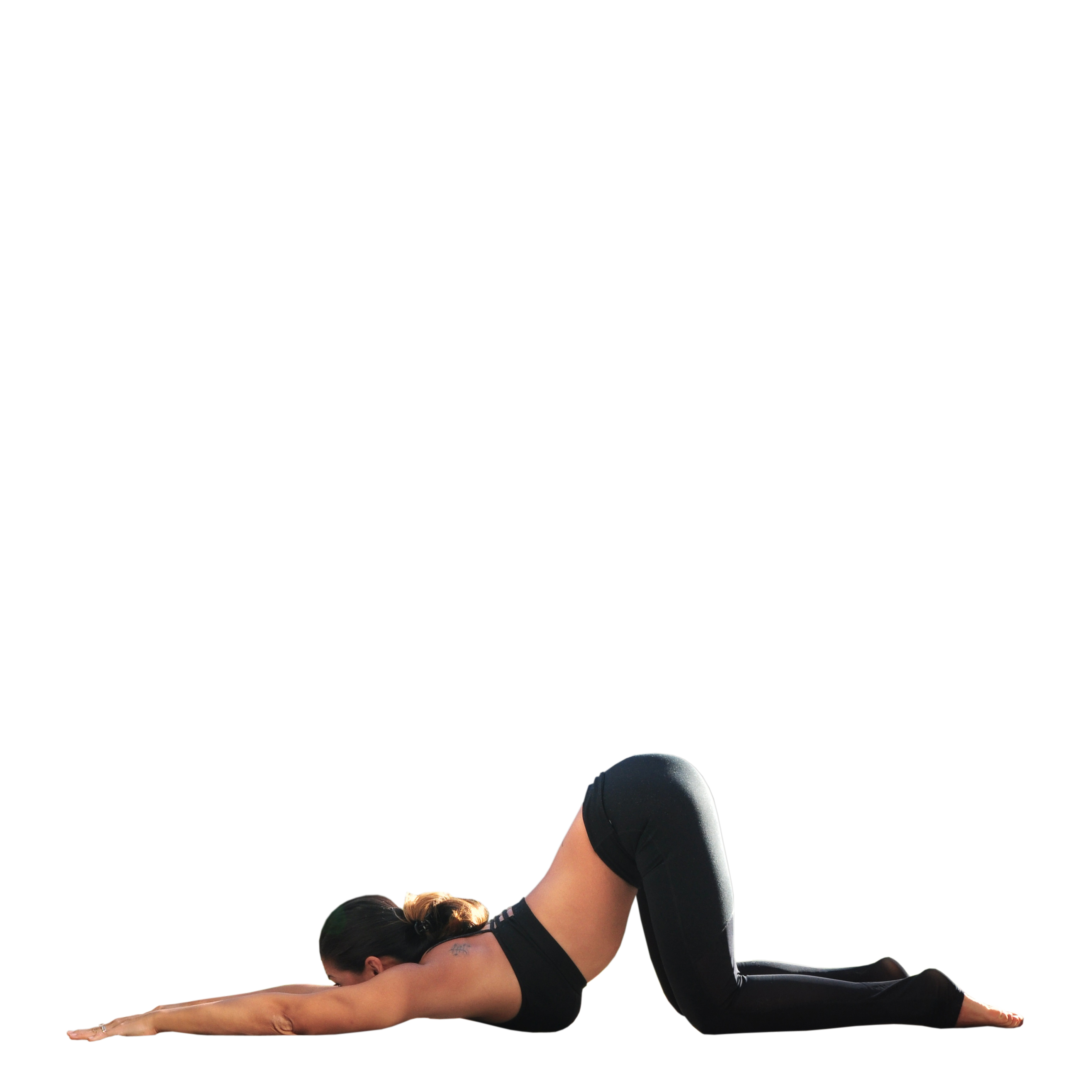
    This is one of our favorite poses for stretching the upper back and shoulders. Beginners should consider modifying the pose by placing their forehead on the mat. This will help relieve any potential strain in the neck. Start off in tabletop position and slowly walk the hands forward dropping your chest onto the mat. Keep your hands actively pressing into the mat and arms hugging in towards one another.

    High Lunge or Crescent Lunge Variation
    7

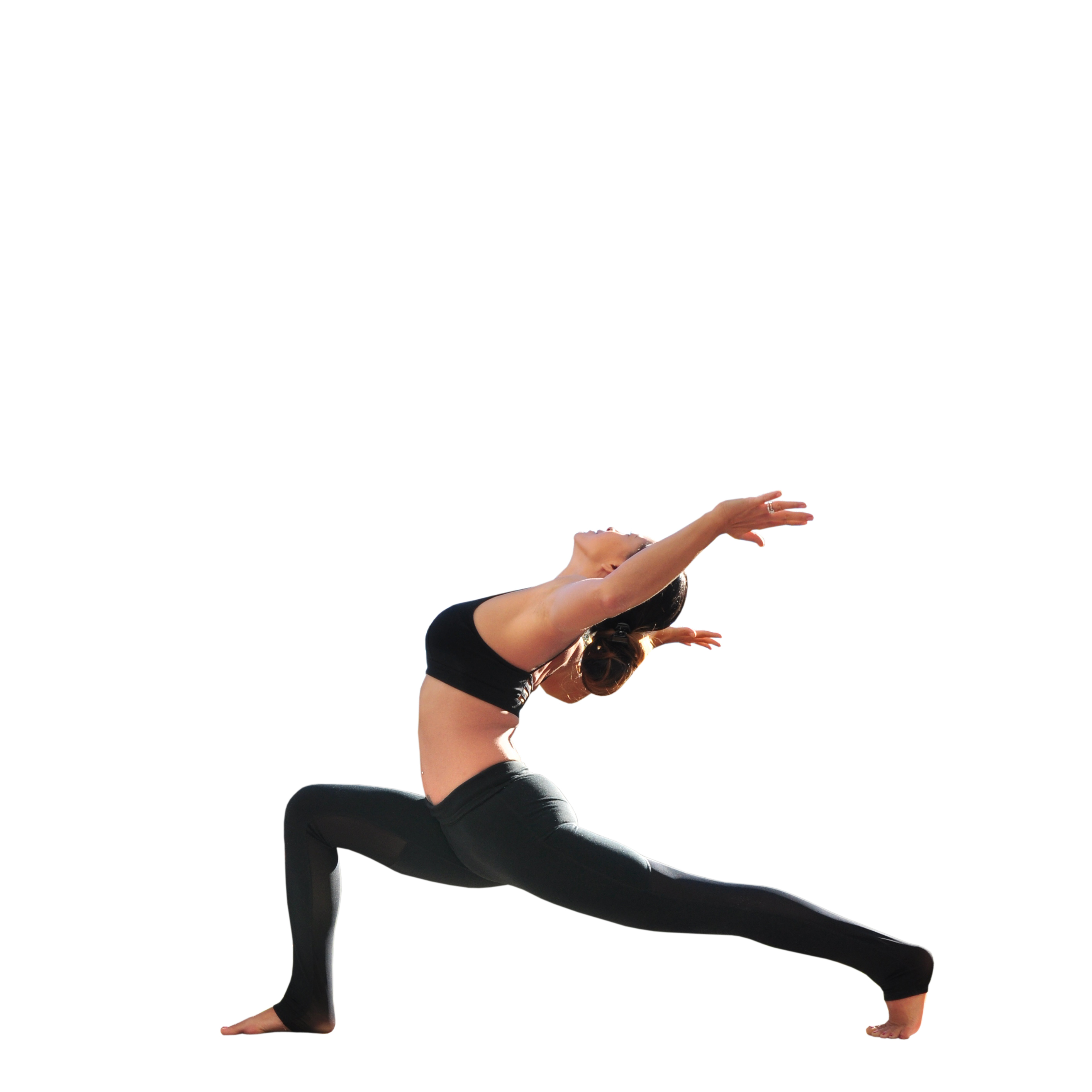
    While in high lunge, open your chest and shoulders by bending your elbows to create 90 degree angles with your arms (think goal-post arms!)  A more traditional version of this pose is with arms extended straight overhead.  Regardless, be sure to keep your head aligned between your arms.  Do not allow the head to fall back which will cause strain to your neck. Remember to engage the back quadricep and sink your hips toward the floor to activate your hip flexor and psoas muscles.

    Low Lunge or Anjaneyasana Variation
    2

    Clasp your hands behind your back, drawing your shoulder blades together to open up the front of your shoulders and your chest. Keep your core engaged as you take a mini-backbend moving your clasped hands towards your mat.

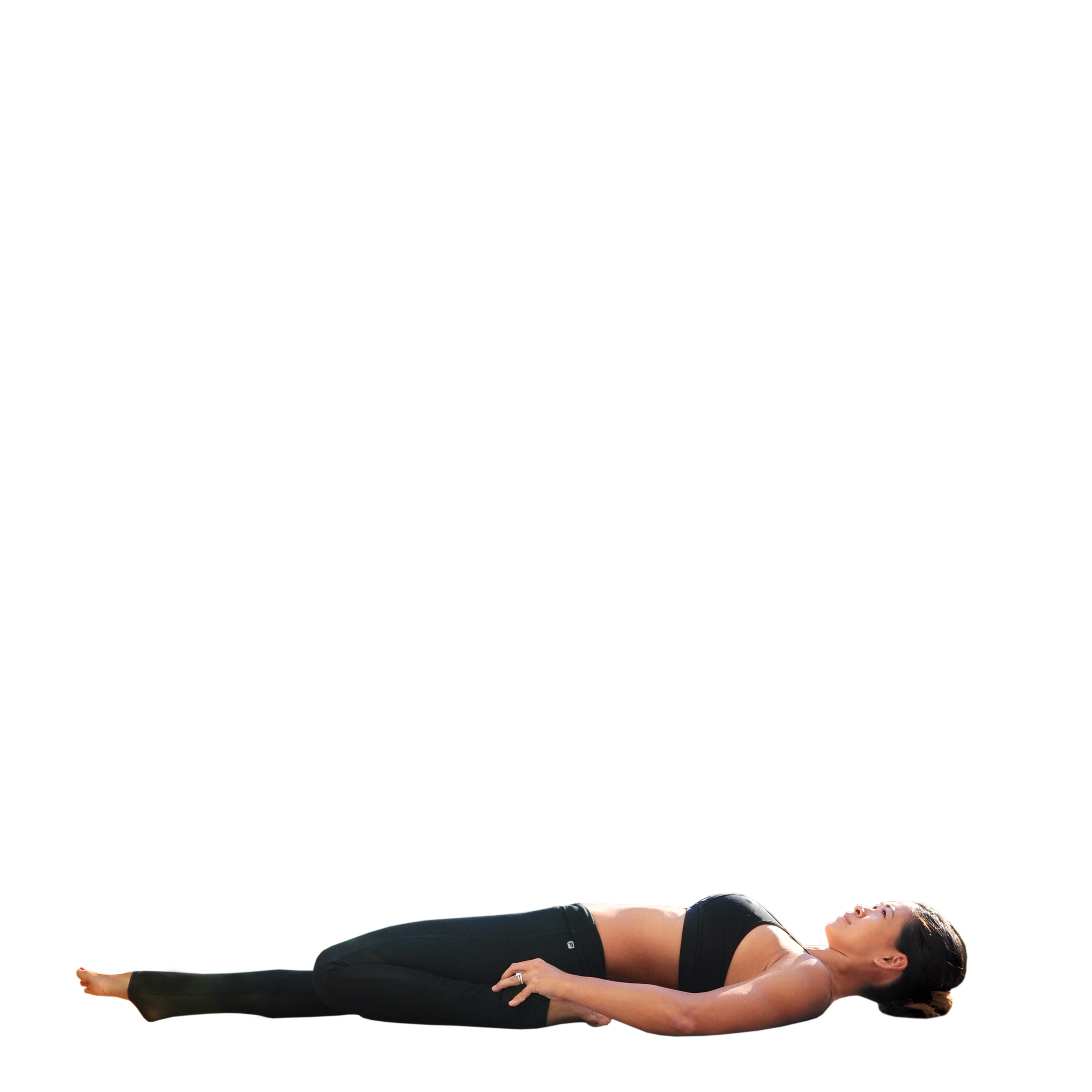
    Reclined Half Hero or Ardha Supta Virasana
    4

    Try a gentler modification of this pose. Rather than lying down completely, begin by leaning back onto your forearms.  This will produce a nice stretch in the front of the thigh.  For a more intense stretch, lie back further.  You should not experience any discomfort in your knee.

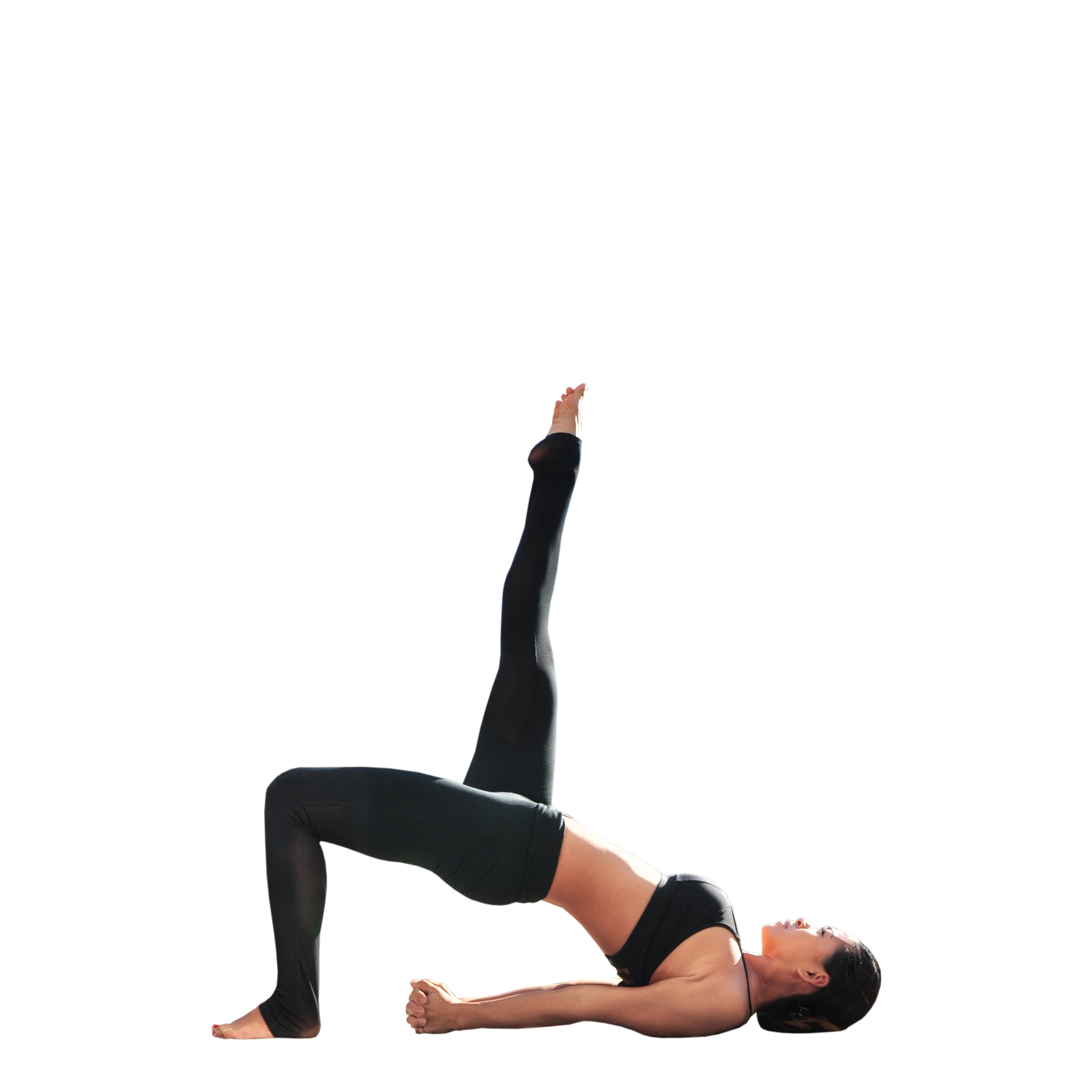
    Bridge Pose or Setu Bandha Sarvangasana
    6

    This is a great backbend for beginners. Use a block or blanket to relieve stress from your lower back or neck. Your feet should be parallel to each other and your knees should stack directly over your heels.  When you begin to lift up, keep your thighs hugging into the midline. Press actively into the mat with your arms and shoulders. Keep the neck long. You can lift one leg up for a deeper posture.

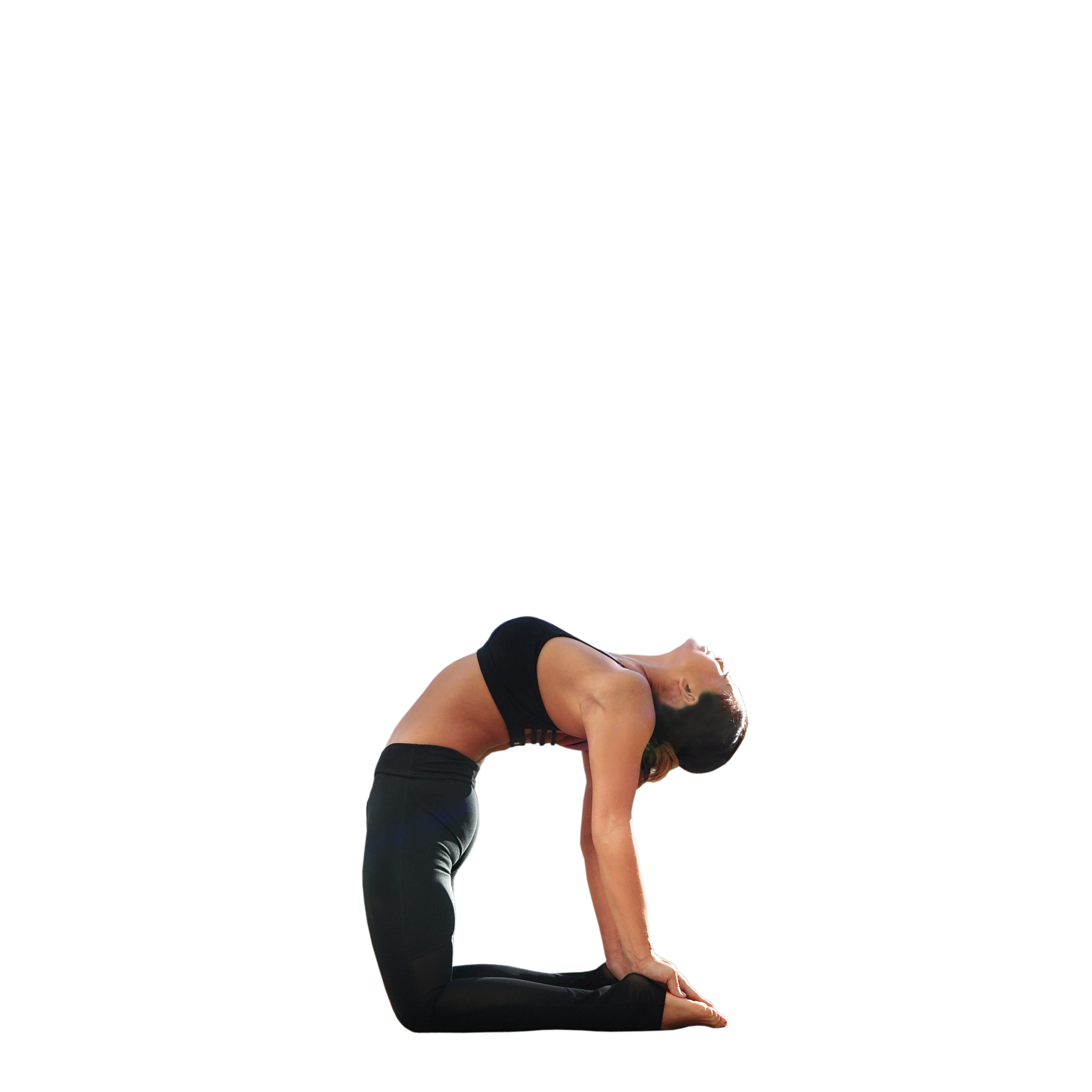
    Camel Pose or Ustrasana
    1

    There are many variations of this pose – from keeping your hands on your low back for support to tucking your toes under so that the backbend is not as deep to the full posture shown here. Find the one that works for you! Just remember to keep your hips pushing forward so the thighs remain perpendicular to your mat.

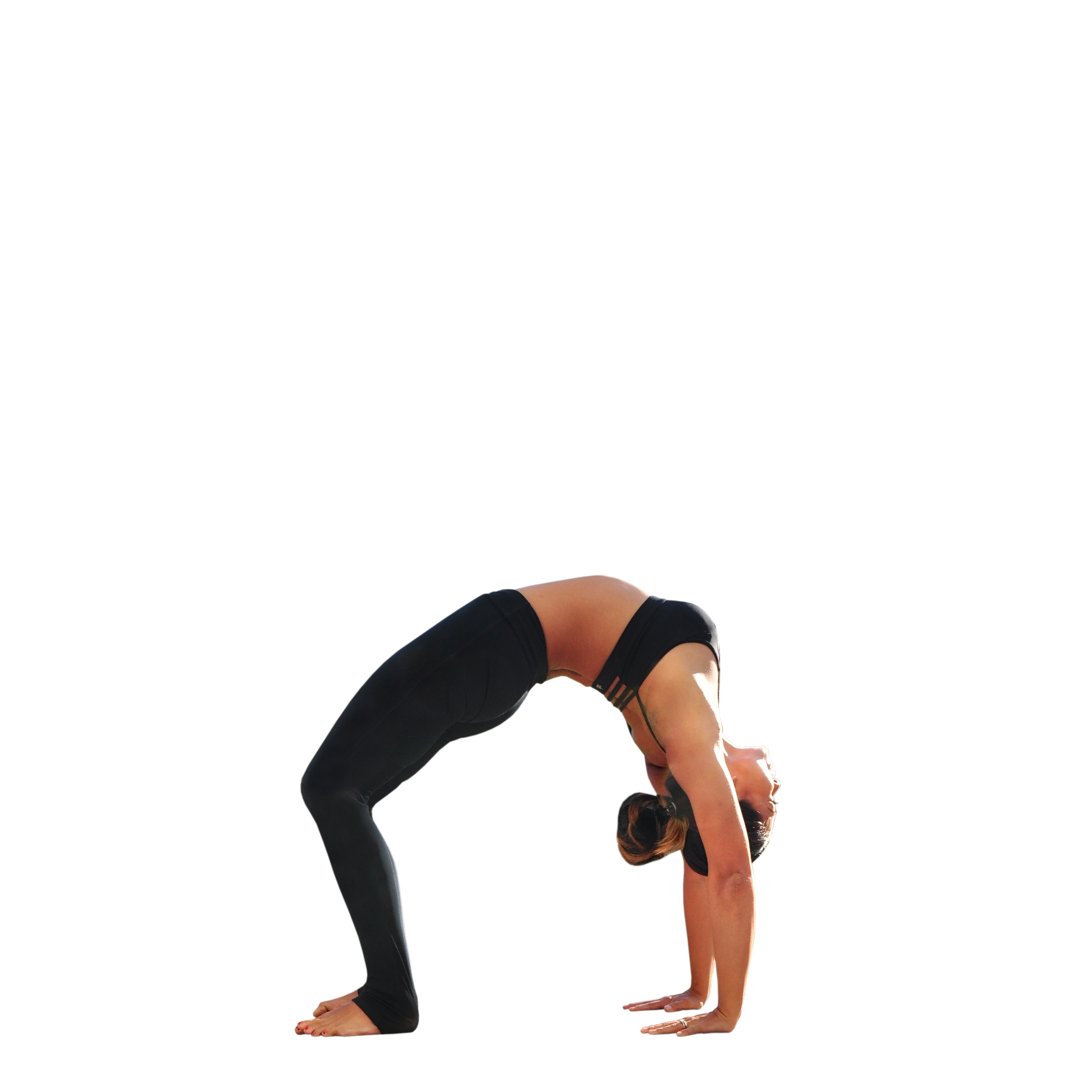
    Upward Bow or Urdhva Dhanurasana
    3

    Make sure your front body and shoulder are warmed up before trying this pose. Keep your feet parallel, hug your knees and thighs in – and don’t forget to breathe!

  • 6 Poses to Reduce Bloating

    6 Poses to Reduce Bloating

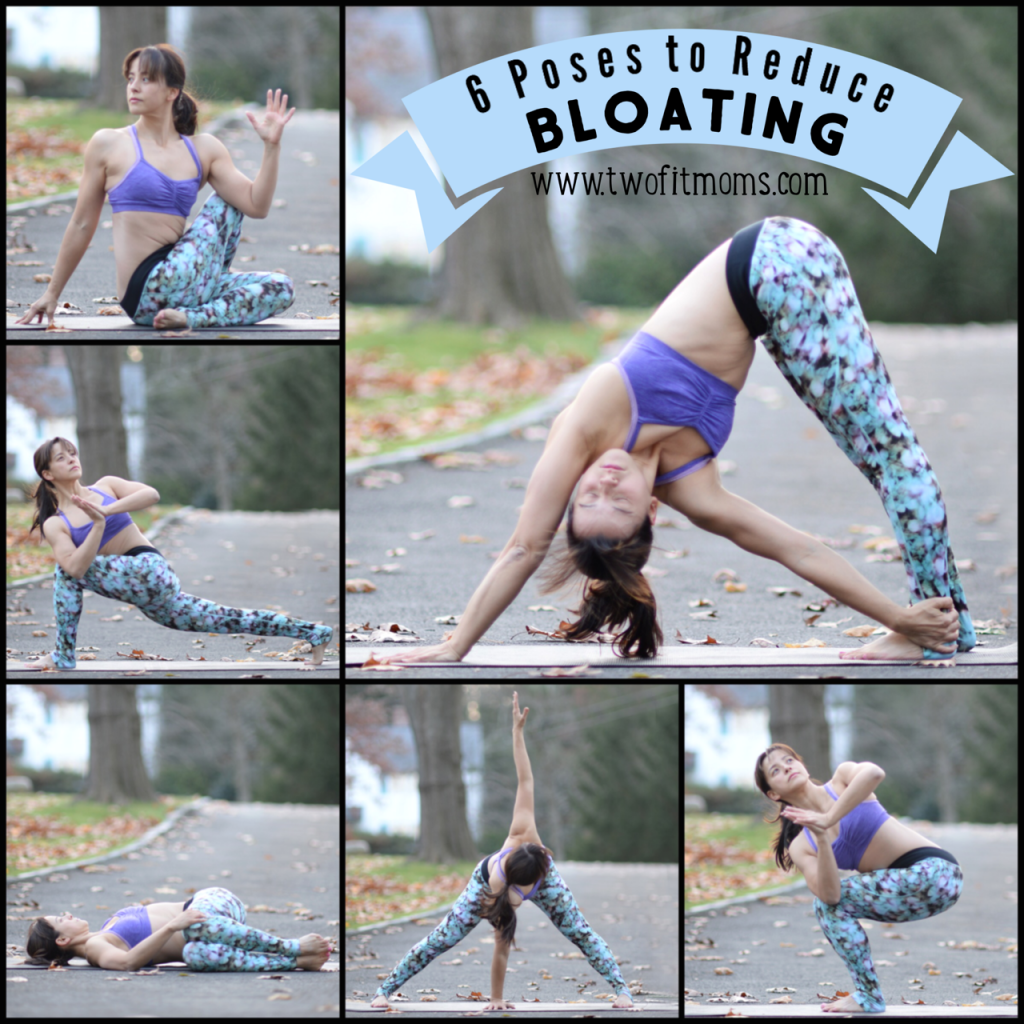
    After a long weekend of overindulgence and rich foods, you may be feeling sluggish and bloated.  Let us help you re-energize and reduce that bloated feeling with these six twisty yoga poses that will gently squeeze and massage your digestive organs.

    As with all twists, be mindful to lift and lengthen on each inhale, and twist deeper with each exhale.  Hold each pose for a minimum of five breaths, and remember to practice the poses on both sides of your body.6Poses

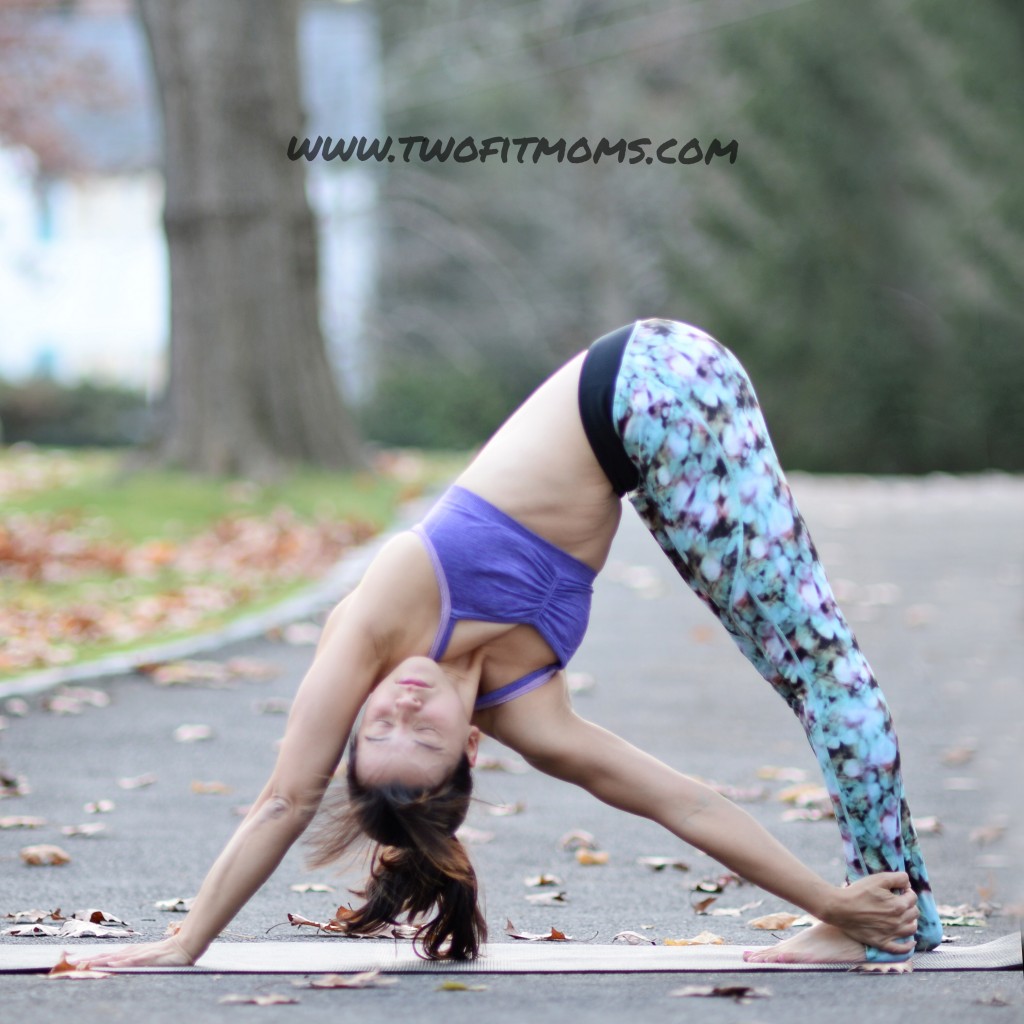
    Revolved Downward Facing Dog
    From Downward Facing Dog, begin to shift your weight into your left hand.  Twist your torso to the left as your reach for the outside of your left thigh, calf or ankle with your right hand.  Gaze up under your left armpit.

    RevolvedDD

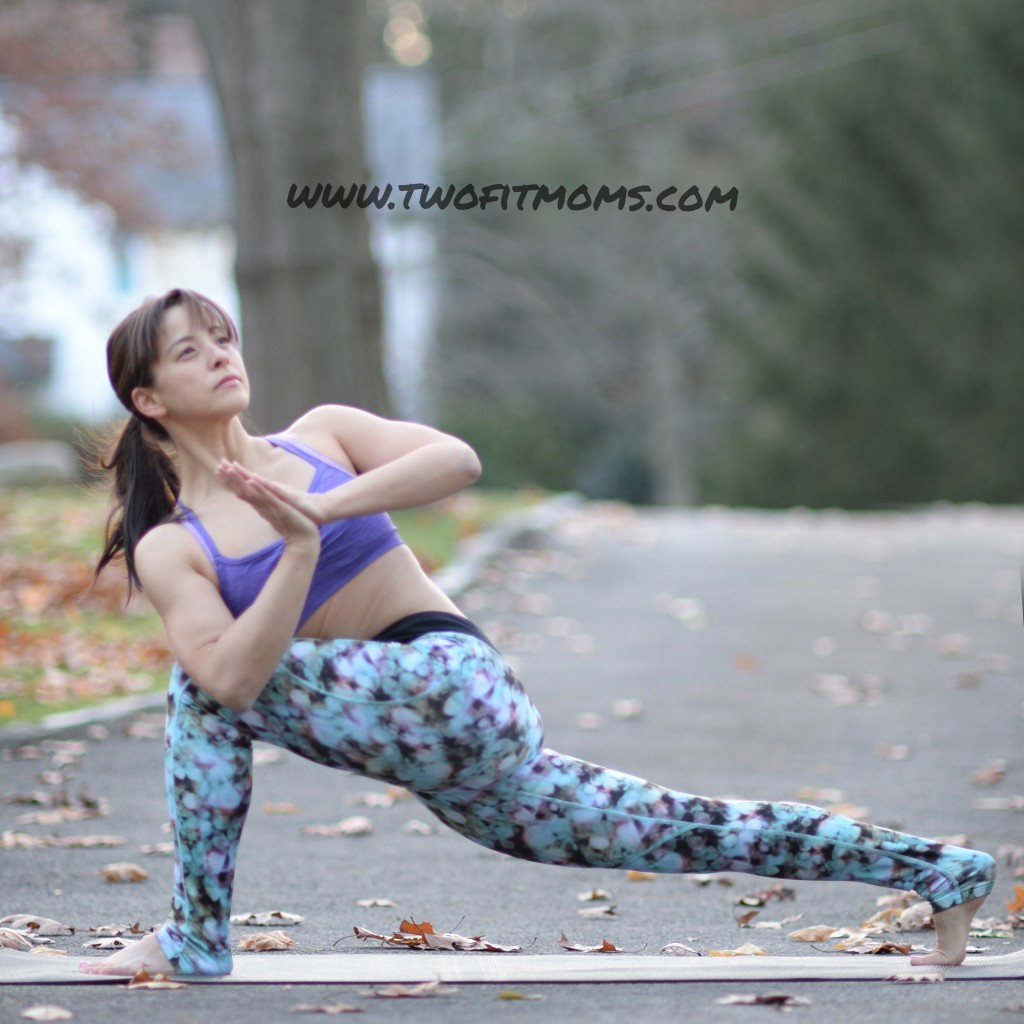
    Revolved Side Angle Pose
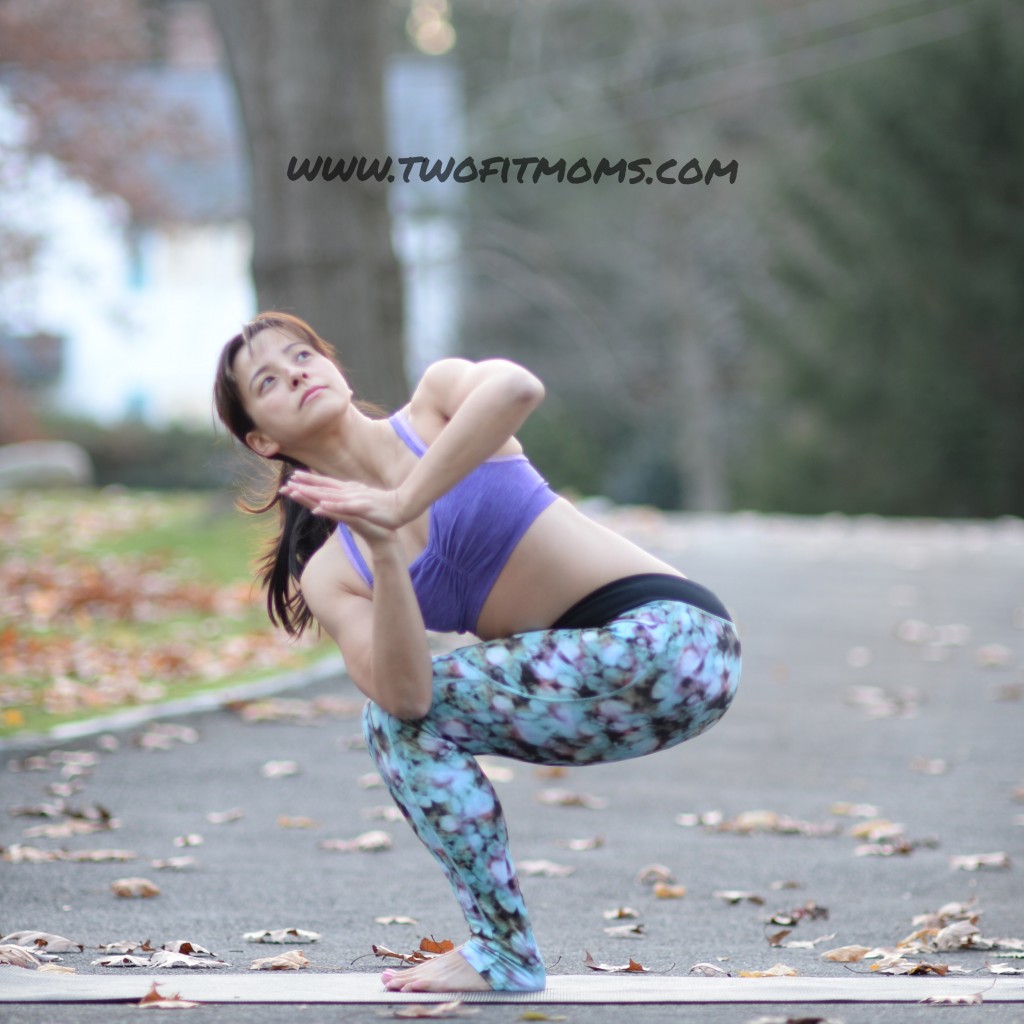
    From Downward Facing Dog, step your left foot forward between your hands as you lift onto the ball of your right foot.  Bring your hands together in prayer in front of your heart, and twist your torso to the left.  Hook your right elbow on the outside of your left thigh.  Press the back of your right arm firmly into your left thigh as you twist deeper with each breath.
    RevolvedSA

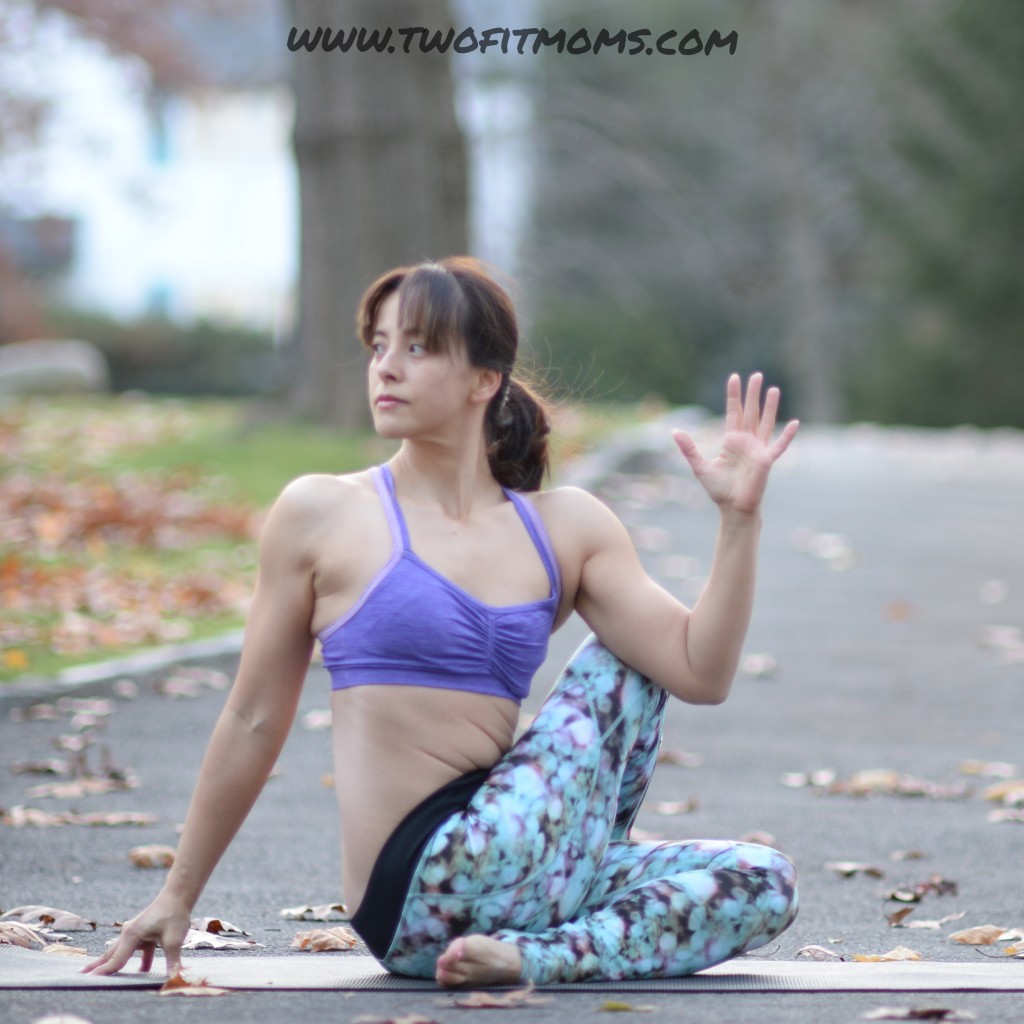
    Half Lord of the Fishes Pose
    Sit on your mat with your legs extended straight in front of you.  Bend your right knee so that the sole of your right foot is flat against the floor.  Step your right foot over your left thigh.  Bend your left knee and slide your leg to the right so that your left foot rests next to your right hip.  Place your right hand on the floor behind you.  Hook your left elbow on the outside of the right thigh, and twist to the right.HalfLordofFishes

    Revolved Chair Pose
    Stand tall with your feet together and your arms extended overhead.  Bend your knees, bringing your thighs parallel to the floor.  Roll your shoulders down and away from your ears.  Sink your weight back onto your heels—try lifting your toes from the mat to confirm that your weight is shifted properly.  You are now in Chair pose.  In order to revolve the pose, lower your arms and bring your hands to prayer in front of your heart.  Twist your torso to the left, and hook your right elbow on the outside of the left thigh.  Press into your hands for extra leverage to twist further.  Glance down at your knees.  If your right knee is protruding forward more than your left knee, make an effort to pull the right hip back in space.RevolvedChair

    Revolved Wide-Legged Forward Fold
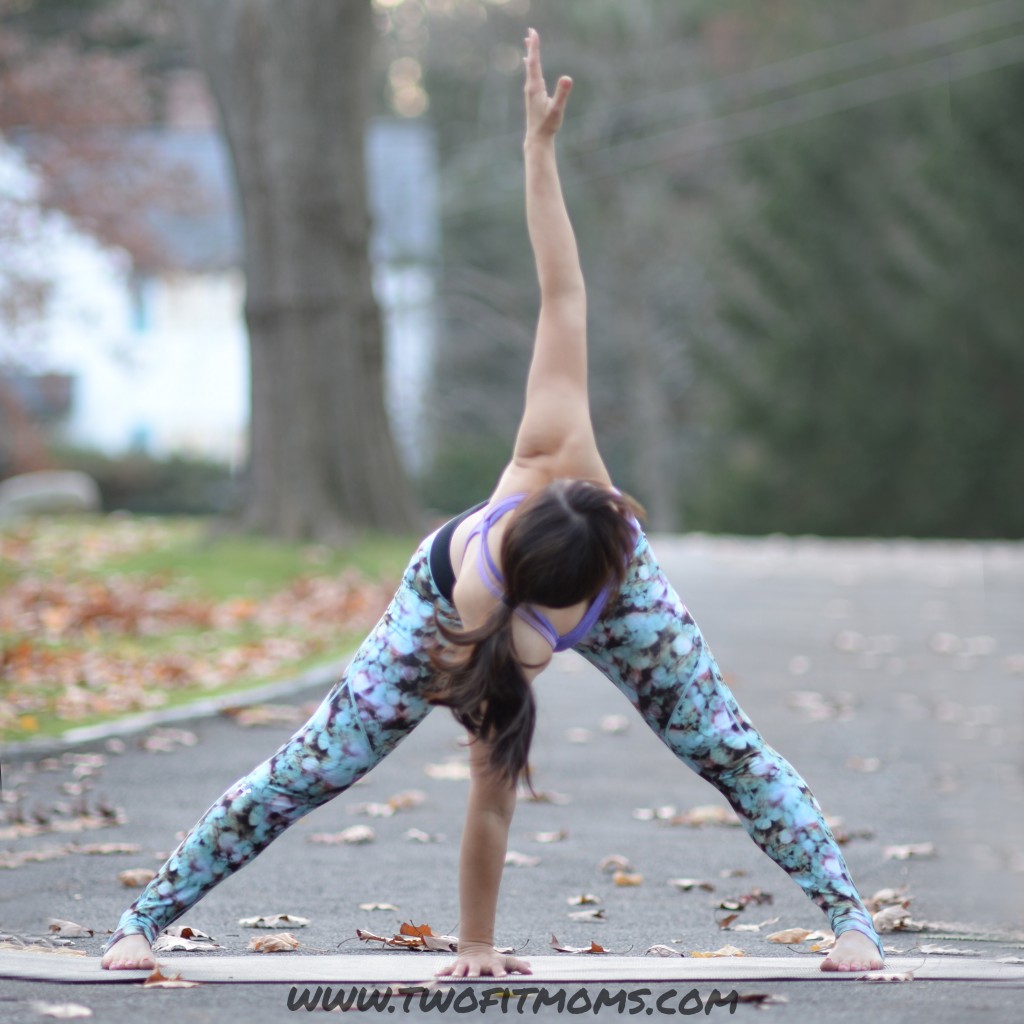
    Place your hands on your hips, and step your feet apart about four feet.  Turn your feet so that your second toes are parallel to one another. (You may feel slightly pigeon-toed in this stance.)  Hinge forward from the hips, as you keep your torso long and extended.  Lightly place your fingertips onto the mat.  Place your right hand on the ground, equidistant from your feet.  Twist your torso to the left, and extend your left arm toward the sky.  Try to make a straight line from fingertip to fingertip.RevForwardFold

    Supine Spinal Twist
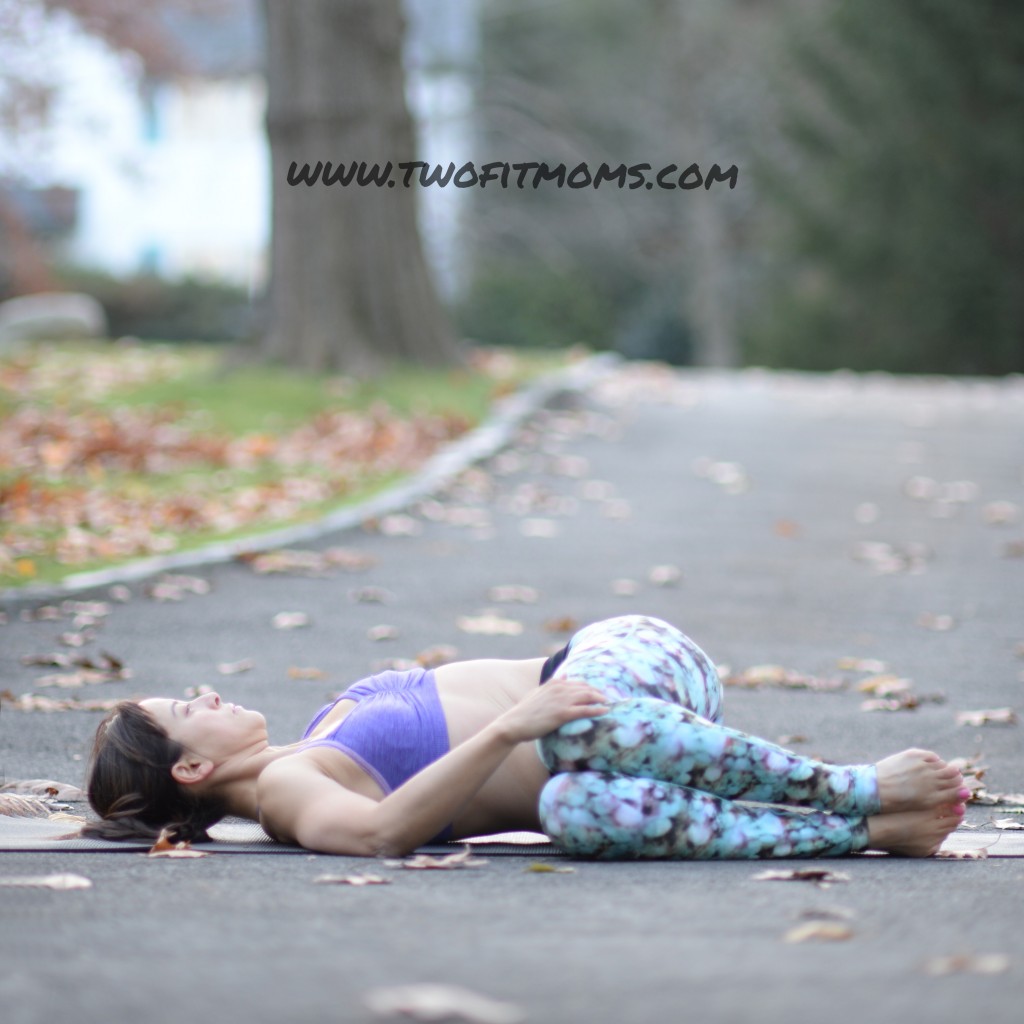
    Lie on your back, and draw your knees into your chest.  Extend your arms out to either side.  Shift your hips to the left by two to three inches, and gently drop your knees to the right.  Keep both shoulders flat on the mat as you twist, and feel free to place your right hand on top of your thighs to intensify the stretch.SpinalTwist

  • Yoga Lifestyle:  Remove Mental Clutter with a To-Do List

    Yoga Lifestyle: Remove Mental Clutter with a To-Do List

    The longer I practice physical yoga poses, the more I come to the realization that yoga is a state of mind.  It’s not just the Warrior 1 pose or the High Lunge or the Headstand that you can hold all day.  It’s the stillness of spirit and peace in your soul that you can feel whether you are standing on a yoga mat or waiting on line at a department store.  Yes, the physical yoga practice will train your ability to focus and find peace in uncomfortable situations, but don’t leave this valuable training on your mat.  Begin to live your yoga by finding and creating peace in all aspects of your life.  Create a yoga lifestyle.

    Opened personal organizer with a to do list.
    The To-Do List
    This week, build your yoga lifestyle by getting into the habit of creating a daily to-do list.  In a previous article, I mentioned how important it is in my own life to create a to-do list before bed each night.  By committing my list of tasks to paper, I remove the mental clutter and liberate my mind.  This simple task of creating a list helps me sleep more restfully, and I close my eyes each night feeling organized for the coming day.  Remember—If you are going to bother spending time on your yoga mat to clear your mind, it’s probably in your best interest to develop a few habits that will help you carry that peace and focus to other areas of your life.

    Tips
    Here are a few tips that I keep in mind when creating my list each night.  See if you feel more organized, focused and productive as a result of creating a daily list!

    E-mail your to-do list to yourself.  I used to be a big fan of paper lists—until I started forgetting my list at home.  These days, I create my to-do list on my iphone’s notepad each night, and I e-mail it to myself as soon as the list is created.  By doing this, I know that my list cannot be misplaced, and I can access it from my phone or my computer when I need it.

    Break down large projects.  Do NOT write a task on your list that will take days to complete.  Larger projects can be approached as a series of smaller tasks.  If you need to re-organize your entire house, don’t write “re-organize house”.  Instead, write line items like “sort and donate kids’ clothing” or “discard expired condiments/food from fridge”.

    Keep it short.  Be sure that each item on your to-do list is a task that can be completed within 1 to 2 hours.  Short, manageable tasks are most likely to get done.  Don’t discourage yourself by listing a 5-hour task on your list.

    Include easy tasks. Include a few items on your list that you are sure that you can complete.  These can be very simple tasks such as “make the bed”, “pack lunches for school” or “chop vegetables for dinner”.  List those items first, and get them done immediately.  It’s a great feeling to cross items off of your to-do list early in the day.  It will give you a sense of accomplishment and motivate you to continue tackling items on your list.

    -Prioritize.  Get through a few of your easy tasks, and immediately tackle an important task on your list while you are feeling fresh and motivated.  If you need to create a marketing presentation for tomorrow, do it early in the day.  Don’t wait for your mid-afternoon slump to kick in.

    -Start fresh each day.  Even if you only get through a couple of items on your list during the day, take the time to create a new to-do list each night.  The act of creating a new list is like a mental reset button.  Tomorrow is a new day, and you will have another opportunity to get it all done.


  • 7 Tips for Eating Well…On the Road

    7 Tips for Eating Well…On the Road

    Although it may seem like a daunting task to choose healthy meals while traveling, eating well on the road isn’t impossible.  If you are away from the comforts of home, don’t throw in the towel.  With a little bit of planning, you can hold it together and find healthy solutions.  For the past month, I have been away from home, tending to my daughter and husband in the hospital.  My meals have been limited to the cafeteria and nearby restaurants and delis.  I know I haven’t been eating nearly as well as I do at home, but it hasn’t been a complete disaster.  Here are some suggestions for you, based on my experience over the course of this past month. Take a look at these tips before you travel, and have a game plan so you can continue to eat well wherever you are!On the road somewhere in Utah with dull weather, USA

    Download the free AroundMe app.   As soon as you arrive at your destination, check this app to see all of the establishments in your surrounding area.  In addition to listing all of the nearby banks, gas stations and parking garages, the app lists all of the local restaurants, supermarkets and coffee shops.  I think it’s very important to know what resources are available before you are ravenous.

    Don’t Limit Your Search!  Meals and snacks aren’t only sold at restaurants.  Keep your eyes open to different possibilities.  I stopped into a bookstore to buy a notebook, and I was shocked to find a vast assortment of healthy snacks at the café counter—hummus, fresh fruit, nuts, sunflower butter, unsweetened iced tea and all sorts of other options that I was not expecting to find in a book store.  Not only did I buy the notebook, but I also stocked up on healthy snacks for the coming days.

    Always buy unsweetened drinks.  In the hospital cafeteria, the walls are lined with refrigerated cases filled with bottled beverages.  Most of these drinks, unfortunately, are full of sugar.  My advice to you is to skip the juice, soda and lemonade altogether.  Find an option without sugar.  I happen to love unsweetened iced tea.  If you cannot find unsweetened iced tea, go ahead and brew a cup of hot tea.  Any place that sells coffee will also have tea.  If it’s an option, feel free to grab a cup of ice from the soda fountain and make your own iced tea by pouring your hot tea into the cup.  Because I expected to be away from home for an extended period of time, I actually carried my own tea bags (and cold brew tea bags) in my backpack.  Every day, I just needed to buy a few bottles of water for my tea bags.

    Look for Unprocessed Foods.  The guidelines for healthy eating don’t change because you are away from home.  When you are shopping for your groceries in the supermarket, you may already be in the healthy habit of buying foods in their most natural form.  The same rules apply when you are away from home.  Don’t look for veggie chips.  Look for veggies.  Don’t look for fruit juice — look for fruit.

    In the hospital cafeteria, there was always a roasted vegetable of the day.  Even in airport convenience stores, you can usually find whole fruits, pre-packaged hummus (which is actually quite natural for a packaged product), nuts, and even vegetable crudité.

    Try to create a well-balanced meal.  Set yourself up for some sort of success.  Don’t go to the deli counter every day if you are inclined to get a ham sandwich on white bread with a bag of cheese curls.  You can do better!  Trust me, I know what it feels like to be away from home and under tremendous stress with very little time for meals.  You can still do pretty well if you stop for a minute and think before buying.  Try to create your own balanced meal by piecing together a variety of food groups.  Will it be perfect?  Probably not.  That’s not the goal.  The goal is just to do our best while we are away from home.  Start out by looking for some vegetables.  Pick up a piece of fruit for later.  Include some protein and fat so you don’t get hungry—this can be in the form of nut butter or lean meat.  If you have the option between white rice and brown rice, always choose the brown.  If you have the choice between grilled chicken and fried chicken, go with the grilled.  If you are lucky enough to find a make-your-own salad counter, ask for your dressing on the side.  Add some beans, chicken or nuts to the top of your salad to make it a heartier meal.  You can do this!

    Avoid the Kids’ Menu.  If you are traveling with your children, avoid the kids’ menus at chain restaurants.  Most of the items on these menus are devoid of nutrition (pancakes with fake syrup, macaroni and cheese, grilled cheese on white bread, etc.)  Instead of ordering from the kids’ menu, try the regular adult menu.  Ask for lunch-sized portions or look at appetizers that may have vegetables. Your kids will surprise you if you give them the chance.

    Look for Chinese Restaurants.  This is such a great tip, and I have been using it since I moved out of my parents’ house to go to college.  I still remember heading to the mall food court to find a Chinese food counter because I knew I would be able to find vegetables.  If you are craving vegetables, and all you can find in the nearby stores are sandwiches and burgers, pick up the phone and order Chinese food.  It’s the one kind of take-out restaurant where you can be sure to find assorted steamed vegetables.  Most places prepare your food to order, so make sure to ask for simply prepared foods with sauce on the side.

    This is by no means an exhaustive list of the efforts you can take to stay healthy while traveling.  It’s just a place to start! With your own ideas and routines, I am sure you will be well on your way to eating well-balanced meals, whether you are away from home for a day or a month.  Good luck, and please feel free to share some of your own tips in the comments section below.

  • Living Your Yoga

    Living Your Yoga

    There may come a time in your life when you are physically unable to unroll your mat and practice the beautiful yoga poses that you’ve come to know and love.

    Maybe it will be an injury, a high-risk pregnancy, or a sick child that needs your attention.  Maybe it will be a challenging time that you can’t even imagine right now.  How will you handle this?  Will your day be ruined because your routine has changed?  Will your inability to physically practice destroy your spirit?  What will happen to your self worth when you are unable to backbend or balance on your hands?  Will you feel tremendous disappointment and anger because you have lost this part of your identity? Or will you tap into everything you know about the non-physical aspects of yoga and TRULY begin to practice?Image of a lotus flower on the water

    I’ve had to face all of these questions over the past few weeks as my physical yoga practice came to a screeching halt.  I didn’t want to give it up, but serious circumstances made it nearly impossible to continue.

    Earlier in the month, I moved with my family to Philadelphia to be nearby the children’s hospital, where my 8-year old daughter received a kidney from my husband.  Just imagine—two patients, two different hospitals, and lots of stress.

    After the transplant, any free time outside of my daughter’s room in the intensive care unit was used to visit my husband in the adult hospital, take a shower and change my clothes.  Arm balances weren’t happening; Inversions weren’t happening; Backbends or splits weren’t happening.

    In the weeks leading up to the transplant, it certainly crossed my mind that I would probably lose strength and flexibility as I became a full-time caregiver, but once the surgeries began, these concerns slipped away.  I was not struggling with a loss of identity as a yogi.  On the contrary, I felt like I understood yoga in a new way!  I didn’t realize it while it was happening, but over the past year, I internalized a thing or two about the non-physical side of yoga—particularly the yogic principle of non-attachment, or Aparigraha.

    What is Aparigraha?
    By now, you probably realize that yoga is more than a series of poses.  It’s a lifestyle with a full set of philosophies behind it.  Aparigraha, or non-attachment, is just one of of the principles of yogic philosophy.  When we practice aparigraha, we practice the act of letting go.  When we hold tight to anything (i.e.,  expectations, attachments, people, objects, etc.), the act of clinging weighs us down and makes us captive to whatever it is that we try to possess.

    In the example of my own life circumstance, I have been able to move forward with my days peacefully, despite the loss of my physical yoga practice.  I’ve been able to do this without disgruntlement or anger because I did not attach my self worth to my ability to practice yoga poses.  I was able to enjoy my mat and experience it fully when it was there for me, and now that it isn’t, I’m okay.  It will return.  I understand that life isn’t static.  It is dynamic, often changing, and always providing a new opportunity.

    This week, I invite you to practice non-attachment.  Let go of your expectations, and see what happens.  Enjoy each moment, but do not become a prisoner to the joy of that moment.


    -Can you function and thrive, even if your well-laid plans become derailed?


    -Can you exercise without expectations for your body?


    -Can you lighten your load by ridding your house of physical attachments that weigh you down—old clothes, textbooks that haven’t been used in years, kitchen appliances that don’t fit your lifestyle, etc?


    -Can you enjoy your relationships and love fiercely without feeling the need to own or control the people in your life?


    Begin practicing aparigraha, and watch your life transform.  Good luck!


  • September: A Time for New Beginnings

    September: A Time for New Beginnings

    September marks the end of the summer and generally brings with it a flurry of activity. Whether you are preparing your kids for the first day of school or preparing yourself to dive back into work, it’s a busy time of year. If you are feeling a bit overwhelmed, remember that September can also be invigorating. The new season brings new beginnings.??????????

    Personally, my mental calendar resets in September.  Once I finish mourning the end of summer, I get back into the swing of things, ready to move forward and start fresh.  I look at this time of year as an opportunity to recommit to my goals — those that fell by the wayside throughout the course of the year.  So, here are a few suggestions to give September your all and to successfully move through the rest of 2014.

    1. Accept where you are in the process. You may be well on your way to achieving the goals you set at the beginning of the year, or you may not have made any progress at all.  Wherever you are in your goal process, accept it and move forward.  Don’t beat yourself up.  This month offers the opportunity to start new! Believe in yourself. Remember, it’s never too late.

    2. Re-set your goals. Use this month as an opportunity to re-affirm your goals — or, possibly, adjust them.  Over the course of the year, your goals may very well have changed.  Take a look at where you are in your life NOW to help determine what you can achieve by the end of the year.

    2. Start small. Maybe you decided to change your diet as part of your resolutions for 2014. Maybe you decided to start exercising.  Maybe you decided to change your career. Maybe none of these things happened.  If that’s the case, now is the time to get back on track and try to make a change.  Start small.  Rather than completely overhauling your diet, eliminate one unhealthy item. Rather than jumping into a daily exercise regimen, start out by exercising once a week. Rather than quitting your job, start researching new career paths. Small steps will make the path to success more manageable.

    3. Make a daily “to do” list. Make a daily “to do” list to help organize your goals and the steps you can take, daily, to work towards them.  Wake up each morning prepared to cross something off of your list.

    4. Surround yourself with positive people. We all need a positive support system — people who build you up and encourage you to move forward.  Positive energy is productive, negative energy is not.  Eliminate the negative. Surround yourself with people who genuinely believe in you and support you.  Friends and family that cheer you on are not just important, they are essential.

    5. Track your progress. Whether you keep an old-fashioned, hand-written journal or track your success and progress on social media, being able to look back at what you’ve accomplished is exhilarating. In fact, it will motivate you to continue on a path to success, whatever that may be.

    6. Take pride in your success. Remember, you are ultimately in charge of motivating yourself. So take pride in even the smallest victory. Share your success and be proud.

    7. Inspire others. What better gift can we give others than inspiration? Living and succeeding by example is motivating, so share your journey with others.  Your success may very well inspire someone else to achieve their goals, or to at least set themselves on a path towards achieving their goals.