Category: Latest News

  • Eliminate the Struggle in Tripod Egg Headstand

    Eliminate the Struggle in Tripod Egg Headstand

    Have you tried our Tripod Egg Headstand tutorial without much success?  Are you stumped as to why you are unable to get into this inversion?  If so, this article may shed some light on the topic and help you re-focus your efforts.

    There are many elements that play into the perfect headstand— core strength, neck stability, concentration, balance, hand placement, head placement, etc. The list of factors is surprisingly long, but if I had to pick just one factor that determines whether or not a beginner can successfully perform a Tripod Egg Headstand, I would have to say… HAMSTRING FLEXIBILITY!
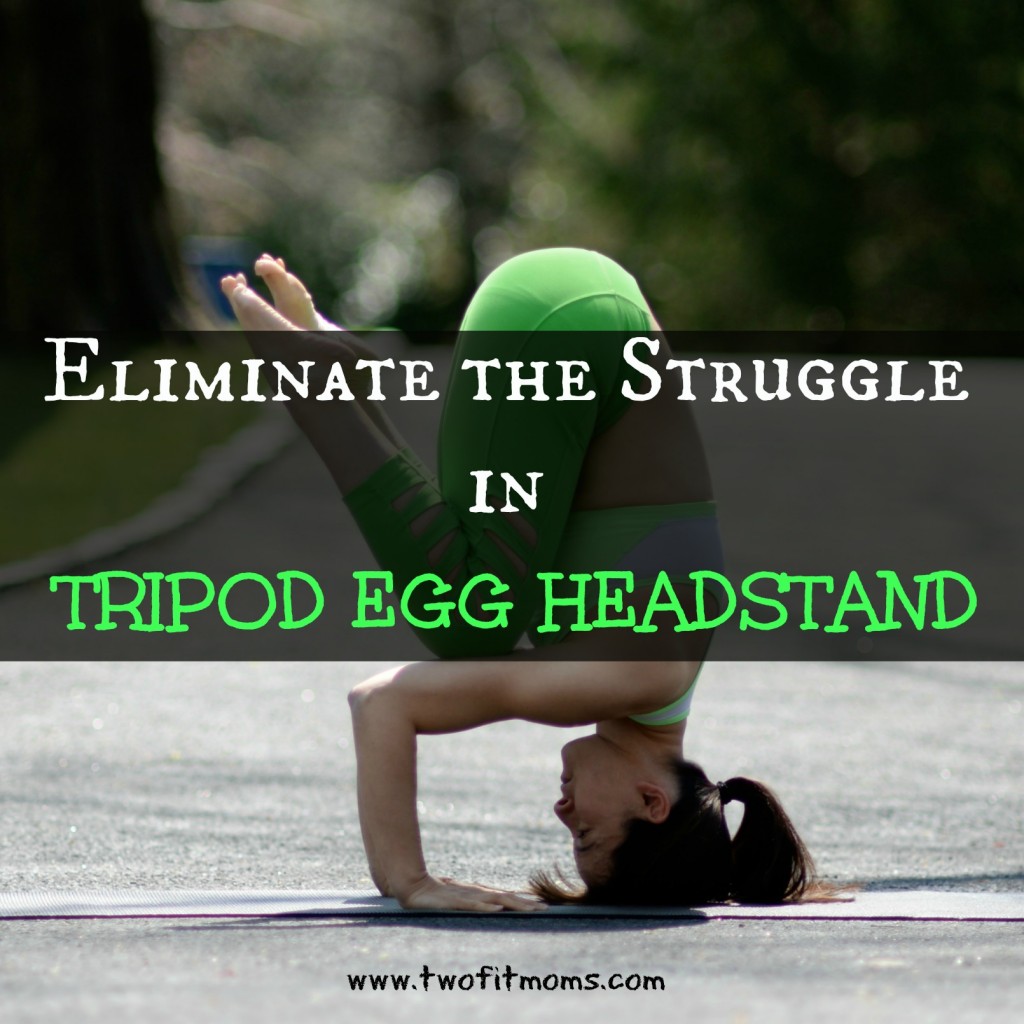
    TripodEggBannerThat’s right— the tightness (or looseness) in the backs of the legs. Does that surprise you? It might. Most people rarely make the connection between hamstrings and headstands, but the connection is real. If you are struggling to climb into a Tripod Egg, your hamstrings may be the issue.

    Let me explain.

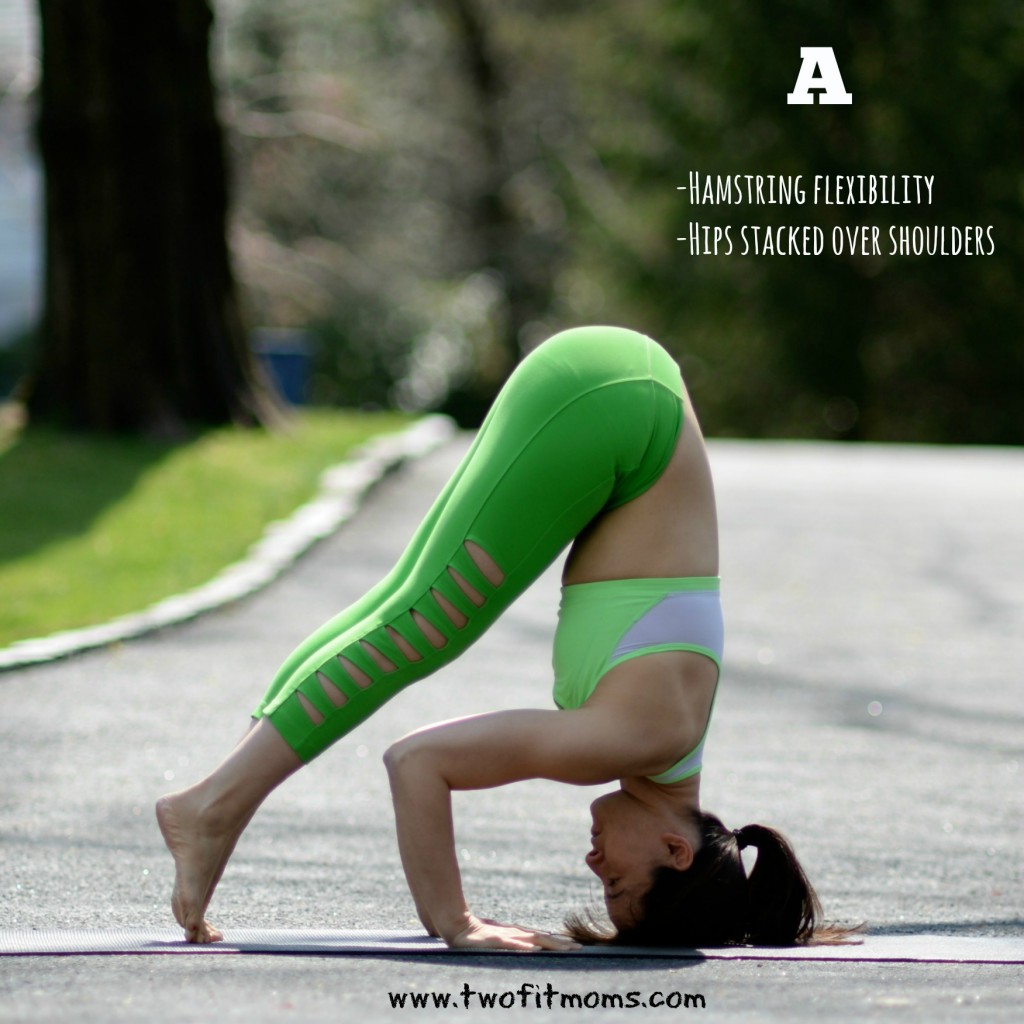
    Take a look at photo A below. No, it’s not really a headstand…I haven’t taken flight just yet, but this posture basically looks like a headstand with my feet still resting on the mat. In fact, if you only look at my arms, head and torso and use your hand to cover my legs in this photo, you’ll probably think that I am balancing in a headstand.  The reason why this image resembles a headstand is because my hips are stacked right above my shoulders. Hip stacking is what makes it possible to easily perform a Tripod Egg headstand. How does one stack the hips over the shoulders? By walking the feet toward the elbows— a task that requires hamstring flexibility. Walking the feet toward the elbows may feel effortless to someone with loose hamstrings, but it will feel very difficult to someone with limited hamstring flexibility.
    HamstringsLooseText

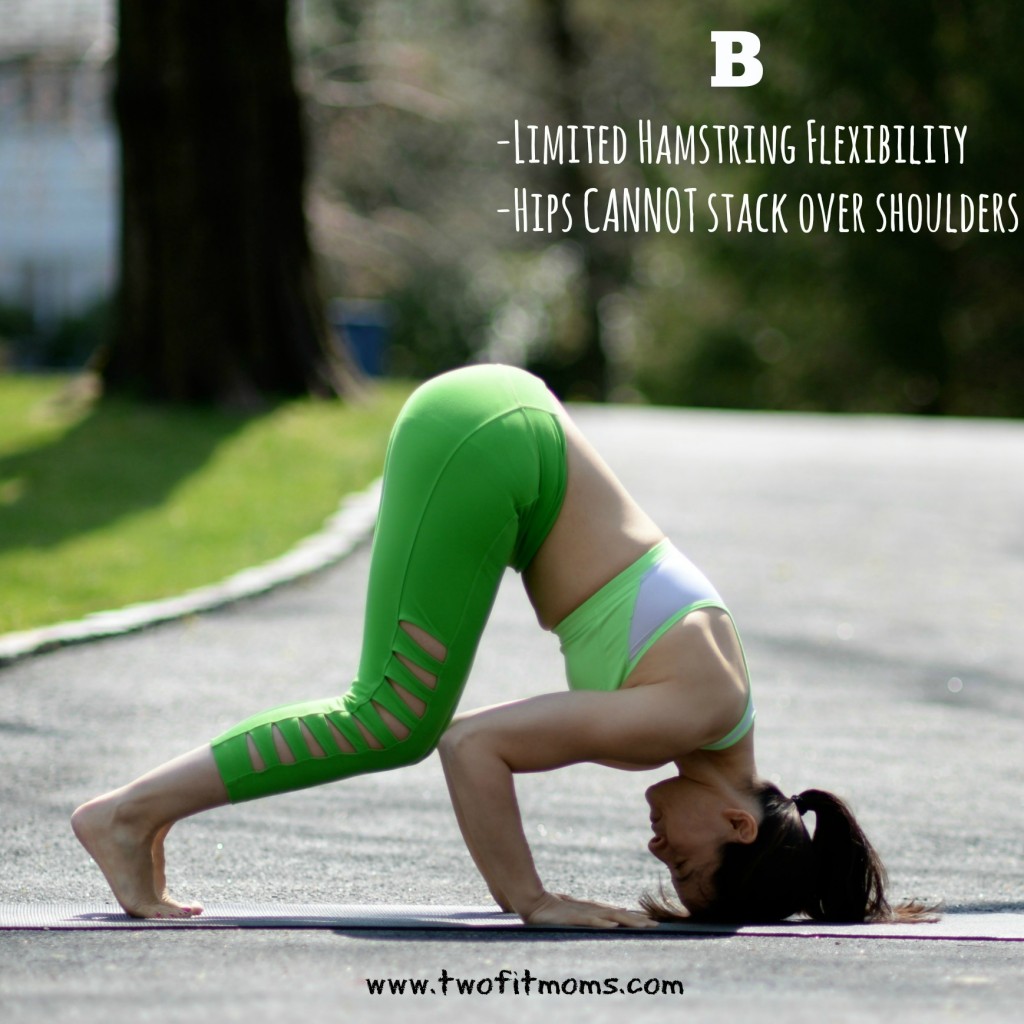
    Take a look at photo B where I simulate a case of tight hamstrings. My knees are bent, and as a result, I am unable to stack my hips over my shoulders. If you draw an imaginary vertical line through my hips, you will easily see that my hips are not even close to being aligned over my shoulders. So now we have this important realization: Without hamstring flexibility, hip stacking doesn’t happen.
    HamstringsTightText

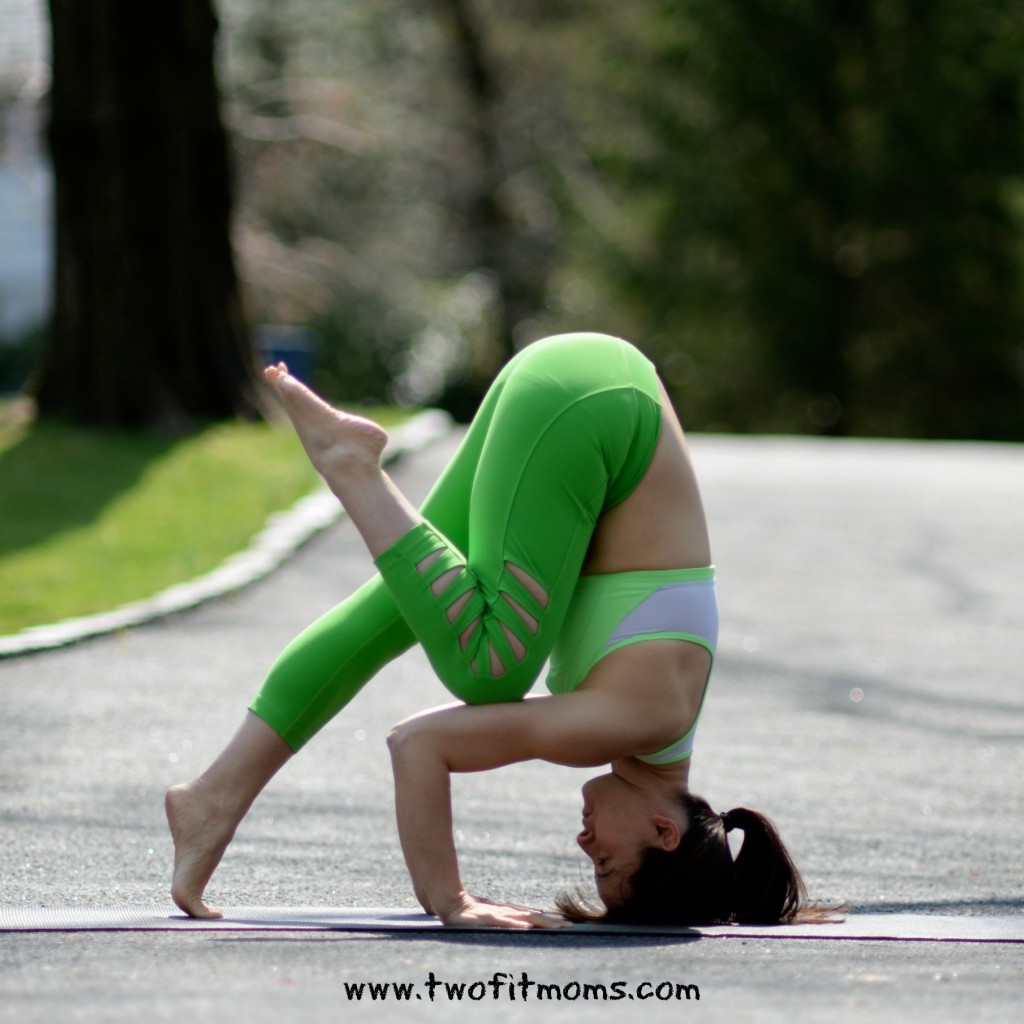
    Assuming I have plenty of flexibility in my hamstrings, I can stack my hips and easily place my right knee onto my right tricep.  Take a look at this next photo and compare it to photo A above.  Yes, I have to engage my core to lift my knee, but I don’t have to change anything else about my posture. My body is already aligned and ready to go. This posture is possible because of the hip stacking.  And in turn, the hip stacking is possible because of the hamstring flexibility. The final motion of lifting the left knee onto the left tricep doesn’t require much additional effort once the hips are stacked and the first knee is in place.
    OneLegBentTFM

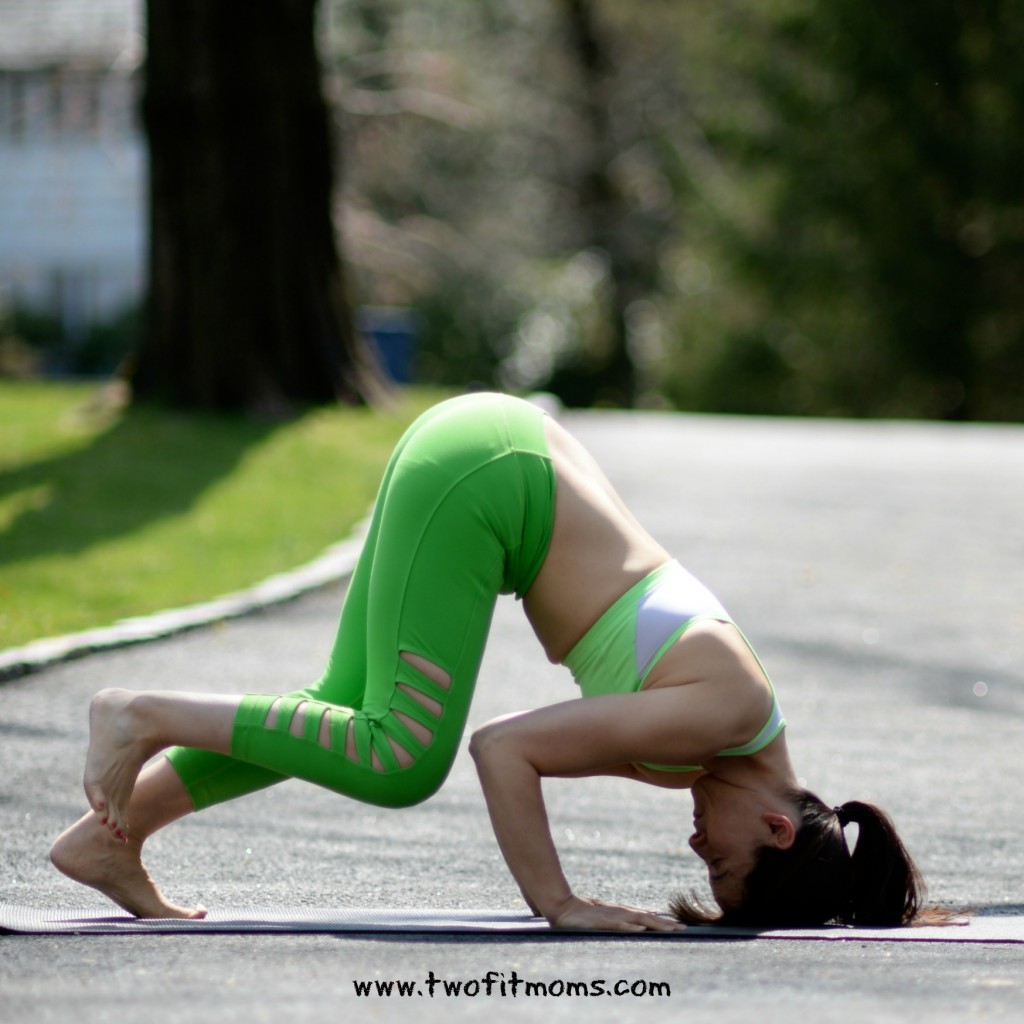
    By now, you see the importance of having loose hamstrings, but let’s go through one final illustration.  In the photo below, I am simulating a scenario where my hamstrings are tight, and I am attempting to put my knee onto my tricep.  With tight hamstrings, I cannot straighten my legs.  If I cannot straighten my legs, I cannot stack my hips.  Consequently, it’s not even possible to get my knee onto the back of my arm.  My knee is actually BELOW the level of my tricep.  Even if by some strange miracle, I could crunch my body and round my back in such a way to allow the knee to rest on the tricep, what are the chances of balancing with both knees on both triceps if the hips are not aligned over the shoulders?  Slim to none, and slim just left town.
    TightHamstringAttemptTFM

    If you are struggling with your Tripod Egg, and you don’t know why, I encourage you to set this inversion goal aside for a little while and focus on gaining more hamstring flexibility. Once you make progress, re-visit the inversion. I bet you’ll notice quite a difference!

    If you are looking for suggestions on improving your hamstring flexibility, we can help!  Please warm up with a few rounds of Sun Salutations, and practice these hamstring stretches on a daily basis. If you own a yoga strap, give this stretch a try, too.  Good luck!

     

  • 5 Healthy Things You Should Do EVERY Day

    5 Healthy Things You Should Do EVERY Day

    Creating a healthy lifestyle doesn’t have to be stressful or impossible. You don’t need to overhaul all of your habits at once and plunge into a lifestyle that you barely recognize. Spare yourself the anxiety and shock of a sudden shift in habits by incorporating changes into your life, one small step at a time. The trick is to feel successful. If you feel successful, you will continue down the path of wellness.

    Let me introduce you to our short list of wellness tips that you can incorporate into your own life in order to make health a top priority for you and your family. We have boiled it down to five simple steps that you can take every single day to start feeling better immediately.Green Background With Sunburst, Vector Illustration

    If you aren’t quite ready to tackle all five tips at once, add one each day until these habits feel effortless. As the old saying goes… “Rome wasn’t built in a day.” It’s just fine to lay one building block today and maybe another one tomorrow.

    Once you get the hang of these basic steps and have incorporated them into your daily life, you can continue to add to this list to create a daily plan that works for you.

    Make a Meal
    Ideally, you’d make all of your meals at home, but I know that life is busy. Some nights, it’s easiest to just order from a local restaurant or to meet friends for dinner. Yes, you can find healthy options and do quite well at restaurants, but at the end of the day, no one will take as much care with your food as you will. At home, you can control the amount of sodium, oil and sugar that goes into each dish. And at home, you can be sure that your produce is scrubbed and the ingredients are fresh and offer a variety of nutrients. At a restaurant, you lose all of that control, so I encourage you to commit to making a meal for yourself at least once a day. For those of you who don’t like to cook or don’t know how to cook, start out with an easy meal. Breakfast is a great place to start. If you don’t have the kitchen prowess to bake an oatmeal cake or make a vegetable frittata, blend a smoothie. A fruit smoothie mixed with greens and chia seeds (or hemp seeds or flax seeds) and maybe some almond butter is a great healthy choice for you.

    Go Outside
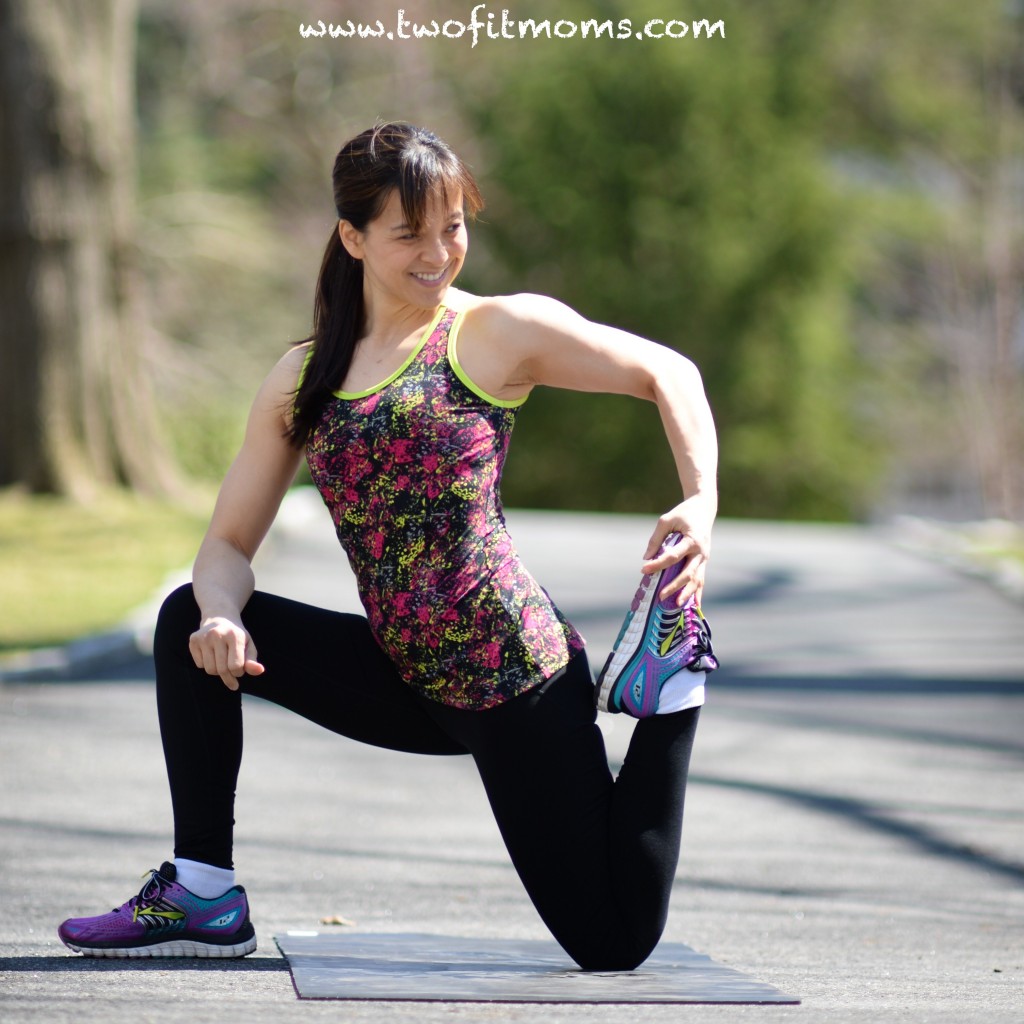
    Getting some fresh air is the quickest way to change your mood and clear your mind. It’s amazing what a little sunlight and air can do—and it’s not all in your head! Your mood really is changing, as sunlight increases the production of the mood-lifting hormone, serotonin. Whether you’re walking, doing yoga, gardening, or sipping your morning coffee/tea, make an effort to set aside 30 minutes every day to enjoy some fresh air and sunshine. GoOutside

    Unplug from Electronics
    I know that this is a tough one. Right now, I’m fully immersed in the current season of Game of Thrones, and there’s just no way that I’m giving it up. I get it. I’m not asking you to give up all of your favorite shows or asking you to cancel your phone service. I’m simply asking you to limit your time with your electronics by unplugging from it all each day. Start by being more mindful of how many precious hours you spend in front of your television, your iPad and your cellphone. Can you turn it off at a set time each evening? Can you limit yourself to an hour of television every other night? Can you pare down the list of shows that you watch? Can you limit your social media interactions to a 15 or 30-minute block of time? Decide on limits that seems reasonable to you, and enforce them. I know that when I turn off my electronics, I am more productive. I read more, cook more, sleep more, write more, and feel more connected to my own life. I bet you notice the change in your own life, too.

    Do Something for Yourself
    Make a commitment to do something for yourself each day. Let it be an activity that you love. Let it be an activity that you do purely for pleasure and not out of obligation. I happen to love exercising, but if I’m being honest with myself, there is definitely a component of obligation to my health when my alarm clock buzzes each morning. When I curl up in my bed with a favorite book, there are no strings attached. It’s pure pleasure reading. Find your own activity that brings you joy and do it each day— even if it’s for just a 15-minute block of time. This is one simple way to bring balance into your life.

    Move Your Body
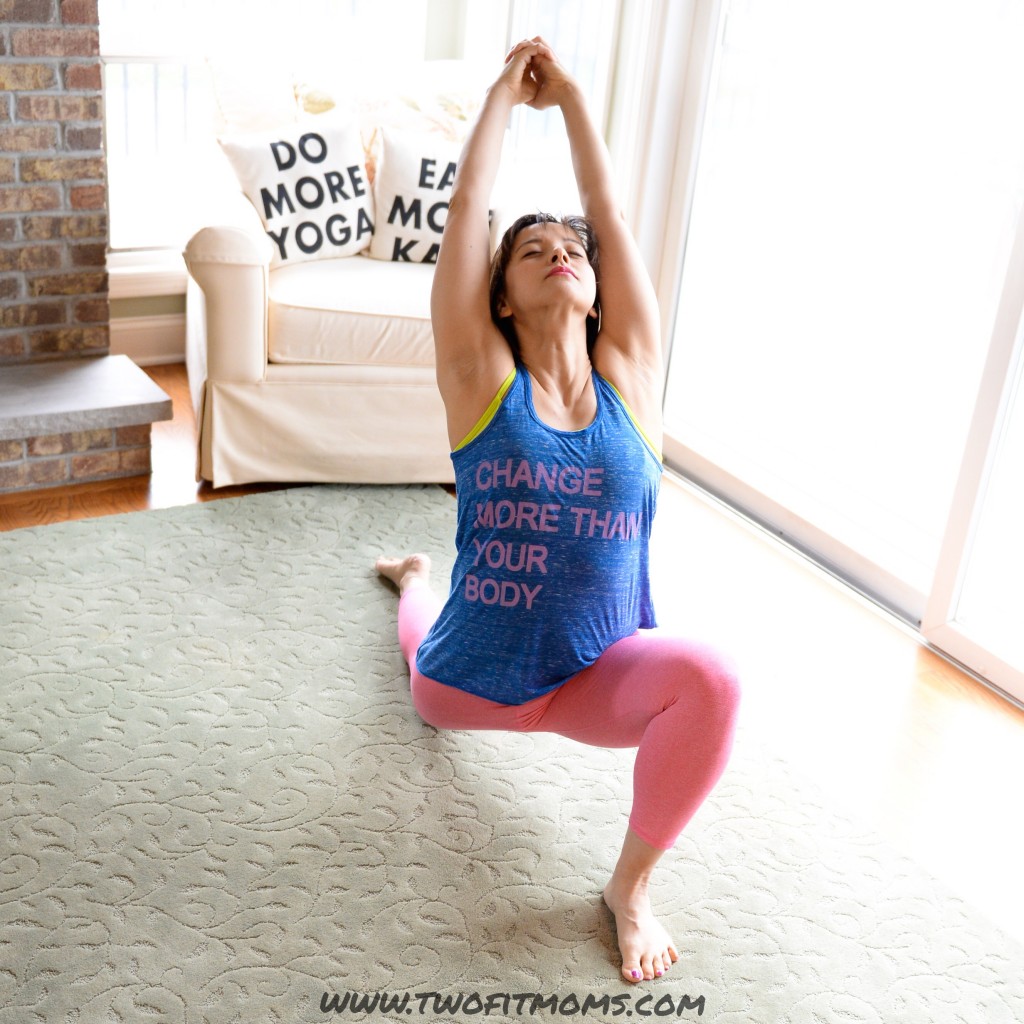
    Get into the habit of moving your body each day. If you are not already in this habit, start out small. You don’t need to start training for a marathon today if that’s not what floats your boat. You can start with a few minutes of push-ups and crunches on your bedroom floor. You can go for a walk. You can attend a yoga class or go for a bike ride. You can go to the gym or jump rope in the park. The possibilities are endless, and you don’t have to start with an overwhelming exercise regimen. Lay the foundation by building healthy habits. Once the habits are established, continue building upon them.Move

  • Pose of the Week: Upavistha Konasana

    Pose of the Week: Upavistha Konasana

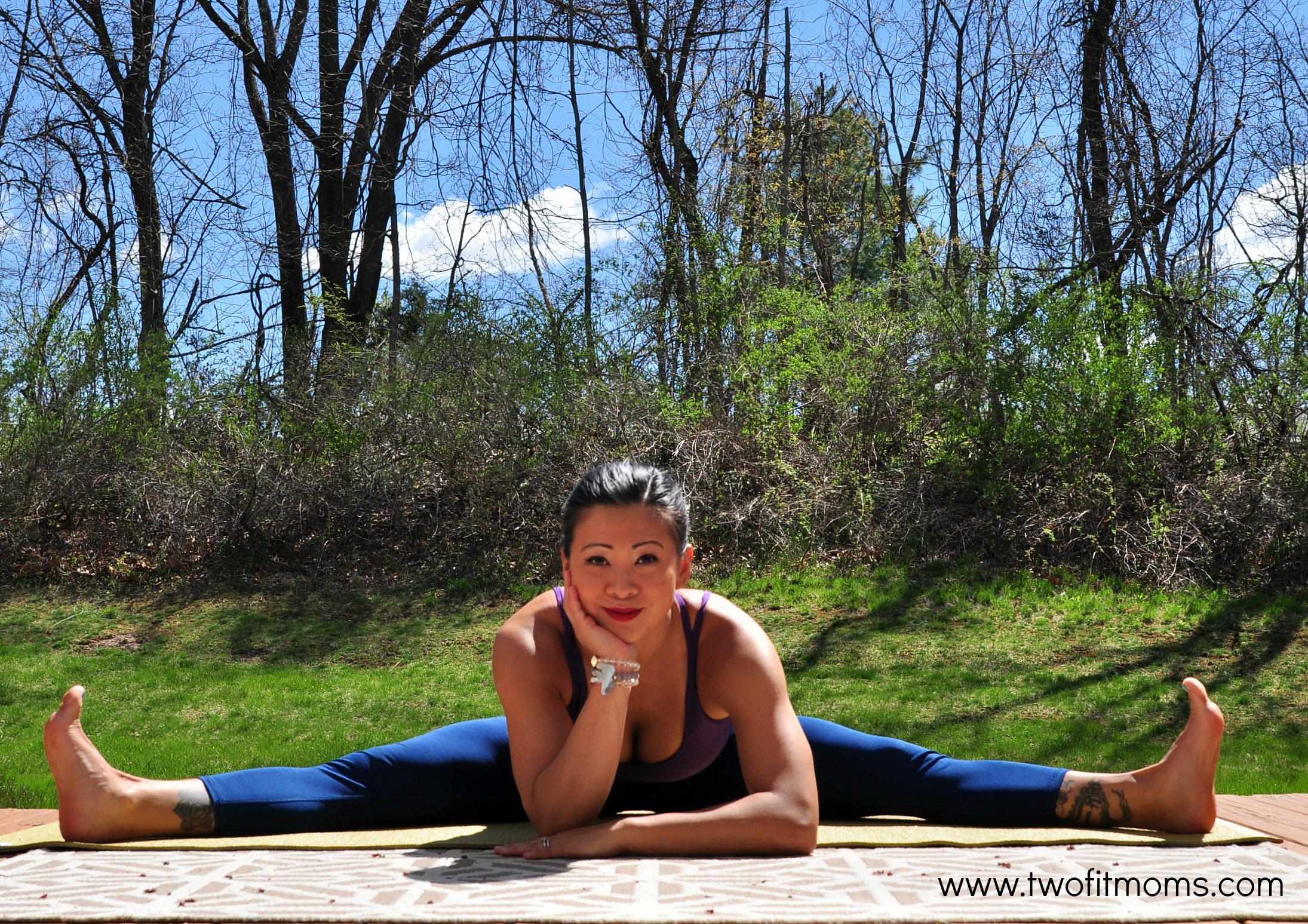
    Upavistha Konasana

    Today we are launching our Pose of the Week series, which is designed to help you focus on making small steps towards your yoga and wellness journey.  Rather than tackling a full sequence or an hour-long class, just make a commitment to yourself to practice this single pose every day this week.  You can make a difference in your health and wellness, one step at a time.

    We are starting with Upavistha Konasana or Wide-Legged Seated Forward Fold.

    Take a comfortable seat on your mat and spread your legs evenly apart. Root down through your sits bones, lengthen up through your spine and flex your feet. Find a little bit of external rotation in your thighs so that your knee caps and your toes point up towards the sky. Press down through the tops of your thighs and shin bones.

    Take a deep breath in.

    On the exhale, slowly start to walk the fingers forward and fold. Fold as deeply as you can without rounding through your spine.  You should feel sensation and stretch through the backs of both legs, but never pain. Relax into the stretch and move deeper as the intensity of the stretch lessens. Stay here for about one minute, then slowly release and shake out your legs.

  • Flying Lizard:  A Step-By-Step Tutorial

    Flying Lizard: A Step-By-Step Tutorial

    Have I mentioned lately how much I love arm balancing? Arm balances are what first attracted me to the practice of yoga. Until a few years ago, I thought yoga was just a collection of standing and seated poses. I had never seen anything quite like fallen angel or crow pose before, and when I saw these incredible postures, I was intrigued. I wasn’t quite ready for the challenge of inverting because I was so frightened of breaking my neck, but I was ready and willing to test my strength and balance while staying close to the ground in an arm balance.

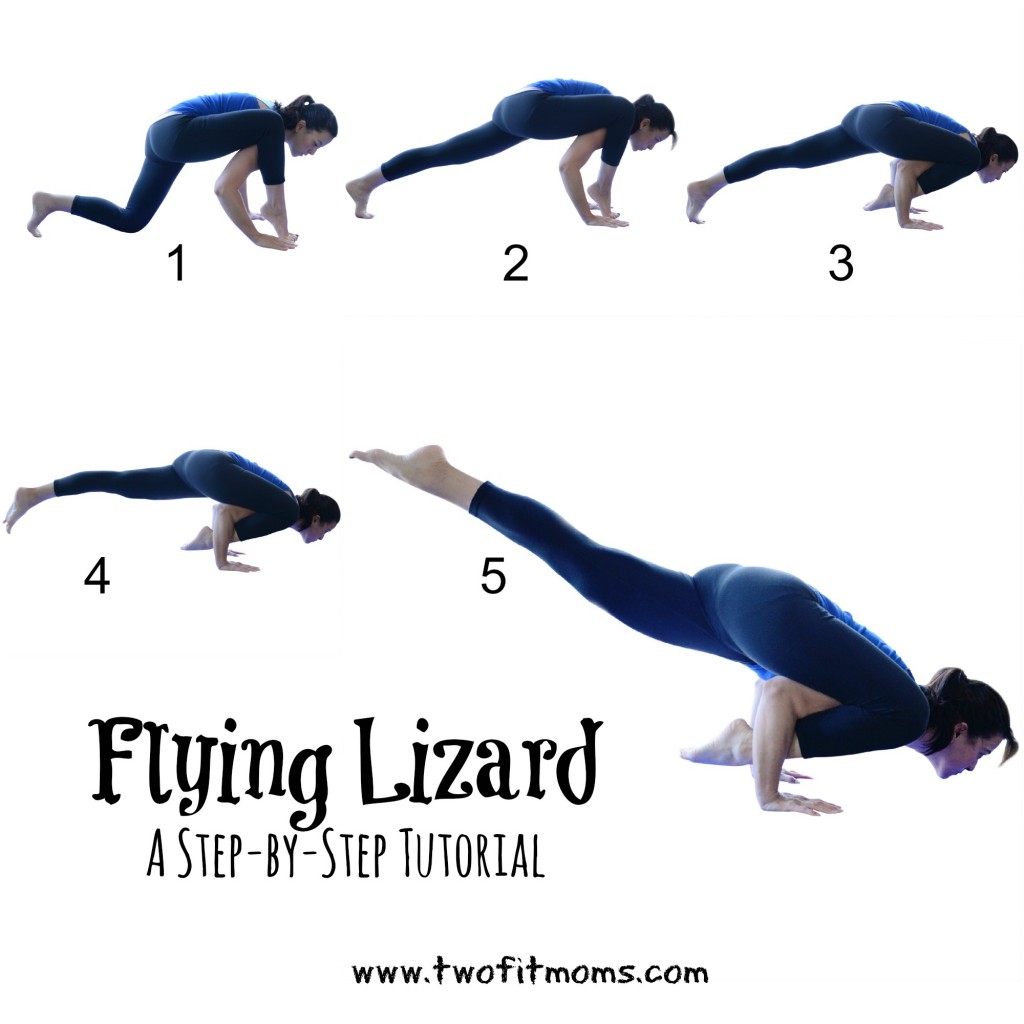
    If you are dabbling in the world of arm balances, or if you are considering getting started, let me introduce you to a pose called Flying Lizard.FlyingLizard

    You may be looking at the full expression of the pose in step 5 and thinking to yourself, “No way. Not happening.” Guess what? That’s okay! The reason why I want to introduce you to this particular arm balance is because EVERY step along the way is beneficial—even if you never fly your lizard.

    Step 1 on its own is a hip opener that is worth practicing. Step 2 intensifies the stretch. Step 3 provides the stability of 3 points of contact with the floor while adding an element of difficulty (lifting the front foot from the ground). Step 4 gives you the practice of arm balancing, and step 5 offers the challenge of flying the back leg high into the air.

    Give this entire tutorial a try, or feel free to just practice the steps that feel comfortable to you at your current level of fitness/flexibility. If you would like some additional hip stretches, click HERE.

    Step 1
    Come onto your hands and knees for Tabletop position. Your shoulders will stack directly above your wrists, and your hips will stack above your knees. Step your right foot to the outside of your right hand. Lift onto the ball of your right foot, and make an effort to wiggle your right shoulder underneath your right knee.

    Step 2
    Lift your back knee from the ground.

    Step 3
    Engage your core, shift weight into your hands, and lift your right foot from the ground, drawing it into your body.

    Steps 4 & 5
    Gaze forward, not straight down. Continue to shift weight forward into your hands as you lift your back foot from the ground. As you gain strength and find your balance, practice extending your back foot toward the sky. Remember to energize the lifted leg by engaging all of your muscles and even your feet!

  • The Power of Positive Affirmations

    The Power of Positive Affirmations

    “Start training like an athlete. Start eating like an athlete. Start sleeping like an athlete.”

    One of my favorite fitness trainers gives this simple, yet very inspiring advice on an exercise DVD that I own. I can hear these words in my head, long after I’ve finished my workout.

    At the heart of this message is the idea that if you play the part, you will ultimately become the part. Maybe you’re not an athlete today, but by adopting the lifestyle of an athlete, you slowly but surely become one.Differently sized and colored pebbles, stacked

    Positive affirmations work in the same way. By repeating a motivational phrase and speaking positively, you can transform your habits and attitude over time.

    Just as the fitness trainer encourages her viewers to start living the life of an athlete, a positive affirmations practice can help you speak your dreams into existence. You can create the reality that you desire. By repeating positive affirmations each day, you effectively drown out the internal voices that say you’re too sick, too old, too injured, too heavy, too fill-in-the-blank. Your words have incredible power, so use that power wisely.

    Affirmations and Yoga
    If you would like to incorporate positive affirmations into your yoga practice, I recommend stating an affirmation (out loud or in your mind) every time you do a repetitive action.

    For example, you can state an affirmation every time you complete a round of sun salutations. Or you can state an affirmation every time you find yourself in downward facing dog or in mountain pose. Repetition is key. In order for the affirmation to be engrained into the subconscious mind, you must hear it often to truly internalize it.

    Here are two basic guidelines to follow when creating your own affirmations: First, keep your affirmation brief so that it’s easy to say and repeat. Here are a few that come to mind: I am strong. I am healthy. I am loved. I am successful. I am enough.

    Second, state your affirmation as if it is already true. Speak in the present tense rather than in the future tense. Rather than saying, “I will lose weight and get healthy,” say “I radiate health and wellness.” And rather than saying “I will find a better job and make more money,” say “I attract wealth and opportunity.”

    Feel free to create your own affirmations that speak to your spirit, and let us know how you do when you incorporate these positive statements into a yoga practice.  You WILL get over the discomfort of speaking positively about yourself.  I know it’s uncomfortable at first, but watch your life transform as you make the mind-body connection.


  • The Key to Managing Acute Stress

    The Key to Managing Acute Stress

    These days, most articles that I run across on the topic of stress tend to be about chronic stress— the day-to-day stress of jobs, finances and family dysfunction that chip away at our well-being, year after year. This is the insidious form of stress that we all try to manage with yoga and meditation in the hope that we can gain control over it and avoid all sorts of medical issues down the road (heart attack, stroke, ulcer, etc.) Controlling chronic stress is one of my on-going goals, and I use various techniques, such as journaling, prayer, and meditation to help each day.ManagingStress

    With all of this stress management on my mind, you’d think that I would be mindful of acute stress as well as chronic stress, but I actually rarely think about the acute variety. I lump all forms of stress into one bucket, and that’s not really a fair way to think about it.

    Acute stress is short-term stress that fires up in response to an event. The event might be a near collision on the highway. Or maybe something more primitive— like being chased by an animal. In either scenario, your stress hormones are in high gear. Your adrenal glands release adrenaline and norepinephrine, your heart races in your chest, and your body feels hyper-alert and energized.

    I thought about acute stress today as I was on a conference call for work. As I tried to speak naturally and (hopefully) intelligently, I worried that I was rambling and not communicating effectively. I suddenly realized that I was sweating and my heart was pounding in my throat as I was asked a series of interview questions. I was exhibiting the symptoms of an acute stress response!

    I wasn’t running from an animal or avoiding a near-death experience, but I was pumped up with stress hormones as if my life were in danger. Although the physical sensations of acute stress are uncomfortable, this type of stress response (in small doses) is actually good! We want our impulses to quicken and our awareness of our surroundings to intensify when we are in a challenging situation. What we DON’T want is uncontrollable energy and fear that cannot be used to our advantage. The good news is that we can effectively manage our acute stress to work for us rather than against us.

    Being able to channel the rush of adrenaline into a controlled stream of positive energy is the trick to being able to thrive under short-term stress. And you can do it!

    I know this isn’t going to come as a huge surprise, being that this is a yoga website and all…but the trick to managing and channeling this stress is to control the breath.

    You can turn an intense, harried situation into a calm, collected experience by slowing your rate of breathing. You will continue to benefit from the added burst of energy provided by the stress hormones flowing through your body, but you will be in full control. Your voice will not waver, and your actions will exude confidence.

    You obviously cannot shut down in the middle of your stressful episode to meditate or start flowing on your yoga mat. Instead, you will practice these two breathing techniques and re-gain control of the situation. You may find that one technique is easier than the other. Try them both for a couple of minutes each and see what works for you.

    Slow-Deep Breathing
    Inhale deeply through the nose for a count of six until the lungs are full, and then exhale through the nose for a count of six until the lungs are empty. In your head, count like this: Inhale-two-three-four-five-six; Exhale-two-three-four-five-six. Keep the count in your head for a couple of rounds until the rhythm of the slow breathing exercise feels natural.

    Square Breathing
    Inhale through the nose for a count of four; Hold your breath (with lungs full of air) for a count of four; Exhale for a count of four; Hold your breath (with lungs empty) for a count of four. Practice this breathing technique by maintaining this count in your head: Inhale-two-three-four; Hold-two-three-four; Exhale-two-three-four; Hold-two-three-four.


  • Springtime Flow

    Springtime Flow

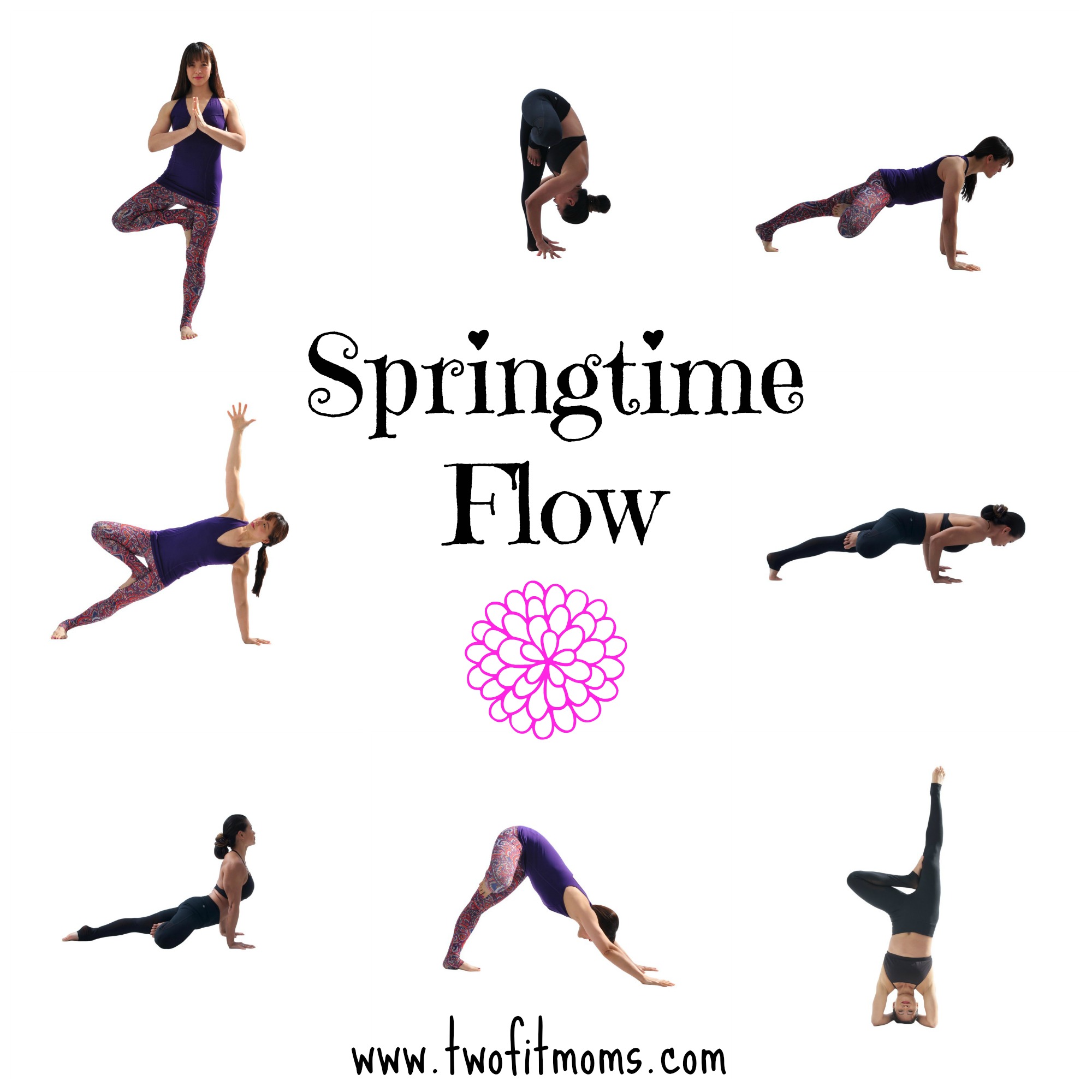
    Spring is a season characterized by rebirth, renewal and growth.springtimeflowforig Many of us are looking forward to longer, lighter evenings and the uplifting energy of Spring. To celebrate the season (and to help you out of bed before the sun has risen), we are putting a fresh spin on a traditional sequence. Each pose within the sequence becomes a hybrid — and a hip opener — by keeping the legs in tree pose. Challenge your balance and flexibility by practicing this variation of Sun Salutation that pays homage to blooming trees and fresh routine. Remember to practice the sequence on both sides of your body, and breathe deeply through each pose.

    1. Tree Pose

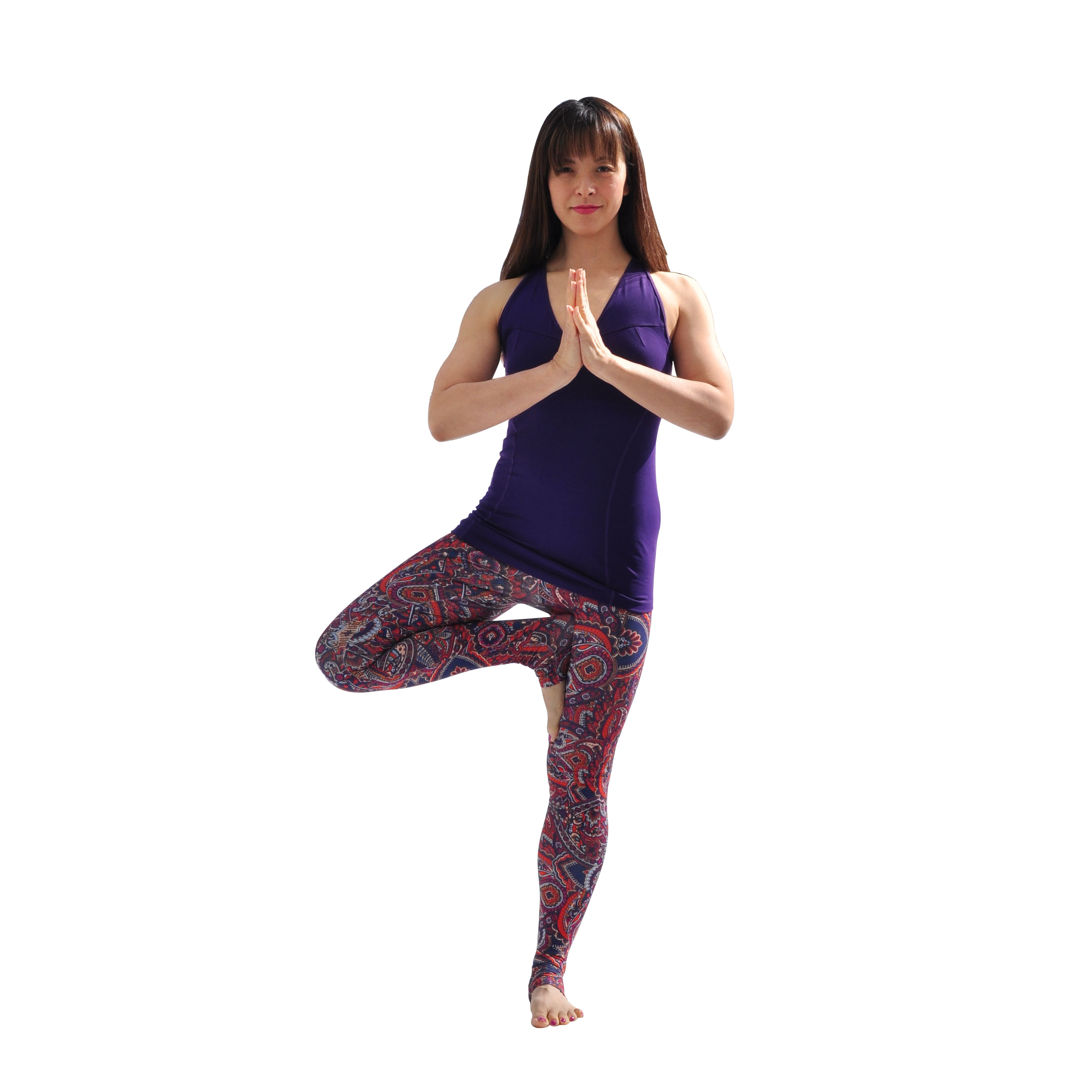
    Start in Mountain Pose at the back of your mat. Toes are spread, spine is lengthening towards the ground. Slowly shift your weight into your left foot and pick up your right foot. With the help of your right hand, place the sole of the right foot onto the inner left thigh. Find stability in this pose by pressing your right foot firmly into your left thigh, and your left thigh firmly into the sole of your right foot. Keep your right knee pressing out. Bring your hands together at heart center. Take 5 deep breaths, then on your next inhale sweep your hands up towards the sky.

    Tree Pose


    2. Standing Forward Fold with Tree Legs

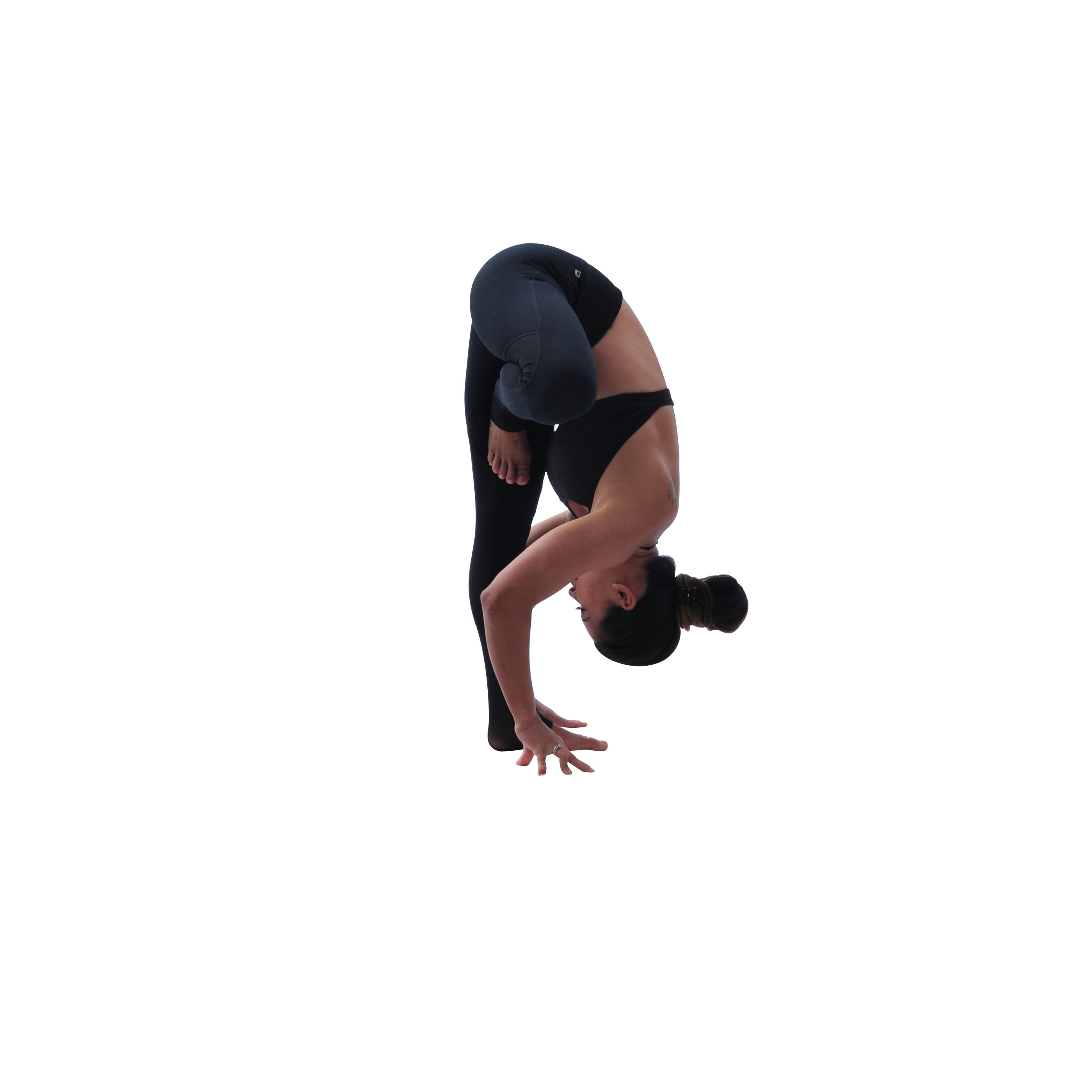
    On an exhale, swan dive down into this Standing Forward Fold variation. Continue to keep your right knee open to the side. Feel the hamstring stretch along the back of your left leg and the stretch in your right hip. Stay here for 3-5 breaths.

    Standing Forward Fold

    3. High Plank Pose with Tree Legs

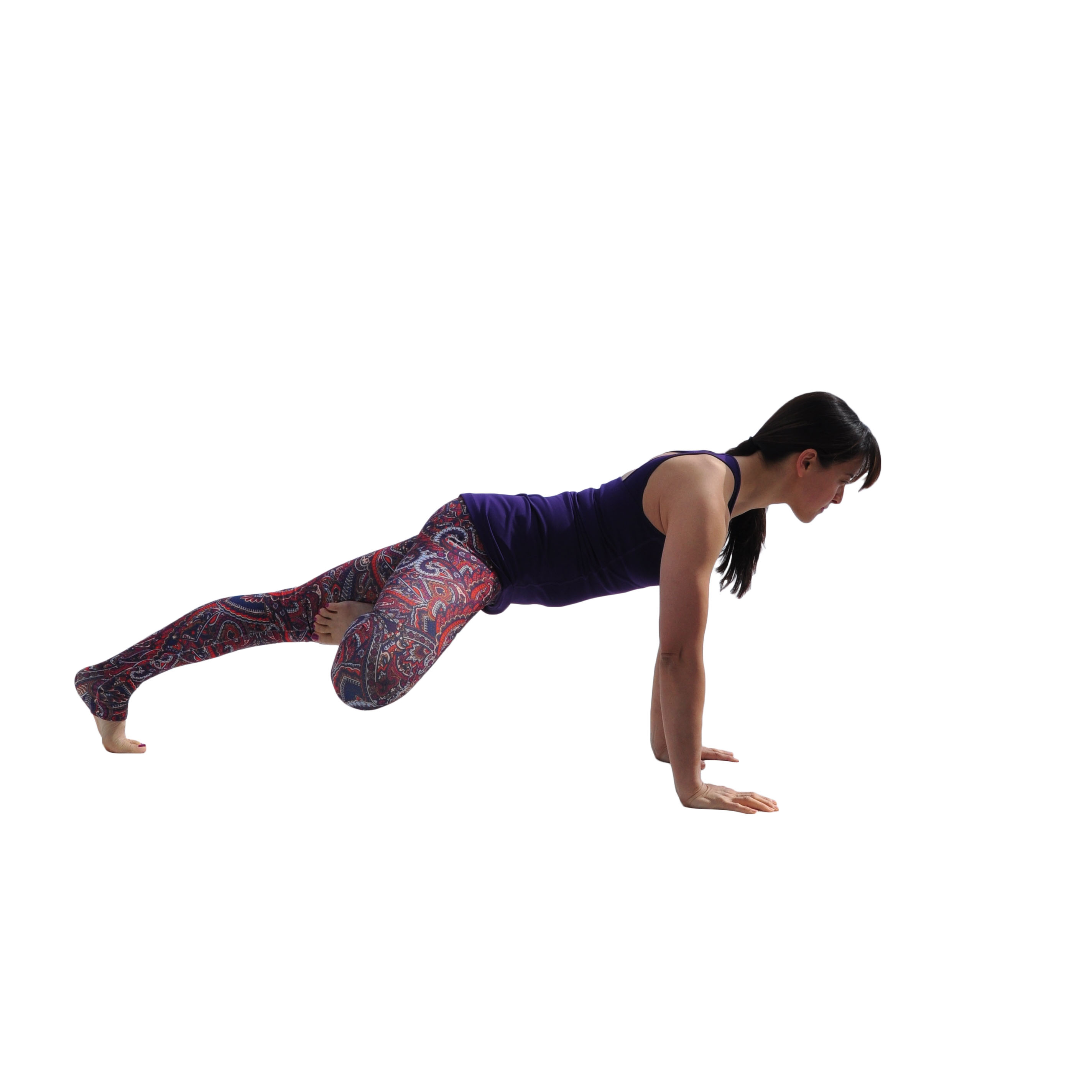
    Rather than stepping or jumping back into Plank Pose, as you would in a traditional Sun Salutation, on an exhale, slowly walk yourself out into Plank Pose with Tree Legs.  Continue pressing your right foot firmly into your left thigh, and try to make a straight line with your body from head to heel. Stay here for 3-5 breaths.

    YJMarch3

    4. Side Plank Pose with Tree Legs

    Before moving into your Chaturanga Dandasana, which is usually the next pose in the Sun Salutation, take a short detour into Side Plank Pose with Tree Legs. On an inhale, shift your weight onto your left hand, roll onto the outer edge of the left foot and pop up onto your right fingertips. Find your balance here. On the exhale, slowly extend your right hand up towards the sky. Keep your hips lifting as you continue to root down through your left hand. Look up at your right hand for an added challenge.  Stay here for 3-5 breaths and return into your High Plank Pose with Tree Legs.

    YJMarch4


    5. Low Plank Pose with Tree Legs

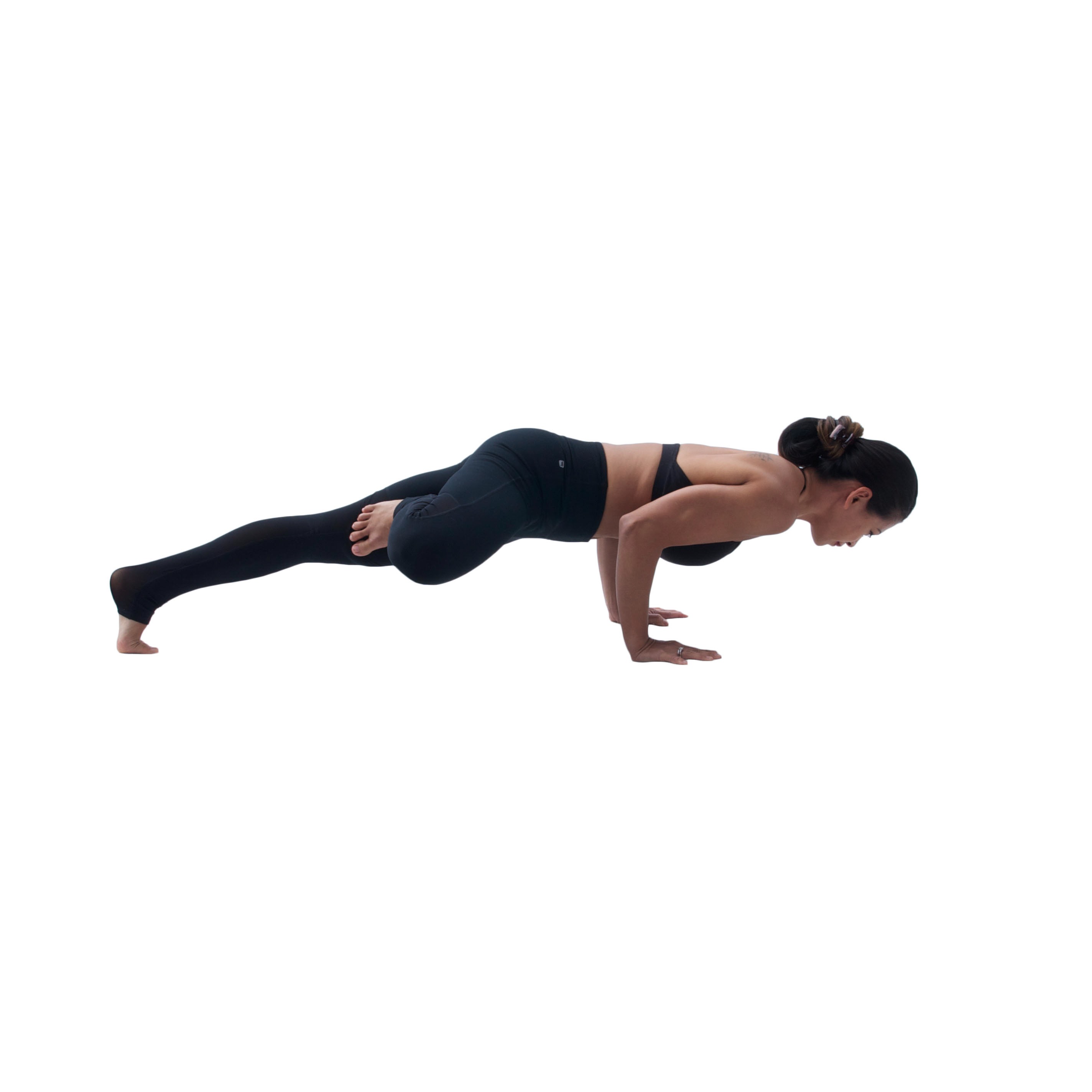
    From High Plank Pose, slowly shift slightly forward. On an exhale, bend your elbows coming into Low Plank Pose (or Chaturanga Dandasana) with Tree Legs. Hug your elbows in and engage your core to maintain stability.

    YJMarch5

    6. Upward Facing Dog with Tree Legs

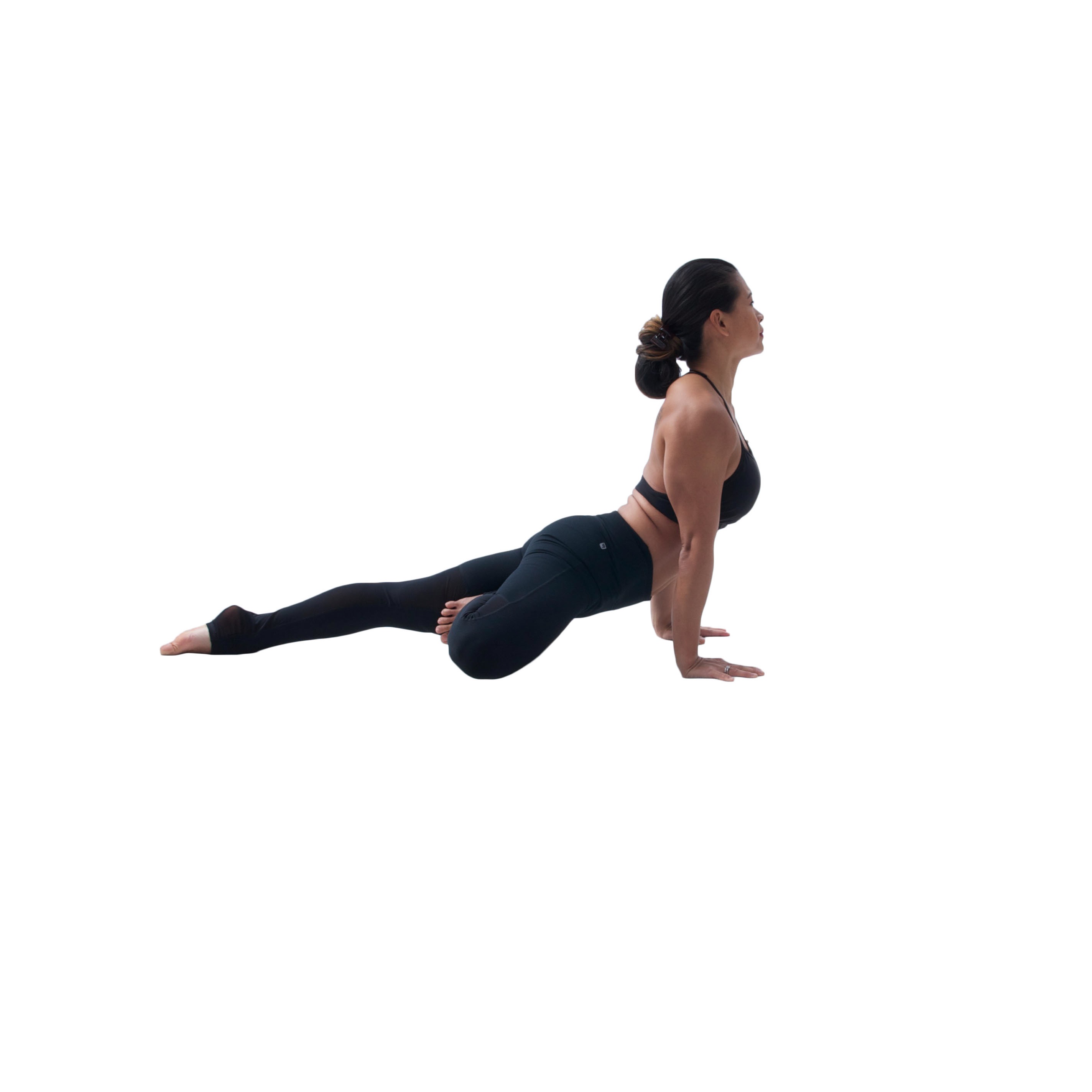
    On an inhale, roll over the left toes and come into Upward Facing Dog with Tree Legs. Feel free to modify by taking the Cobra Pose variation with hips on the ground. Press into your hands, lift your heart and relax your shoulders. Take 3-5 breaths.

    YJMarch6

    7. Downward Facing Dog with Tree Legs

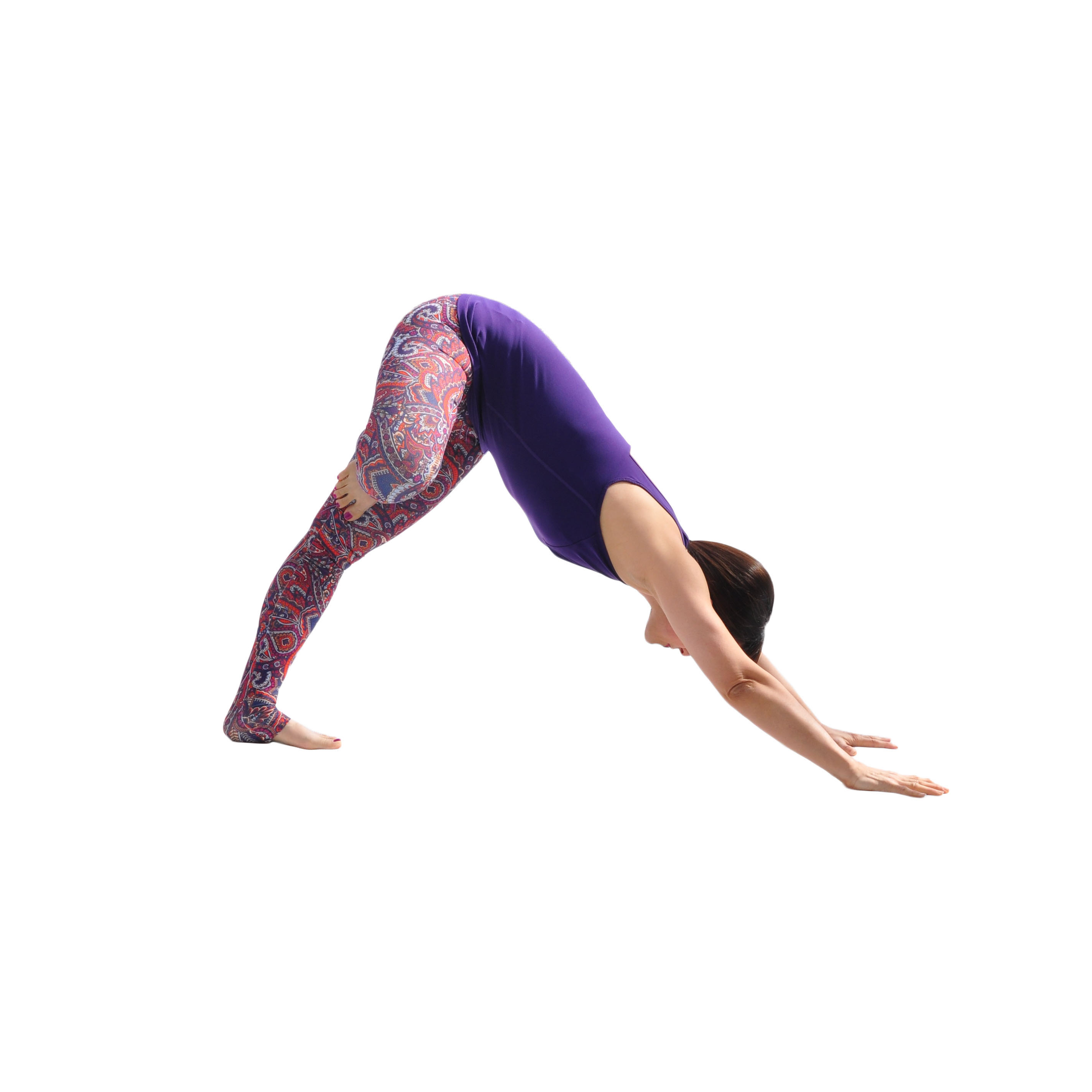
    On an exhale, roll back over your left toes and come into your Downward Facing Dog with Tree Legs. Spread your fingers wide, relax your shoulders and engage your belly. Stay here and hold for 5 deep breaths. Complete your Sun Salutation by walking your hands back to your left foot and then slowly lifting back up into Tree Pose! Release the right foot, shake it out and repeat on the other side.

    YJMarch7

    8. Optional: Supported Headstand with Tree Legs

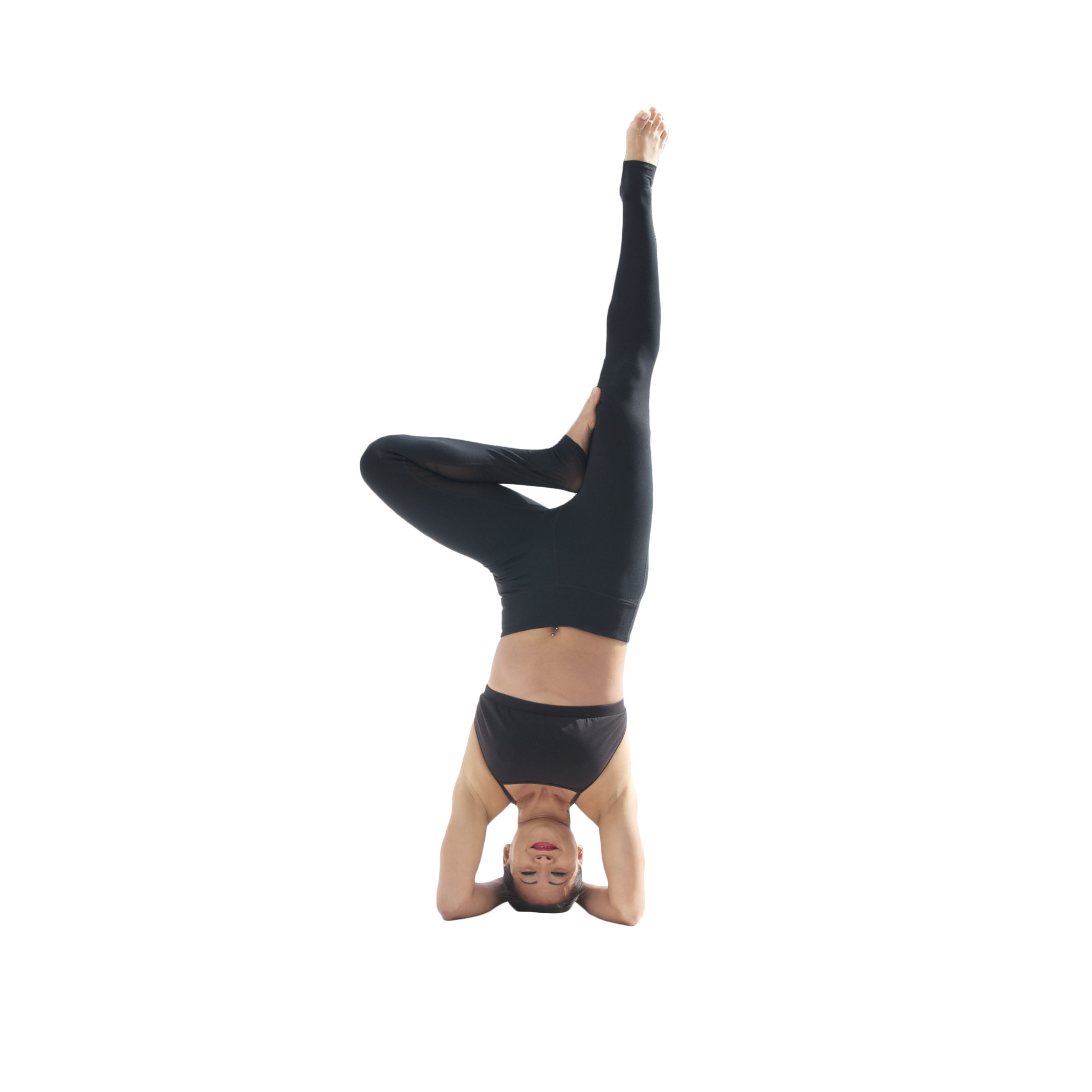
    For an added challenge, feel free to add an inversion at the end of your Sun Salutation practice. Keep your elbows hugging in, neck long, belly engaged and legs energized! To maintain our tree theme, slowly bend on knee and bring the sole of the foot to the inside of the other thigh, then switch! Remember to continue breathing. Take a well deserved Child’s Pose after you come down.

    YJMarch8

  • Recipe on the Go:  Overnight Chia-Oat Pudding

    Recipe on the Go: Overnight Chia-Oat Pudding

    Are you ready for another recipe from our “Recipe on the Go” series? The idea behind this collection of recipes is to provide you with quick meal ideas when you have no time to spare. We know what it’s like to always be on the go, and we want to help you with tips and suggestions for maintaining proper nutrition even when life gets unusually hectic. A quick recipe at home is still better than most options you will find at chain restaurants and local delis.

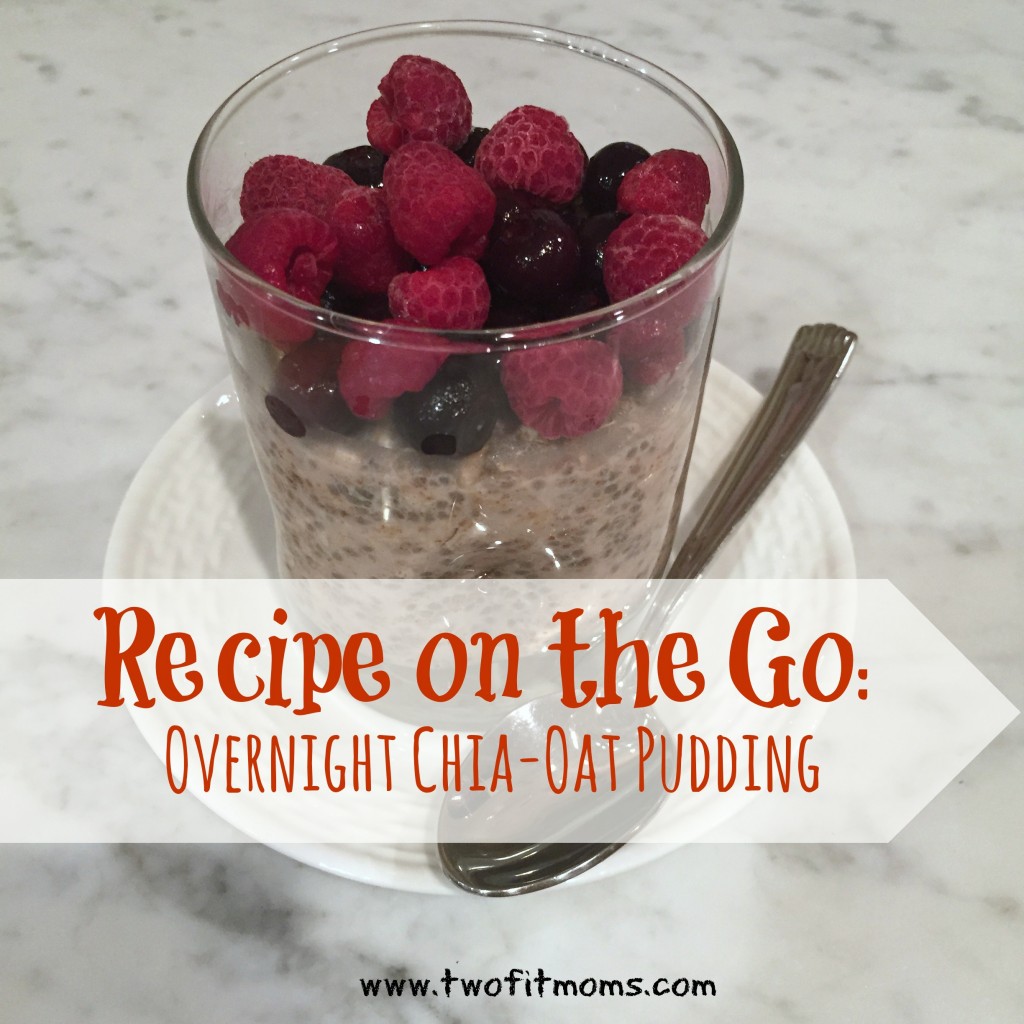
    This time, we are bringing you a make-ahead breakfast (or snack!)— a delicious overnight chia-oat pudding that sits in the refrigerator all night and is ready to eat in the morning.OatChiaPudding

    If you like to eat breakfast at the office, mix all of the ingredients into a mason jar or some other type of portable container so you can grab and go without any hassle.

    I love this overnight pudding because it’s satisfying without being sweet. You’ll notice that I include an optional ingredient (maple syrup) to sweeten the mixture, but I actually do not use the sweetener at all. Perhaps you will not need the sweetener either — it all depends upon your palate. Feel free to top your pudding with some fresh or frozen berries to add texture and additional flavor and nutrients.

    Ingredients
    (One Serving)

    ½ cup rolled oats
    2 tablespoons chia seeds
    1 tablespoon almond butter
    ¼ teaspoon ground cinnamon
    ¾ cup milk (I use cashew milk)
    1 teaspoon maple syrup (or more, to taste)

    Mix all ingredients in a jar, portable container or drinking glass. Place in the refrigerator overnight. Serve as is or with berries/fruit.

    Helpful hint: If you prefer a sweeter pudding, consider using a sweetened almond or coconut milk — or drizzle honey on top. For added texture consider adding nuts.  The possibilities are endless!

  • Taking Care of You

    Taking Care of You

    Recently, I had the opportunity to work with a life coach. It’s an interesting concept. Most people have probably never considered the idea of getting a life coach, but in theory, I guess it makes a reasonable amount of sense. All elite athletes have a coach to help them train. A coach can see things in you that you are unable to see in yourself and therefore, they are able to direct you toward the best path for success.

    Unlike a therapy session or a counseling session, which delves into your past to understand the present, life coaching analyzes the present in order to help bring positive change to your future.TakingCare

    At the end of my coaching session, I felt like I had been shown my own reflection, and that reflection wasn’t muddled or distorted. It was a perfect mirror, and I was able to see my own life with a level of clarity that I hadn’t seen prior to the session.

    I didn’t receive bucket loads of advice from this coach. In fact, I think good coaches rarely tell you what to do— they illuminate the way so that YOU know exactly what to do and can make those important decisions yourself. This particular coach did happen to give me a piece of advice, and I’m so happy that she did. It’s such a great piece of advice that I’m going to pass it on to you. It sounds obvious, but it’s not as simple as it sounds. Are you ready? Here goes:

    Do something for yourself every single day.

    Did you get that? You probably think you do, and maybe you do. I thought I got it, but I didn’t.

    I said to the coach, “I always do things for myself! I wake up at the crack of dawn each day and exercise, just for ME! I stay up late preparing healthy meals for the next day. That’s also for ME! I practice yoga to balance all of my strength training and to stay limber. And I even meditate every night! Trust me, I’m doing lots of things for myself.  I’ve got this concept down pat.”

    The coach listened. We then discussed each of the items that I rattled off my list. After talking for quite a while, I came to understand that everything that I did each day for myself was out of obligation, not pleasure. The coach’s intention behind her suggestion to do something for myself every single day was based on pure pleasure.

    Yes, I happen to enjoy my daily wellness habits, but I’m not doing any of those items for pleasure. I exercise, meditate, stretch and cook for hours to maintain good health and to avoid painful flare-ups. I do them religiously because I value my health and partly because I fear the pain and immobility that accompanies an autoimmune flare-up.

    So now…. Time to re-evaluate. Do I do something for myself every single day? Purely for pleasure? Probably not. I am ready to make this change. Are you? It doesn’t have to be an hour-long activity. It can even be 15 minutes. What do you love? Maybe it’s a cup of tea at a favorite café. Maybe it’s a bath at night. Maybe it’s a bike ride or a half hour with a magazine or good novel. Whatever it is, let it be something with no strings attached. No guilt attached.

    Do it for your well-being. Do it as a daily ritual to honor yourself.

    Please share what you plan on doing each day in the comments section below!

  • My Favorite Meditation App:  Alleviate Stress in Ten Minutes

    My Favorite Meditation App: Alleviate Stress in Ten Minutes

    Yesterday was quite a day. Stressful and intense are two words that come to mind when I think about it. I admitted my daughter to the hospital for an overnight treatment to help fight a nasty virus in her newly transplanted kidney.

    As I packed my bag for the trip, I assured myself that everything would be fine, and my daughter wouldn’t be too upset about this hospitalization.

    We’ve done this before, I thought. I am fine with going back to the hospital. We know so many of the nurses and can navigate that children’s hospital like pros. It’s just a one-night stay. We’ve had to stay for weeks in the past. One night is nothing. She won’t mind. We will make it as enjoyable as possible. We will play Candy Crush and watch a movie together and make the best of a crappy situation.Yoga girl in lotus position ,abstract frame

    Well, I must have been in denial. My daughter was horrified to learn that we would have to stay overnight. The last time she was admitted to the hospital, she endured weeks of painful, extensive treatments and tests. Coming back to the same hospital and being re-admitted must have triggered terrible memories. It was tough for me to see her so upset.

    I was in for a huge shock when it dawned on me that this hospitalization was hard for me, too. I really thought it would be fairly easy to handle, but I found it to be sweat inducing, nerve wracking, frustrating and downright difficult. It was nearly 11 pm when the treatment finally began, and I was completely spent. We hadn’t yet started the movie that we planned to watch, we hadn’t gone to the gift shop to buy bags of popcorn, and we hadn’t done anything that we had intended to do to make the hospital stay a bit easier. I was sprawled on the rollaway cot in the hospital room, and I didn’t even have the energy to walk to the bathroom. Every inch of my body was exhausted, and my brain felt like it stopped functioning. I’m not sure why it suddenly crossed my mind to meditate right then and there, but that’s exactly what I did. I didn’t have the energy to sit up. I didn’t even have the energy to clear my mind on my own.

    But I did find the energy to pull my iphone out of my pocket and open the Headspace app. I listened to a free 10-minute guided meditation, and when it was over, I opened my eyes, and I was completely rejuvenated. I felt like I had slept for hours. I’ve NEVER experienced anything like that before. I’ve heard that meditation is quite powerful and can have a restful effect on the body, but I have never personally experienced such rejuvenation after 10 minutes of anything!

    I guess there’s a first time for everything, and I’m thankful that this particular first time happened to occur during this stressful experience at the hospital. It probably helped that this wasn’t my first time meditating, and it probably also helped that I had a daily meditation practice— but I’ve only been meditating on a regular basis for about two and half months. If I can create a successful meditation experience that is both restful and rejuvenating with just a couple of months of practice, I know you can, too. If you are interested in creating a regular meditation practice, begin by reading some of my tips for getting started. Then, go ahead and download the Headspace app. Give the 10-day program a try. It’s not overwhelming, and I know you have 10 minutes to spare.

    Please note that I do not work for Headspace, I am not paid by Headspace. I do not benefit in any way by telling you about this Headspace app. This is just part of my personal journey, and I want to share whatever happens to be working for me.

    Here’s a quick summary of what I’ve discovered so far (which isn’t a lot because I’ve only recently started using it):

    Headspace is an app that offers you the basics of meditation in a free 10-day program called Take10. Each day, you listen to a 10-minute guided meditation. It’s simple. You put your headphones on and tune into the instructor’s voice for ten minutes. You don’t have to think about setting a timer or finding background music or wondering if you can tune into your breath. The instructor tells you exactly what to do, and that’s what makes it so easy. It takes all of the thinking out of the process, which is exactly what you need as a beginner.

    If you give the app a try, please leave a comment and let me know! Share your journey with us!