Category: Inversion

  • Funky Pincha Mayurasana

    Funky Pincha Mayurasana

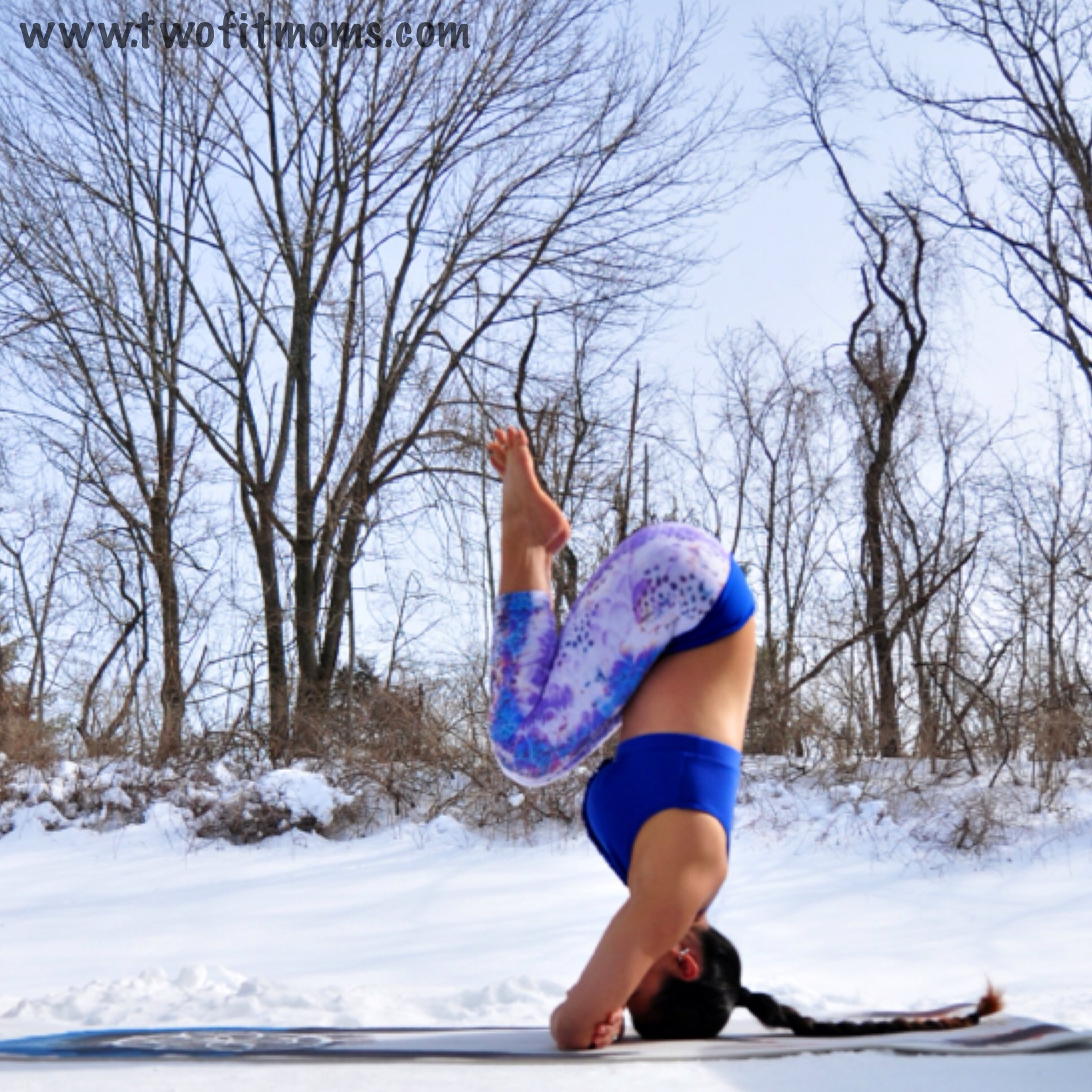
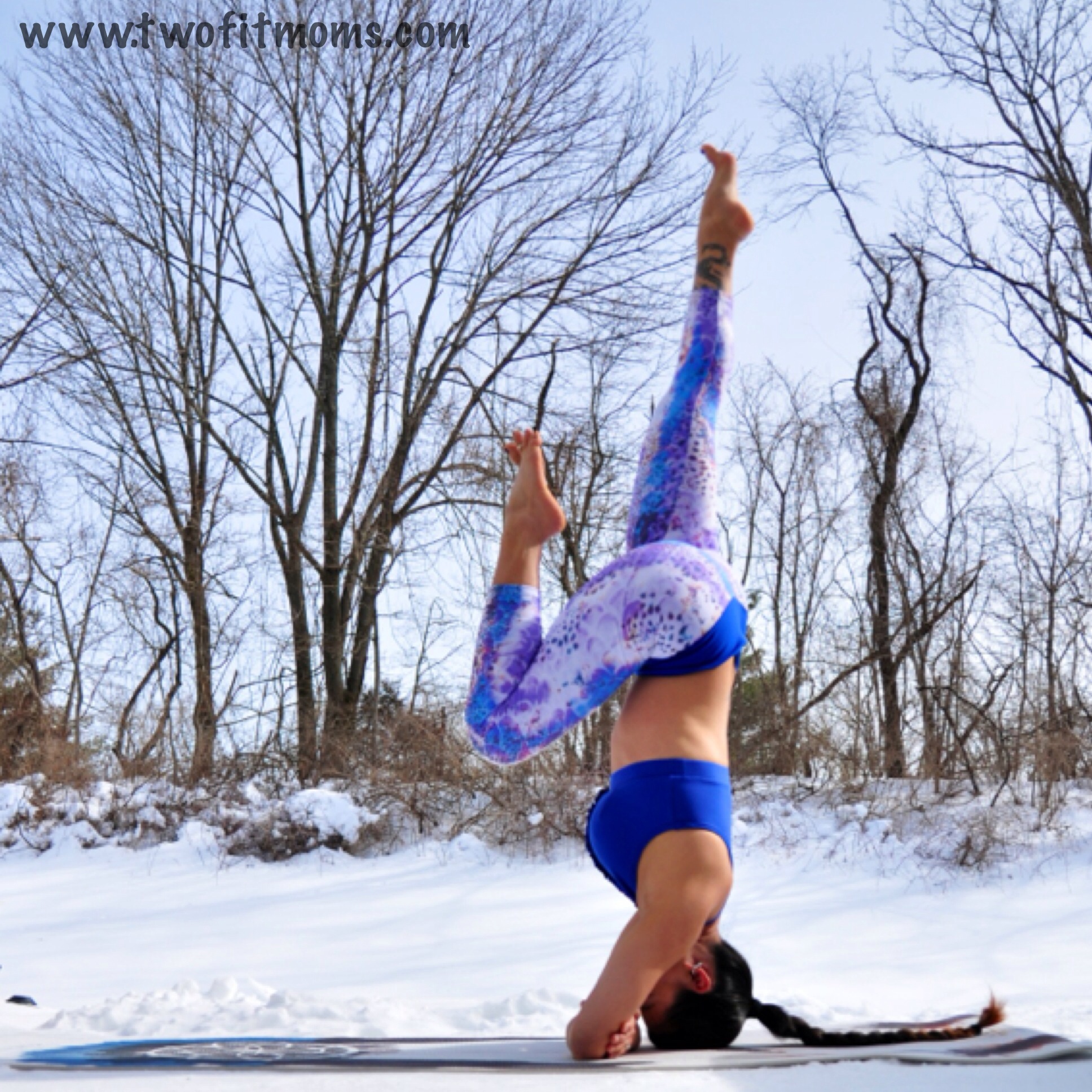
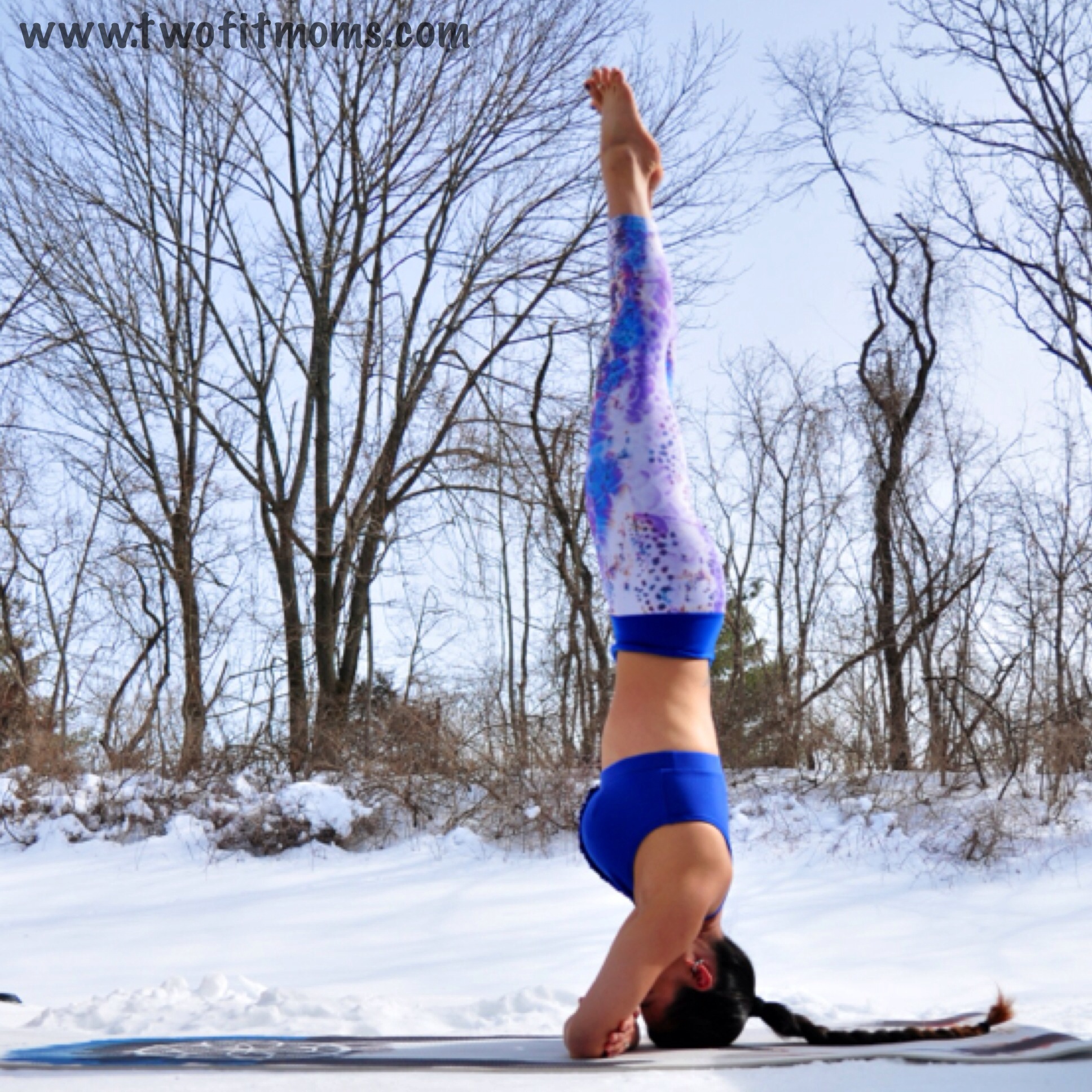
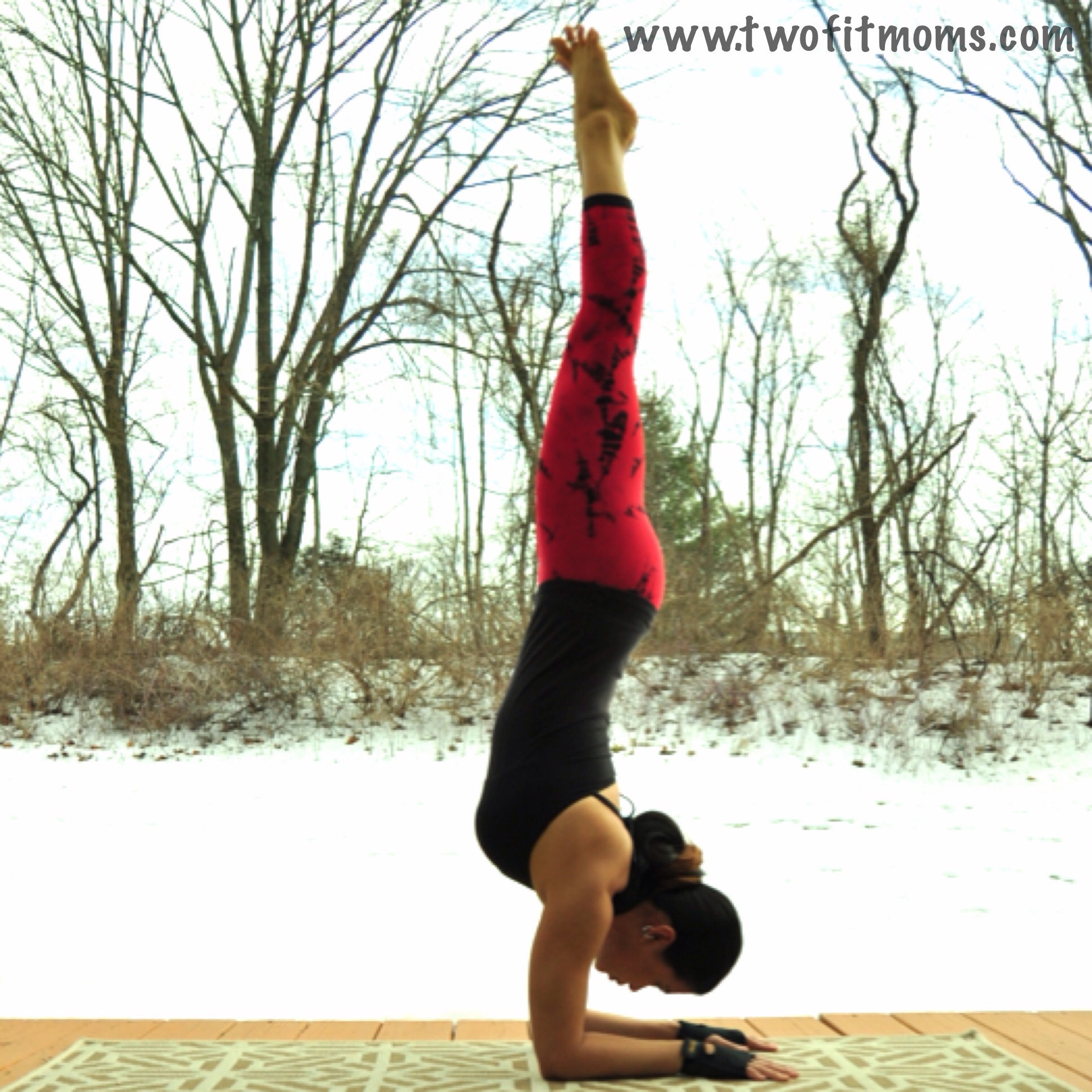
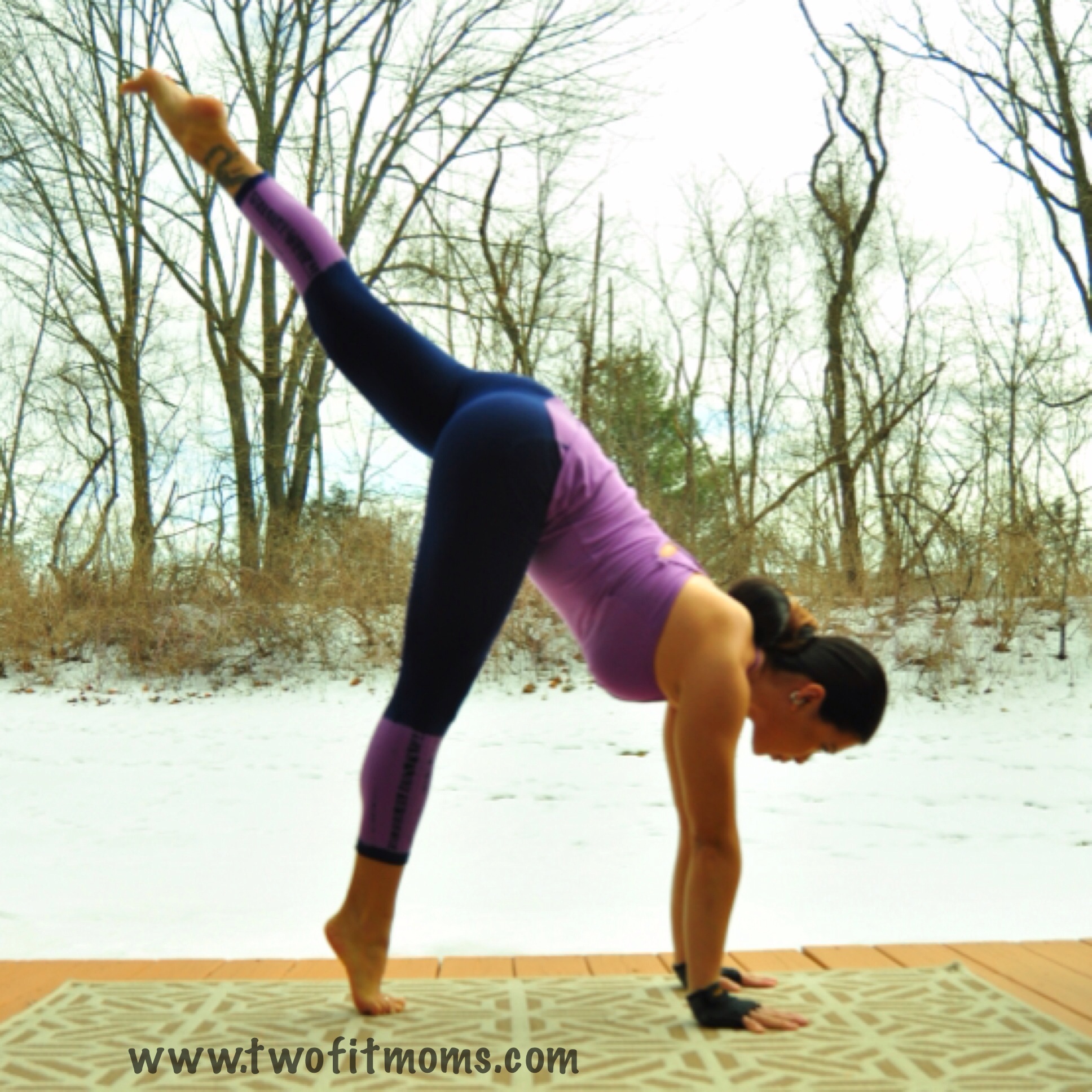
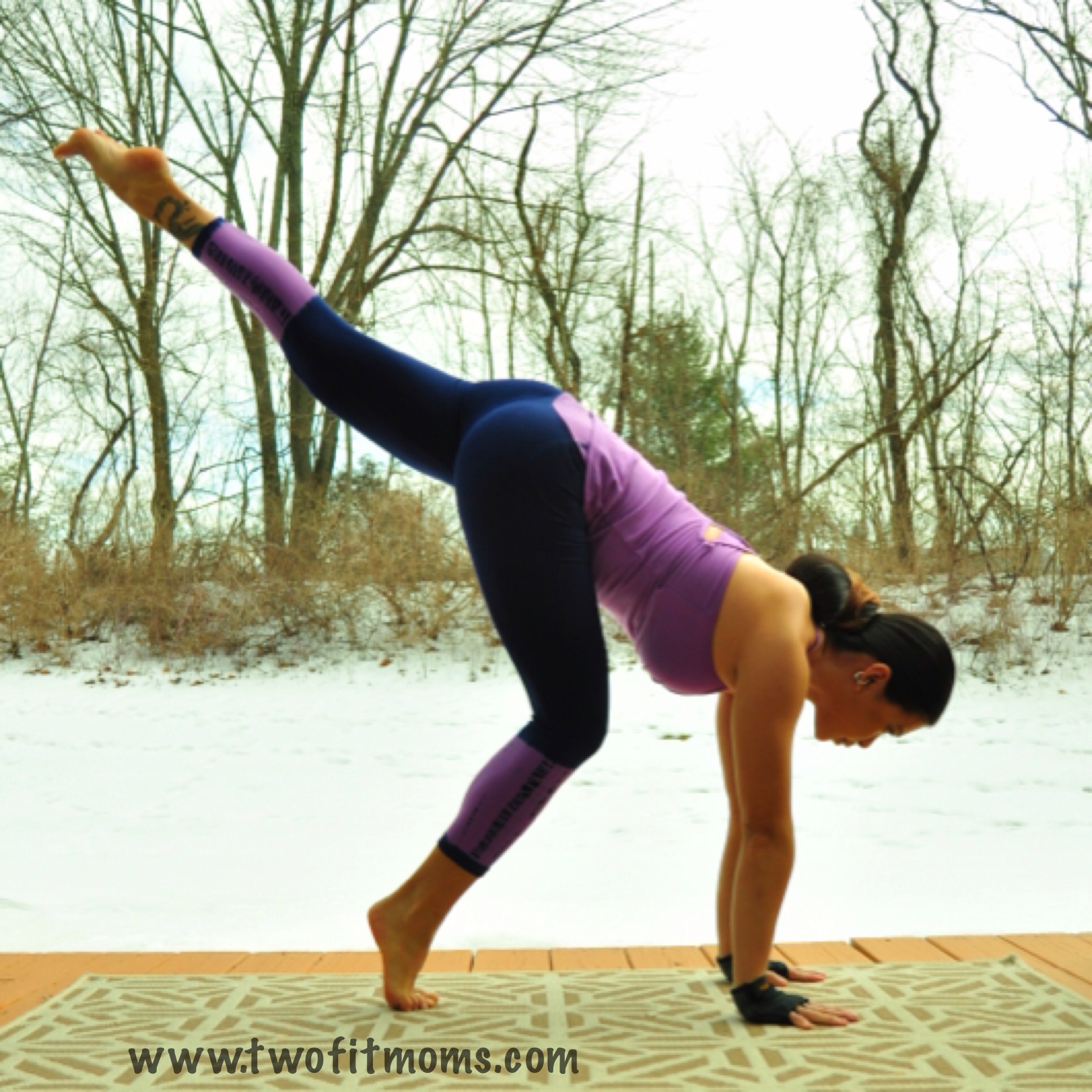
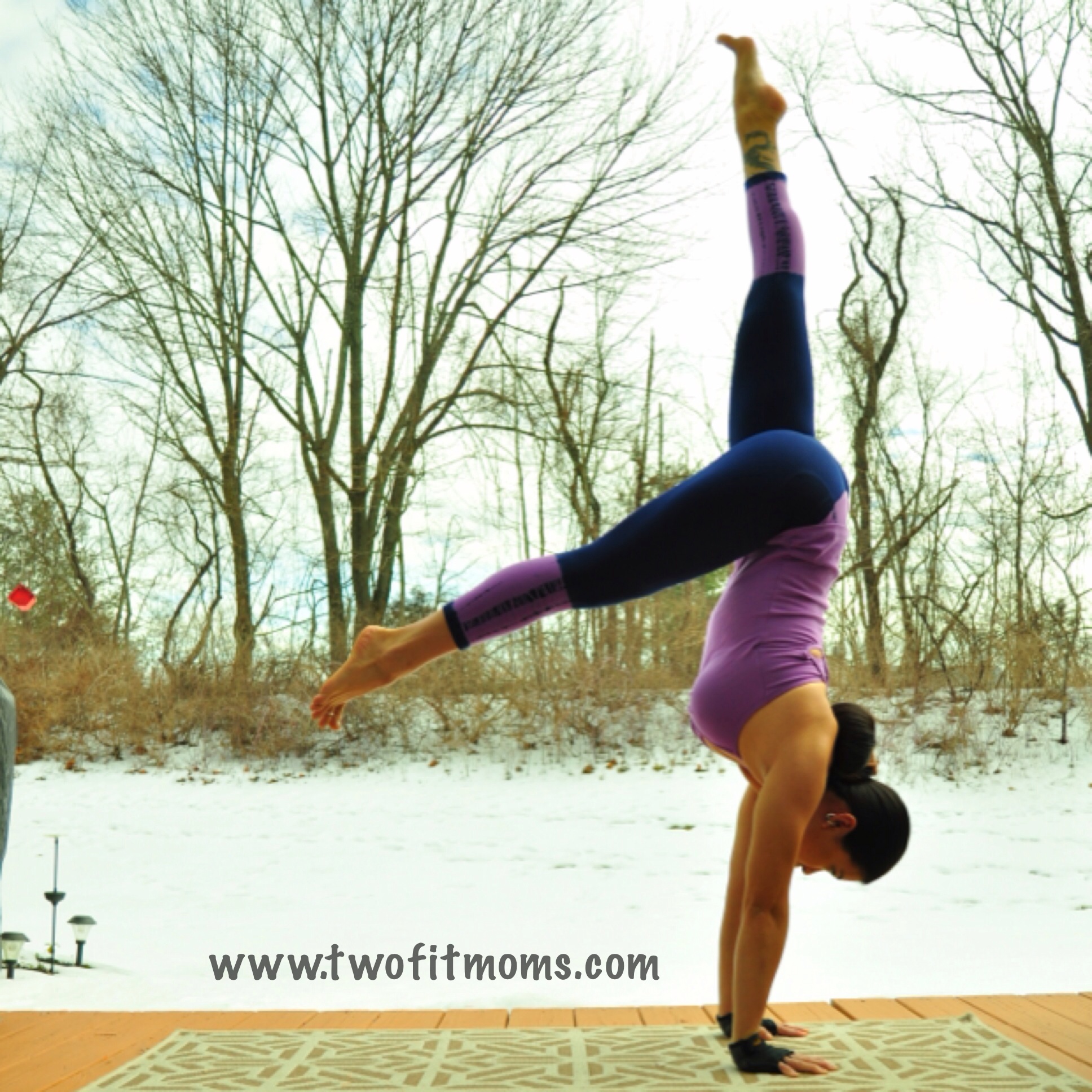
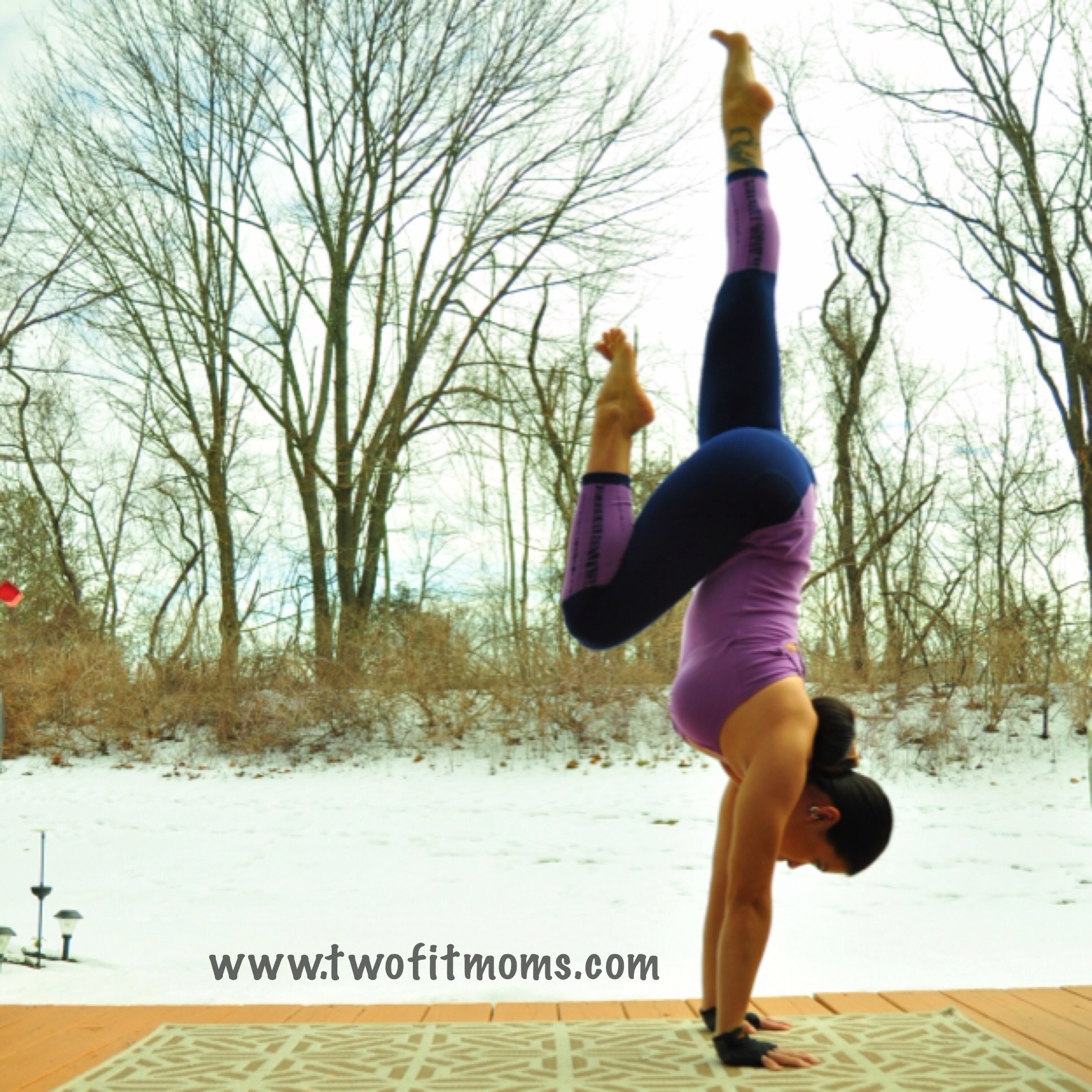
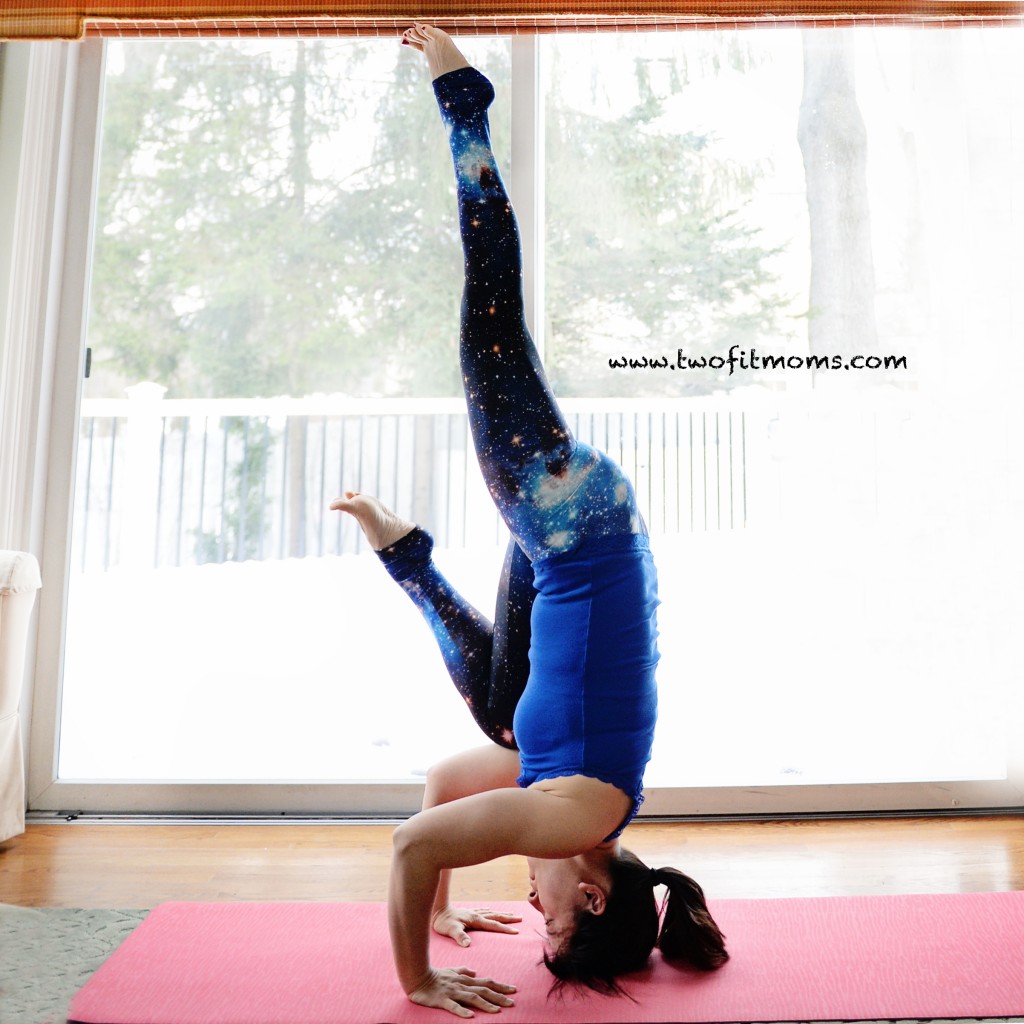
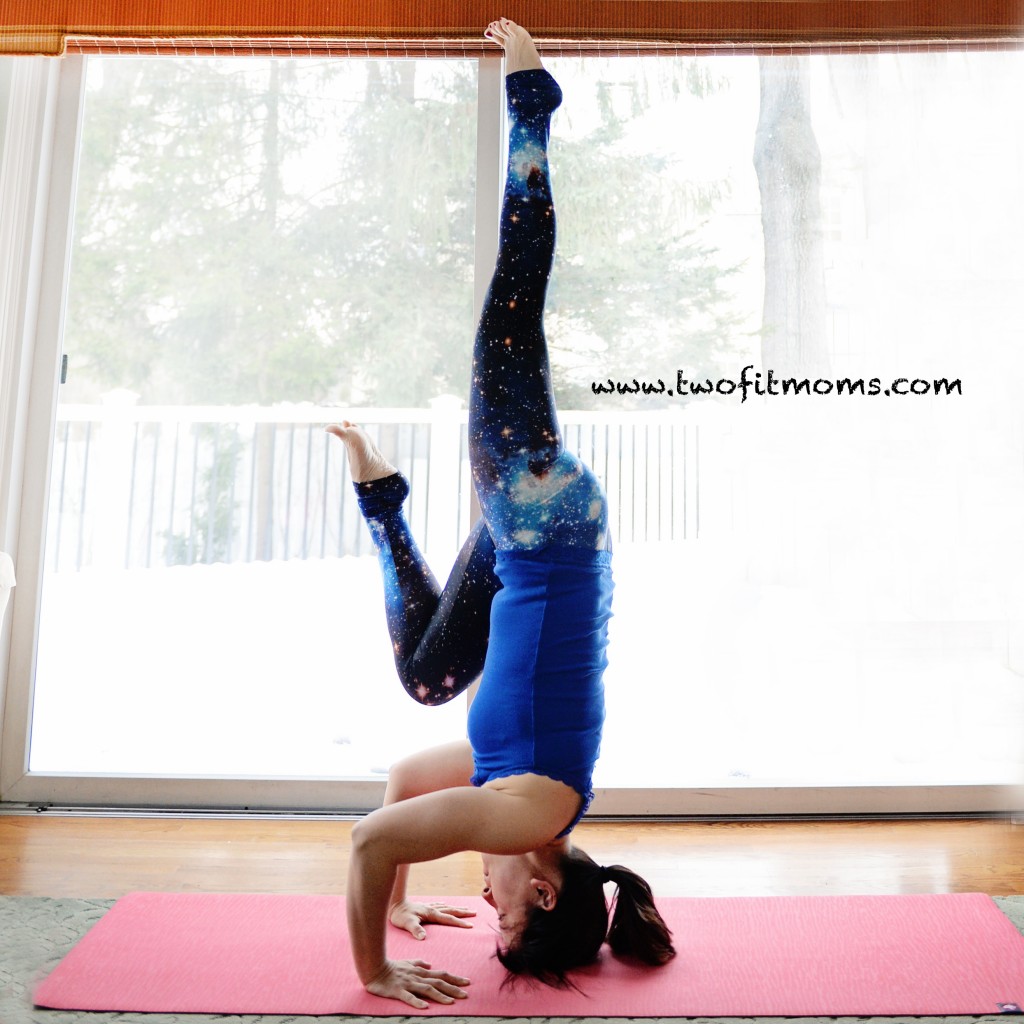
    It’s time to get FUNKY in Pincha Mayurasana! In this variation you are on one forearm and one hand versus both forearms. The key is squeezing the elbows in toward the midline.

    It is incredibly important to note that you should have a solid, REGULAR Pincha Mayurasana practice before attempting to kick up in this variation. Feel free to practice funky Dolphin pose to get yourself familiar with the different arm placement.

    Step 1: What it means to get “funky”

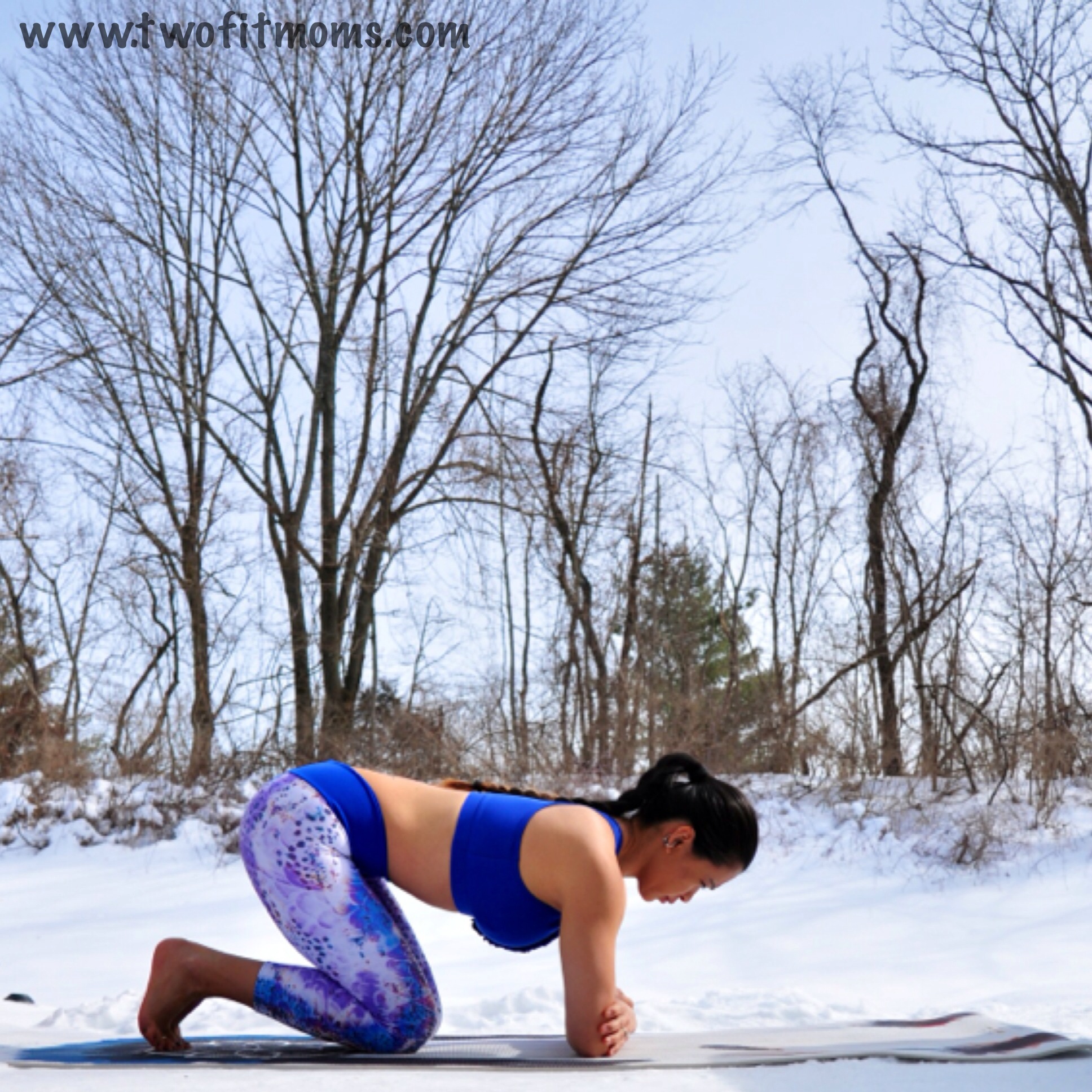
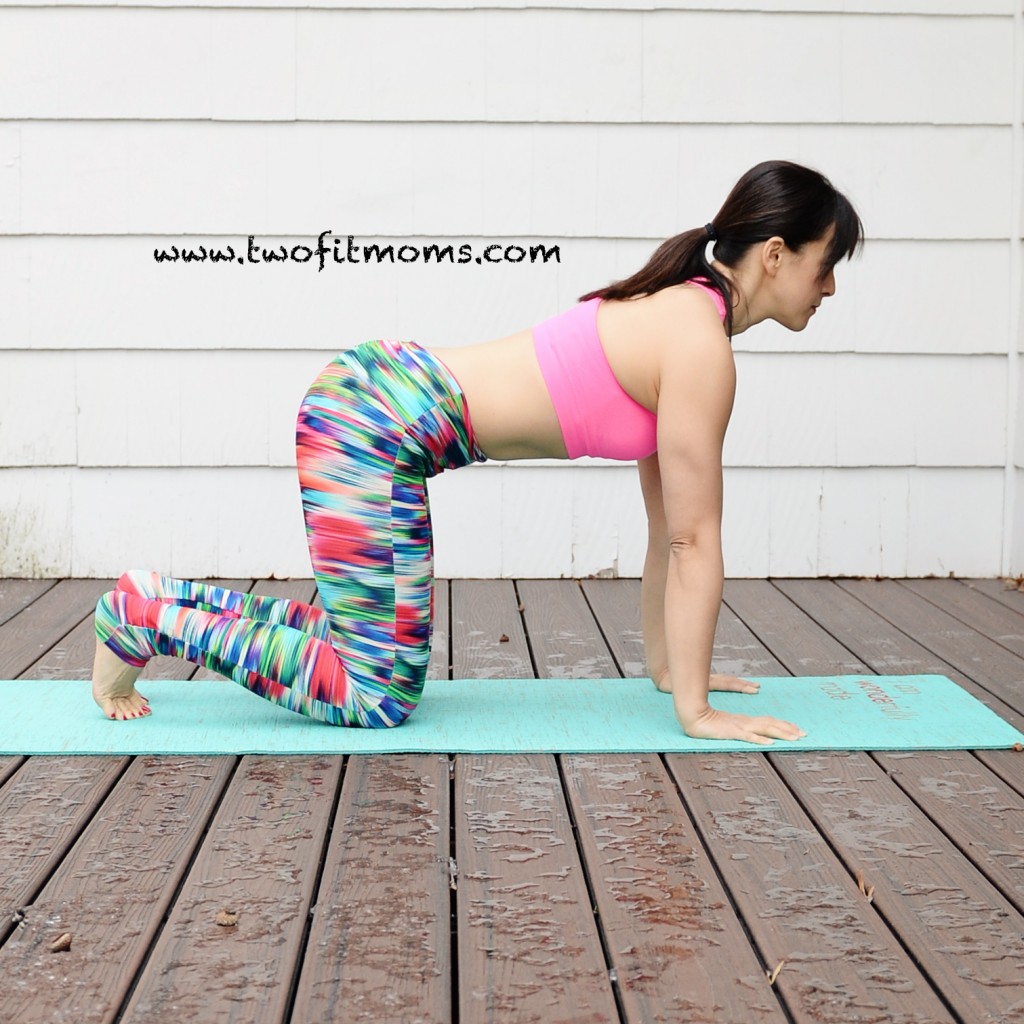
    Start off on all fours, Tabletop position… fingers spread wide, shoulders stack directly over your wrists, hips stack directly over your knees.  Biceps roll forward, so there is an external rotation of your upper arms. Arm bones plug into their sockets, shoulder blades pull down your back. Keep your toes curled under. It is important to have a solid base to start.

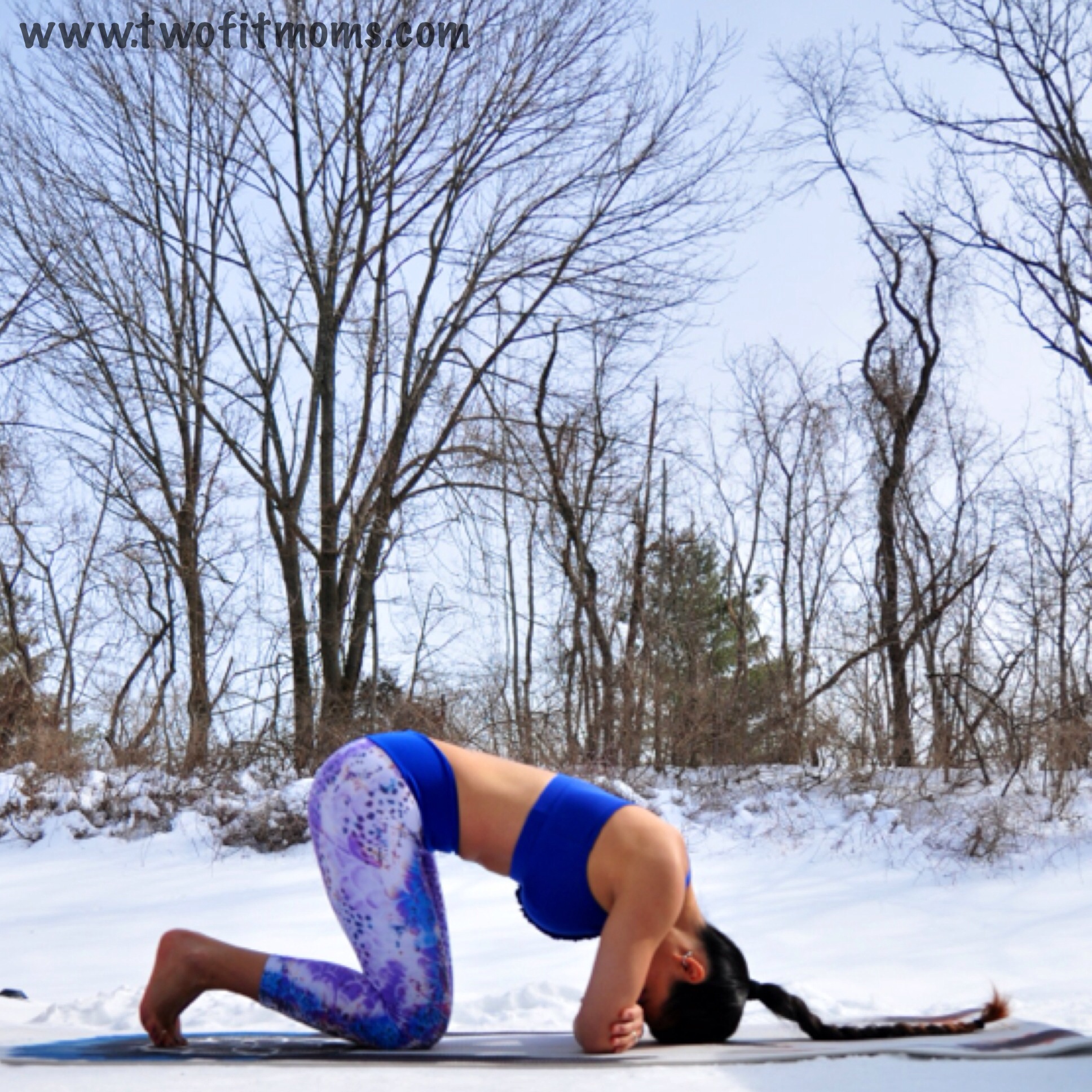
    Keeping the external rotation in your right arm, slowly lower your right elbow down onto your mat. Your right forearm should be parallel to the edge of your mat. Even though it is down, feel your right elbow continue to squeeze in.

    Move your left hand back so your left fingertips line up with the back edge of your right elbow that is on your mat. You may have to play with this to find what is most comfortable… move maybe an inch or so up. Where ever your hand lands though, squeeze that elbow in!
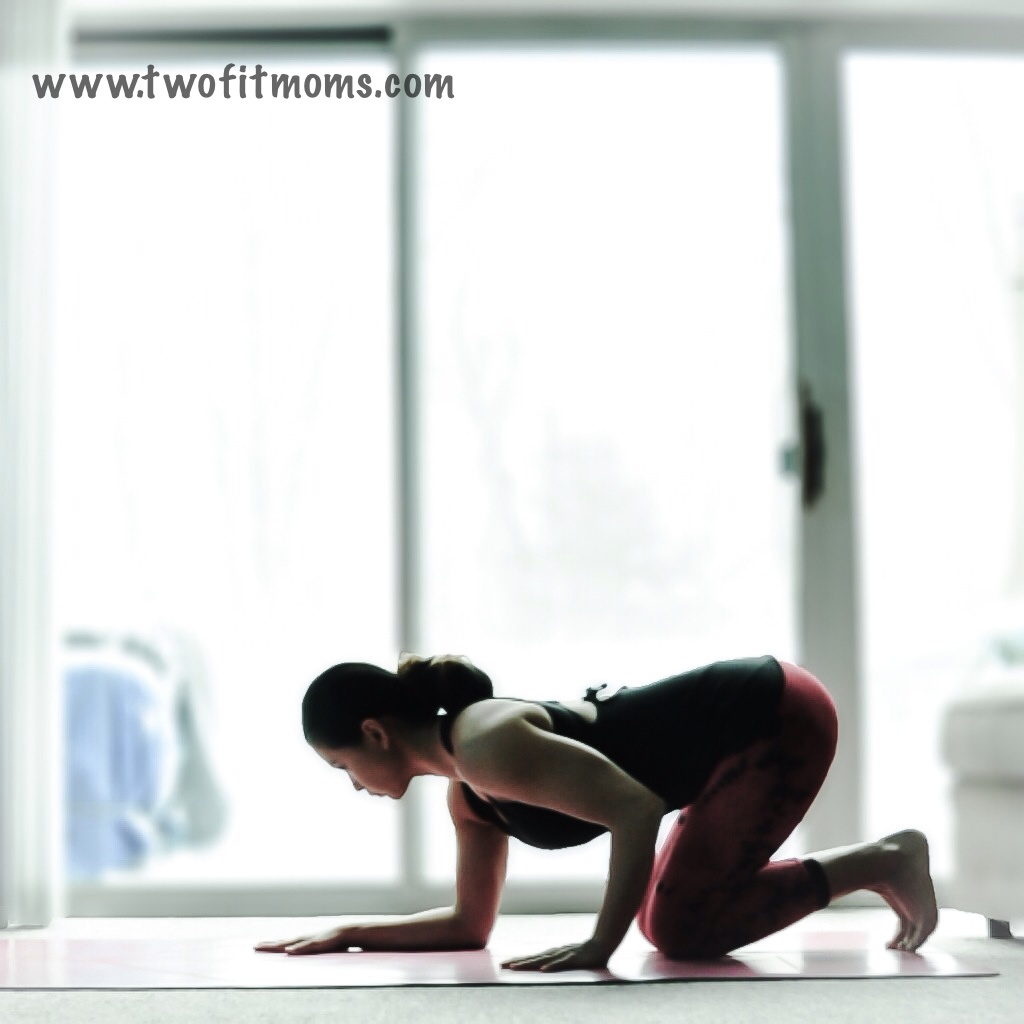
    Photo Feb 18, 11 07 53 AM


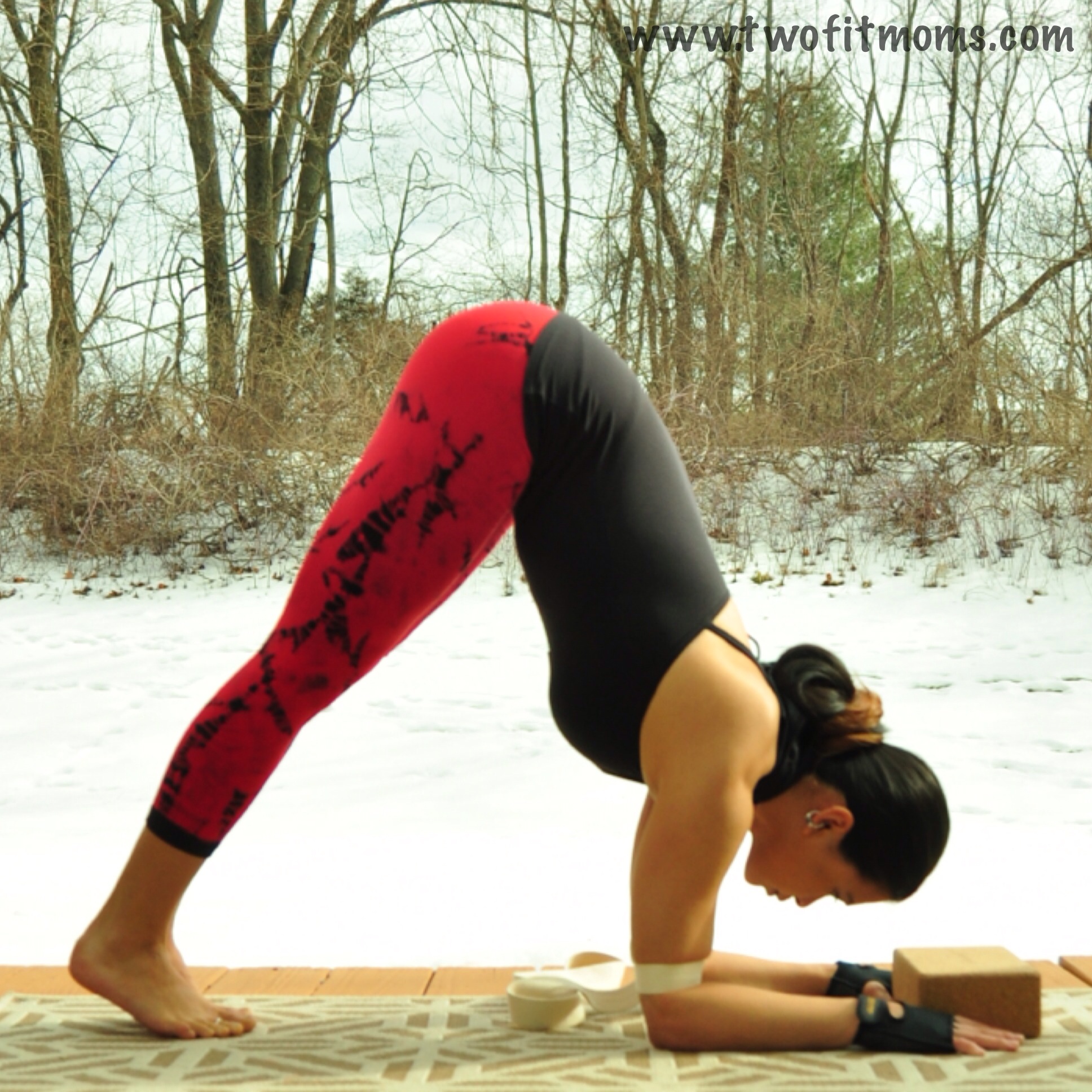
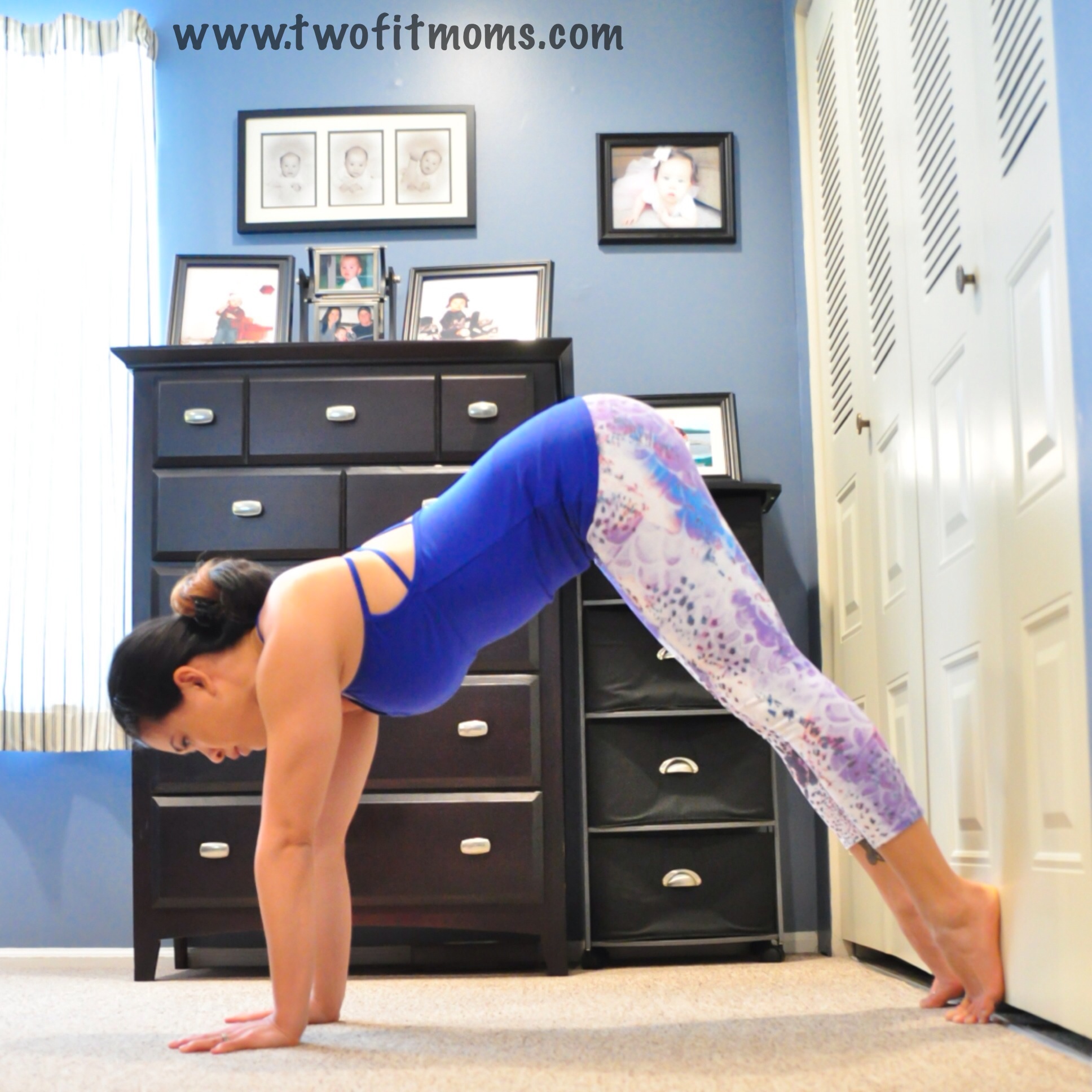
    Step 2: Funky Dolphin

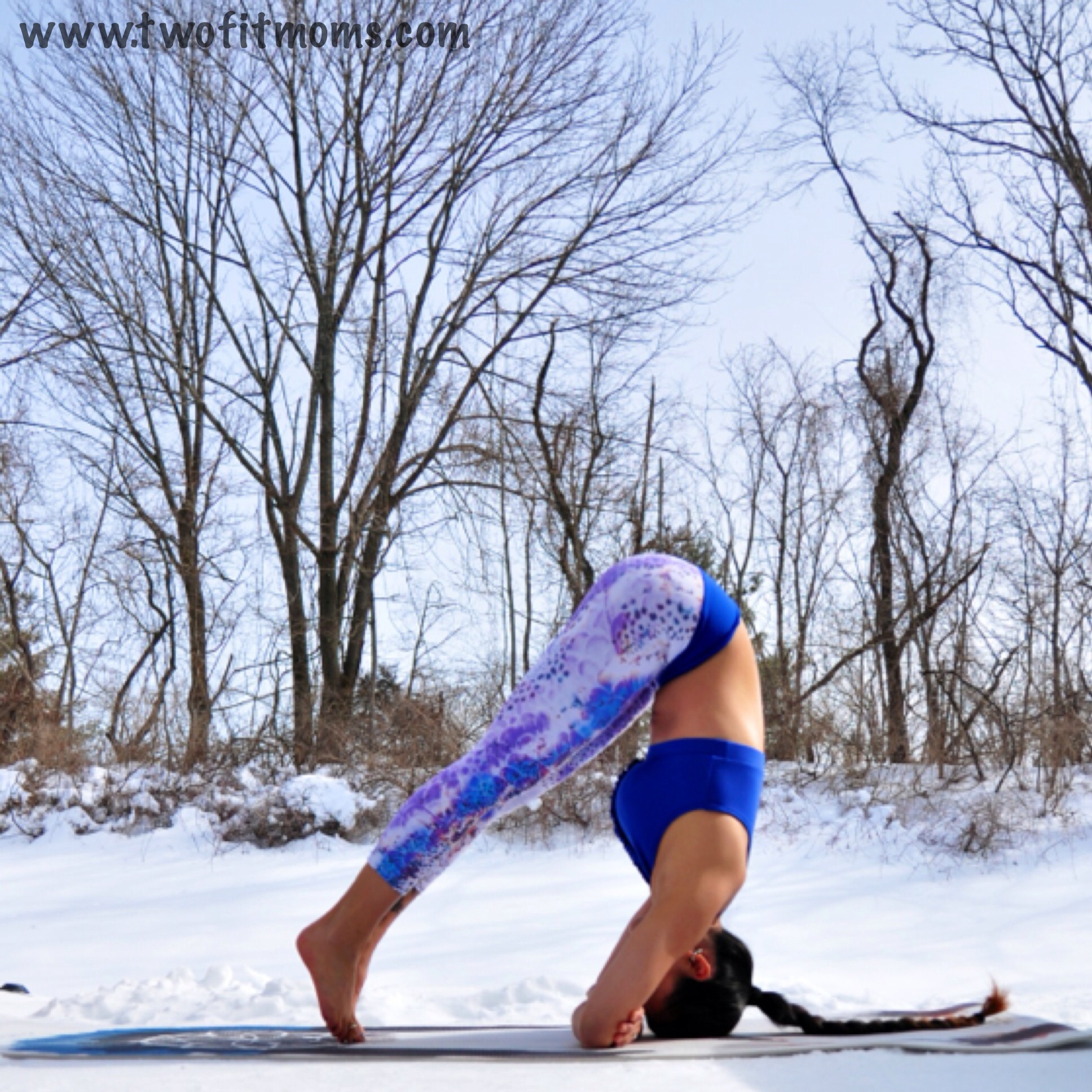
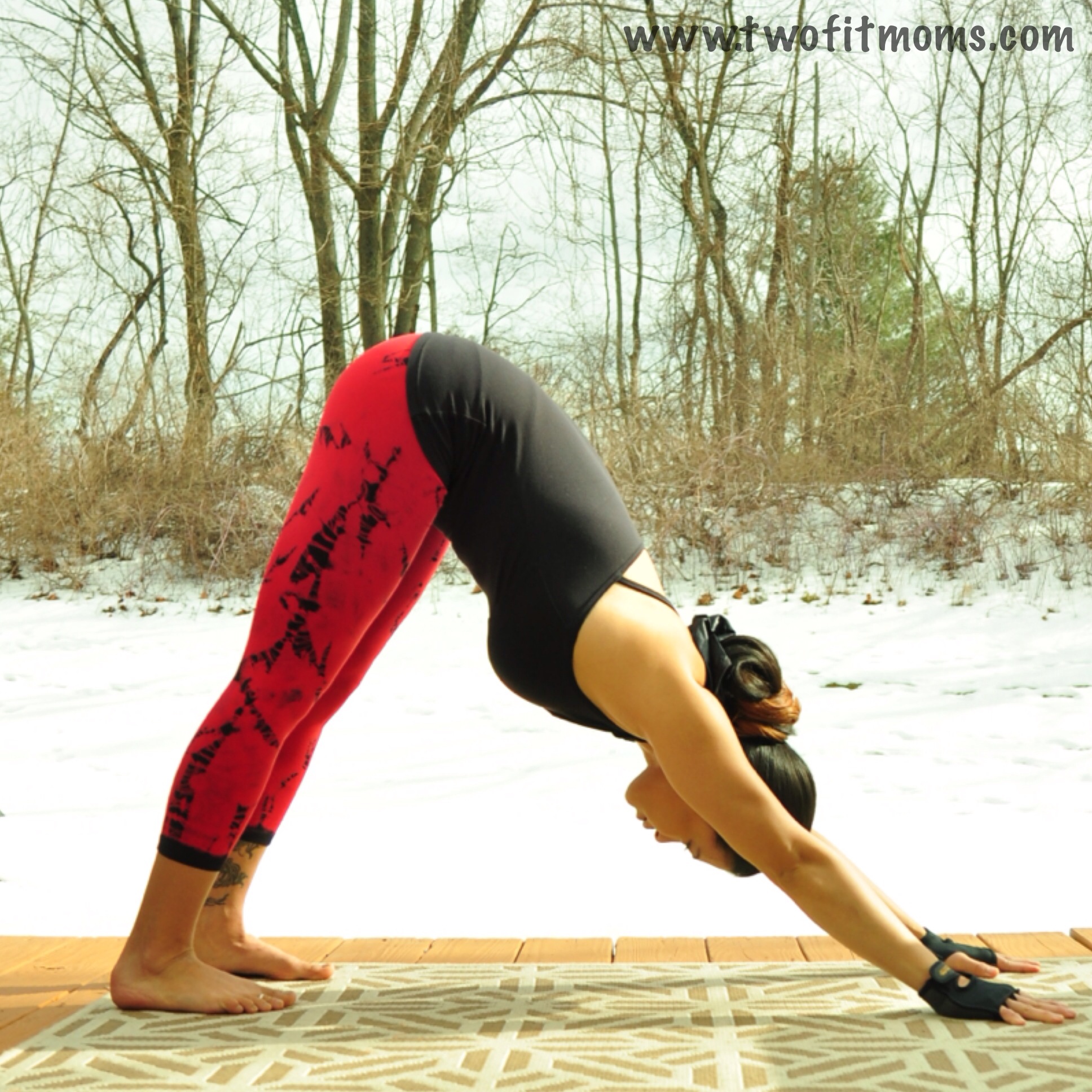
    Keeping the elbows in, press your forearm and hand firmly into your mat and lift your knees up. Hips will lift and legs will straighten. Walk your feet in towards your arms as much as your flexibility allows. Try to keep equal pressure in your forearm and hand. The tendency will be to put more pressure into your forearm… try to keep the weight equal. Stay here and hold for five breaths. Come down, take a Child’s Pose and repeat on the other side.
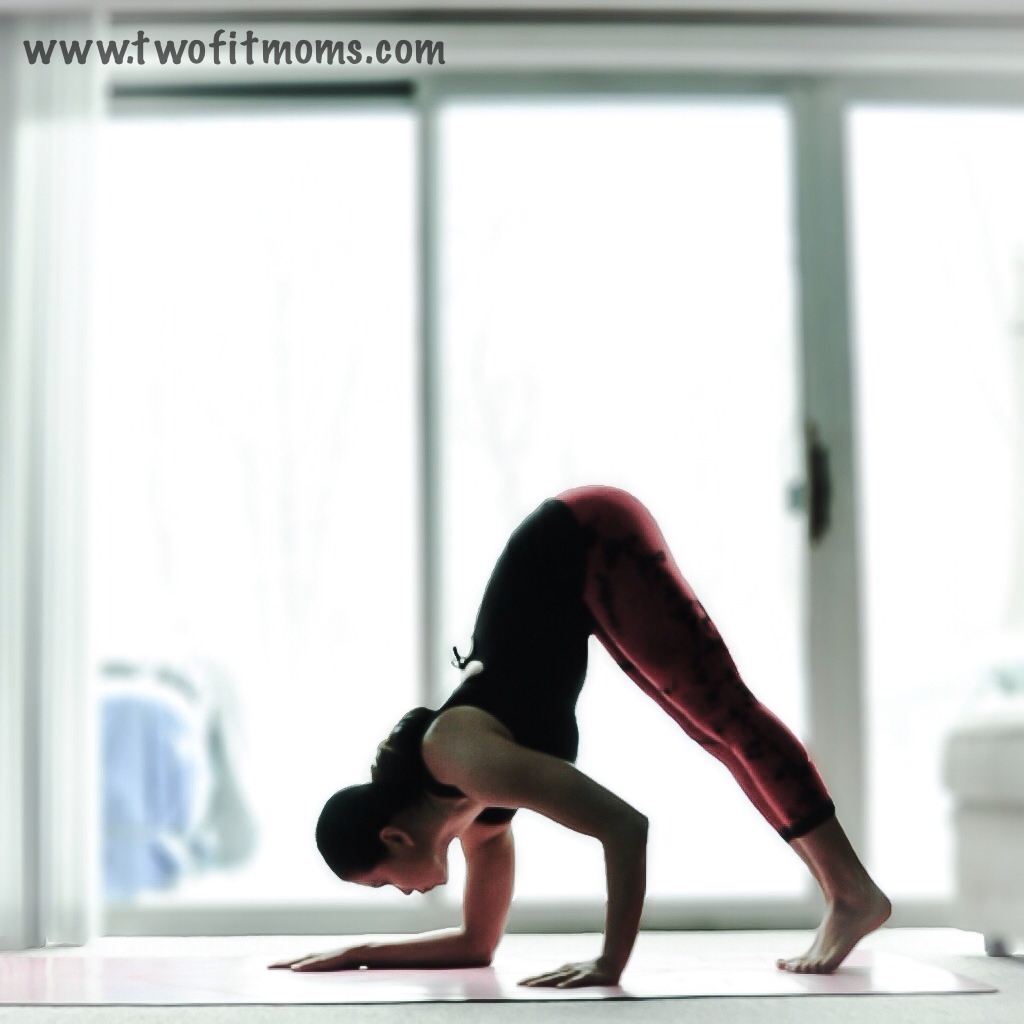
    Photo Feb 18, 11 08 03 AM

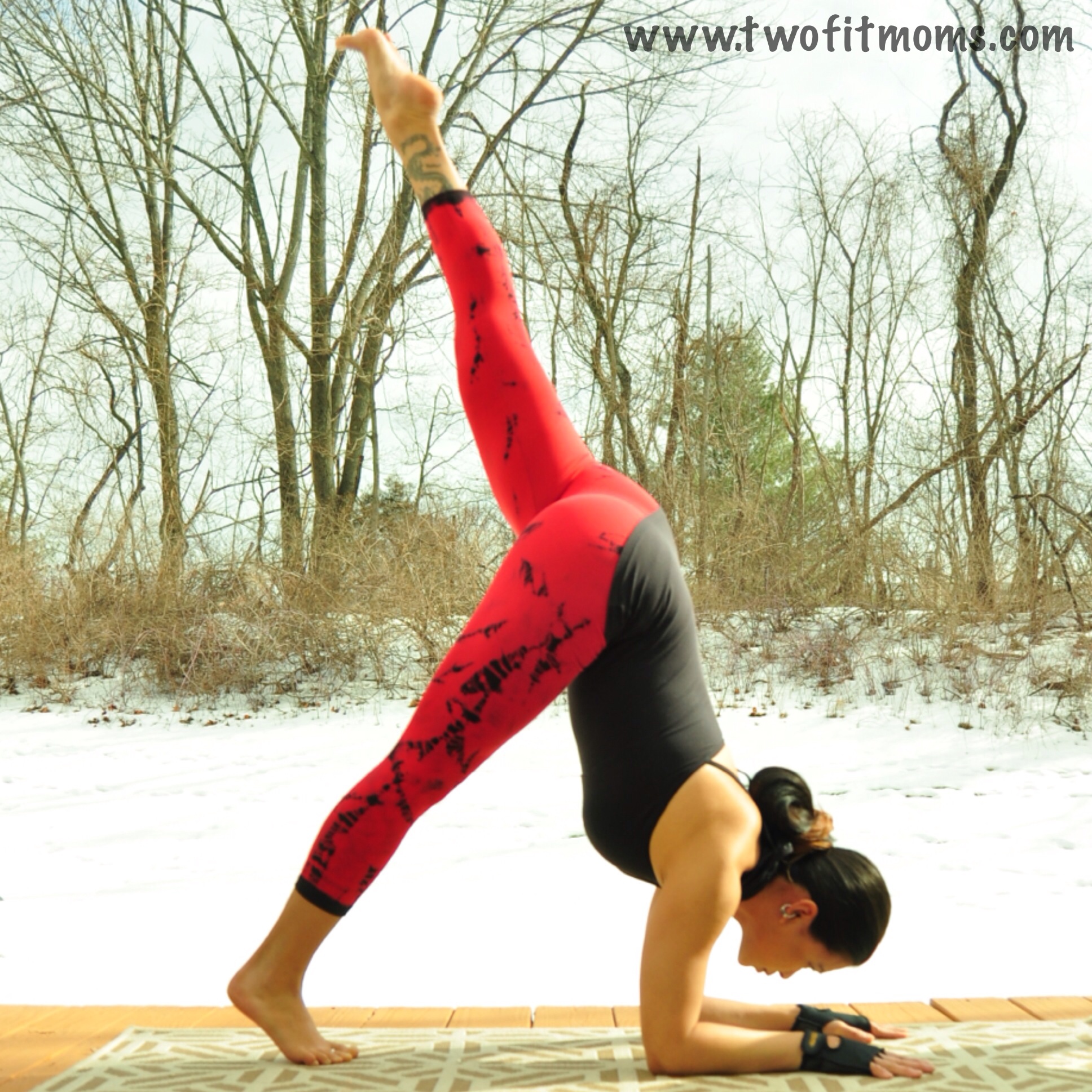
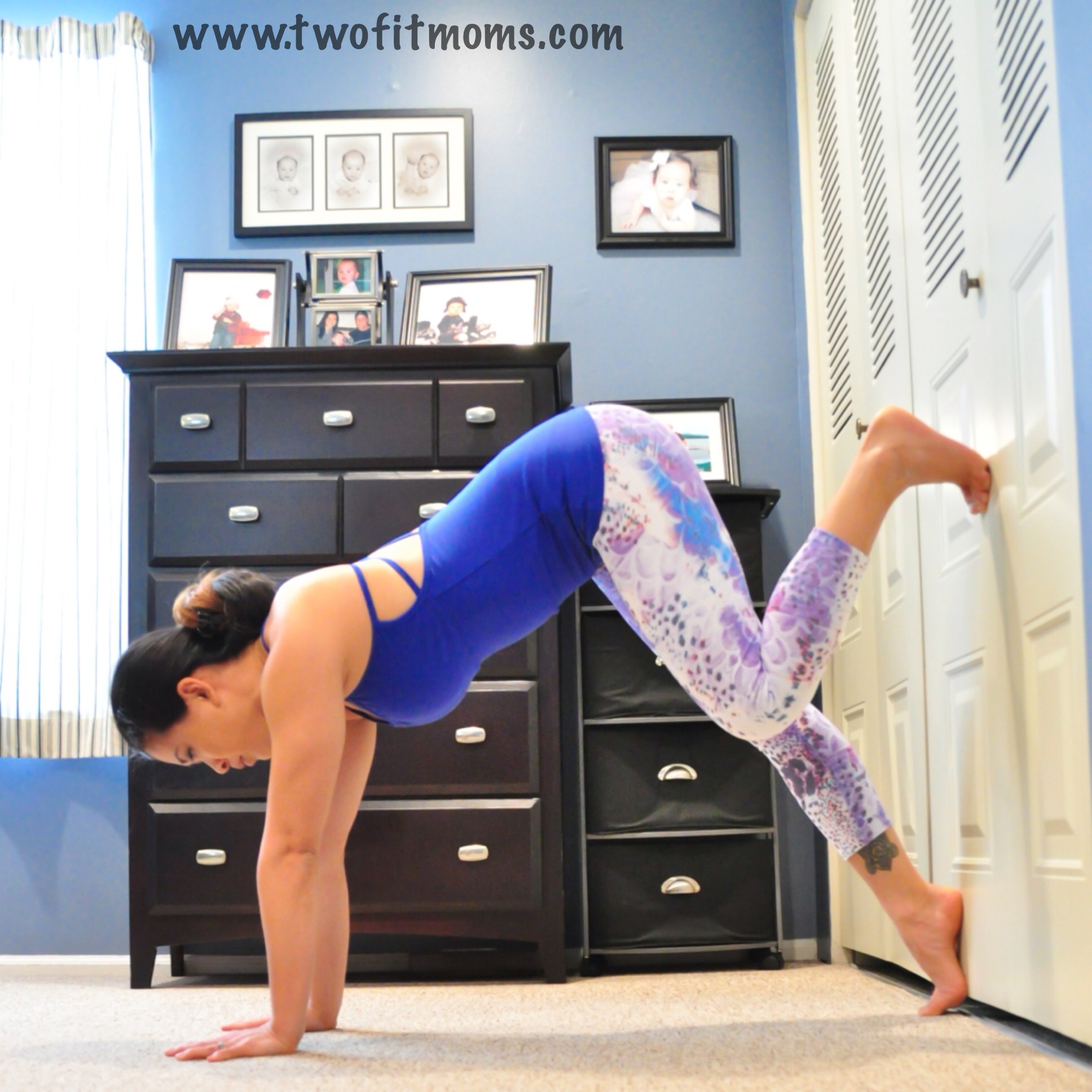
    Step 3: Lift a leg

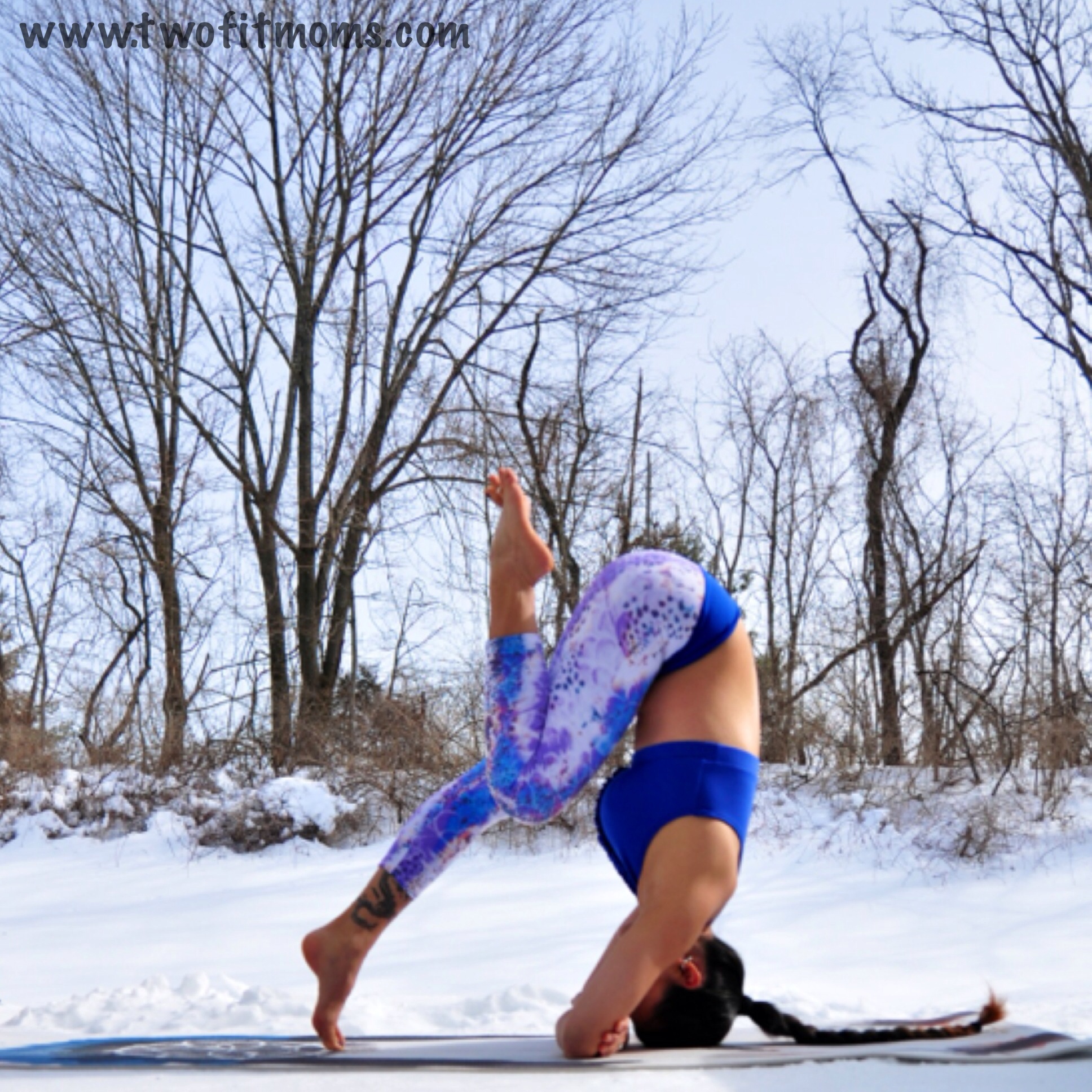
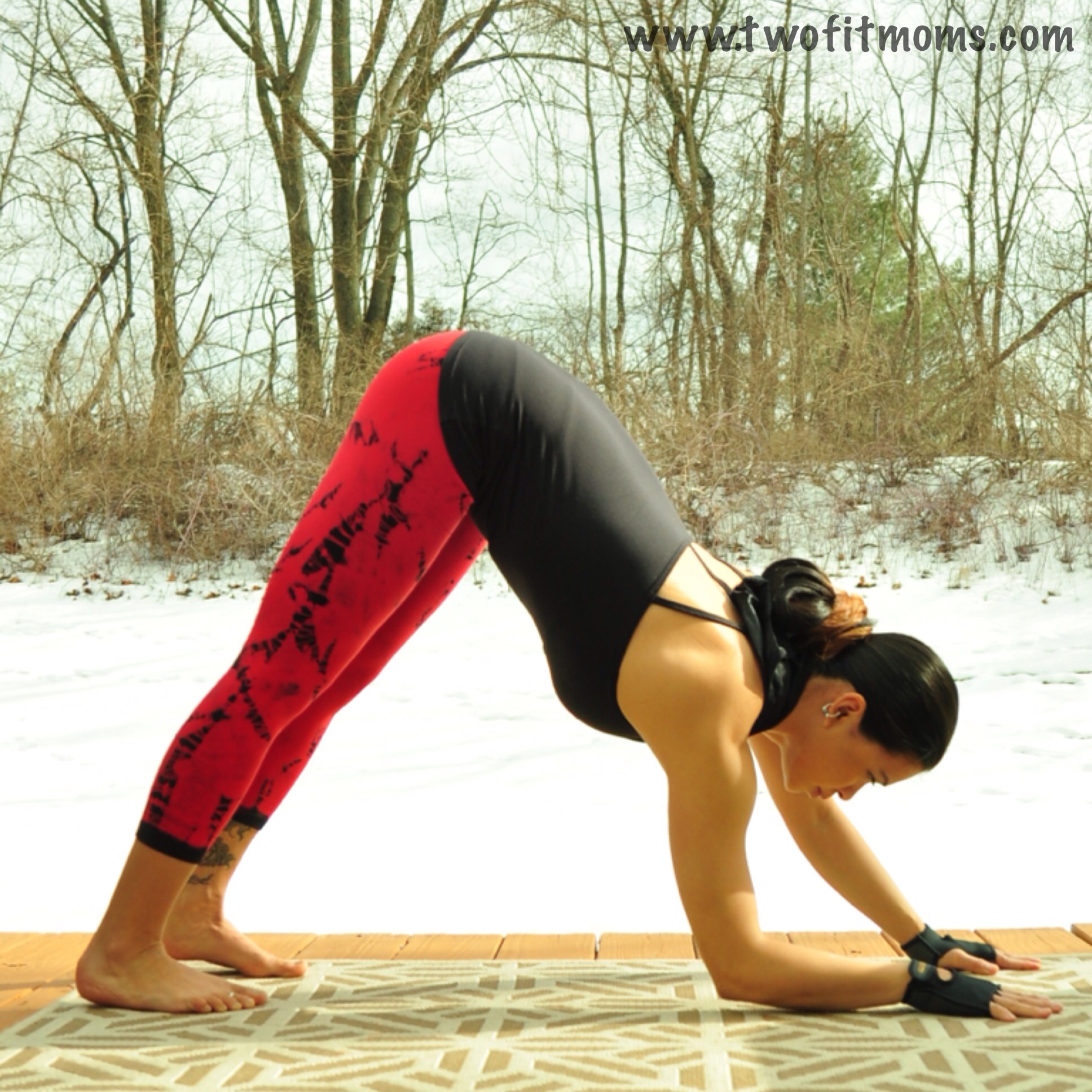
    I prefer to lift the leg that is on the same side where the hand is planted. Try both legs though and see what is more comfortable for you. Keep the lifted leg engaged… really energized and pulling up. Remember to keep the elbows pulling in and lifted leg internally rotating… try not to let your hips open too much. Mine tend to open a little, but if they are too open, you will be crooked when trying to kick up and probably fall over. Come down, take a Child’s Pose and repeat on the opposite side.
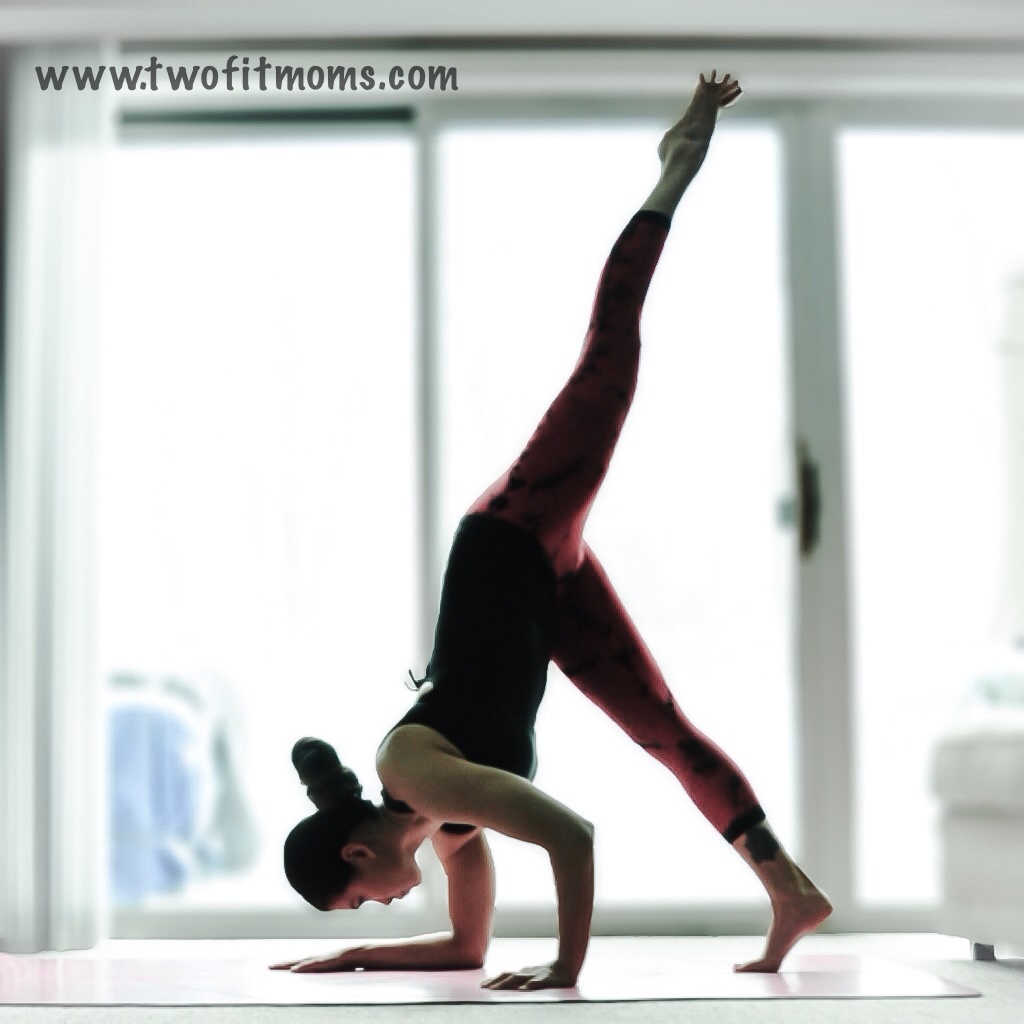
    Photo Feb 18, 11 08 10 AM

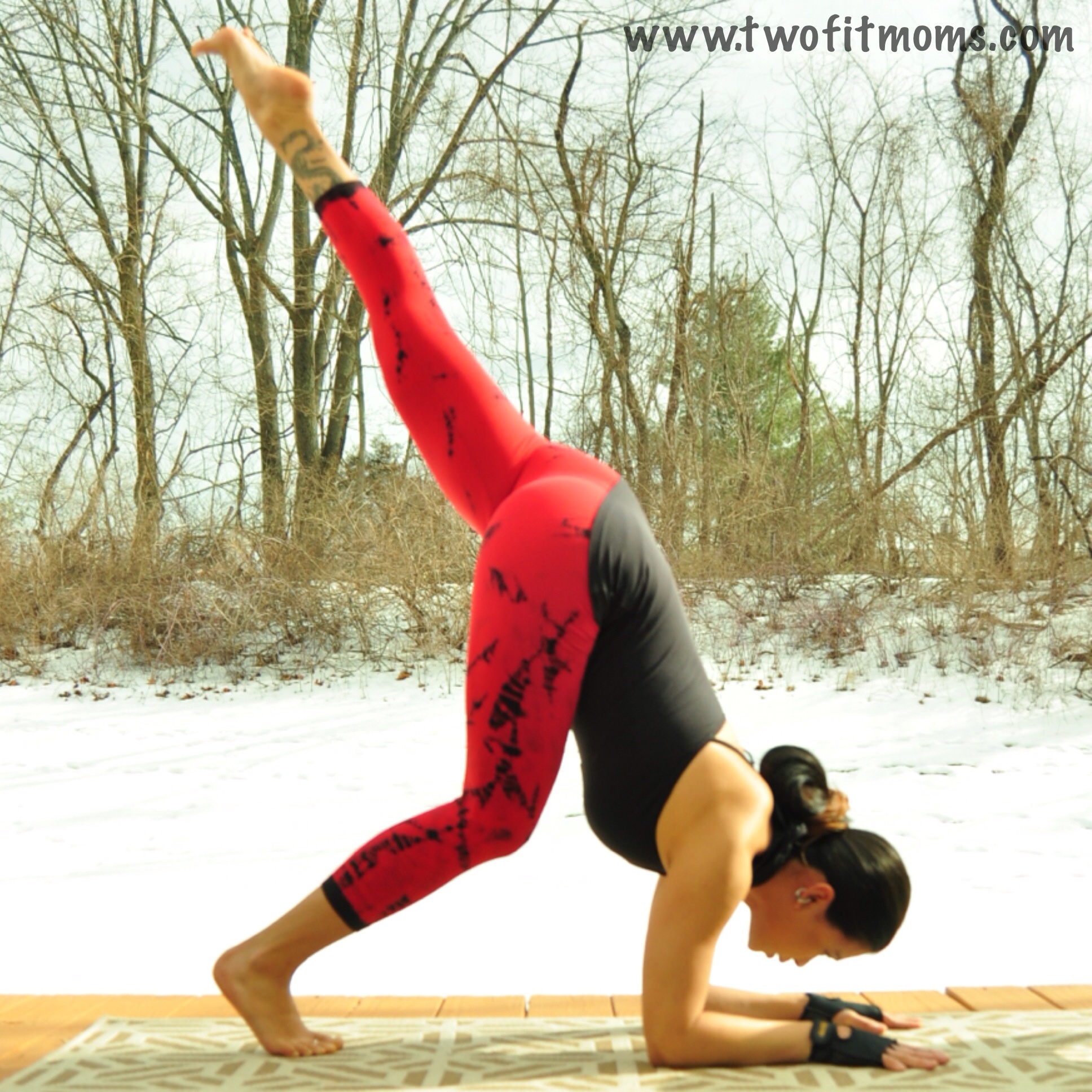
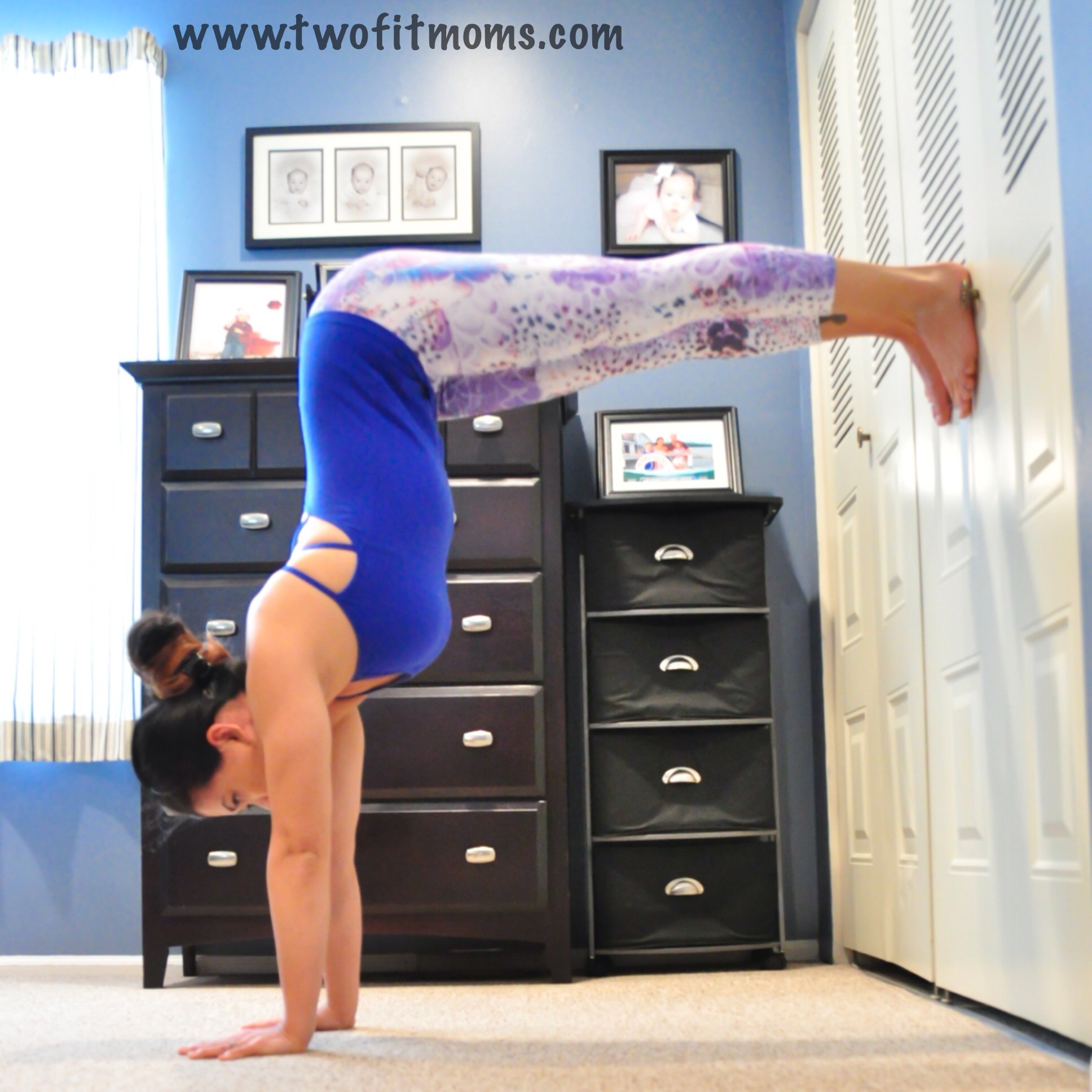
    Step 4: Take a few baby hops, maybe catch some hang time

    If you are ready to start baby kick ups, please find a wall space and set yourself up about six to eight inches away and come into the previous step, funky Dolphin with one leg raised. Before bending the bottom leg, ask yourself . . . Are you pressing equally into your forearm and your hand? Are your elbows squeezing in? Are your hips relatively square? Is your lifted leg engaged? Are you gazing down at your mat?

    When you are ready, put a slight bend into the bottom leg and take a few baby hops. Between each hop, check to make sure you are in form. As you become more comfortable, you will find more hang time. Play with both legs extending out as shown below or bending in the bottom leg.

    Come down and take a Child’s Pose… then repeat on the other side!
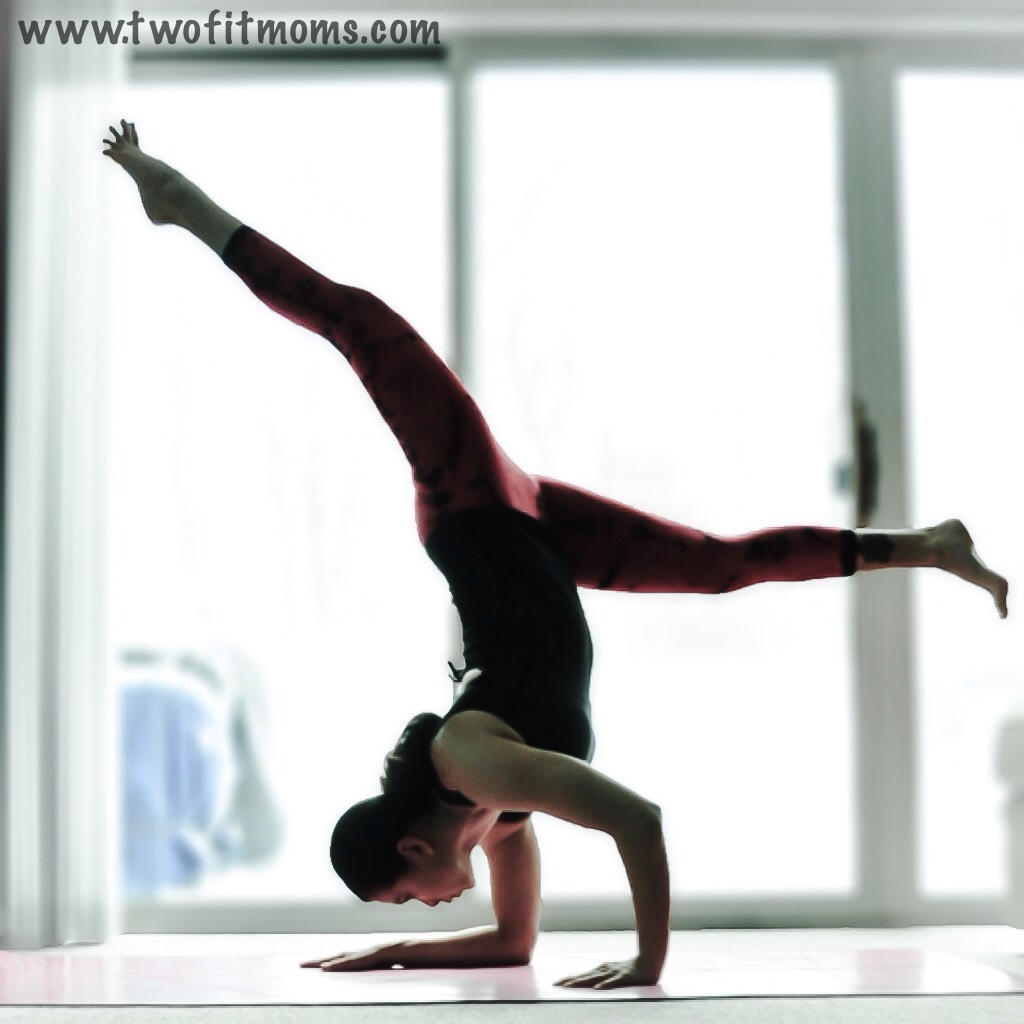
    Photo Feb 18, 11 08 20 AM

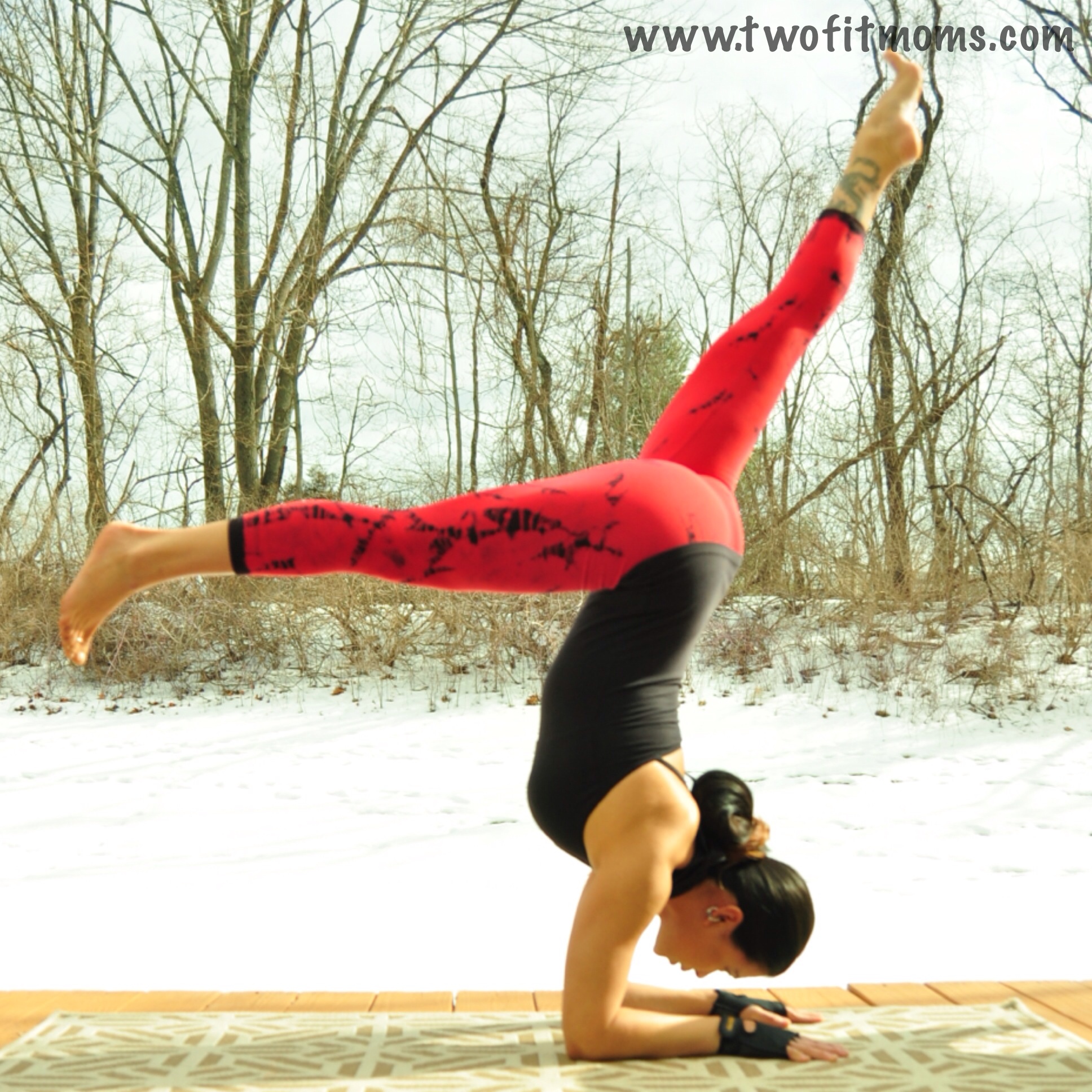
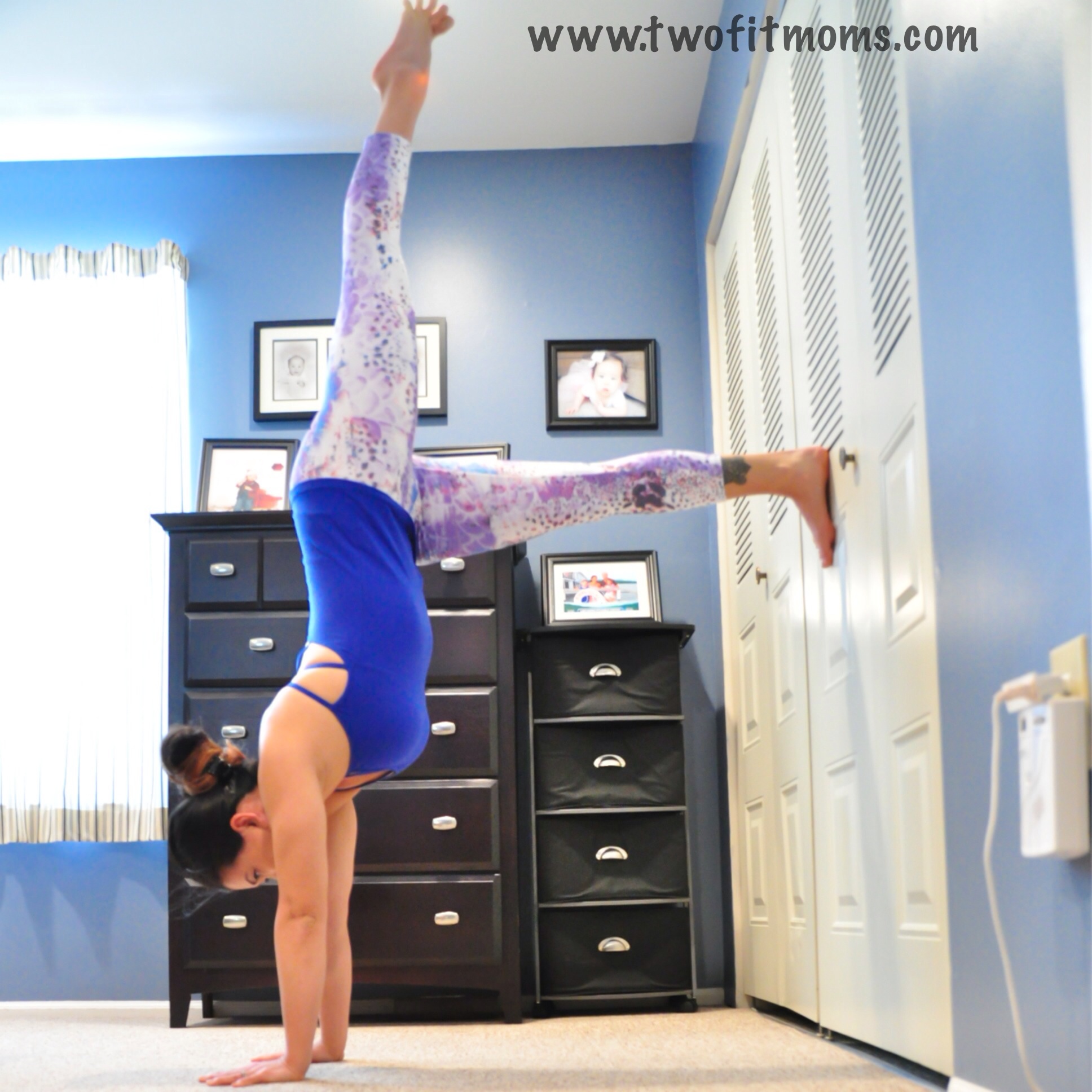
    Step 5: Full expression

    Once you find your balance with legs apart, you can play with bringing the legs together.
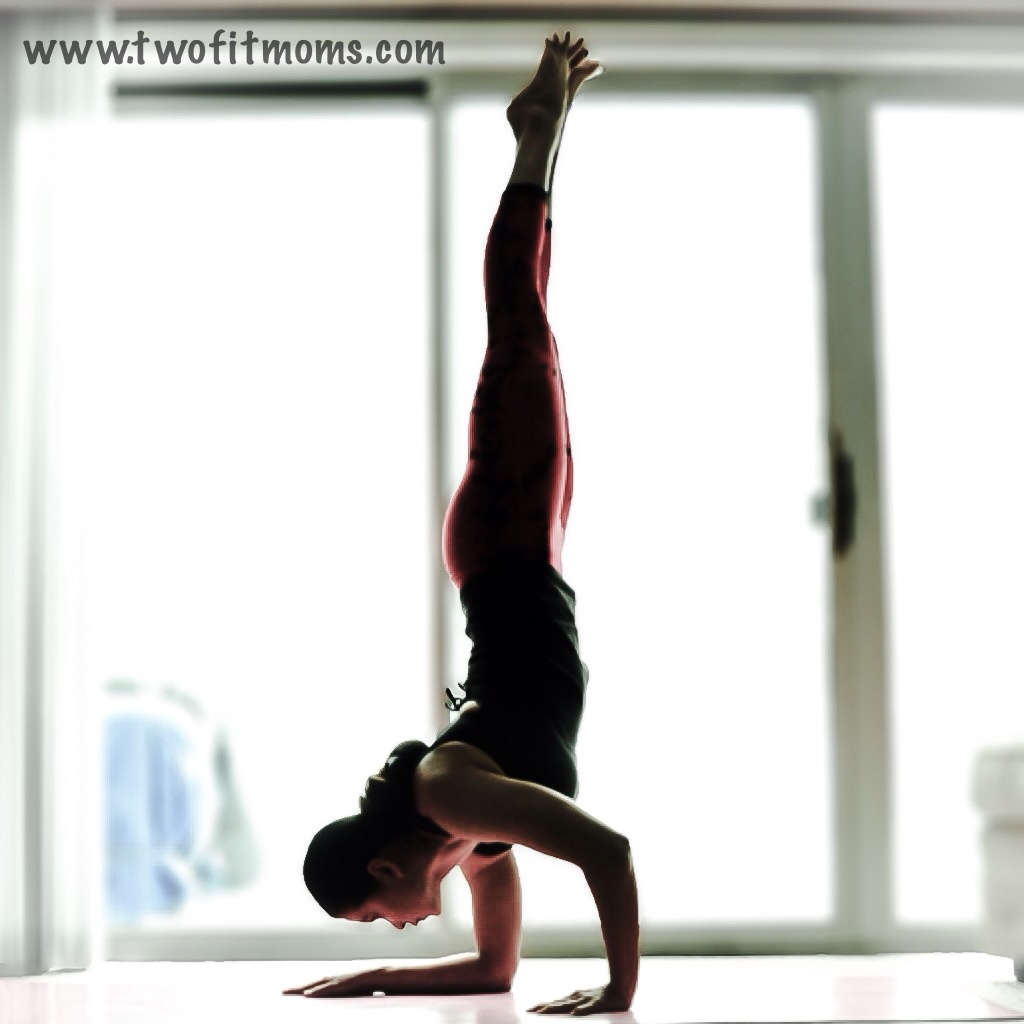
    Photo Feb 18, 11 07 44 AM


    XOXO

    Blog Signature

  • Headstands 101:  The Art of Falling

    Headstands 101: The Art of Falling

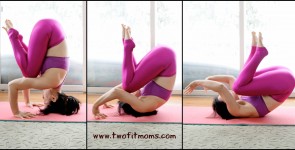
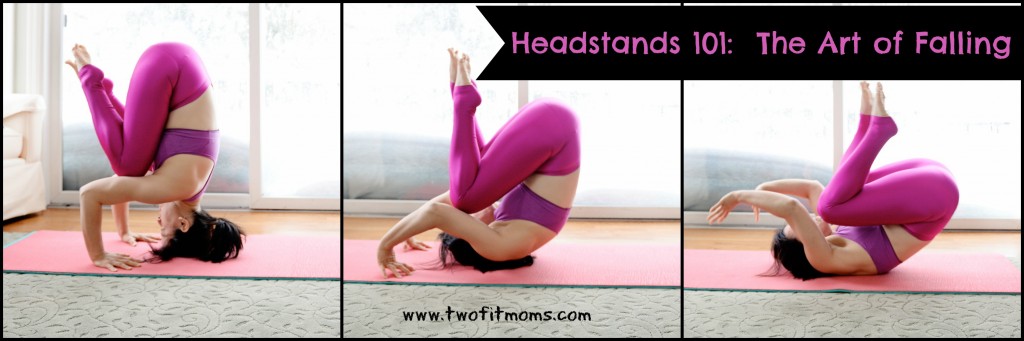
    I would be remiss to write a “Headstands 101” series of articles and not touch upon the topic of falling.  Falling is the greatest fear in practicing any inversion.  Nobody wants to fall because it feels so uncontrolled and unexpected and could result in an unwanted injury.

    Today, I’m here to tell you that falling is a skill.  You CAN and WILL turn your falls into transitions.  You will no longer fall out of a headstand.  When you feel your body wavering as you balance on your head, you will not flail around and fall flat onto your back.  Instead, you will execute a controlled transition from one pose into another.  The goal?  Tripod headstand into a somersault.  Once you master this transition, your headstand practice will soar to another level.  When you can practice without fear, amazing things will happen on your mat.  Let’s get started.

    Channel Your Inner Kindergartener
    First, remind yourself what it feels like to do a somersault.  Squat down onto your mat as you rest on the balls of your feet.  Keep your knees together and place your hands down onto the floor in front of you.  Spread your fingers and begin to lean forward, putting pressure into your hands.  Tuck your chin to your chest and place the back of your head onto the ground, slightly in front of your hands.  Round your back, push off of your feet, and turn yourself into a tight ball.  Somersaulting should not hurt!  Keep practicing this move until it feels natural and smooth.

    Once you feel comfortable somersaulting, come into a tripod egg to practice the exit strategy.  If you need a refresher on getting into a tripod egg, click HERE to review the steps for this pose.

    Banner
    From your tripod egg, tuck your chin to your chest, round your back by squeezing your knees into your body, and safely roll out of the headstand.  Practice this over and over until it is second nature to tuck and roll as soon as you feel as though you no longer have control of the pose and may tip over.  Once you can tuck and roll out of a tripod egg, lift your knees from your triceps a few inches and try somersaulting again.  Keep lifting your legs and practicing your forward roll until you can safely tuck and roll out of the full expression of the pose with your legs fully extended.

    If you cannot master the somersault, don’t worry about it.  You can always re-visit this transition at some later date.  Until you can MASTER the somersault, however, you should NOT move your headstand practice away from the support of a wall.  There is no purpose in practicing if you put yourself in danger.  You must be able to safely exit a headstand in the middle of a room via forward roll, and until you are comfortable practicing somersaults, you should continue practicing with a wall behind you.  This is all a process, so please do not be discouraged if you are struggling.  It does not need to happen today.  Or tomorrow.  Or even a year from now.  Let yoga be a lifelong practice.  Be safe, have fun, and practice without fear.

  • Baddha Hasta Sirsasana B

    Baddha Hasta Sirsasana B

    Baddha Hasta Sirsasana B is probably my favorite headstand variation.  “Baddha Hasta” refers to the bound hand position which is the base for this variation. With ANY headstand, be mindful and be extremely aware of your body and its position. Headstands can be fun and exhilarating when practiced with caution. There should never be any rush…the asana will come with patience and diligence. Remember to use a wall if needed!

    Step 1: Get a grip!

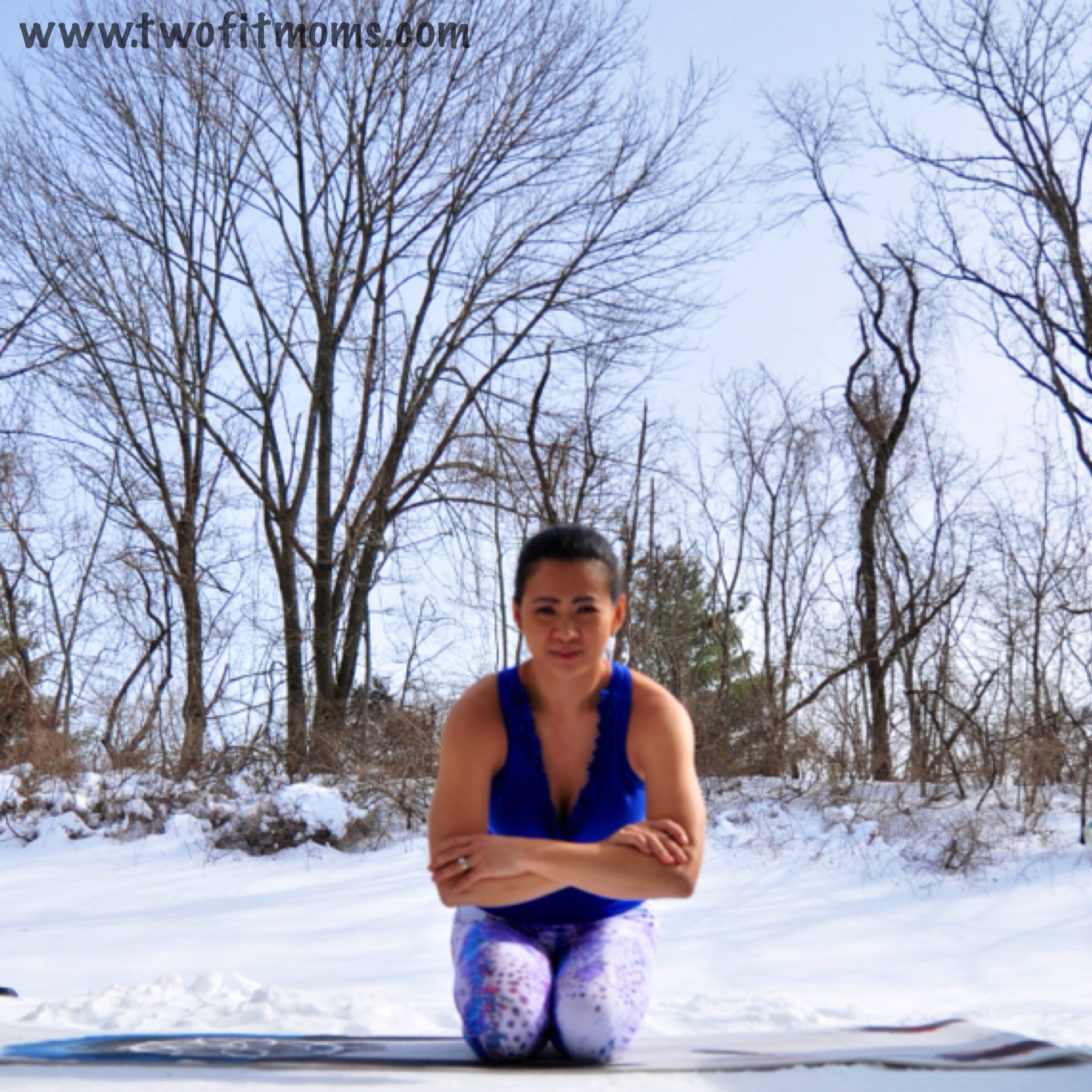
    Start by sitting on your heels. Extend your arms out, bend the elbows and loosely grab the opposite forearm by the elbow.

    Photo Feb 15, 2 26 11 PM

    Step 2: Set yourself up

    Keeping the grip on opposite arms, place your forearms down onto your mat and curl your toes under. Place the crown of your head down right in front of your forearms. Start to press your forearms firmly down into your mat as you draw your shoulders down to lengthen your neck. No turtles allowed!

    Remember to use a wall if needed!

    Photo Feb 15, 2 26 25 PM

    Photo Feb 15, 2 26 37 PM

    Step 3: Dolphin

    Keeping pressure in your forearms and neck long, slowly lift up off of your knees and walk the feet in towards your head. The goal is to get the hips stacking over your shoulders. Resist the urge to dump into your neck as weight is added onto your arms, shoulders and head. Stay here and hold for 5-8 breaths. Come down and rest in Child’s Pose before moving on.

    Photo Feb 15, 2 26 49 PM

    Step 4: One step at a time

    When you’re ready to move on, come back into Dolphin. Slowly bend one knee into your chest, then place it back down onto your mat. Repeat with the other knee. Come down and rest in Child’s Pose before moving on.

    Photo Feb 15, 2 27 01 PM

    Step 5: Headstand egg

    From Dolphin, bend one knee tight into your chest. Using your core and maybe the tiniest push off, bring the second leg into your chest. I do not suggest kicking up with straight legs. Move slowly and with awareness to prevent any injuries to your neck. Once both legs are tucked into your chest, do a little check… Are you firmly pushing into your mat with your forearms? Are your shoulders melting away from your neck? Is your core engaged?

    Photo Feb 15, 2 27 13 PM

    Step 6: Lift off!

    When you are ready to lift up, try lifting one leg at a time SLOWLY. The quicker you move, the more likely you are to fall, lose balance or tweak your neck. If you successfully lift one leg up, THEN try to bring the second leg up to meet the first. Keep the legs engaged by flointing or pointing the toes. Stay here and breathe…

    Photo Feb 15, 2 27 25 PM

    Photo Feb 15, 2 27 36 PM

    Slowly come down and take a Child’s Pose.

    Remember, this is a more advanced headstand variation! If you do not get it this time around, no worries! Your yoga journey is your own… There is no timetable to your practice. Have patience and keep practicing.

    XOXO

    Blog Signature

  • Pincha Mayurasana

    Pincha Mayurasana

    Pincha Mayurasana, or Forearmstand, is probably the scariest of all of the inversions. There is just something about being on the forearms that seems harder. I highly recommend having a block, a yoga strap and a wall nearby to practice.

    Step 1: Downward Facing Dog

    Photo Feb 05, 4 52 42 PM

    Start off in Downward Facing Dog, or Adho Mukha Svanasana.  Hands are shoulder width apart, fingers are spread wide and grip the mat, weight is equally distributed through all four corners of your palms, biceps externally rotate out, upper arm bones plug into their sockets, shoulder blades roll down the back, lower ribs corset in, navel pulls in, core engages and inner thighs rotate in. It’s a long checklist, but a solid down dog will translate to a solid inversion practice. I like to start with my fingers and move down to my feet when mentally adjusting myself.

    Step 2: Dolphin Pose

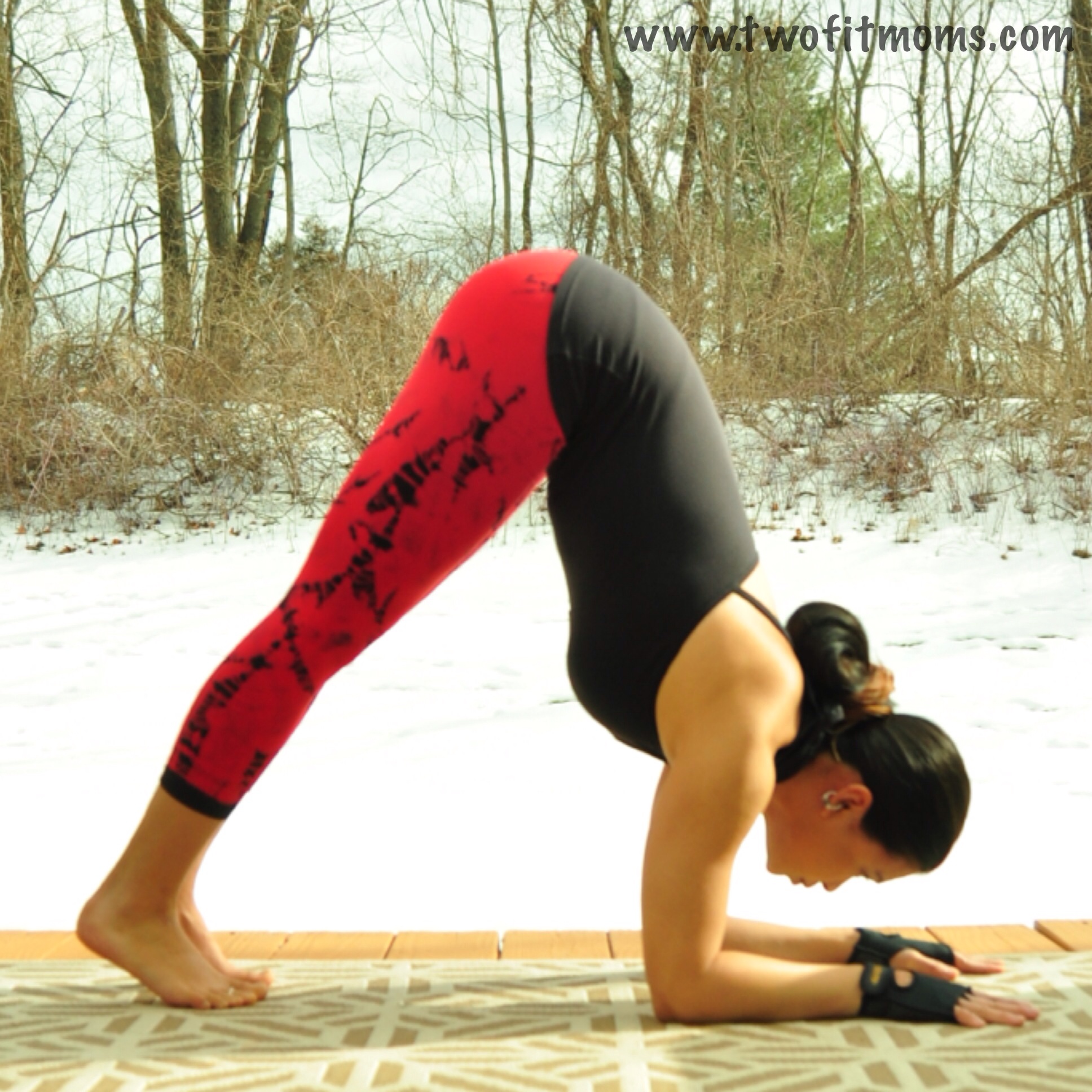
    Keeping the external rotation in those arms, slowly make your way onto your forearms. Forearms should be shoulder width apart and parallel to each other. Let the head hang neutral. Push firmly into your hands and forearms, and keep the elbows and upper arms squeezing in.  Stay here and breathe.  This is a great preparatory pose, and it will build arm/shoulder strength. You will probably start to feel this about three breaths in.  Try to stay here for five breaths and then take a Child’s Pose before continuing.

    Photo Feb 05, 4 52 56 PM

    When you are ready, come back into Dolphin Pose and walk your feet in as much as your flexibility allows. Look down and focus on the space in between your forearms.

    Photo Feb 05, 4 53 07 PM

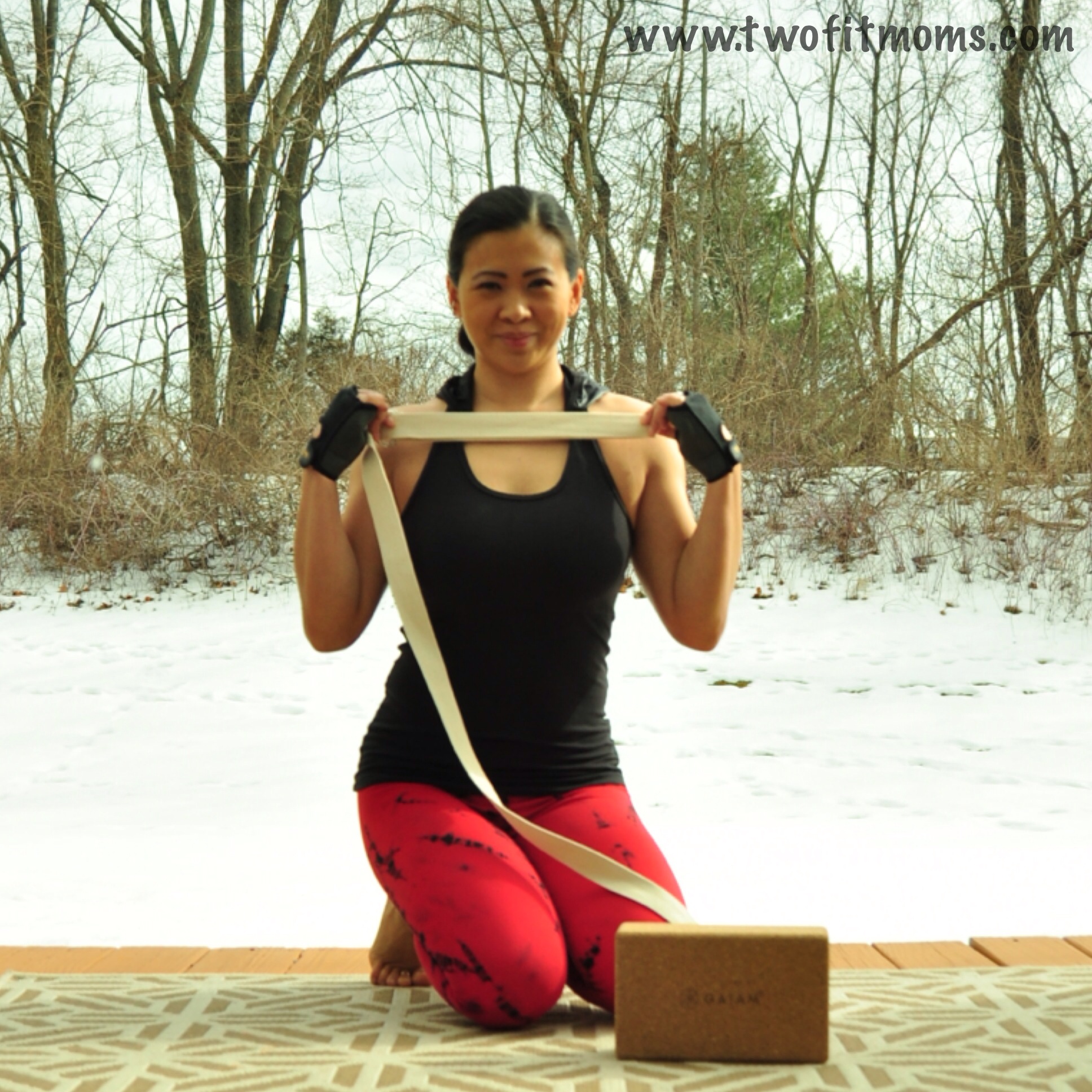
    If you are having trouble keeping your elbows in, create a loop in your yoga strap.  Measure the loop so that it is as wide as your shoulders.  Place the strap just above your elbows. Additionally, you can also use a block in between your hands.  The block should be placed longways.   Using the corners of the block, set your hands up so the index fingers squeeze the sides while the thumbs squeeze the bottom.

    Photo Feb 05, 4 53 19 PM

    Photo Feb 05, 4 53 30 PM

    Step 3: Lift a leg

    Slowly lift one leg high into the air.  Keep the hips square by flexing the foot of the lifted leg and pointing the toes down toward your mat. PLAY with lifting both legs up.  Everyone usually has a more dominant side or one that just feels more comfortable.  In the beginning, stay with the dominant leg. Once you get more comfortable, THEN practice using both!

    Photo Feb 05, 4 53 42 PM

    Step 4: Baby kick ups

    Bend the bottom leg and lightly push off of the foot – maybe only an inch or so off of your mat.  Keep the top leg energized and extended toward the sky, while the bottom leg extends out.  Both legs need to be active. Make sure not to let your face sink towards your mat.  Push actively into your forearms and hands, keep the shoulders down and away from your ears. Try to keep the arms at 90 degrees.

    Photo Feb 05, 4 53 53 PM

    Be patient. When you feel ready, you can start kicking up a bit harder to try to get the hips up over the shoulders and maybe gain more hang time.

    Photo Feb 05, 4 54 05 PM

    Step 5: Full expression

    Once you are comfortable kicking up into an “L” shape and holding it, you can start to play with bringing the bottom leg up to the top leg.

    Keep your lower ribs pulled in and your core engaged to avoid banana back.

    Photo Feb 05, 4 54 15 PM

    Don’t be frustrated if this pose does not come easily.

    “Even if you fall on your face, you’re still moving forward.” – Victor Kiam

    XOXO

    Blog Signature

  • Handstands 101: Part 2… The Kick Up

    Handstands 101: Part 2… The Kick Up

    If you are comfortable walking your feet up the wall and being on your hands, you are ready for the next move (if not, check back to my last post  here for a refresher).  The next step on your journey to handstand is the “kick up.”  As the name implies, it involves kicking your legs up into the air and placing all of your weight onto your hands.  I highly encourage you to have a person, and a wall, nearby  if this is your first time!

    Let’s get started!

    Step 1: For my newbies

    If you are completely new to the handstand and nervous, please ask a friend, partner, spouse or family member to spot you.  Sometimes just having someone there as an added safety measure reduces the fear.  Also, I recommend positioning yourself  8″-12″ inches from the wall.  This time, fingers will face the wall so that you are kicking up towards it.

    Step 2: Get set in downward facing dog

    Photo Feb 02, 2 21 03 PM

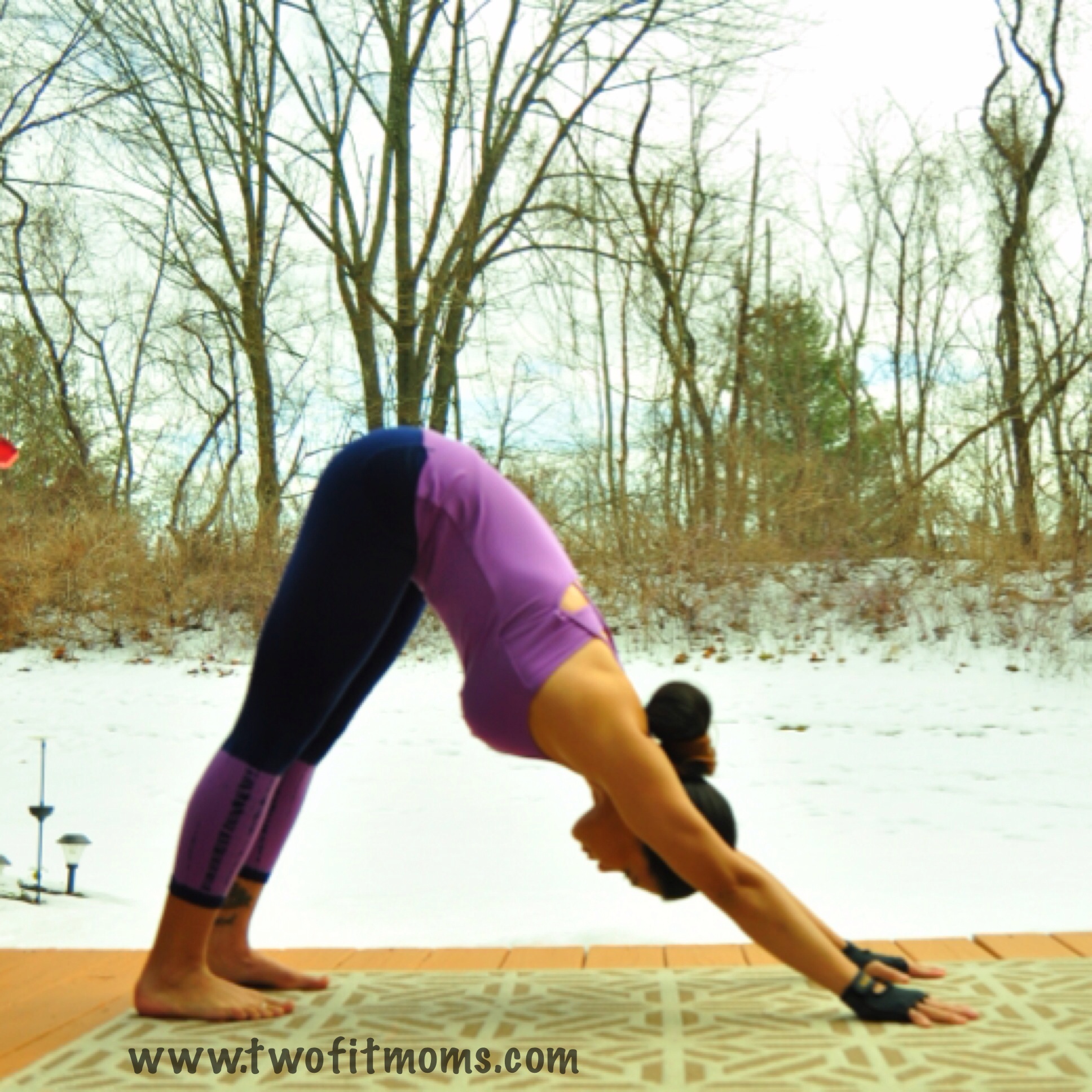
    Considered a mild inversion itself, Downward Facing Dog, or Adho Mukha Svanasana, offers the perfect starting position for your handstand practice.  Many of the alignment cues for handstand should also be applied in this pose.  Here is a quick rundown of what I discussed in my previous post.

    – Fingers are spread wide and grip the mat
    – Weight should be equally distributed through all 4 corners of your palms
    – Biceps externally rotate out
    – Arms remain straight!
    – Upper arm bones plug into their sockets
    – Shoulder blades roll down the back
    – Lower ribs corset in
    – Navel pulls in, core engages
    – Inner thighs rotate in
    – BREATHE, BREATHE, BREATHE!

    Step 3: Stack the shoulders over your wrists

    Photo Feb 02, 2 21 18 PM

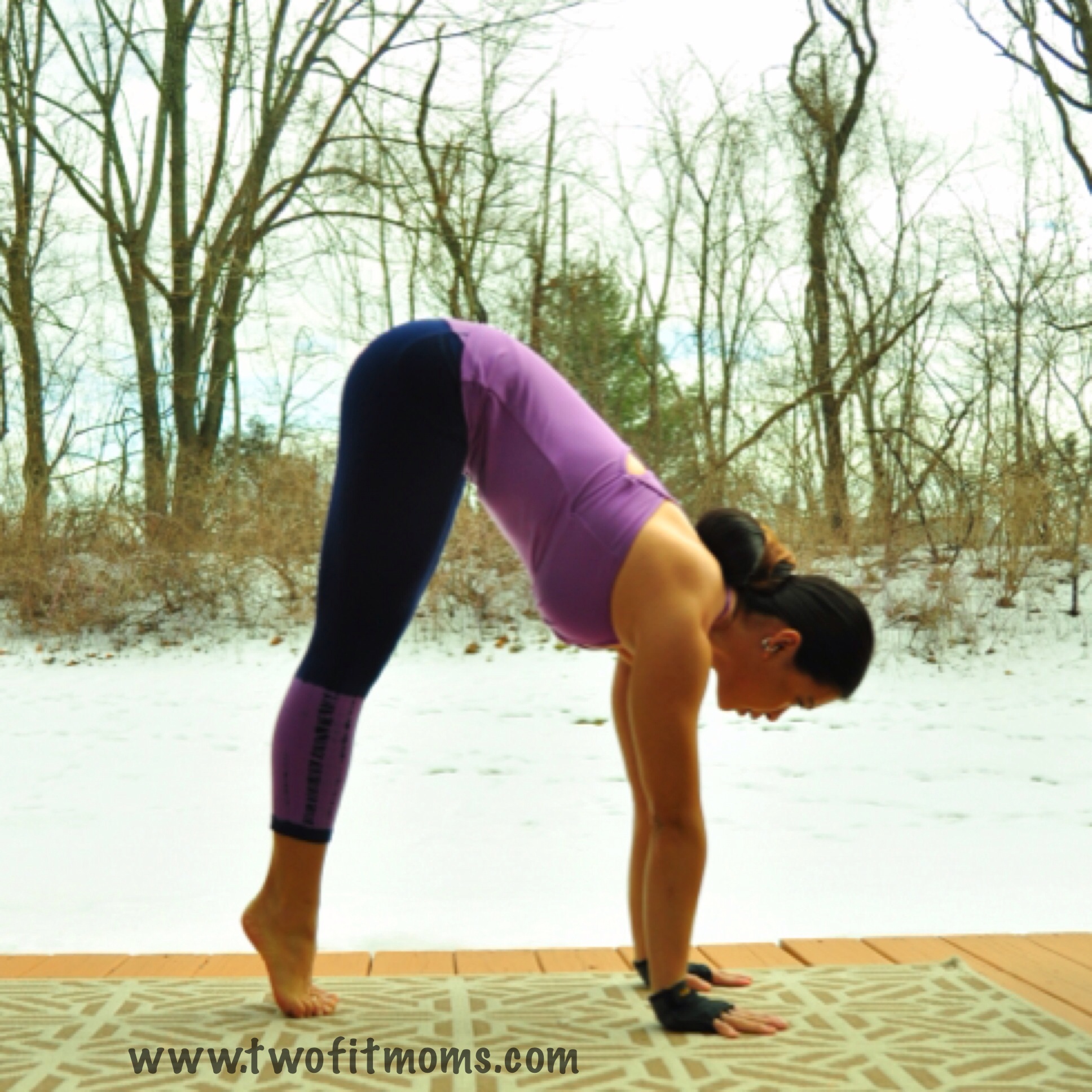
    From Downward Facing Dog, slowly walk the feet in towards the hands so that the shoulders stack directly over your wrists and you come onto the balls of your feet.  Keep your gaze down. I usually gaze slightly past my fingertips.  Make a mental note – even though you have shifted slightly forward and put more weight into your hands, the above key alignment points have not changed.

    Step 4: Lift a leg

    Photo Feb 02, 2 21 33 PM

    Slowly lift one leg high into the air.  The key is to avoid opening up your hip.  A good way to keep the hips square is to flex the lifted foot and keep the toes pointing down toward the mat.  PLAY with lifting both legs up.  Everyone usually has a more dominant side or one that just feels more comfortable.  In the beginning, stay with that leg. Once you get more comfortable, THEN practice using both!


    Step 5: Get ready to spring!

    Photo Feb 02, 2 21 51 PM

    Keeping the hips square, bend the bottom leg.  DO NOT lower the top leg down towards the ground!  Keep the lifted leg extending up towards the sky.


    Step 6: Take flight!

    Photo Feb 02, 2 22 30 PM

    Pushing off of the bottom leg, GENTLY… I repeat.. GENTLY kick off of the ground.  The first few times you try, you may only get a few inches off of the ground.  THAT IS TOTALLY FINE!  You are building confidence and trust in yourself!  Take your time and set yourself up in between attempts.  Remember that checklist in the beginning of this tutorial?  Keep going through it in your mind.

    Remember, handstands are a full body posture… so claw your mat, engage your core, floint or point those feet!

    Once you kick up, the bottom leg can extend out straight which is usually called an “L” handstand or you can bend it in towards your body (shown below).  When learning, I preferred the “L” better for gaining hangtime but please try both.  Everyone is different!


    Photo Feb 02, 2 22 12 PM

    Whatever method you choose, ALWAYS remember to breathe.  The traditional way is to inhale while kicking up.  I like to exhale on the way up. I know, it’s weird. ..but I feel more connection to my core this way.  When you are learning and trying to remember what to do, I think it’s more important to just REMEMBER to breathe.  So play around with it, and try it both ways.


    HAVE FUN and BE SAFE!

    XOXO

    Blog Signature


  • Headstands 101…Continued

    Headstands 101…Continued

    Last week, I posted a tutorial for a basic tripod egg headstand. If you missed it and would like to join in on the inversion fun, please click HERE to get started.

    If you’re still reading, I will assume that you’ve managed to get through the first Headstand 101 article and perform your first inversion. Congratulations! Getting yourself to this point is significant—I know many of you had to overcome fears and put aside a mountain of self-doubt, but here you are, experiencing success.

    TripodEggCollage

    In this tutorial, I will guide you through the remaining steps to get yourself into a full, tripod headstand with extended legs. Let’s get started.

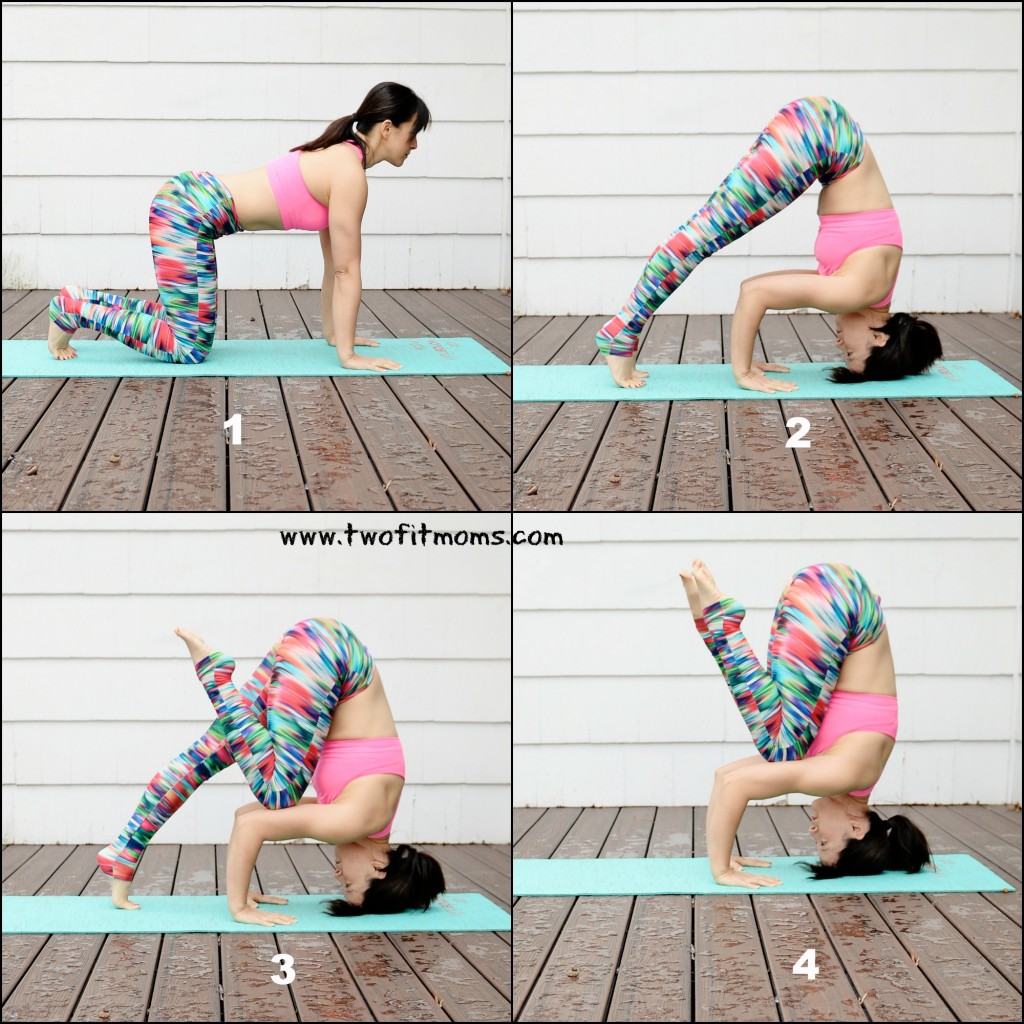
    From your tripod egg pose (step 4 in the collage above), engage your abs and begin to shift your weight into your left knee. As you push your left knee firmly into your left tricep, your right knee should feel light on your right tricep.

    Your first goal is to lift your right knee just 1 or 2 inches off of your tricep. If you can manage to do that, lower your right knee, and repeat the exercise on the other side Step1(shifting weight onto the right knee and lifting the left knee a few inches instead). Most people will find this task to feel more natural on one side. Although we traditionally practice both sides in yoga, in these beginning stages of learning a new inversion, I advise you to just work on getting comfortable by practicing on the side that feels more natural.
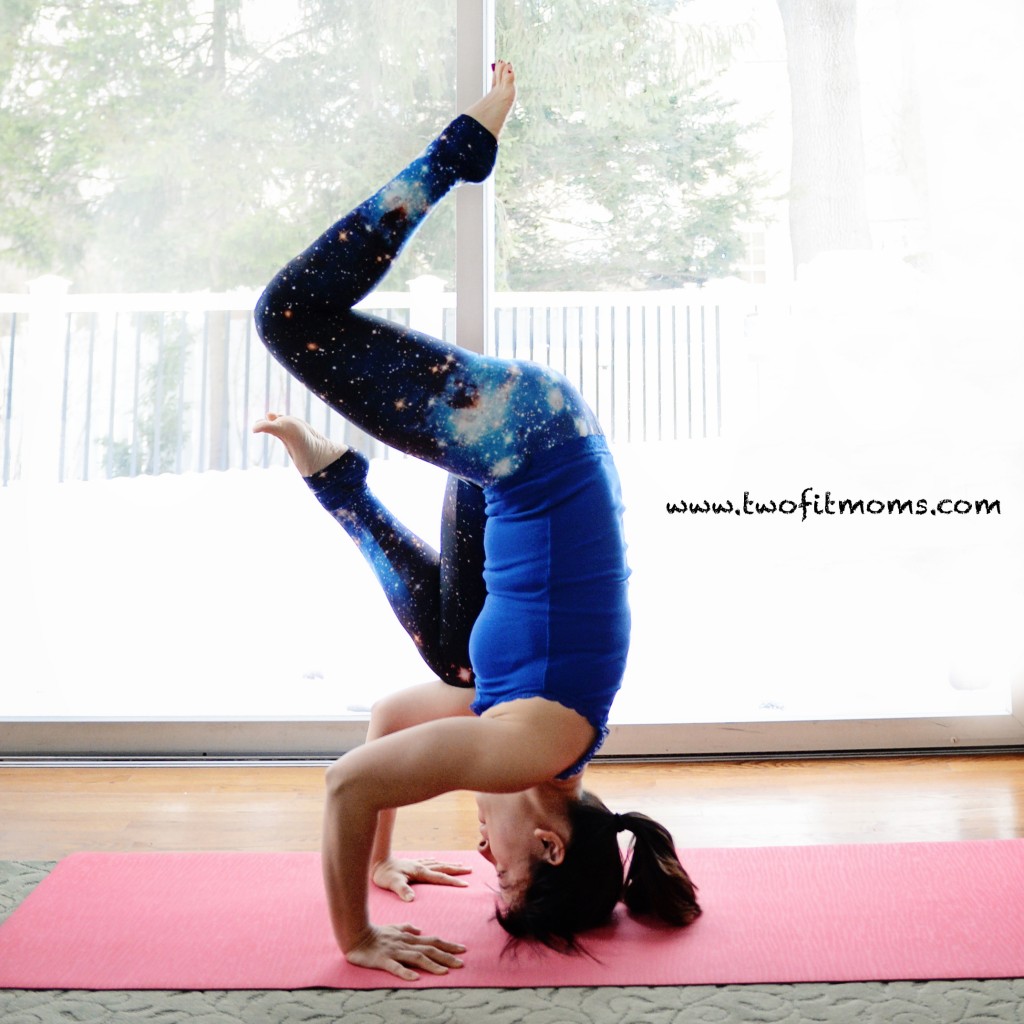
    Once you’ve determined which side feels more comfortable, practice lifting that one knee a few inches at a time into the air. Move slowly, and please resist the urge to throw both knees into the air simultaneously.  Lifting both legs simultaneously adds much more core instability to the pose. For beginners, our strategy is to maintain as much stability as possible by keeping one knee planted on one tricep until the other leg is fully extended.

    Step3

    If you are unable to lift your knee at all, continue practicing the exercise of shifting your weight back and forth between triceps. You will build the strength and stability in due time.  Please do not rush the process by deciding to kick up into a headstand. NEVER kick up into a headstand. Your head and neck are bearing your body weight, and the last thing you need to do is to add the instability and sharp movement of a kick-up.

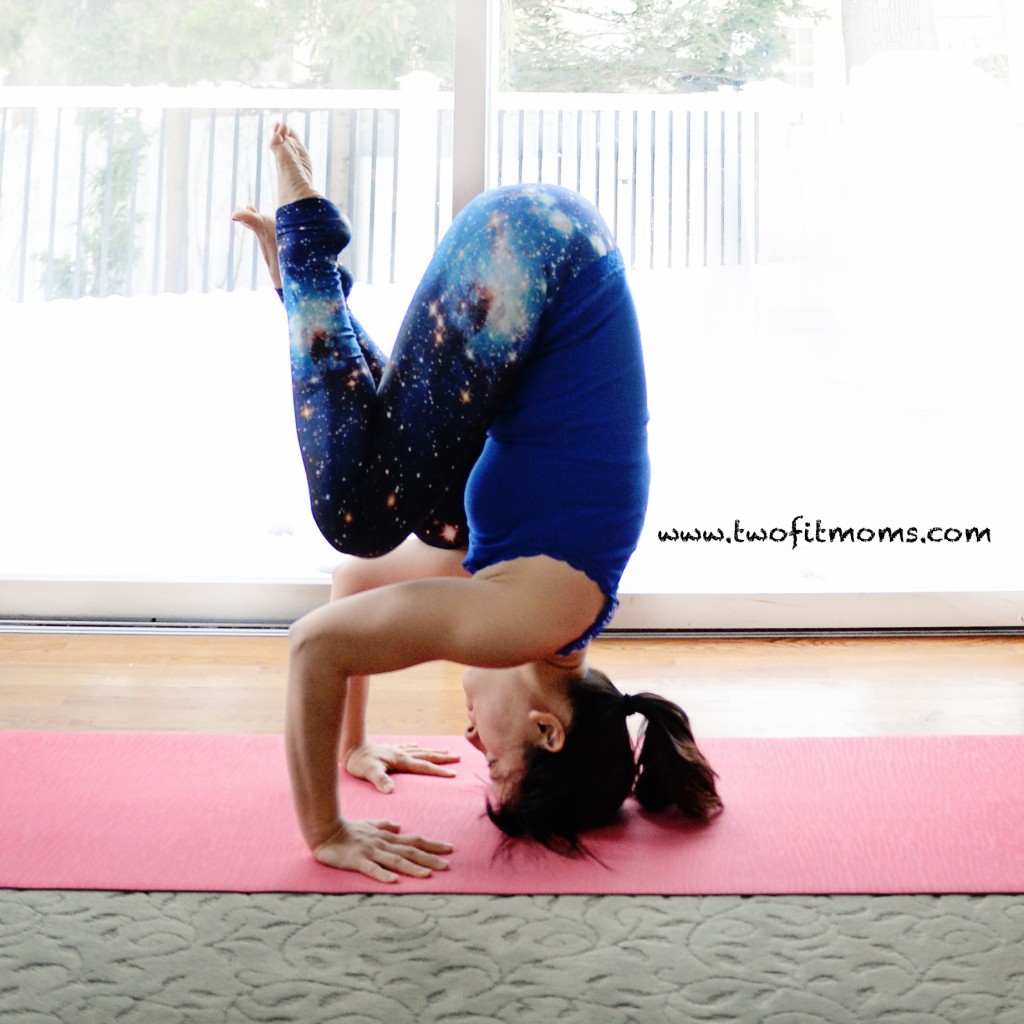
    If you DO manage to extend one leg into the air, notice whether your body is swaying.  If so, make an effort to engage all of your muscles.  Keep your core tight and energize your extended leg by pointing, flexing or “flointing” your foot.  Flointing is essentially pointing with the ball of your foot—think of Barbie feet that look like they are perpetually in high-heeled shoes.

    Keep practicing your headstand with one-leg extended until it feels stable. Do not move on to the next step until you are comfortable and stable with one leg fully extended.

    Step4

    Before you extend your second leg into the air, run through this checklist in your mind:

    -Is your core engaged?

    -Are you remembering to breathe?

    -Are you flointing/flexing/pointing the foot of your extended leg?

    -Are you making an effort to keep your elbows squeezing in rather than splaying out to the sides?

    -Is your neck nice and long?

    If you’ve answered yes to these questions, slowly begin lifting your second knee into the air. Again, you will feel most stable if you lift in small 2-inch increments.

    Step5

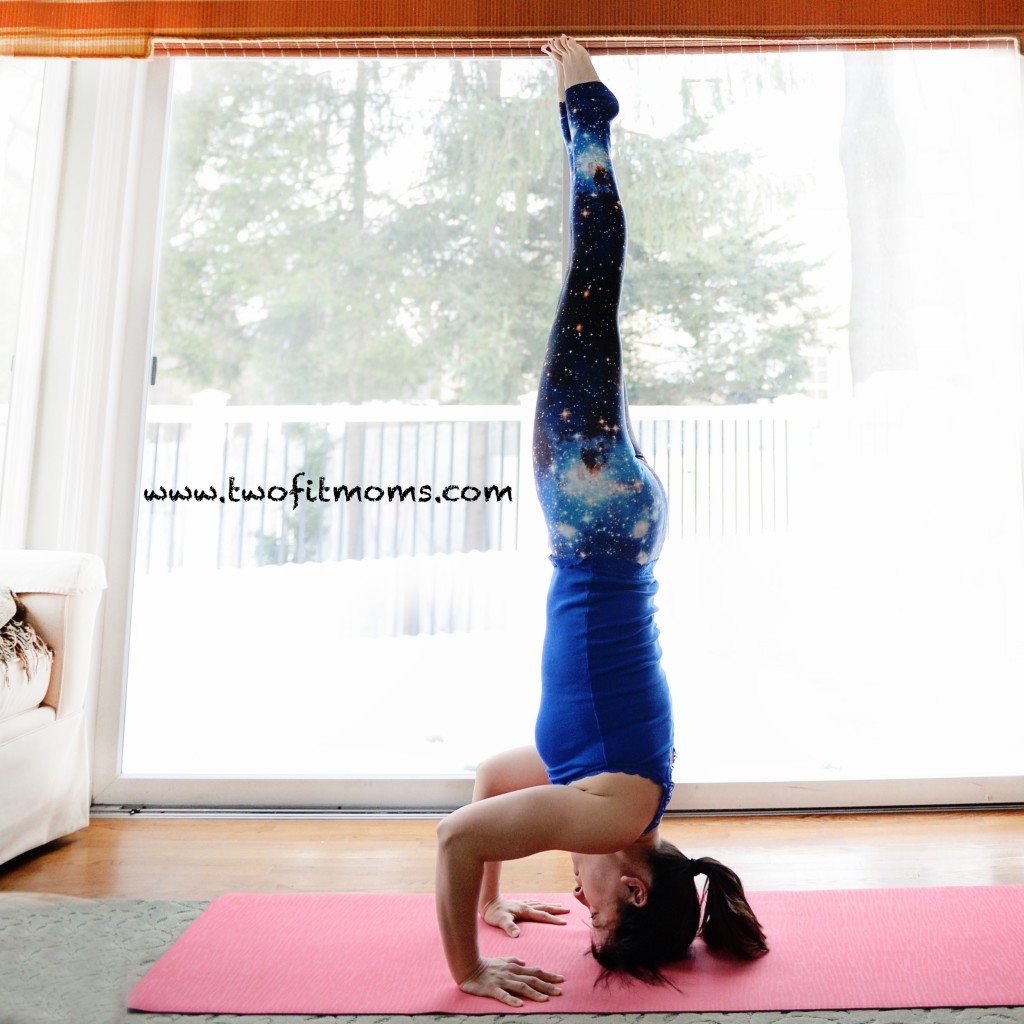
    Lift slowly and maintain an engaged, energized feeling through out your entire body to find stability.  Once you find full extension of both legs, see if you can hold the pose for 5 full breaths.  Congratulations.  You did it!

    Step6

  • Handstands 101: Building Your Foundation

    Handstands 101: Building Your Foundation

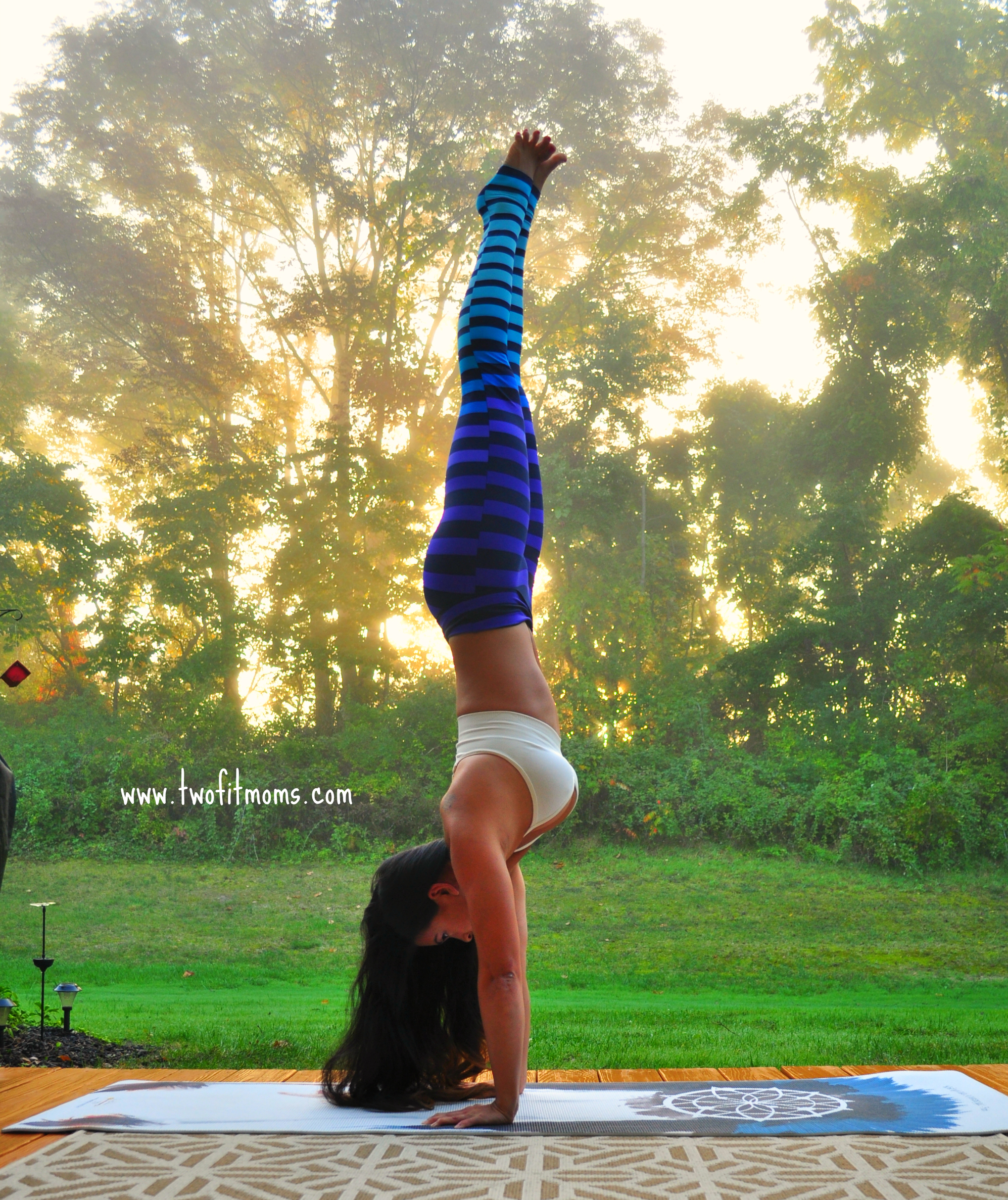
    Handstands have become an integral part of my practice.  They can be fun and exhilarating, and can take your practice to a whole new level.  For beginners, they can be scary and seem impossible.  Here is how you can comfortably start a handstand practice. 

    DSC_6079

    Step 1: Get out of your head!

    The phrase “I can’t” can no longer be in your vocabulary. Although the journey to a free-standing handstand may seem impossible for you, it isn’t!  Handstands are not built in a single day… for most people it takes time, practice and patience.  If you cannot do something today, that does not mean you will never do it.  All of us START some where, and all of us were BEGINNERS at some point.  So get it out of your head that you can’t do a handstand and get it into your head that you WILL!

    Step 2: Your phalanges are your best-friend

    Photo Jan 31, 8 04 34 AM

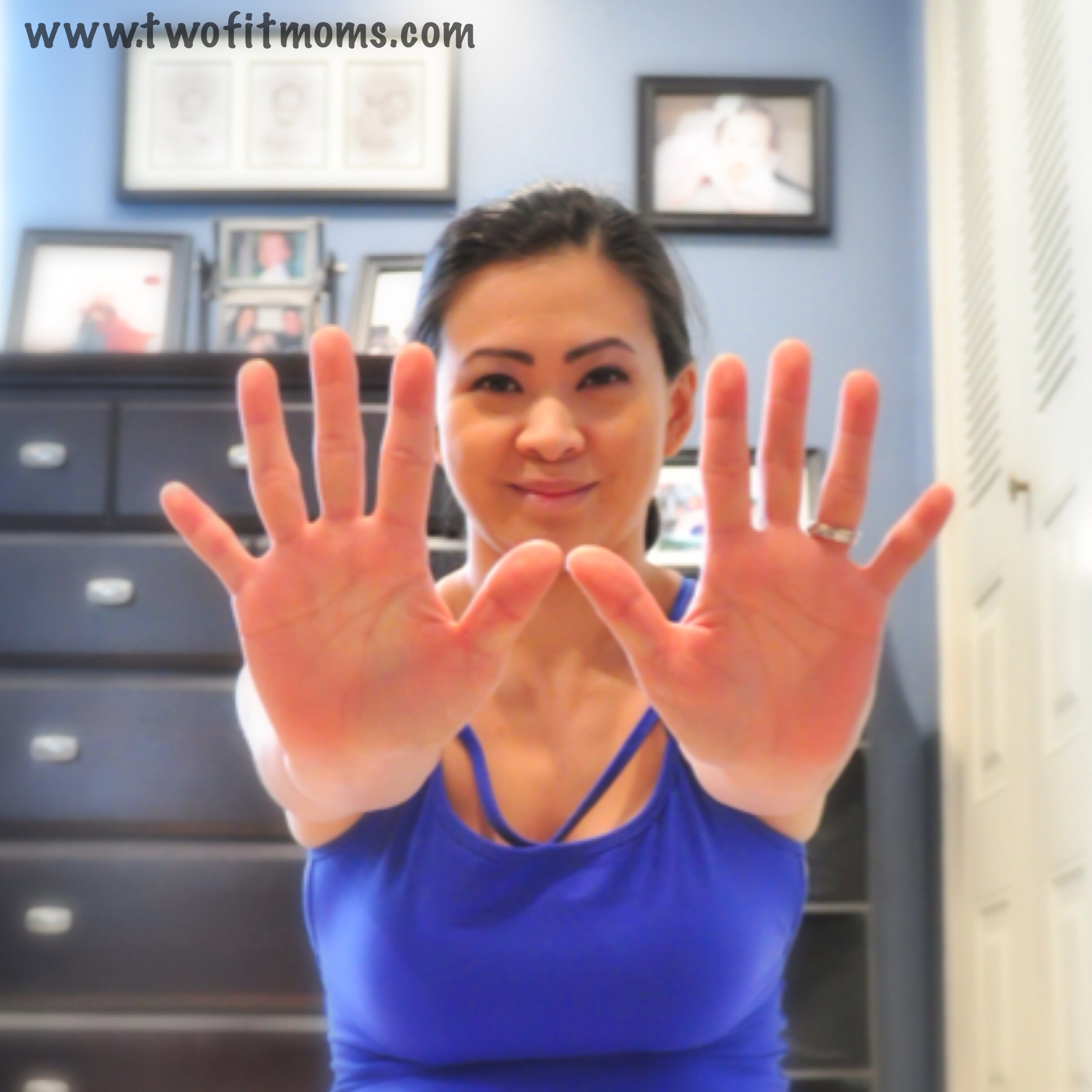
    Just as the name implies, the goal is to be able to balance on your HANDS.  Your ten little fingers are the key to helping you balance and connect with the earth.  The weight of your body should be equally distributed through all four corners of your palms.  Too far toward the heel of your hand, you will come down immediately… too far toward your fingers, you will fall the other way and hurt your fingers.

    GRIP your mat with your fingers!  Keep your fingers active by clawing your mat.  Those ten little digits can make or break your handstand.  By actively using them, it will keep your weight centered and help you stay balanced.

    Step 3: Building your foundation

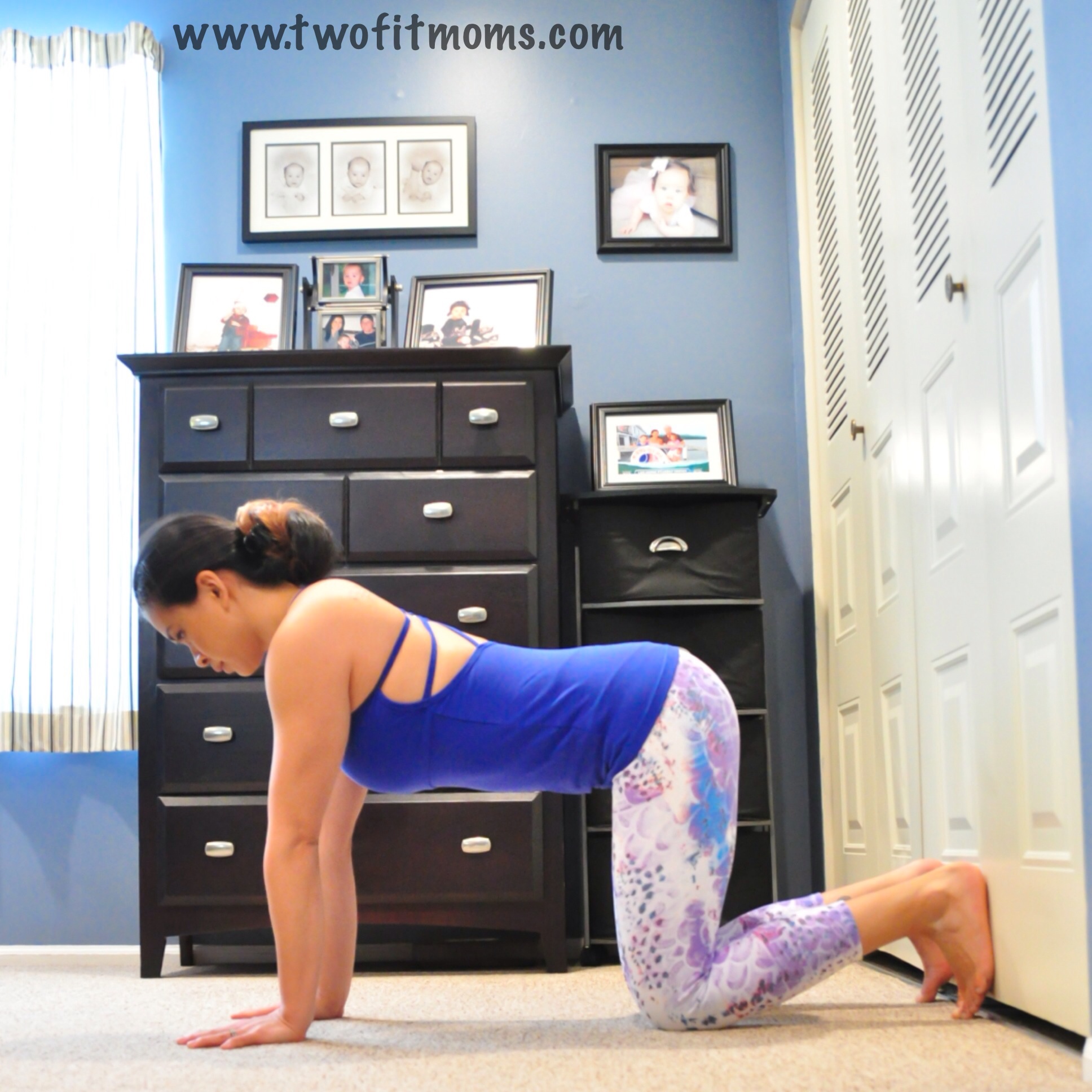
    Photo Jan 31, 8 04 50 AM

    Time to find a wall space!  Begin at the wall and make your way into tabletop position with your heels going up the wall.  Set yourself up so that your shoulders are directly over your wrists and your hips are over your knees.  Hands are shoulder width distance apart.  Remember what we just talked about?  Spread your fingers wide, index fingers will be parallel to one another or close to that.  Everyone is different, so play with this!

    Roll the biceps out!  You will hear this often and may think… What the hell does that mean?  What this implies is an external rotation of your arms.  Still lost?  Try this little exercise… Sit up tall and extend both arms out in front of you so that hands are shoulder width apart, hands are flexed and index fingers are parallel to one another.  Slowly rotate the hands so that the index fingers start to point towards one another… Feel the upper arm bones pull out of their socket and feel your upper back round? This is NOT what we want.  Now, slowly start to rotate the hands back out and bring the index fingers back to parallel… Feel the arm bones plug back in, the upper back straighten and shoulder blades roll down the back.  Bingo!  You can exaggerate this feeling by actively rolling the shoulders away from your ears.

    Now take that external rotation into your tabletop position against the wall!

    Step 4: Lift those hips!

    Photo Jan 31, 8 05 06 AM

    Time to add some more weight onto those hands and arms! From tabletop position, push into your hands and lift your hips up into a shortened downward facing dog.  Your feet will press into the wall.  Keeping your hands and arms exactly as is, slightly shift forward so that the shoulders line up directly over the wrists again.  Keep your gaze focused on the ground and slightly beyond your fingers.  Feel the weight distribute equally through your palms, feel your fingers claw at the earth.

    Take a few breaths and come down if you need to rest!

    Step 5: Walk the feet up the wall

    Photo Jan 31, 8 05 21 AM

    Slowly bend one knee and bring the foot higher onto the wall.  Push into the wall with that foot so the bent leg straightens and you can slowly bring the second foot up to meet the first.


    Step 6: Congratulations on your first handstand!

    Photo Jan 31, 8 05 36 AM

    When you straighten both legs, your hips will stack over your shoulders which should already be over your wrists. Suck your bottom ribs in by not dumping into your chest.  This will help prevent the “banana back” or curve in your spine.  Engage your core and bring your navel in.  Masumi described it best… It’s similar to the feeling you get when someone throws a football to you to catch.  Your ribs pull in, your core engages to prepare for the impact.  Keep your legs engaged, feet pushing into the wall!

    Congratulations!  You’ve done your first handstand!  Stay here and breath.  Try to work your way up to ten deep, slow breaths in and out through your nose.  Not only will this get you comfortable on your hands, this exercise will also start to build strength in your wrists, arms, shoulders, core and legs.

    Step 7: Take it up a notch!

    Photo Jan 31, 8 05 58 AM

    Only when you are ready, you can start to play with lifting one leg actively into the air. Keep the hips square towards the wall and the inner thigh rolling in.  A great way to practice this is by keeping the lifted foot flexed.  Are your toes still pointing toward the wall?  Always keep one foot solidly pressing into the wall.


    Step 8: Relax and do a happy dance!

    Congratulations! You did it! Remember… everyone’s practice is unique and progresses at a different pace. Do not compare yourself to others.  Your practice is YOUR own.

    XOXO

    Blog Signature


  • Headstands 101:  Your First Inversion

    Headstands 101: Your First Inversion

    If you want to invert but don’t know where to begin, you’ve come to the right place.  You CAN do a headstand safely and without fear—even if you have no prior experience in gymnastics, dance or yoga.  When I began my headstand practice about 14 months ago, I had absolutely NO background in any of these areas. I only started practicing inversions Headstands101at the age of 36!  It is never too late to learn a new hobby or skill.  Just be patient, and remember to practice.  It may not happen for you today, and that’s ok!  There is no timetable for success.  I will equip you with the tools and knowledge, and you will work at your own pace until you feel comfortable in the pose.
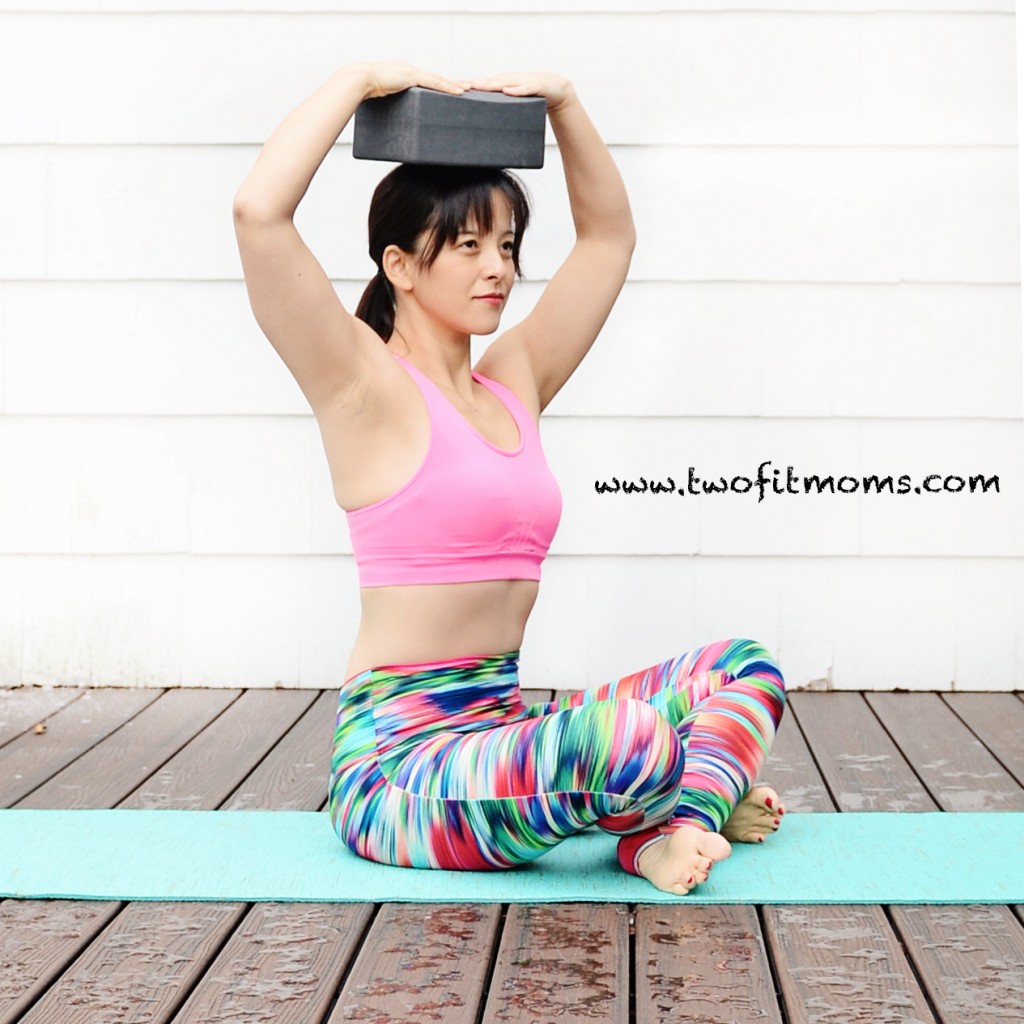
    The inversion I want to introduce today is the tripod egg headstand.  The “tripod” refers to the triangle shape produced by the placement of your hands and the top of your head.  The “egg” refers to the tight oval tuck shape of your body in the final pose.  Please approach this pose with a can-do attitude.  You CAN, and you WILL.

    Before attempting this pose, warm up your body with a bit of movement and stretching.  Hamstring flexibility is very important in this pose.

    Let’s get started:

    BalanceBlock
    Step 1:  Find a book (or yoga block), and place it on top of your head to find the balance point. Press the book firmly onto your head so that you can remember the feeling of that balance point.  The balance point of the book will not necessarily be your balance point in a headstand, but it is a starting point, and you can adjust accordingly once you test that spot for comfort.

    Step 2:  Come onto your hands and knees into tabletop position.  Check your form, and make sure that your shoulders are stacked directly above your wrists, and your hips are stacked above your knees.
    Tabletop

    Step 3:  Bend your elbows to form 90-degree angles, and place the top of your head onto the floor in front of your hands.  Make sure that you can see your fingertips at all times!  Your hands should NOT be along side your ears.  Your hands and head form a triangle rather than a straight line.

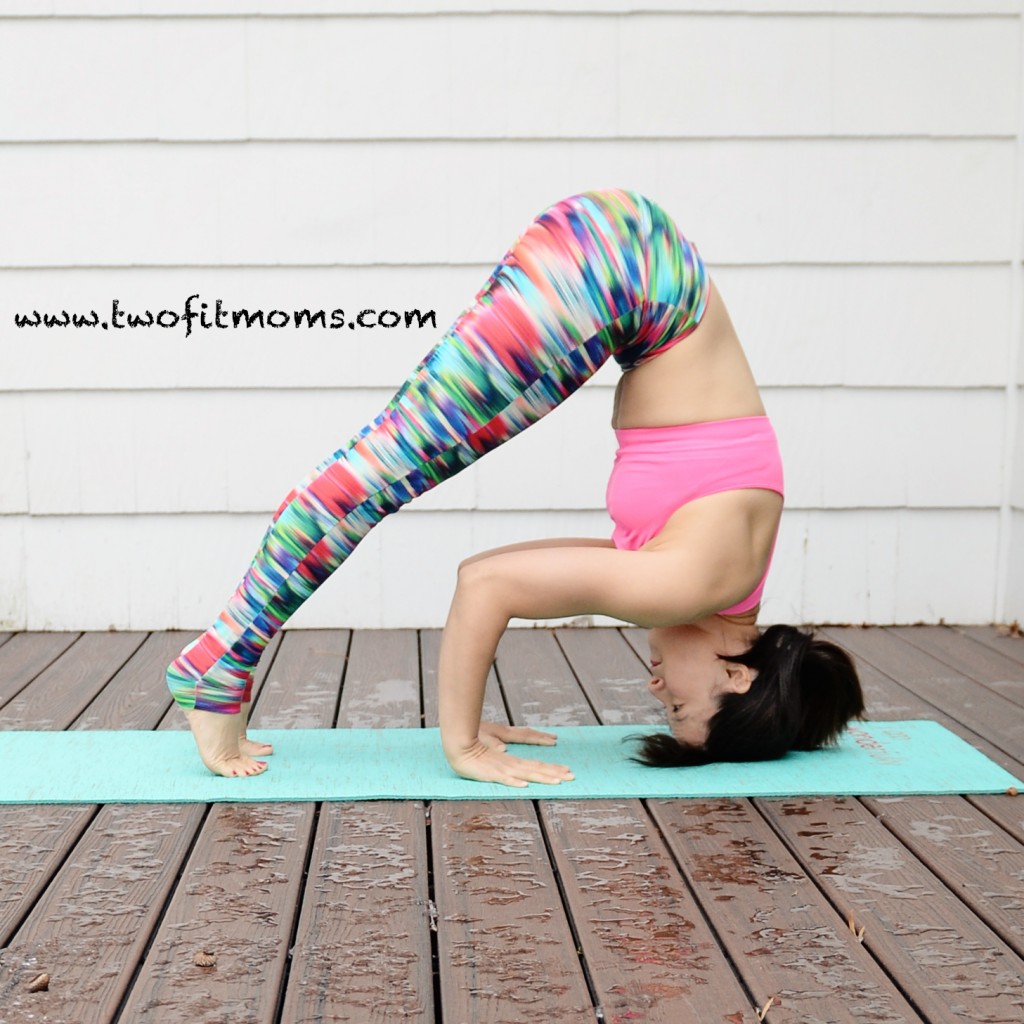
    Step 4:  Tuck your toes, and lift your knees from the floor.  Walk your feet in towards your hands/head so that your hips are lifted high into the air.  Assess how you feel.  If your hamstrings are straining, stop and re-visit this pose after you feel Dolphinmore limber.  If your neck feels strained, focus on lengthening your neck so that your shoulders are drawn away from your ears.  If the top of your head hurts, adjust your balance point a few inches.  Personally, my own balance point in a headstand is not the same as the balance point with the book on my head.  I usually balance a few inches closer to my forehead.  This is an exploration.  Find the right spot for your own body.
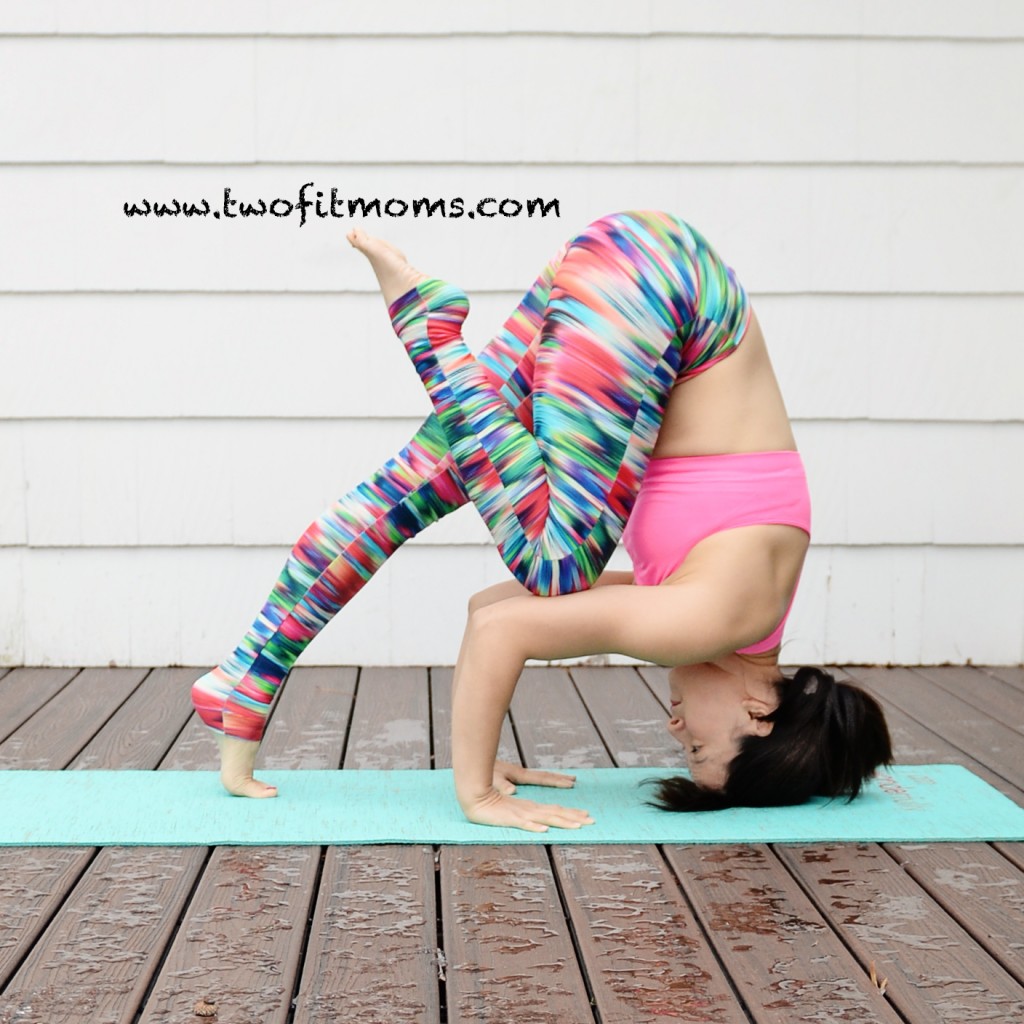
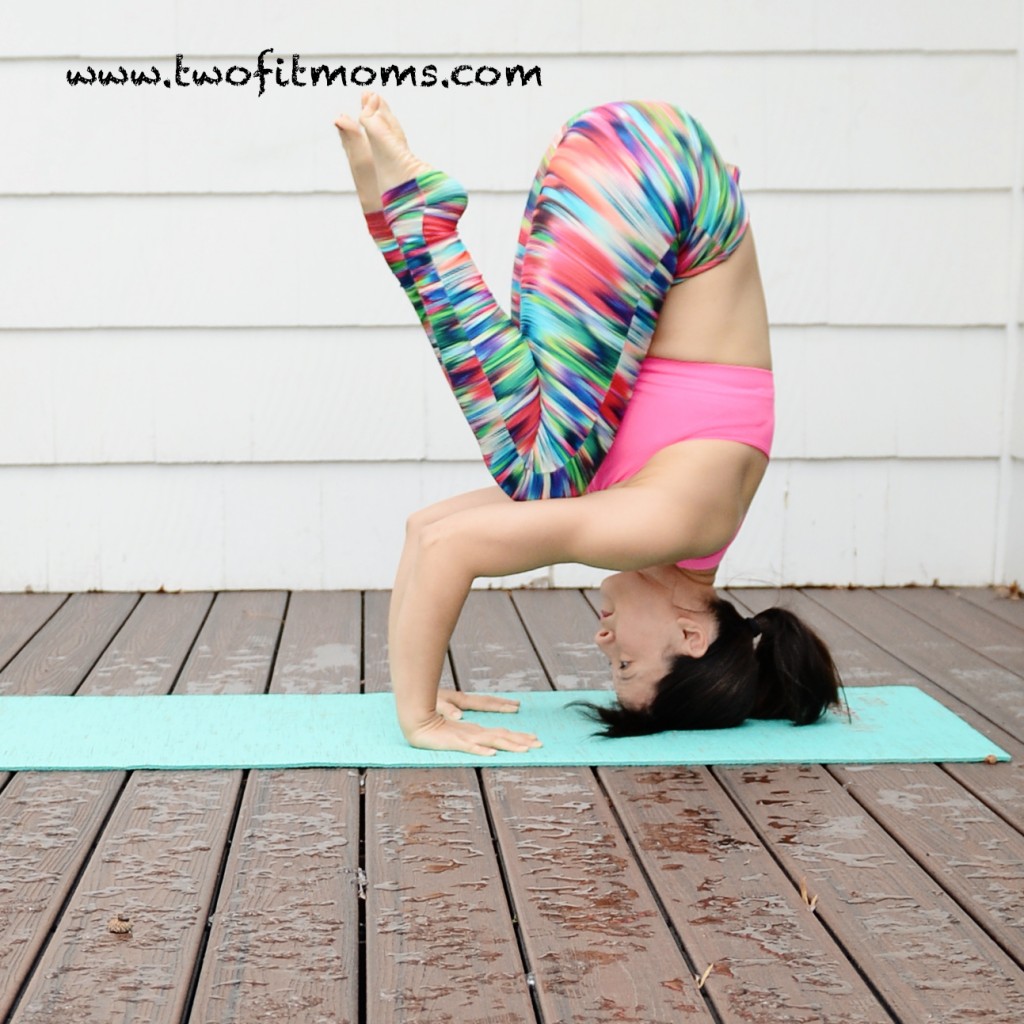
    Step 5:  Make sure that your elbows do not splay to the sides.  Your elbows should continue to point in the SAME direction that you are facing!  If you feel comfortable, lift one knee onto one tricep.
    DolphinOneLeg

    Step 6:  If you still feel comfortable, slowly lift your other foot from the floor and place it on the back of your other tricep.  Remember to keep your neck long, and breathe!  Congratulations on your very first headstand.
    HeadstandEgg

    One important point to mention—if you lose your balance, tuck your chin to your chest, round your back, and somersault out of the pose.  You might even want to practice your forward rolling skills PRIOR to starting this tutorial.  It’s no fun to fall, but if you somersault out of the pose, you technically aren’t falling.  It is a controlled and safe way to exit the tripod egg headstand.

    Wherever you may be in your yoga practice today, I assure you that it is perfect.  Honor yourself and your body.  Namaste.