Category: Z Featured

Our editors pick the cool stuff for you

  • Introduction to Dropbacks

    Introduction to Dropbacks

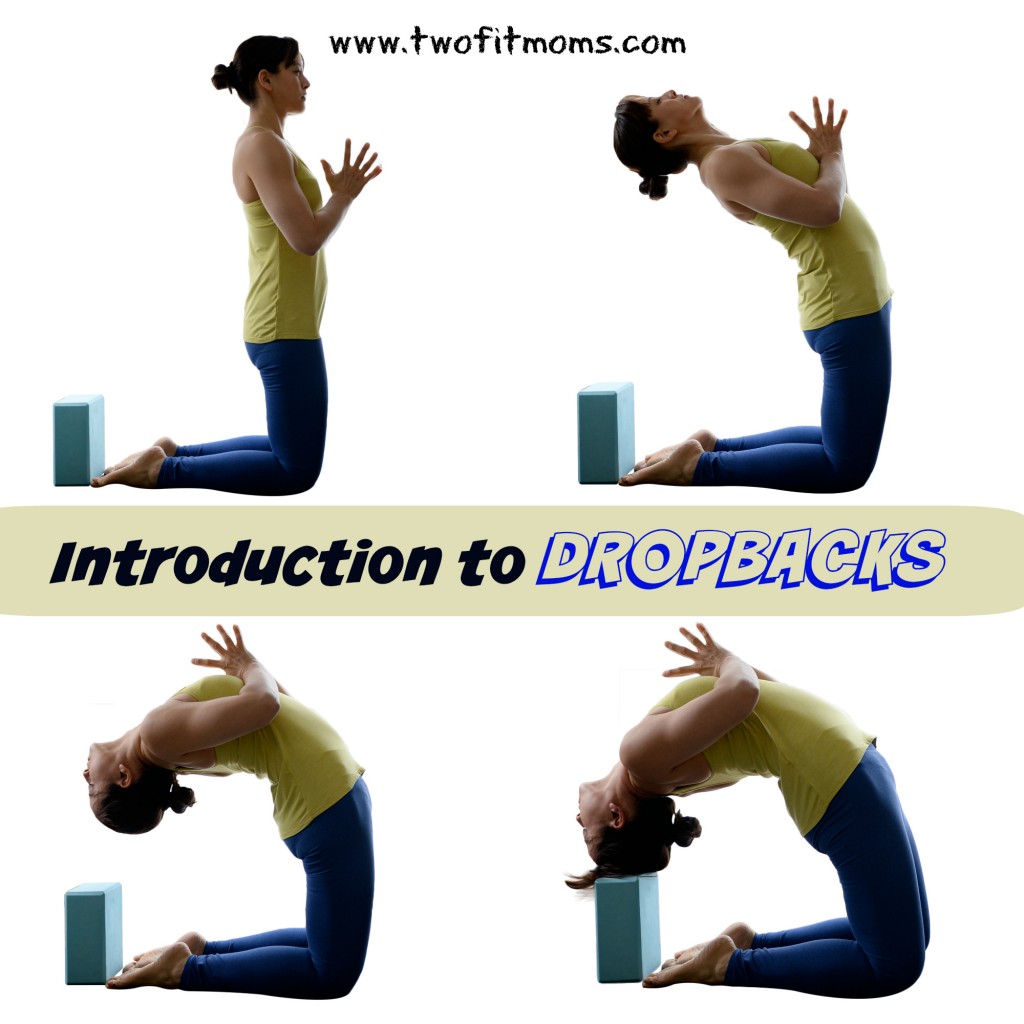
    I originally created this four-step photo tutorial for my Instagram account, but I decided today that it was worthwhile to also post it to the website. I am always looking for new and creative ways to use my yoga blocks. Here is an unconventional, but very useful way to deepen your practice with a bit of help from a block.IntrotoDropbacks

    Dropping back into any kind of backbend can be terrifying the first time. Trust me, I get it. I’ve had visions of splitting my head open, and of course, breaking my neck. Hopefully, this post will alleviate some of your fears. Rather than starting with a traditional yoga dropback, which begins in a standing position and ends in wheel pose, I recommend starting a bit closer to the ground with a camel dropback.

    If you freak out half way through the tutorial, you can simply reach your hands to the mat on either side of you. Not a big deal. This tutorial will help you build confidence at YOUR pace.

    In my own experience, I’ve found it to be much more of an accessible feat to drop back if the process is broken down into baby steps. Rather than starting with the goal of dropping your head onto the mat, let’s work with a block and drop back onto that.

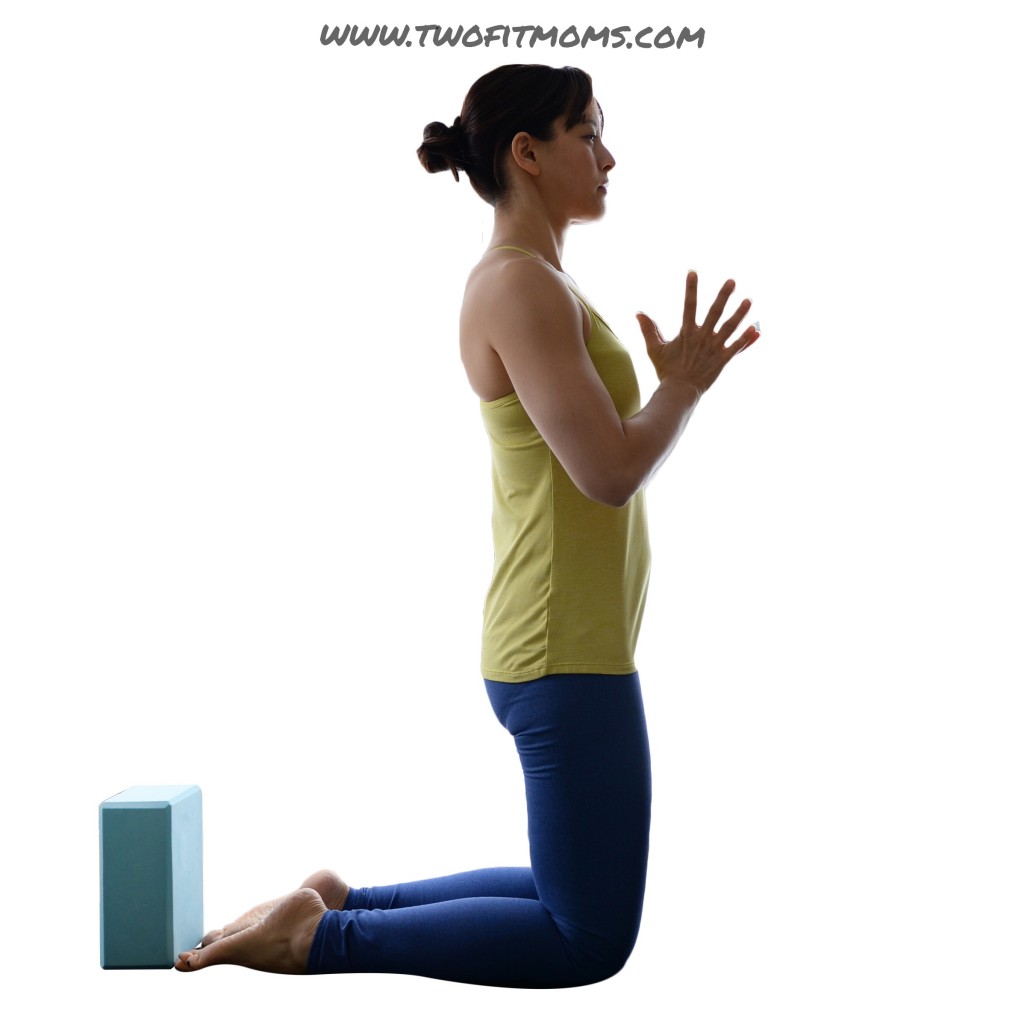
    Step 1
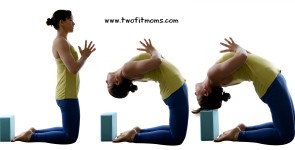
    Flip a block to its tallest orientation, and place it against your toes as you kneel on your mat. Bring your palms together in front of your heart.Step1wm

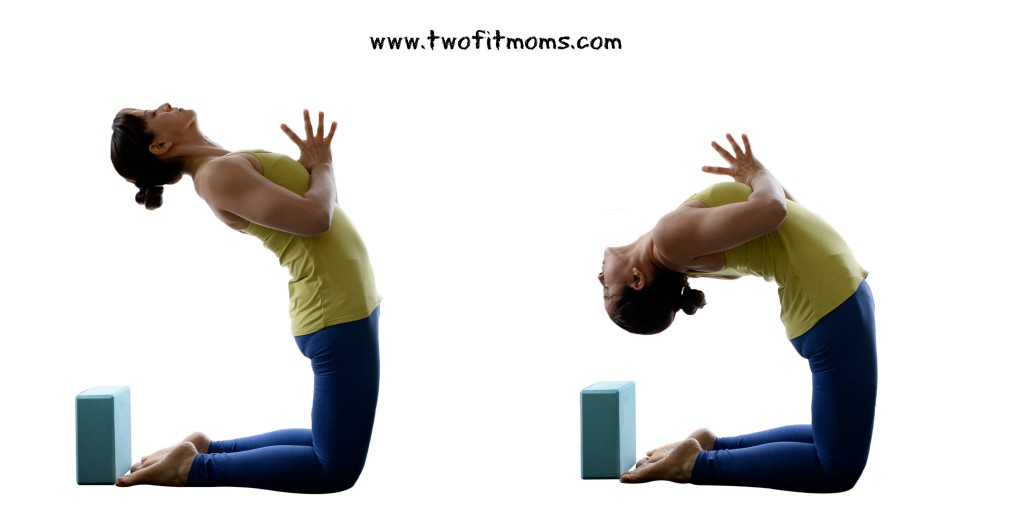
    Steps 2 and 3
    Slowly begin to push your hips forward, and find strength in your legs, as you lift your chest toward the sky and bend back. Be mindful of your breath—it’s so easy to forget to breathe while backbending. Inhale and exhale deeply through your nose.
    Steps2and3

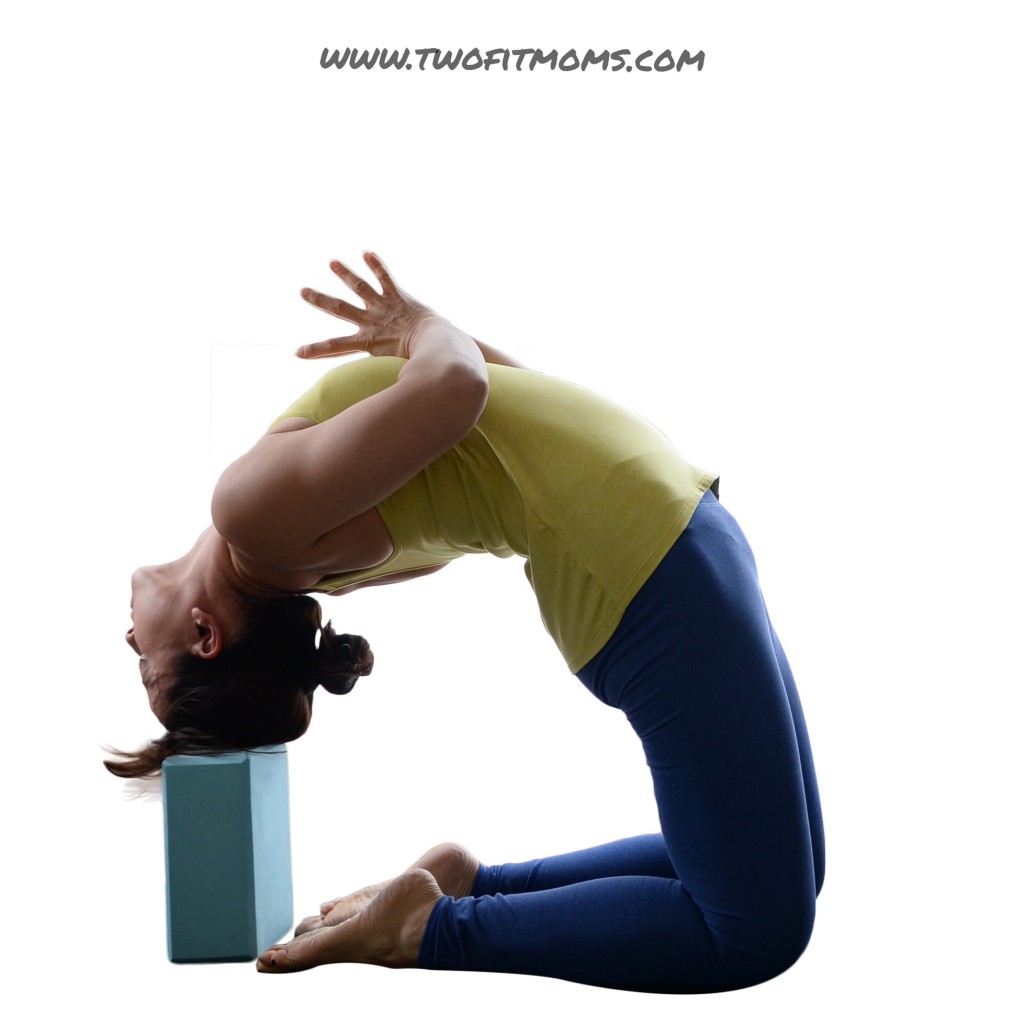
    Step 4
    Gently place the top of your head onto your block. If the block is currently beyond your reach, start with a higher surface—maybe a stool with a cushion. See if you can hold this position for a few deep breaths. To exit the pose, engage the core, engage the thighs, and slowly rise back to a kneeling position.Step4wm

    You CAN overcome your fear of dropbacks, one step at a time. Once you become comfortable with the block at its highest orientation, go ahead and flip the block onto one of its other edges to practice a deeper dropback. Let us know how you do.


  • Meatless Shepherd’s Pie

    Meatless Shepherd’s Pie

    Every year I make Shepherd’s Pie for St. Patrick’s Day.  In keeping with the theme, I made it this year as well — but I tried my hand at a vegetarian version.  Actually, I made two this year — one with meat and one without.  I wanted a side-by-side comparison.  Plus, it’s one of my husband’s favorite dishes, so I knew having two on hand wouldn’t be the worst thing!
    shepherdspiebanner
    Similar to our Meatless Bolognese, I substituted ground meat with baby portobello mushrooms.  I also replaced the traditional mashed potato topping with our Cauliflower Mash.  So, not only is this dish vegetarian, but it is also a great low carbohydrate option.

    You can also make this recipe vegan if you skip the egg yolk and grated parmigiano-reggiano in the Cauliflower Mash, but since we do not follow a vegan diet, I incorporated both.

    My husband, who is the barometer given his love for Shepherd’s Pie, gave me two thumbs up.  Actually, he told me that I MUST post the recipe on our site.  I agree.  It’s so yummy and a totally acceptable substitute for the traditional meat version.  While my kids preferred the meat pie, they didn’t turn their noses up at the veggie option.

    So, if you are looking for a festive St. Patrick’s dish,  or just a really delicious and hearty vegetarian (or vegan) entree, try our Meatless Shepherd’s Pie.  We think you are going to love it!

    Meatless Shepherd’s Pie
    Serves four

    For the filling:

    2 tablespoons olive oil
    16 ounces of baby portobello mushrooms (chopped — approximately 4 cups)
    1 large carrot grated (approximately 1 cup)
    1 large onion grated (approximated 1 cup)
    2 cloves of garlic, crushed
    2 tablespoons of tomato paste
    1/2 cup of red wine
    1/2 cup of chicken or veggie stock
    1/2 cup of frozen peas
    2 tablespoons of Worcestershire sauce (Vegan version available)
    1/2 teaspoon of dried thyme (or fresh, but add a bit more)
    1/2 teaspoon of dried rosemary (or fresh, but add a bit more)
    1/2 teaspoon of salt
    1/8 teaspoon of pepper

    Topping:

    2 cups of Cauliflower Mash
    2 egg yolks
    1/2 cup of grated parmigiano-reggiano cheese

    Preheat oven to 400 degrees.

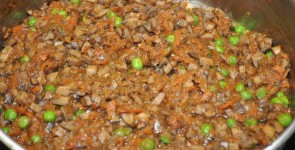
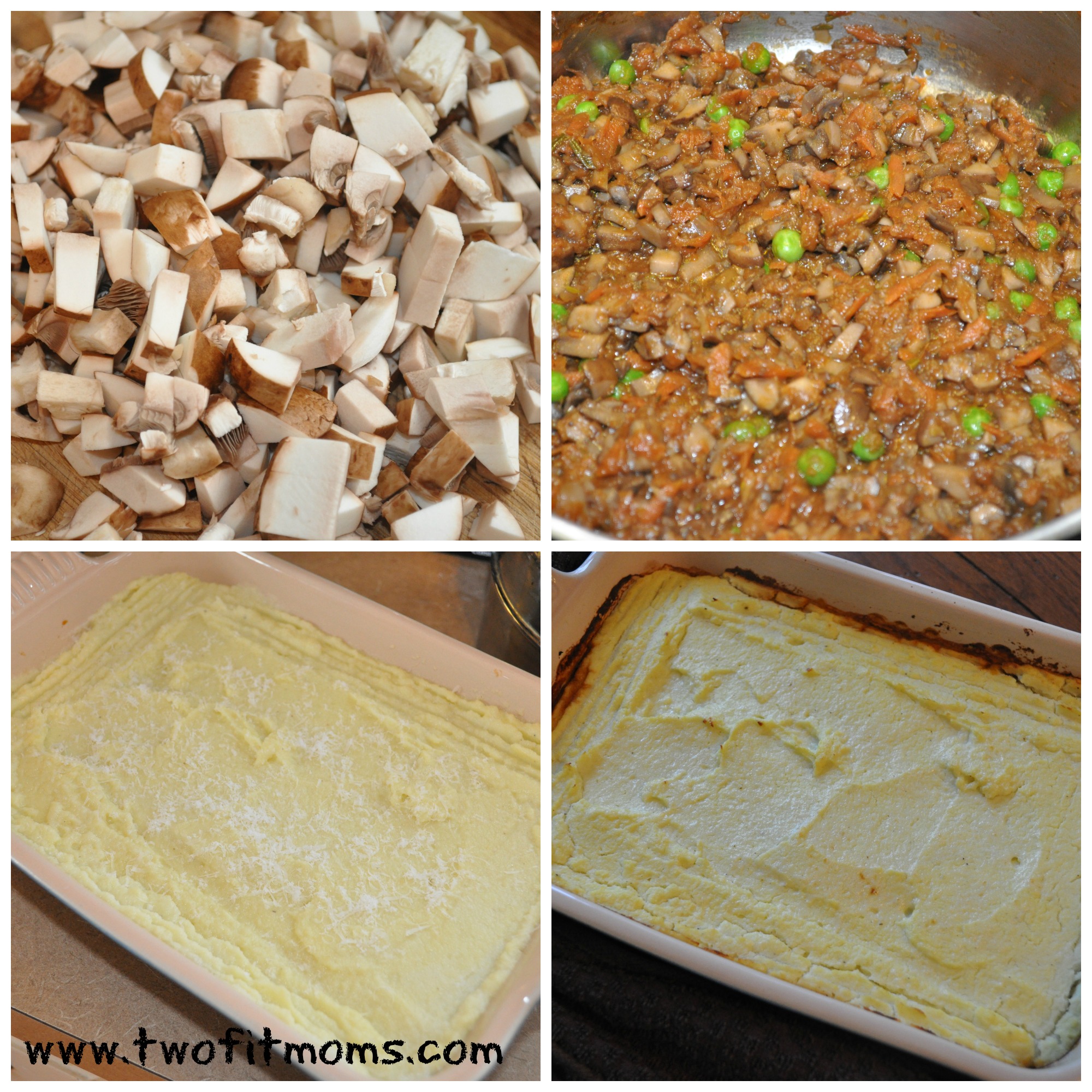
    Add two tablespoons of olive oil to a deep skillet over medium heat.  Once it comes to temperature, add the chopped mushrooms.  Let them begin to cook down a few minutes and then add the grated carrot, onion, garlic, salt and pepper.  Cook the veggies until the water evaporates, approximately 10 minutes.  Then add the tomato paste and mix until incorporated.  Deglaze the pan with the wine and the stock.  Add the Worcestershire sauce, thyme, rosemary and the frozen peas.  Mix until combined. Test the mixture to see if you need more salt/pepper.  Pour the mixture into a baker — I used an 8 inch by 11 inch baker.

    Add two beaten egg yolks to your Cauliflower Mash along with 1/2 cup of grated cheese.  Spoon cauliflower mixture over the mushroom mixture and spread evenly across the top.  You can also add some extra grated cheese to the top to help brown the pie.  Cook for 18-20 minutes and serve hot.

    Helpful Hint: The cauliflower topping does not brown as easily as a potato topping — even after broiling for a bit.  So, don’t be discouraged — it’s equally delicious!
    shepherdcollage

  • Produce & Pesticides

    Produce & Pesticides

    It’s what we’ve all been waiting for— the results of the Environmental Working Group (EWG) annual produce study. Each year, EWG analyzes thousands of fruit and vegetable samples for pesticide residues. The most recent EWG report ranks 48 different fruits and vegetables by the total number of pesticides found on them. We have listed the 15 most contaminated fruits and vegetables here, as well as the 15 varieties of conventional fruits and vegetables that are least likely to contain pesticides.Produce and Pesticides

    Why is this so important to consider, you may ask? Well, pesticides are chemicals that exist for the purpose of killing “pests”, such as insects, mold, bacteria and weeds that interfere with the growing process. It is a known fact that some pesticides, such as organophosphates and carbamates, affect the nervous system. Other pesticides can cause skin irritation, lead to cancer, or affect the endocrine system.

    While you should take some comfort in knowing that the Environmental Protection Agency determines how much of a pesticide can remain on food that you buy, we believe that it still pays to be an informed consumer and to make your own decisions about the food you choose to ingest.

    Ideally, all of our fruits and vegetables would be grown locally and organically. Practically speaking, we do not all live in areas with supermarkets that carry vast varieties of organic produce, nor do we all have financial budgets that allow a fully organic diet. We believe that the EWG list is a helpful shopping tool if you’d like to limit pesticide exposure.

    Please note that the words “clean” and “dirty” are specifically referring to pesticides, not the quality of the produce, whether it is genetically modified, or whether it is grown locally or thousands of miles away.  Pesticides ONLY.  It is up to YOU to determine which factors are most important to consider before purchasing food.

    Here are some general guidelines:

    -If a fruit or vegetable is on the “dirty” list, make an effort to buy the organic version.

    -If you consume a particular fruit or vegetable on a frequent basis, buy organic—especially if it’s on the “dirty” list.

    -The EWG study found that although leafy greens, such as kale and collard greens did not make the “dirty” list, they tend to be treated with particularly toxic pesticides. If you frequently purchase conventional greens, cook them. Pesticide levels typically diminish when food is cooked.

    -Use organic greens for juicing.

    -Go ahead and make that guacamole with conventional avocados. Only 1% of avocados tested showed any detectable levels of pesticides!

    -Remember to thoroughly wash your produce before eating. I know it’s tempting to just wipe that apple on the edge of your shirt. Without washing your produce, your risk of ingesting pesticides is greater.


  • Cauliflower Mash

    Cauliflower Mash

    Mashed potatoes are delicious, but mashed cauliflower is a great alternative.  Cauliflower is low in fat, low in carbohydrates but high in fiber, vitamin C and folate.  It sounds like something we could all use in our diet, doesn’t it?
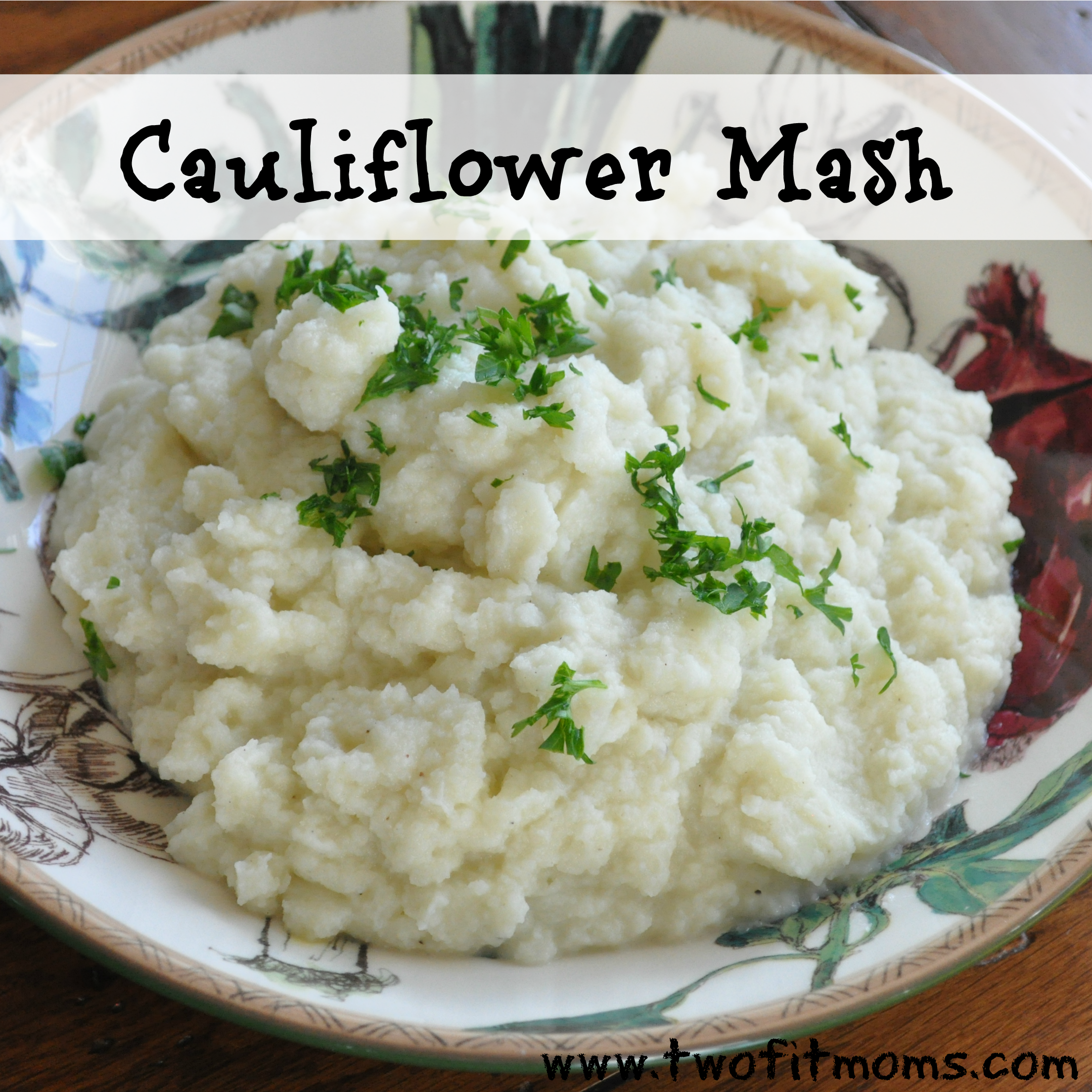
    cauliflowermash
    As a mom, I’m always looking for opportunities to sneak healthy ingredients into my traditional recipes.  I grew up on mashed potatoes, and while I don’t make them as often as my mom did, I do make them time to time — and my kids and husband love them.  However, as usual, I tried a switch-a-roo on them — swapping out my mashed potatoes for mashed cauliflower.

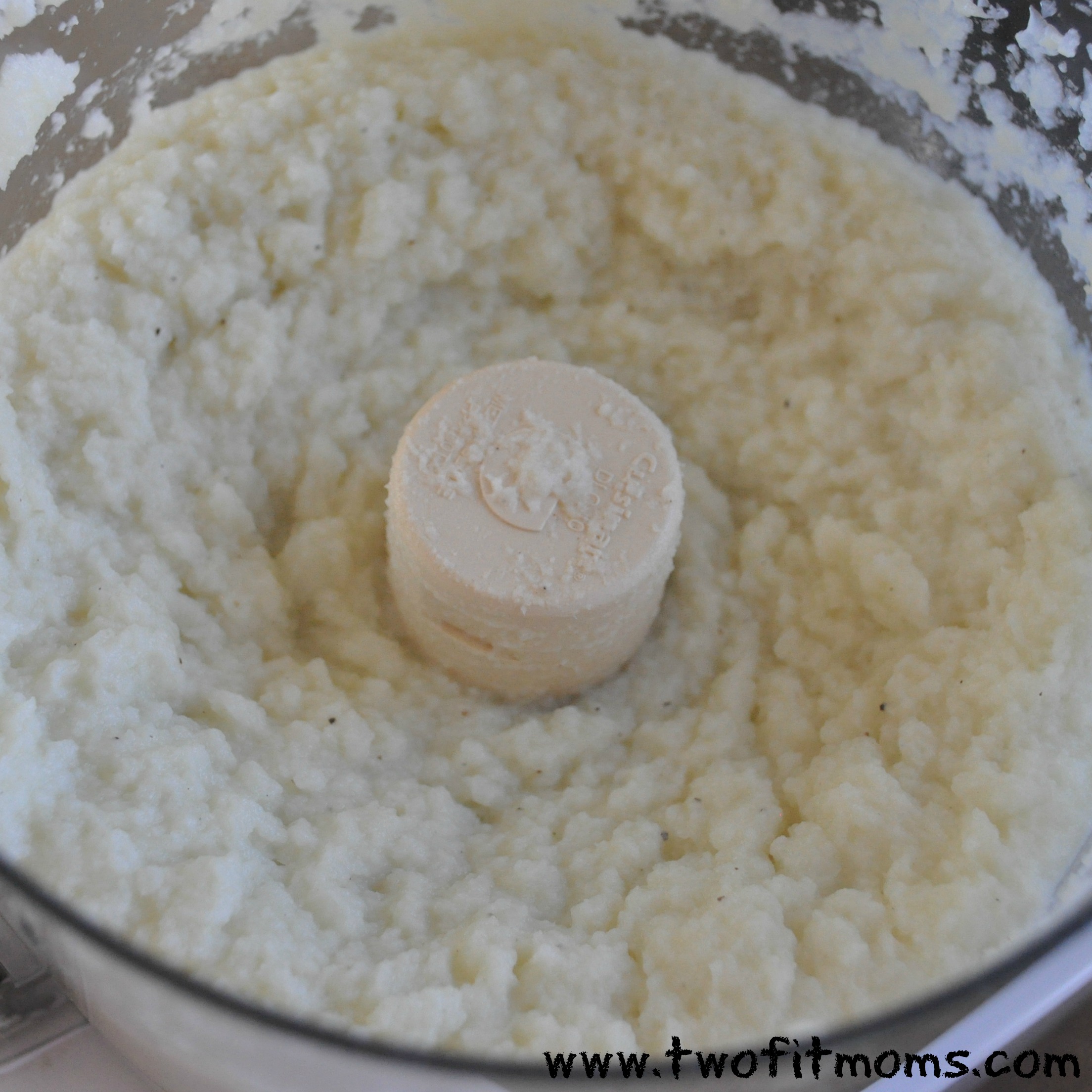
    First of all, the mashed cauliflower looks just like potatoes — actually, it looks better than my usual mashed potatoes because I fancied them up with some chopped parsley.  You will need a food processor to achieve a nice smooth consistency.  I’ve tried an immersion blender, but I’m not a fan.  It’s worth pulling out your food processor. The only serious addition to my Cauliflower Mash is garlic.  I also added a hint of cream cheese to help bring it together, but you could skip it altogether — hence it’s not only a great veggie side dish but you can make it vegan too.
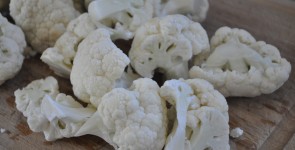
    cauliflowerupclose
    The kids did detect a difference, but the adults devoured the Cauliflower Mash.  That being said, if you are a mashed potato fan, I suggest you try our Cauliflower Mash — it’s a completely delicious and nutritious substitute – in fact, it may end up replacing your mashed potatoes altogether!

    The recipe is super, super easy.  You won’t believe how easy it is! And, you can jazz it up adding herbs and grated cheese, but on its own, it’s absolutely delicious.  Check out the recipe below:

    Cauliflower Mash
    Yields 2 cups

    1 medium sized cauliflower
    2 cloves of garlic, crushed
    1/4 teaspoon salt
    1/8 teaspoon pepper
    1-2 tablespoons chopped parsley (or chives)
    optional: 1 tablespoon cream cheese or sour cream (or vegan butter)

    Remove the core from the cauliflower and separate florets (approximately 4 cups of raw cauliflower).  Throw them into a pot of salted water along with the crushed garlic; bring to boil.  Boil approximately six minutes until tender.  Drain cauliflower thoroughly.

    In the base of a food processor, add the cauliflower, salt and pepper.  If you are going to add the cream cheese, do so now.  Pulse until the cauliflower breaks down into a mash.

    Serve immediately.

    Helpful hints: Do not let the cauliflower cool before making this dish.  It comes together much better if it’s made while still hot.

    Consider steaming the cauliflower to increase the nutritional value.

    Also, if you feel like your mash needs more flavor, add 1/4 cup of grated romano or parmiggiano reggiano cheese.  If you feel like it’s too dry, add a tablespoon of veggie or chicken stock.


  • Beginners’ Tips to Start a Meditation Practice

    Beginners’ Tips to Start a Meditation Practice

    According to yogic philosophy, it takes 40 days to break a destructive habit or to develop a new, healthy habit.  Today marks day 27 of my 40-day meditation journey.  I’m more than half way through to my 40-day goal, and at the end of it all, there is no end.  The end of 40 days will just mark a new beginning.Meditation
    Ultimately, my hope is to have a meditation practice that is engrained into my daily life.  I want it to feel as natural as brushing my teeth or making my morning tea.  Why am I so set on developing a lifelong meditation practice?  Well, meditation, I’ve heard, has incredible powers—the power to reduce stress, promote deeper sleep—even cure physical ailments and lessen physical pain.  If any of this is true, I need a piece of it.  You probably do, too.

    This is not a post to teach you how to meditate.  Rather, this is just my list of observations based on my own experience.  My journey is just beginning, but I am eager to share what I’ve learned so far: 

    There is no “right” time to meditate.  Originally, I thought the “right” time was at the crack of dawn.  I reasoned that the early morning stillness of my household would be conducive to a peaceful, meditative atmosphere.  I also figured that my mind wouldn’t be racing with work and family obligations so early in the day.  In theory, this all made sense, and I thought I had it figured out.  I didn’t.

    I quickly realized that my body just hurt too much in the morning to meditate.  As a newbie, it’s hard enough to enter a meditative state when all conditions are perfect.  Just imagine how difficult it is if you’re focusing on your arthritic knee the entire time!  Ultimately, I moved my meditation practice to the evening when my joints were generally happier and my body felt pretty good.  I highly recommend that you try meditating early in the morning when your mind tends to be clear, and adjust the time of day if necessary.

    Moving your body first makes a BIG difference.  It is MUCH easier to sit in stillness if your muscles are warm and loose.  If you can’t fit an entire workout prior to your meditation, you will still feel much more comfortable if you stretch for even just a few minutes.  A few rounds of sun salutations and some gentle hip openers should do the trick.

    Your meditation space may not be the most obvious choice in your house.  The most peaceful place in my home happens to be in my living room next to a large set of windows overlooking my backyard.  I assumed this was the ideal spot to feel enlightened and grounded.  It wasn’t.  Winters in New Jersey are cold, and even with a good heating system, I was freezing my ass off by the windows.  I moved from room to room in my house, and surprisingly, I ended up on the floor of my bedroom closet.  It was the perfect meditation spot.  Go figure.  Start your meditation practice in the most peaceful spot in your house.  Maybe it will work out just fine, but don’t be too surprised if you test out a number of different rooms and then end up in an unlikely location.

    A pillow and a blanket work wonders.  No, it’s not bedtime, but you will probably find use for your pillow and blanket.  I’m not sure if this is typical, but as soon as I close my eyes to meditate, I become hypersensitive and aware of every ache and pain in my body.  My back aches.  My hip suddenly hurts.  My feet feel cold, and I can’t concentrate.  I’ve learned from experience to keep a pillow close by to sit on or to use as a bolster.  Sometimes, I use the blanket across my lap or around my shoulders.  I’m not always cold, and I don’t always use the blanket, but I can pretty much guarantee that I would be freezing if I didn’t choose to have a blanket close by.  That’s just the way life works.

    You will think you suck at meditating, and that’s okay.  At the end of each day, my teacher would send me a text and ask about my meditation.  For the first couple of weeks, my answer was the same.  “Yes, I meditated, but I really sucked at it.  I’m not sure if it’s even fair to call it meditation.”  That’s when my teacher enlightened me.  She said everybody thinks that they suck at meditation.  No one walks around claiming to be excellent at meditation.  It’s an evolving practice.  Some days, you will easily enter the zone, and other days, you will be making grocery lists in your head and thinking about the dry cleaning that you need to drop off.  Don’t beat yourself up.  Everyone who is new to meditation is going through the same thing.

    There is no one-size-fits-all approach to meditation.  I experimented a ton.  One day, I meditated while holding my hands in a strengthening mudra.  The next day, I meditated while practicing a forceful breathing technique.  Then I tried using music in the background.  Then I tried breathing normally while focusing on my third eye.  And then there was this one time that I tried to meditate with my eyes open…while counting backwards in my head.  Each time I tried a new technique, I learned what worked and what didn’t.  Don’t be afraid of trying something new.  Keep experimenting until you find a routine that works for you.

    Your attitude towards meditation matters.  The first few times that I meditated, I felt very antsy.  I had a lot to accomplish, and sitting around doing nothing was a difficult concept for me to swallow.  I’m glad it didn’t take me long to come to this realization—meditation is not “sitting around and doing nothing.”  Well…let me rephrase that.  Meditation IS sitting around and doing nothing, but the effects of meditation are FAR from “nothing”.  Meditation is a form of therapy.  It’s free, it’s available to everyone, and you can perform it on yourself.  Reconsider your attitude if you are concerned about wasting your time “doing nothing”.  I assure you that your mental and physical well being is not a waste.

    The way to get better at meditating is to meditate.  And here is the most important thing I’ve learned so far on my journey:  You can read books about meditation, analyze all sorts of different techniques, and ask for advice from your friends/yoga teacher, but at the end of the day, the way to get better at meditating is to just meditate.  It’s as simple as that.


  • Yoga for Busy Moms

    Yoga for Busy Moms

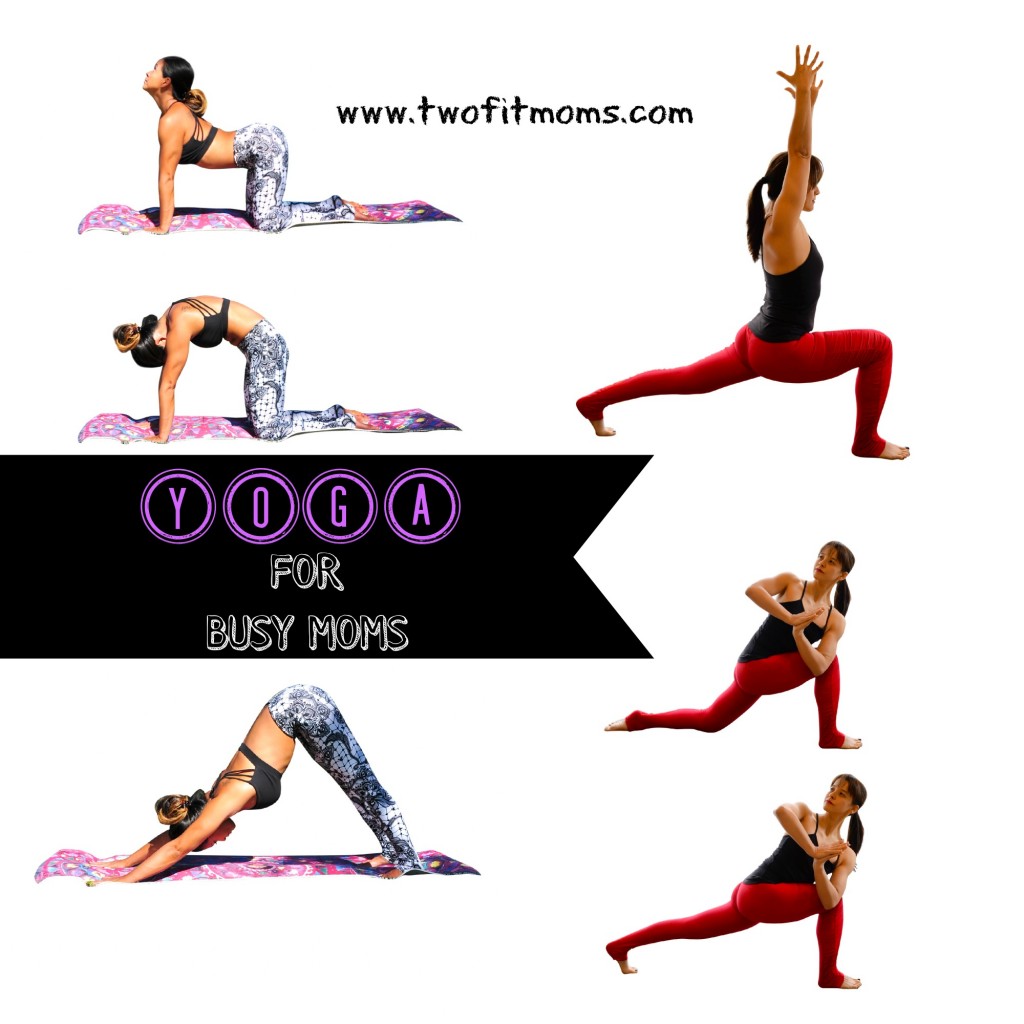
    The daily demands of being a mom can make it challenging (if not overwhelming) to find an extended block of time to practice yoga on a daily basis.  The good news is that you can reap many of the benefits of a full practice in just a fraction of the time.  If you are having a particularly busy day, practice this sequence just once on each side of your body for a quick 10-minute flow that will leave you feeling refreshed and centered.
    YogaforBusyMoms

    We’ve selected a variety of fundamental poses that will stretch and strengthen the entire body in a short span of time.  If you can fit in a 20-minute routine, practice this sequence twice. Make the most of your abbreviated practice by being mindful and present as you hold each posture for 3-5 breaths.

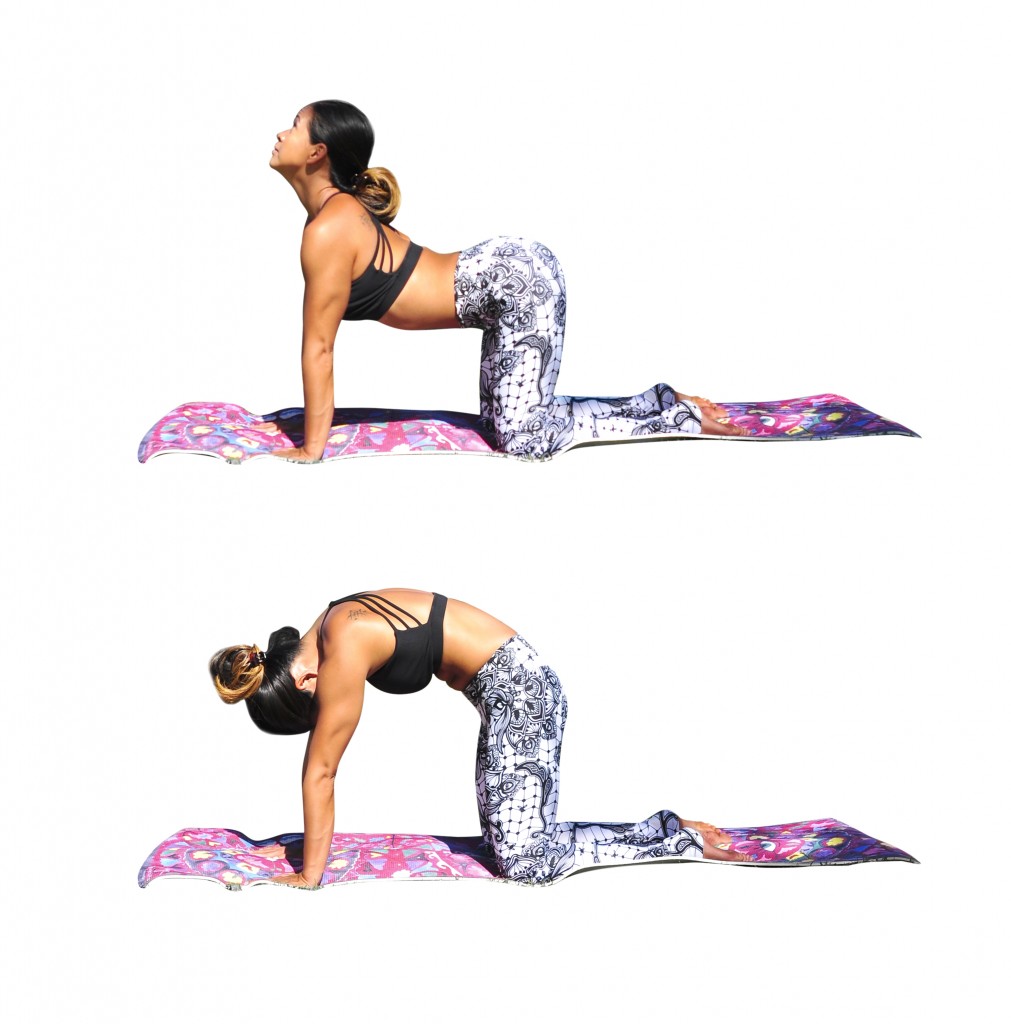
    Cat/Cow
    Begin your practice in Tabletop position with your shoulders over your wrists and your hips over your knees.  Gently warm up your chest and back with 3 rounds of Cat/Cow.  Inhale, as you sink your chest toward the floor and gaze up.  Exhale, as you round your back like a cat.
    Slides 1-2

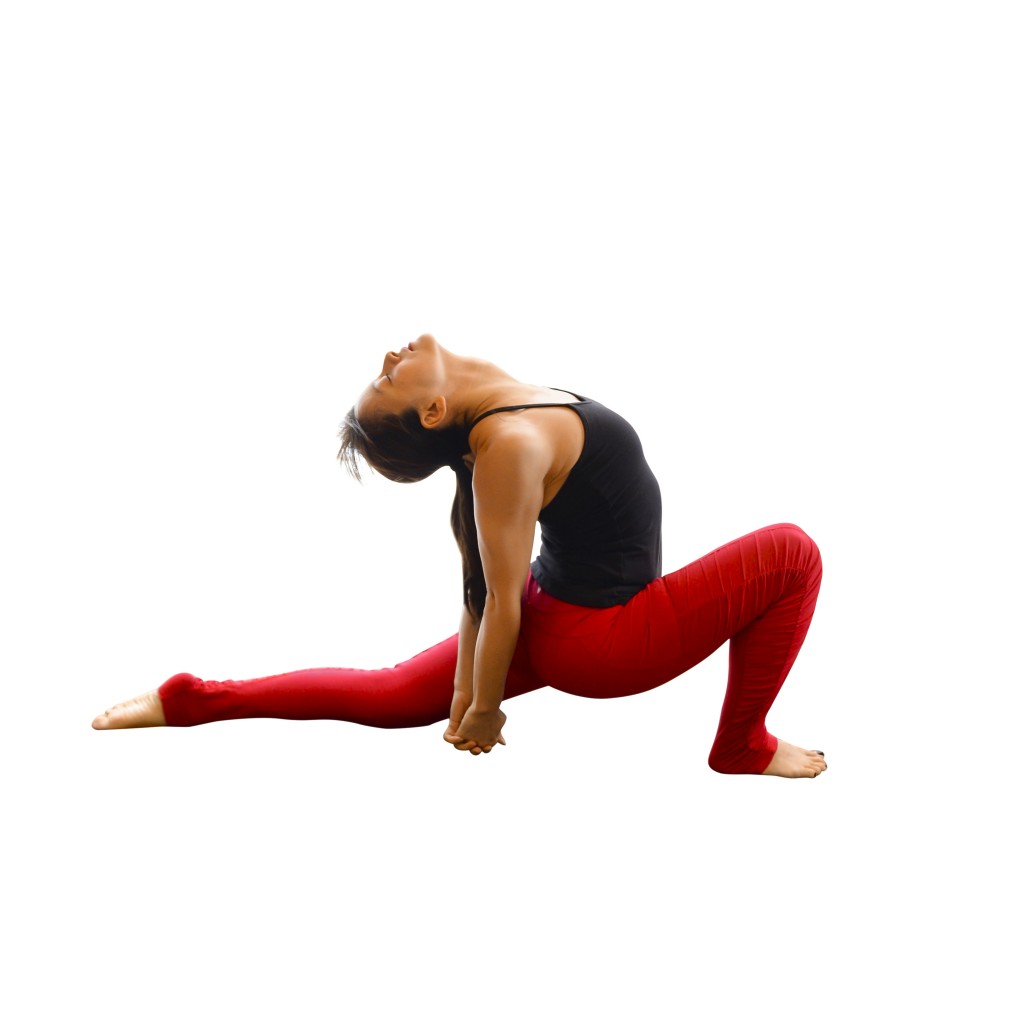
    Low Lunge Variations
    After warming up your spine with cat/cow, step your right foot forward between your hands for one of two Low Lunge variations.  Keep your hands on your front thigh for greater stability, or interlace all 10 fingers behind your back for a chest-opener. If you choose to take the backbend, remind yourself to breathe deeply through your nose.
    3

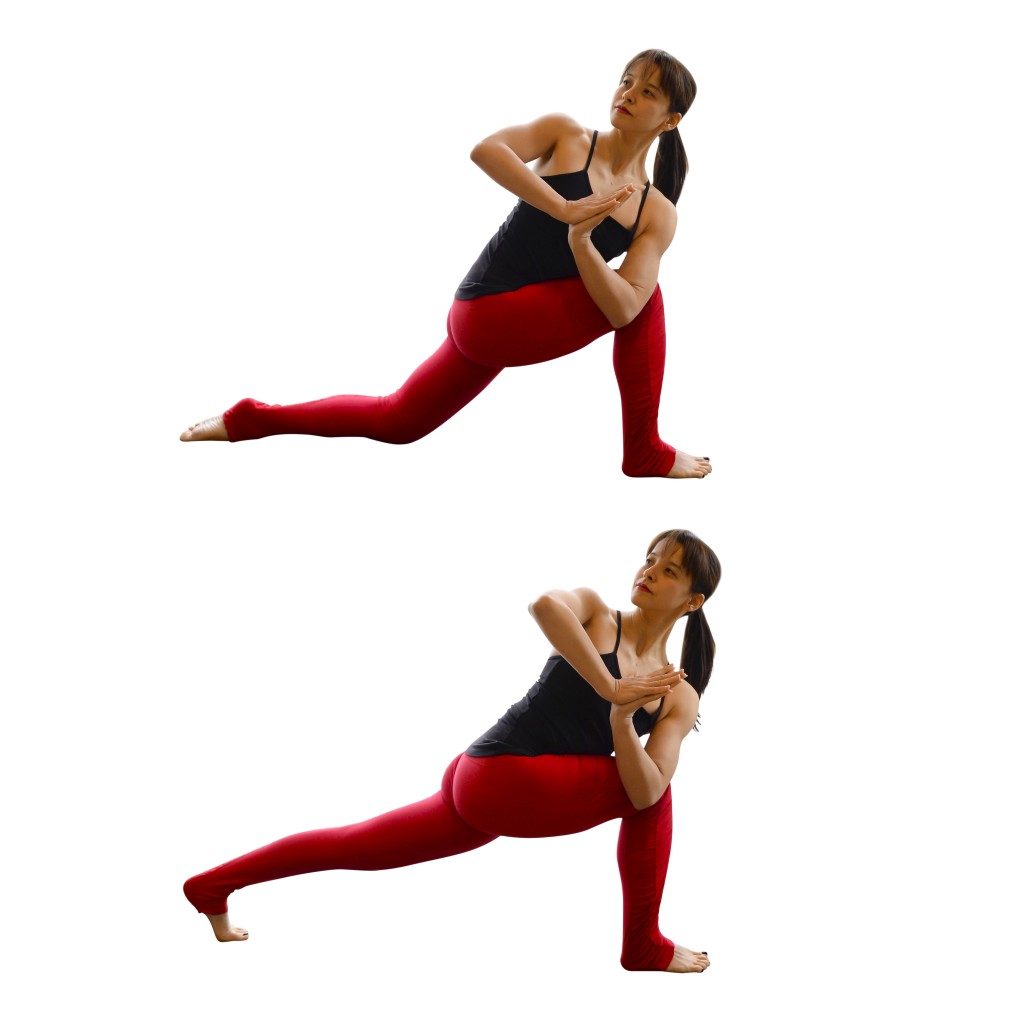
    Revolved High Lunge Variations
    From Low Lunge, align your right knee so that it stacks directly above the right ankle.  Bring your hands together in front of your heart, and twist to the right, hooking the left elbow onto the outside of the right thigh. If you are comfortable, challenge yourself by tucking your back toes, and lifting your back knee off of the floor.Slides 4- 5

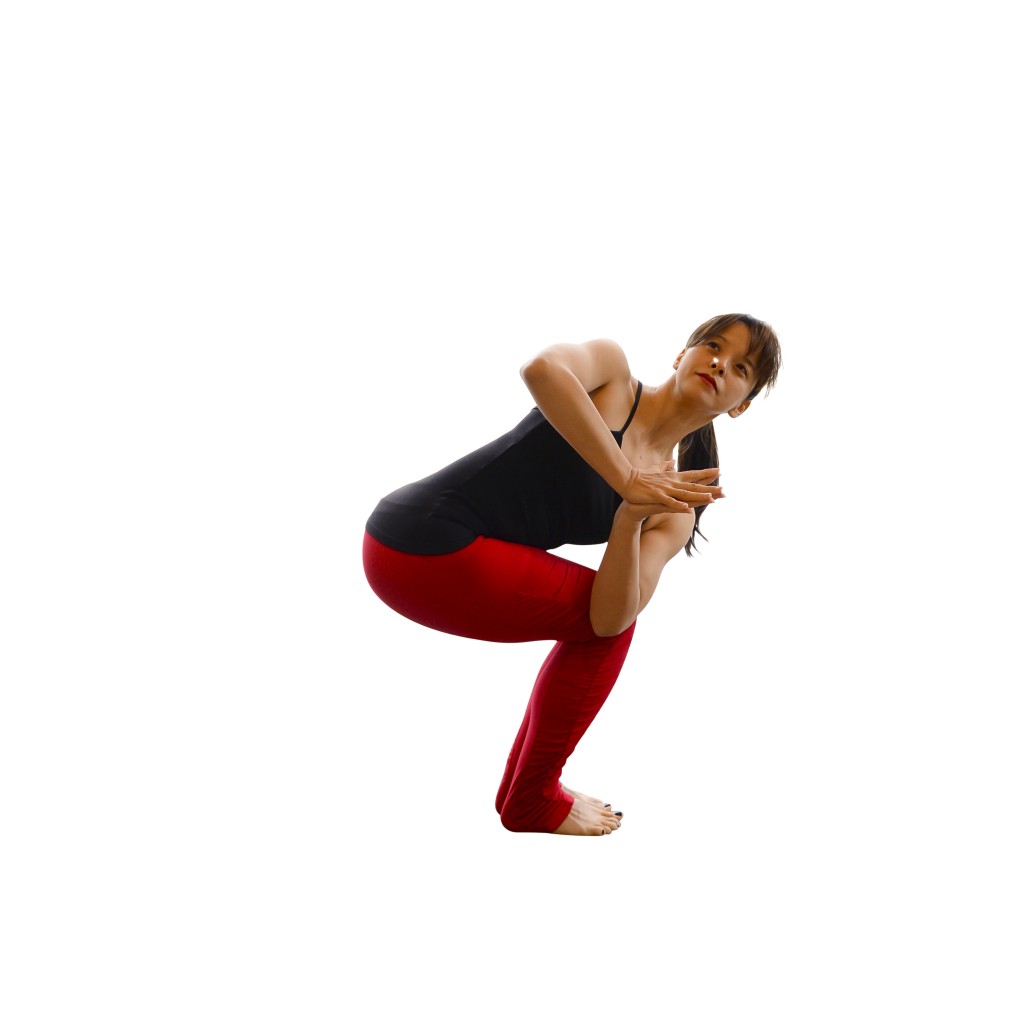
    Side Chair
    From Revolved High Lunge, shift your weight into your right foot, and step your left foot forward for Side Chair.  Press into your hands to twist deeply to the right.  If your left knee protrudes forward more than your right knee, make an effort to pull the left hip back in space. Be sure to rock your weight back onto your heels to protect your knees.
    6

    Standing Forward Bend (Uttanasana)
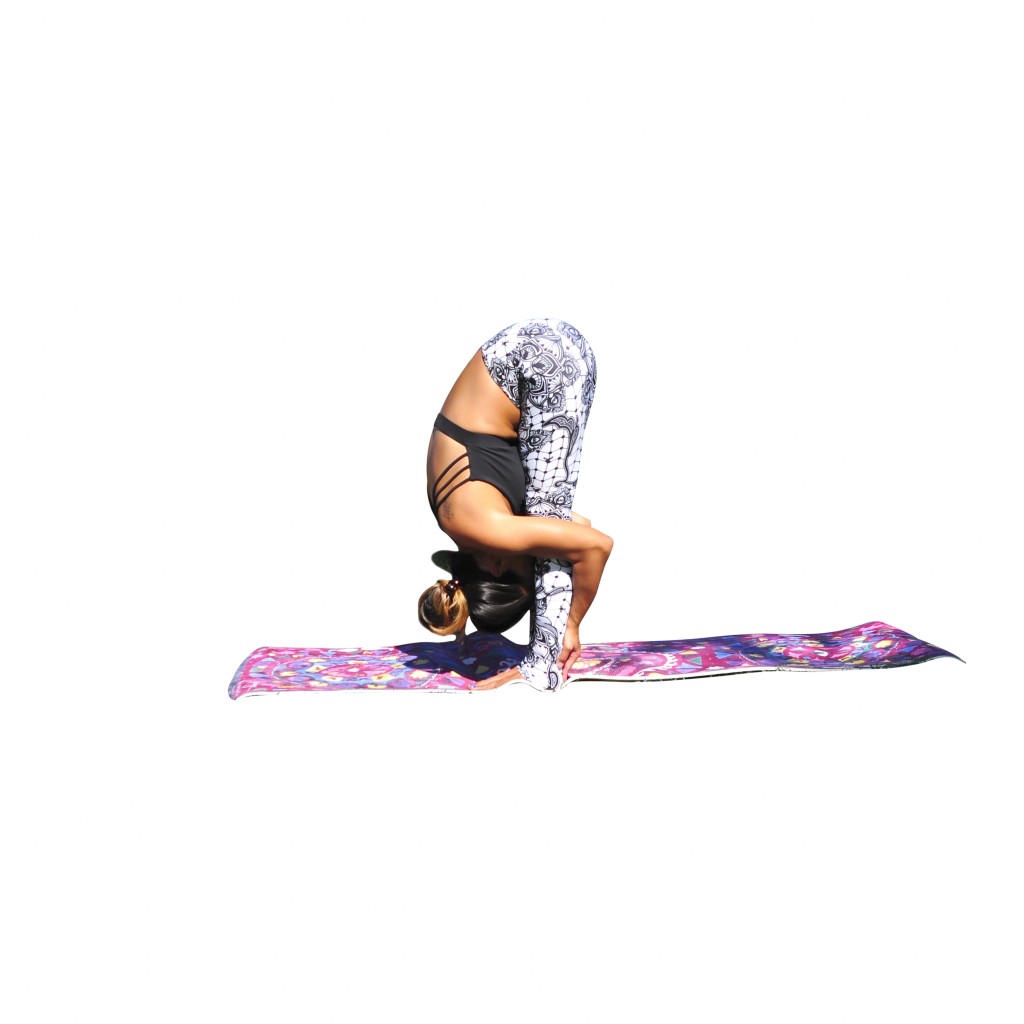
    From Side Chair, untwist your upper body and straighten your legs for a deep forward bend.  Breathe deeply, relax the neck, and allow the weight of your upper body to stretch the hamstrings and release any tension in the lower back. Feel free to take a variation or grab opposite elbows and sway from side to side.
    7

    Chair
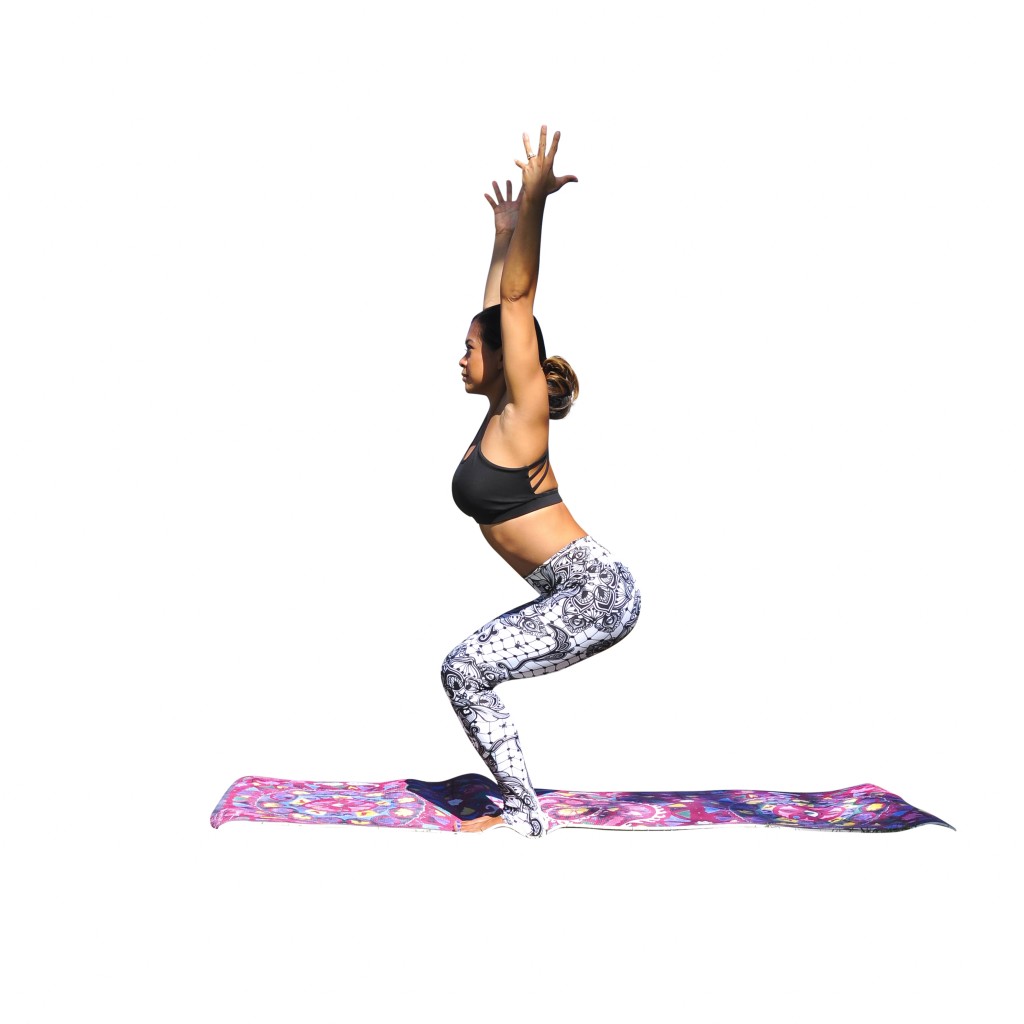
    Bend your knees, sweep your arms overhead, and rock your weight back into your heels for this strengthening pose that will energize your legs. Make sure that your weight is distributed properly by confirming that you can lift all ten toes from the mat. Keep your fingers active, shoulders rolled down and core engaged.
    8

    High Lunge
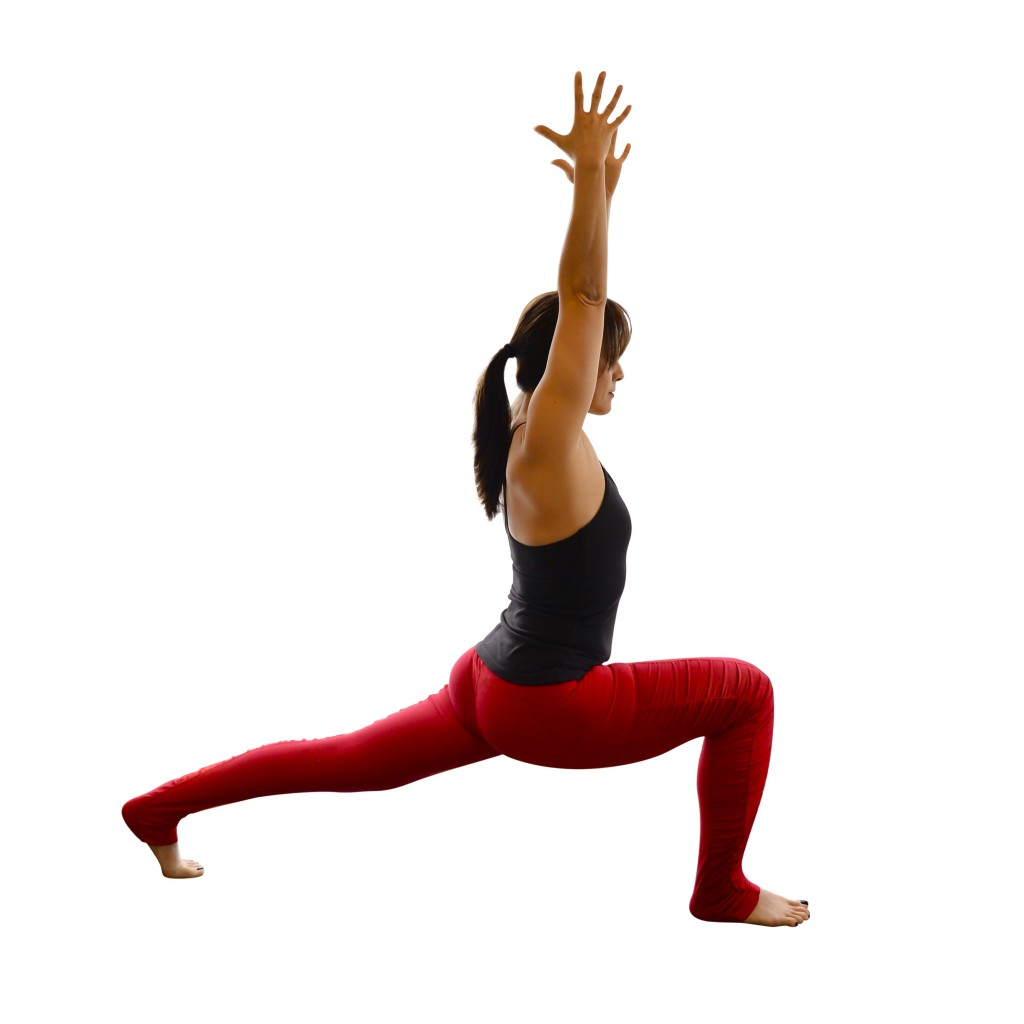
    From Chair pose, shift your weight into your right foot, and take a large step back onto the ball of your left foot for High Lunge.  Feel free to keep your torso perpendicular to the floor, or lift your chest toward the sky for a backbend.  If you choose to take a backbend, remember to keep your biceps along side your ears.
    9

    Warrior 2
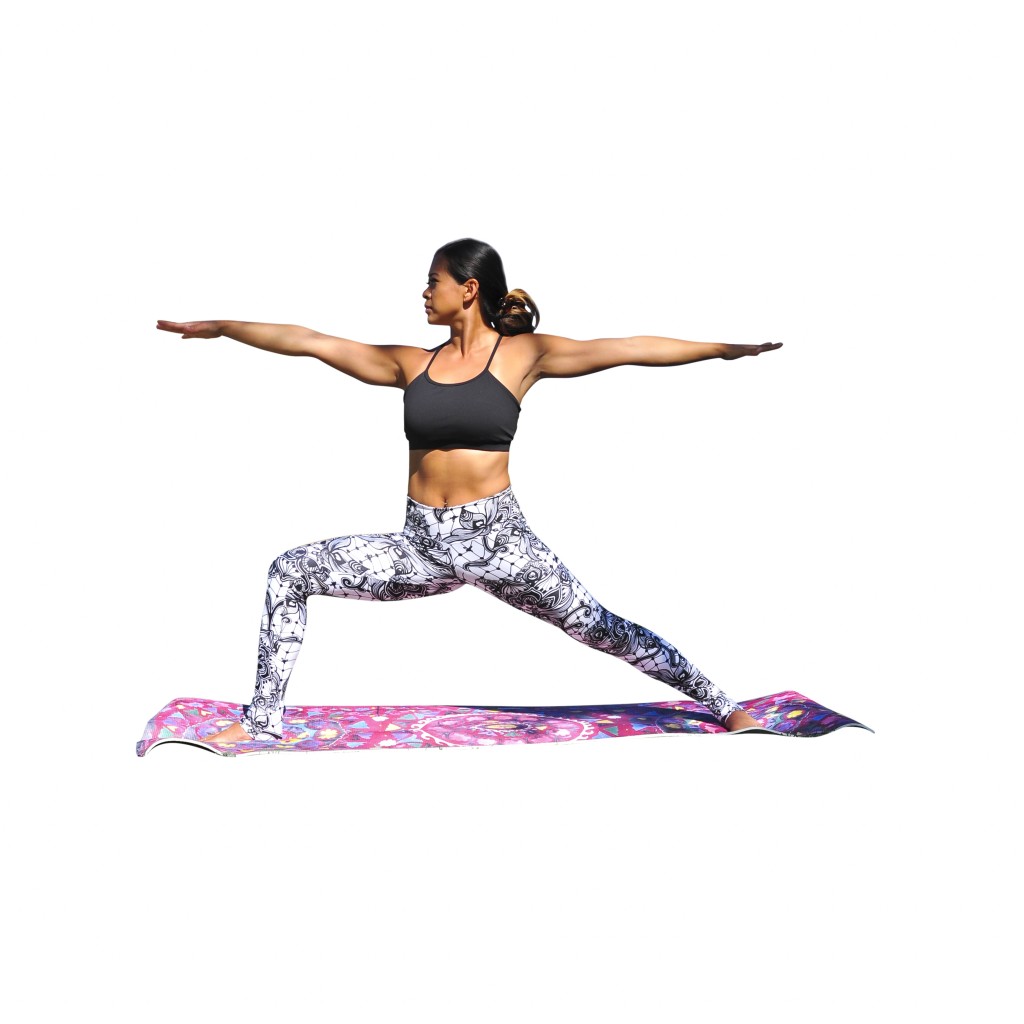
    From High Lunge, spin your back heel down for Warrior 2.  Challenge yourself by maintaining a 90 degree angle in your front leg as you stand strong. Resist the urge to lean forward toward your bent knee. Keep your shoulders stacked right over your hips.
    10

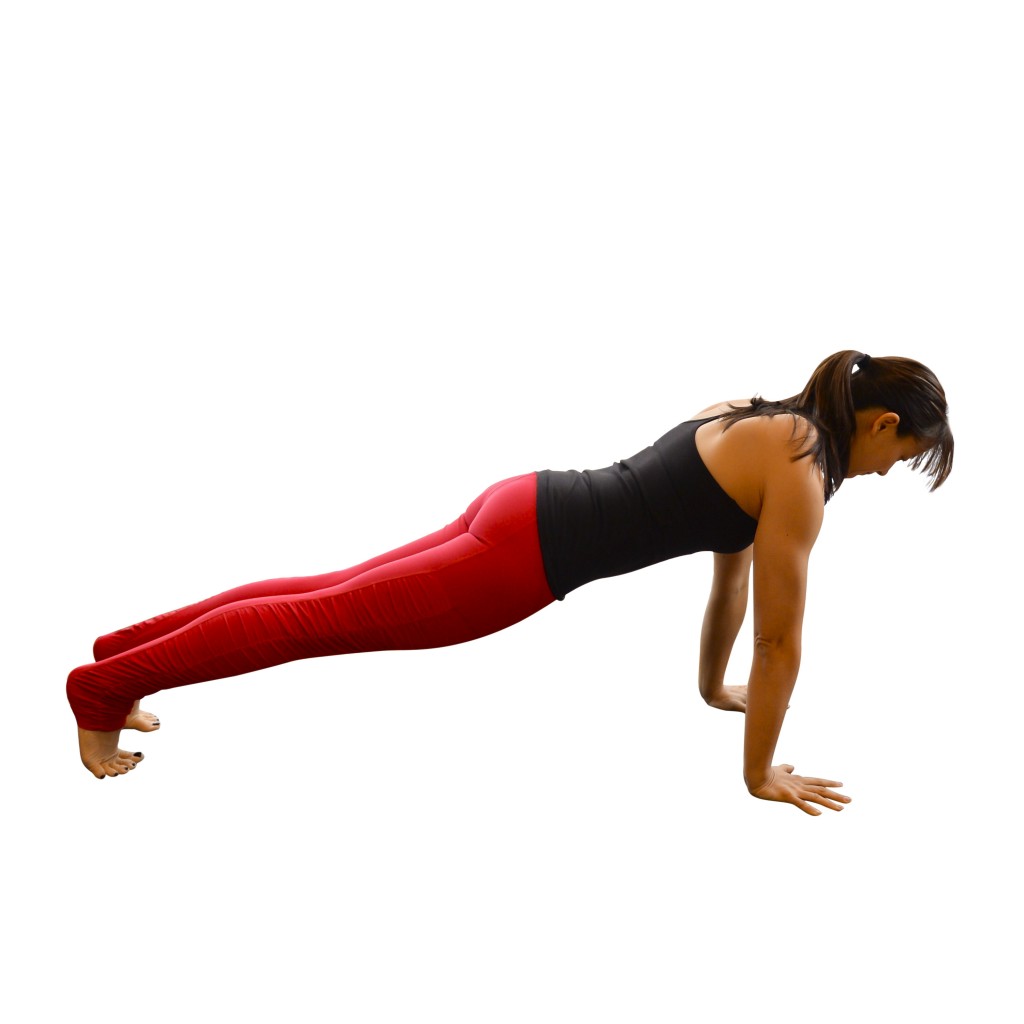
    Plank
    From Warrior 2, windmill your hands to the ground and step back into plank pose.  Create a straight line from head to heel.  Engage your core to keep your hips from sagging. If your hips are sagging or lifted toward the sky, take a modification by lowering onto your knees. It’s definitely preferable to perform each pose with good form.
    11

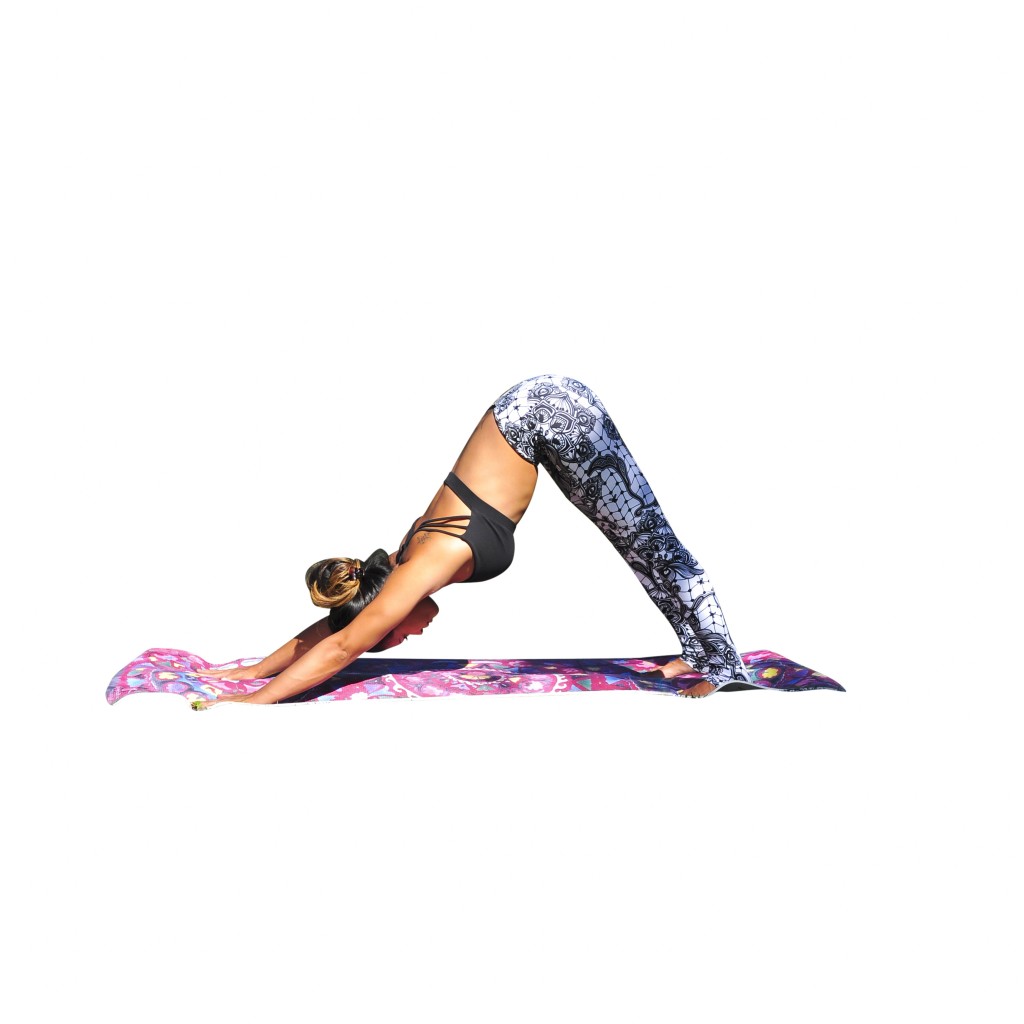
    Downward Facing Dog
    From Plank pose, simply lift your hips up and back to create a shape that looks like the upside down letter V.  Remember to spread your fingers, grip the mat, engage the core and keep the leg muscles active in this pose.
    12

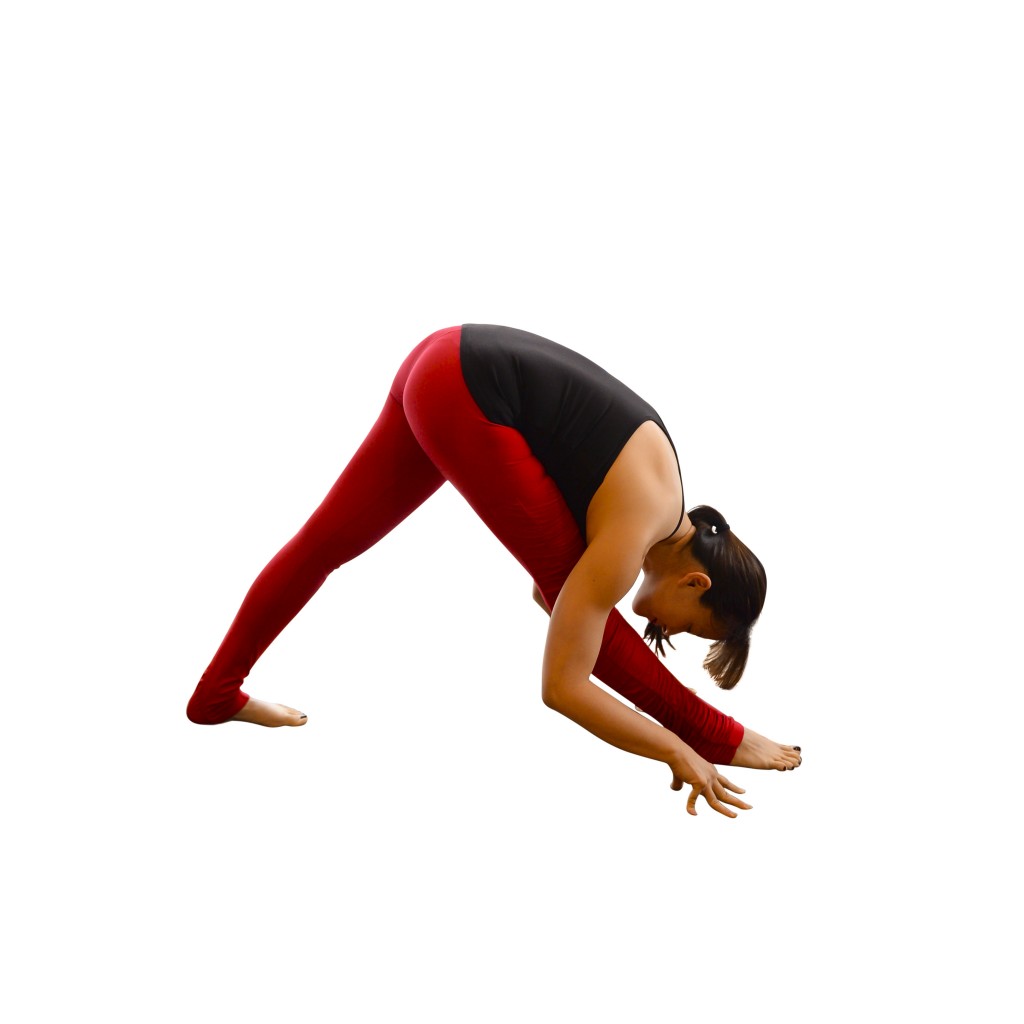
    Pyramid Pose
    From Downward Facing Dog, step your right foot about halfway up the mat, straighten the front leg, and breathe into this intense hamstring stretch.  For the most effective stretch, keep length in your spine as you fold. Whenever your legs are scissored in a yoga pose, be mindful to pull the front hip back, and push the back hip forward. The goal is to have the hips equidistant to the front of the room. 13

  • February Challenge Winner

    February Challenge Winner

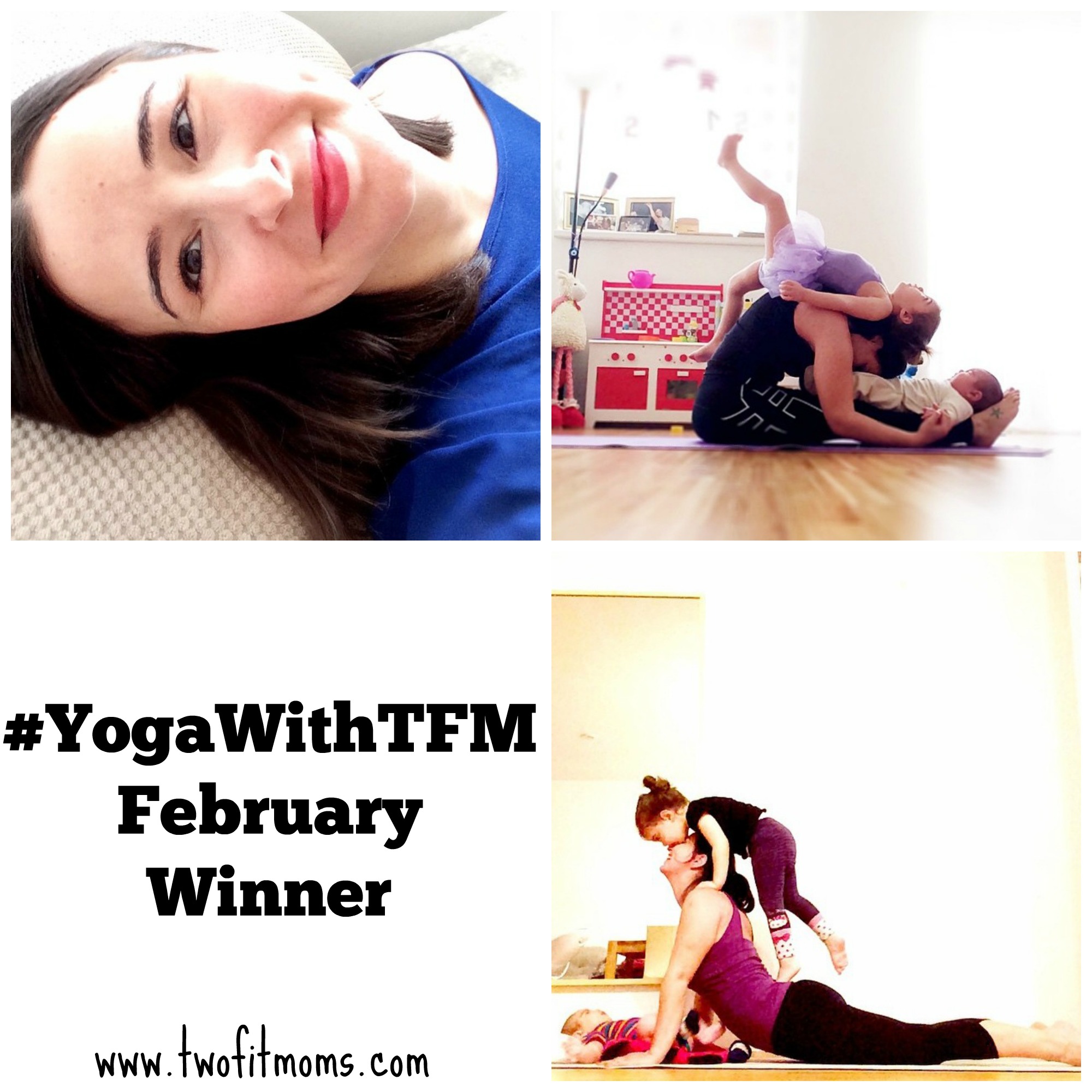
    We are excited to announce the winner of our February Two Fit Moms yoga challenge on Instagram! Congratulations to @MAMA_OF2_ROCKS for successfully completing all ten days of the challenge.

    febwinnercollage


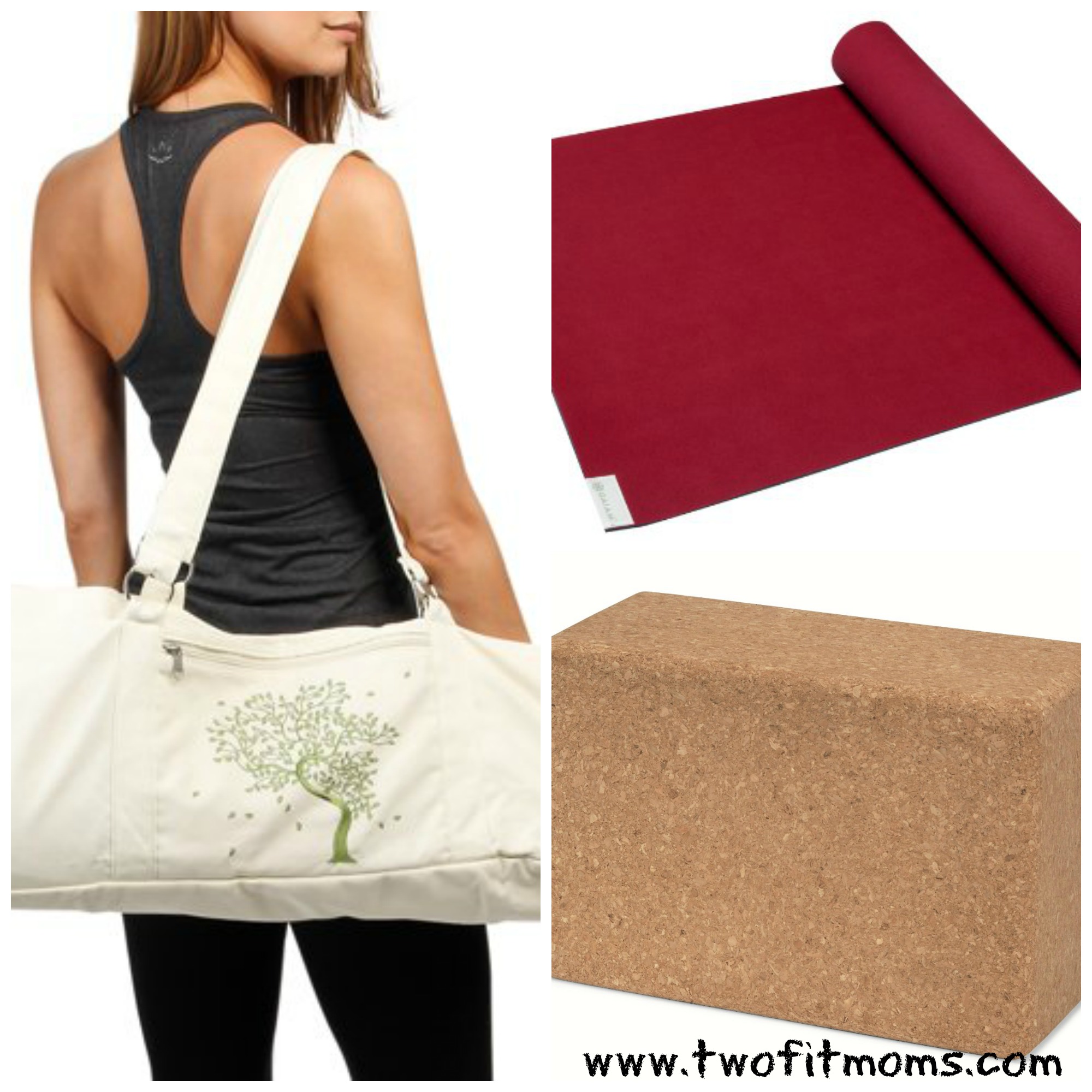
    Please contact kate@twofitmoms.com to claim your Gaiam prize package that includes: a Tree of Life Yoga Mat Tote Bag, a Gaiam Sol Power-Grip Yoga Mat, a Cork Yoga Brick and a free download, from the Gaiam.com website, of our Yoga Rising series!

    FebGaiamPrize

    Thank you all for participating!

  • Meatless Bolognese

    Meatless Bolognese

    Who doesn’t love a hearty bowl of pasta — especially during the winter months when comfort food is on our minds? One of my go-to comfort meals is Penne Bolognese.

    Bolognese is a traditional Italian meat sauce. While my family eats meat, I was convinced I could make a meatless version of my Bolognese sauce, which would be altogether healthier, as well as something that I could share with my non-meat eating friends.

    Meatless Bolognese

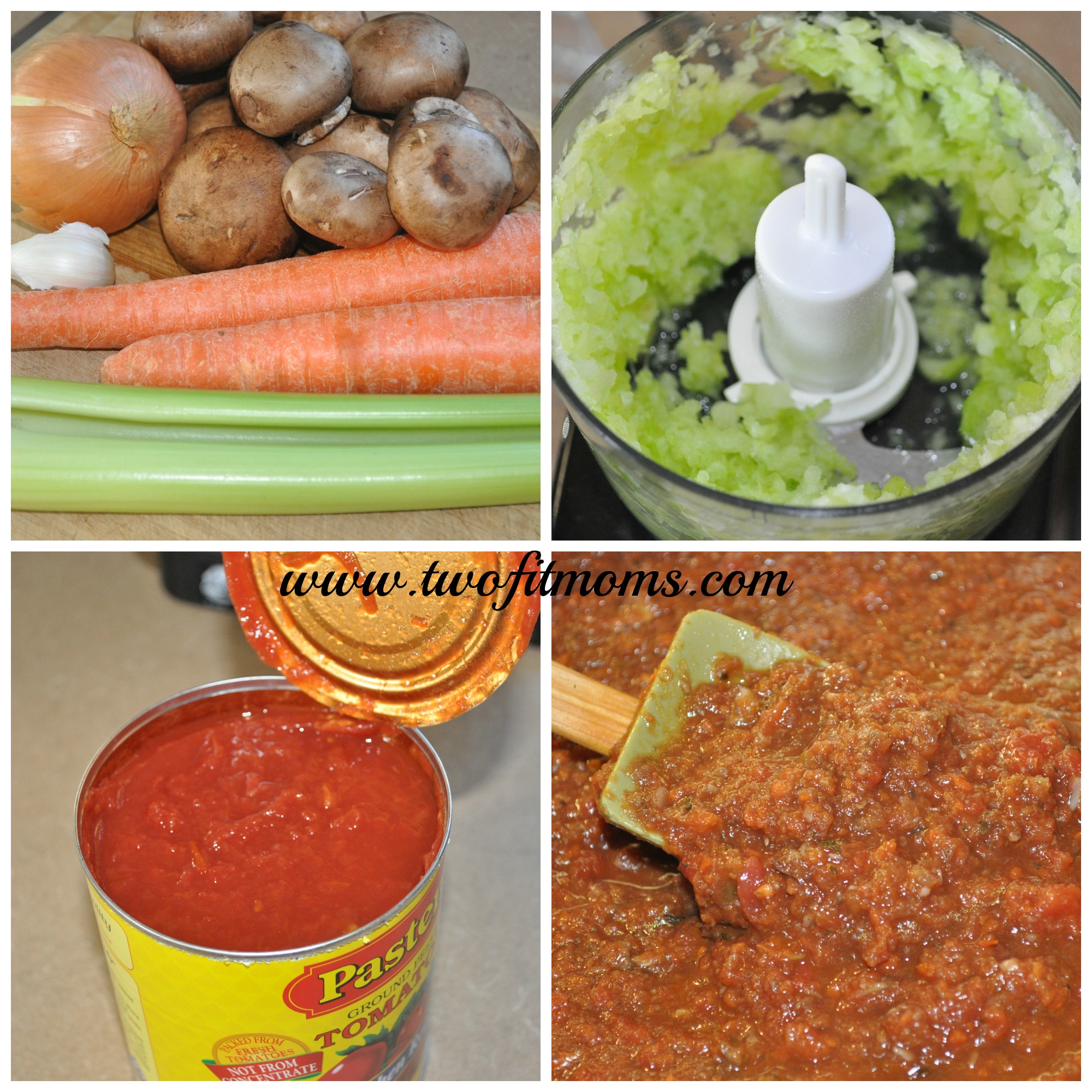
    My Bolognese sauce always includes carrots, celery, onion, garlic and a large can of crushed tomatoes.  However, I replaced the ground meat with baby bella mushrooms which are known for their meaty taste and texture. I  individually food processed each vegetable in order to cut down on the chopping! Plus, my kids don’t like big chunks of vegetables in their pasta sauce.

    bolognese collage

    Aside from the mushrooms, everything is the same.  I incorporated a little cream and topped the sauce with grated Parmigiano-Reggiano cheese — but you can skip these steps if you are not into dairy.

    I used my sauce on top of whole grain pasta, and I like penne (or rigatoni which I featured in the photo) because the shape of the pasta scoops up the sauce.  That being said, any pasta would work – you could even use cooked spaghetti squash or some spiralized veggies!

    So, the verdict?  It was da bomb! We all loved it.  Even my kids! They did notice a slightly sweeter tasting sauce, but they devoured it.  NO questions asked!

    This recipe totally qualifies as healthy comfort food, and, as far as I’m concerned, this recipe was a success. I hope you think so too!

    Meatless Bolognese
    Yields one pot of sauce, enough for 1 lb of pasta

    2 carrots
    2 stalks of celery
    1 medium onion
    1 clove of garlic, crushed
    10 oz of baby bella mushrooms
    1/4 cup of olive oil
    1 bay leaf
    1/2 cup of water (or more depending on the thickness of your sauce)
    1, 28 oz can of crushed tomatoes
    salt and pepper to taste
    1 tablespoon of chopped parsley
    1 tablespoon of chopped basil
    1/4 cup of half and half or heavy cream (optional)
    Grated Parmigiano-Reggiano (optional)
    1 lb of penne or rigatoni or any shaped pasta you like!

    In the base of a food processor, chop the carrots, celery, onion. Reserve vegetables. Then, in a large pot over medium heat, add 1/4 cup of olive oil. This may seem like a lot of olive oil, but the vegetables will soak it up. Once the oil comes to temperature, add the chopped vegetables and the crushed garlic; cook until they soften 7-10 minutes. Then, add the chopped mushrooms, salt and pepper, to taste, and one bay leaf. Cook until the mushrooms soften and all of the vegetables are combined. Keep in mind that the mushrooms will release some much needed water. Once all the vegetables are softened, add the crushed tomatoes and the 1/2 cup of water or more, depending on the desired thickness of sauce. Simmer the sauce for approximately 20 minutes. If you decide to add the cream, you will do so just before dressing the pasta.

    In a large pot of salted water, cook your pasta until it’s al dente. Drain the pasta and top with the Bolognese sauce. Top with the parsley, basil and grated Parmigiano-Reggiano cheese. Serve and enjoy!

    Helpful hints: You can use white mushrooms if you have them on hand, but I tried it both ways, and we definitely preferred the baby portobello mushroom version.

  • Open Your Heart

    Open Your Heart

    February is all about opening up the HEART! So, try incorporating our favorite heart opening stretches and backbends into your practice this month.

    These six postures will open up your shoulders and your entire front body. In fact, they will leave you feeling stretched, energized and ready to tackle your day!

    Ready to get started? Grab a few blocks and a strap. As always, be mindful of your body, modify when necessary and remember to breathe. Try to hold each of these postures for at least 5-10 breaths.

    Reclined Heart Opener with Blocks

    Photo Feb 06, 9 54 39 PM

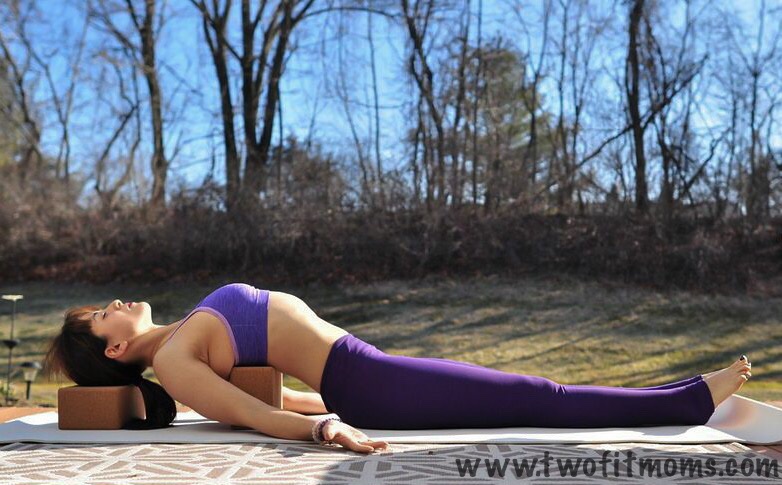
    Lie onto your mat with one block (at its lowest height) under your head like a pillow and a second block (at a higher height) between your shoulder blades. Relax your arms alongside your body and stay on the blocks for at least one minute.

    Hero Pose with Gomukhasana Arms

    Photo Feb 06, 9 54 46 PM

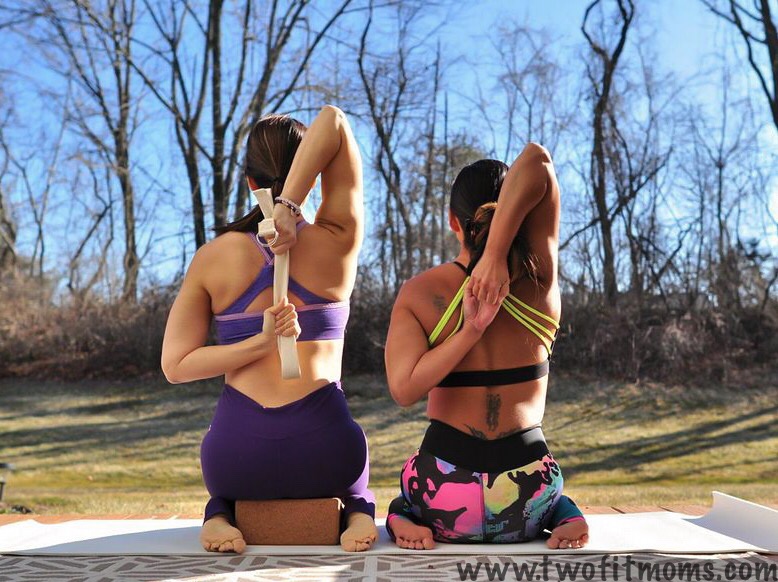
    Start out on your shins, bringing your knees together and separating your feet slightly wider than your hips. From there, have a seat in between your ankles coming into Hero Pose. Feel free to prop yourself on a block if this pose hurts your knees.  Sitting up tall, slowly make your way into Gomukhasana arms. Use a strap if you cannot clasp your hands. Relax your shoulders and pull the elbows back. Stay here and hold for 5-10 breaths, then repeat on the other side.

    Wide Cobra Pose

    Photo Feb 06, 9 54 53 PM

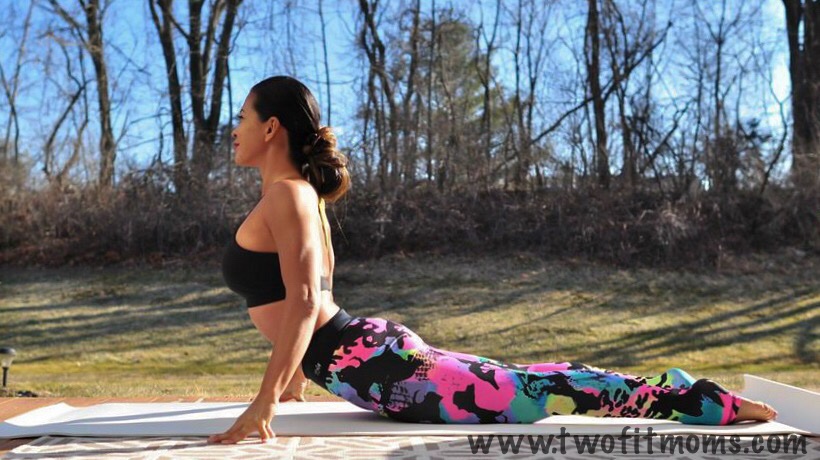
    Lie on your belly and bring your feet hips’ width distance apart. Take your hands wide off of your mat and come onto your fingertips. On an inhale, slowly push into your fingertips lifting your heart high. Keep your elbows slightly bent and actively roll your shoulders back.

    Bow Pose

    Photo Feb 06, 9 55 00 PM

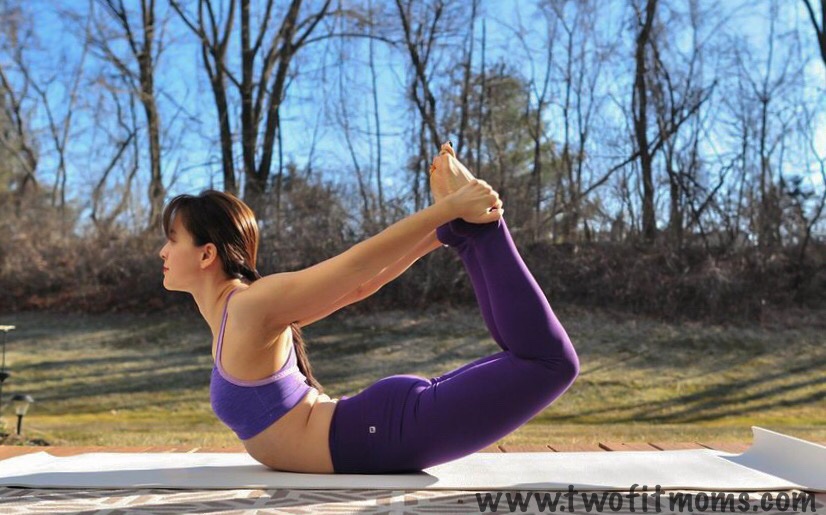
    Lie on your belly and relax your forehead on your mat. Bend your knees and grab onto the outside edges of your feet. On an inhale, kick your feet into your hands lifting your heart high. Use the strength of your legs to lift you up! Stay here and hold for 5-10 breaths, then repeat two more times.

    Funky Camel

    Photo Feb 06, 9 55 07 PM

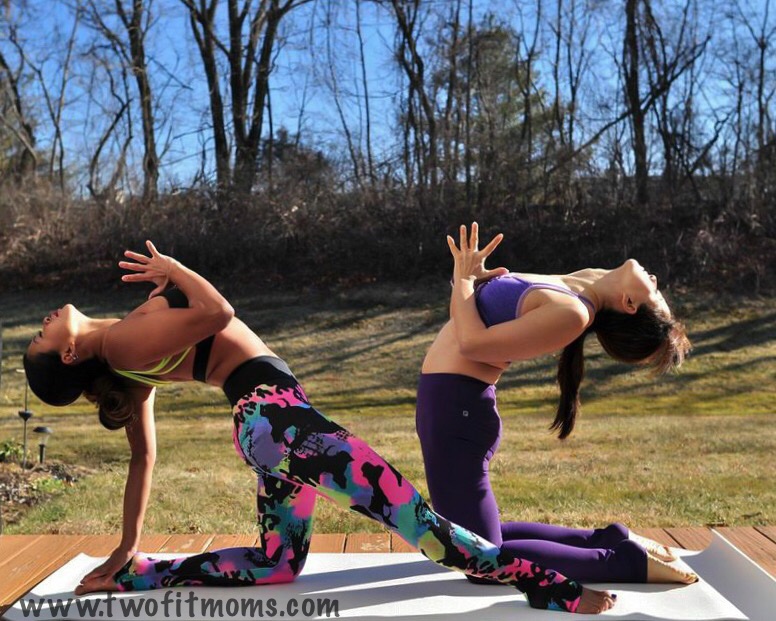
    It’s time to start working on some deeper backbends. Feel free to take a traditional Camel pose or if you’re feeling adventurous, try our funky variations above! Start out on your shins, knees are hips’ width distance apart. From there, step your right foot forward planting the sole of your foot down on your mat. Bring both hands onto your hips squaring them off to the top of your mat. Slowly sweep the left hand up and around bringing your left hand onto your left ankle or sole of your left foot behind you. Take a moment and square your hips once again. Extend your right arm up or bring it to heart center. Take 5 deep breaths, then slowly come up. Repeat on the other side. 

    Wheel Pose

    Photo Feb 06, 9 55 16 PM

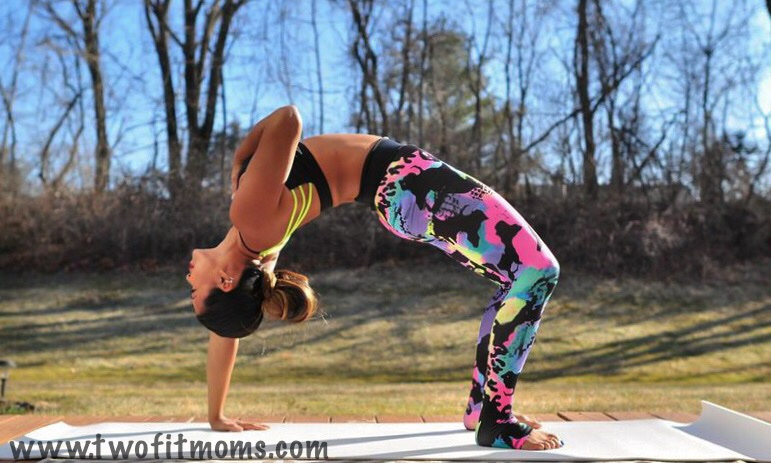
    Make your way onto your back and set up for Wheel. Feet should be hips’ width distance apart and parallel to one another. Hands should be shoulder width apart, fingers spread wide. Both arms and legs squeeze in towards one another. Feel free to bring one hand up to heart center as you hold for 5-10 deep breaths.

  • Move over Cupid:  Fallen Angel Tutorial

    Move over Cupid: Fallen Angel Tutorial

    With Valentine’s Day on the horizon, you may be looking to channel your inner cupid.  Well, we are here to help.  Put on your wings and get ready to enter one of the prettiest yoga poses—Fallen Angel.

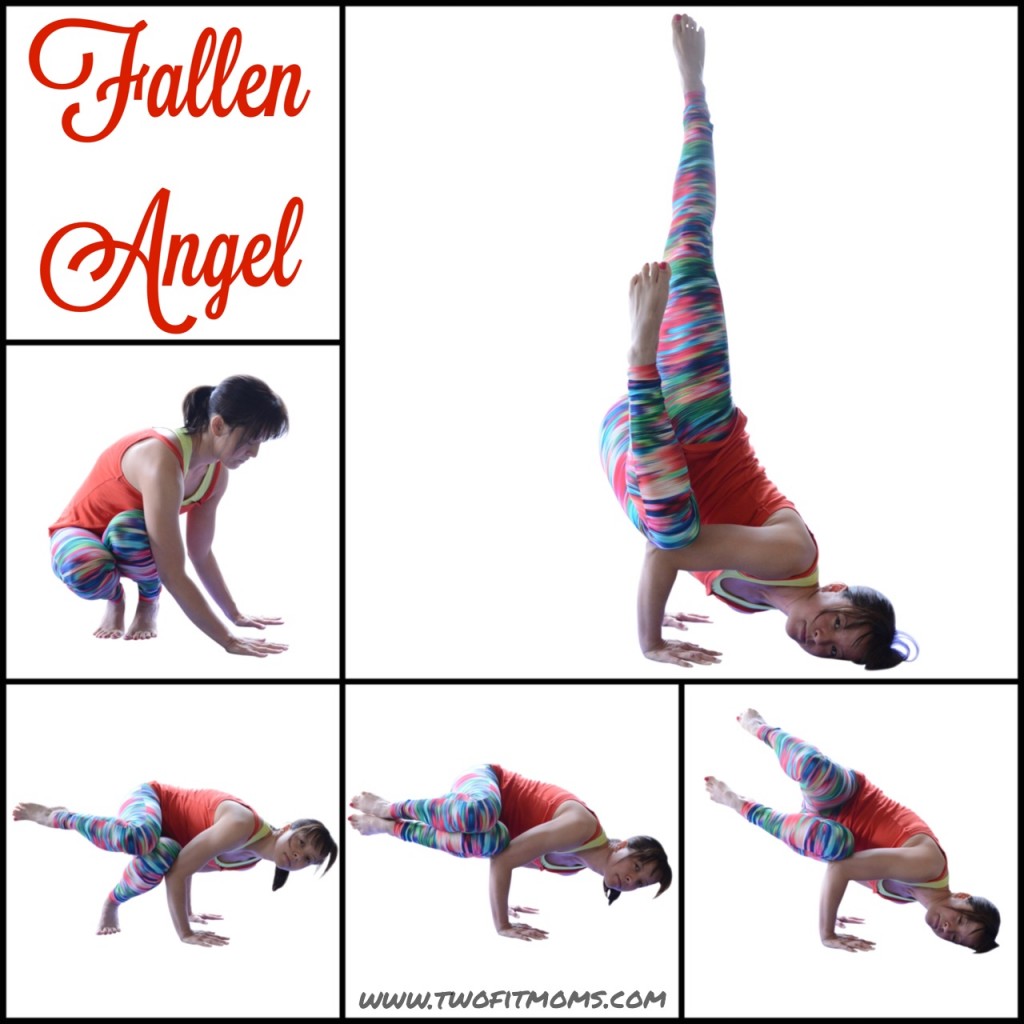
    Fallen Angel is a great hybrid pose for anyone looking to dabble in the realm of arm balances and inversions — its hybrid nature combines elements of both worlds, resulting in a posture that offers a surprising amount of stability.Photo Feb 02, 1 14 00 PM

    We love teaching this pose because of its beauty and accessibility.  A rock solid arm balance practice is not required.  Side crow is just a brief moment in the transition to Fallen Angel—it’s okay if you can’t hold it for five long breaths!  Likewise, an advanced inversion practice is not a prerequisite for this pose.   The arched shape eliminates the possibility of tipping over, which is a common fear for beginners attempting a traditional headstand where the hips are stacked directly over the shoulders.

    If you need a bit of a pep talk before getting started, start HERE and read about the empowering nature of arm balances.  Once you are inspired, warm up your body by doing a few rounds of Sun Salutations and a series of twists.  You are now ready to move forward.


    Step 1
    Lower your body into a squat, resting on the balls of your feet.  Twist your body to the left, placing your hands onto the mat so that the outside of your left thigh rests along your triceps.

    Step 2
    Begin to lean and shift weight onto your hands, being mindful to keep your elbows squeezing inward.  If you are comfortable, slowly lift your right foot from the mat.

    Step 3
    Here is your (modified) side crow transition!  It’s modified because you are resting your left thigh across both triceps rather than on just the right tricep.  If you are unable to hold this balance for long, don’t worry.  Move right on through to step 4.

    Step 4
    Slowly lower the left side of your head onto the mat, and see if you can lift your right leg off of your left leg even by just an inch or two.  If that goes well, keep lifting the right leg, extending it straight into the air.

    Step 5
    The left thigh will remain on the back of the right arm throughout the pose, but you will need to rotate the left leg a bit in order to be able to point the left leg up to the sky.  In the final expression of the pose, the left leg is parallel to the right leg.