It’s what we’ve all been waiting for— the results of the Environmental Working Group (EWG) annual produce study. Each year, EWG analyzes thousands of fruit and vegetable samples for pesticide residues. The most recent EWG report ranks 48 different fruits and vegetables by the total number of pesticides found on them. We have listed the 15 most contaminated fruits and vegetables here, as well as the 15 varieties of conventional fruits and vegetables that are least likely to contain pesticides.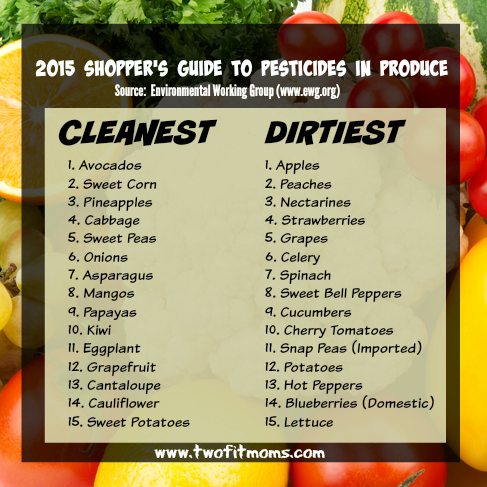
Why is this so important to consider, you may ask? Well, pesticides are chemicals that exist for the purpose of killing “pests”, such as insects, mold, bacteria and weeds that interfere with the growing process. It is a known fact that some pesticides, such as organophosphates and carbamates, affect the nervous system. Other pesticides can cause skin irritation, lead to cancer, or affect the endocrine system.
While you should take some comfort in knowing that the Environmental Protection Agency determines how much of a pesticide can remain on food that you buy, we believe that it still pays to be an informed consumer and to make your own decisions about the food you choose to ingest.
Ideally, all of our fruits and vegetables would be grown locally and organically. Practically speaking, we do not all live in areas with supermarkets that carry vast varieties of organic produce, nor do we all have financial budgets that allow a fully organic diet. We believe that the EWG list is a helpful shopping tool if you’d like to limit pesticide exposure.
Please note that the words “clean” and “dirty” are specifically referring to pesticides, not the quality of the produce, whether it is genetically modified, or whether it is grown locally or thousands of miles away. Pesticides ONLY. It is up to YOU to determine which factors are most important to consider before purchasing food.
Here are some general guidelines:
-If a fruit or vegetable is on the “dirty” list, make an effort to buy the organic version.
-If you consume a particular fruit or vegetable on a frequent basis, buy organic—especially if it’s on the “dirty” list.
-The EWG study found that although leafy greens, such as kale and collard greens did not make the “dirty” list, they tend to be treated with particularly toxic pesticides. If you frequently purchase conventional greens, cook them. Pesticide levels typically diminish when food is cooked.
-Use organic greens for juicing.
-Go ahead and make that guacamole with conventional avocados. Only 1% of avocados tested showed any detectable levels of pesticides!
-Remember to thoroughly wash your produce before eating. I know it’s tempting to just wipe that apple on the edge of your shirt. Without washing your produce, your risk of ingesting pesticides is greater.

 quantities of vegetables at one time. Instead of cooking for just one meal, I roast enough veggies for two or three meals. Unlike boiled or steamed vegetables, which may feel soggy and limp on day two or three, roasted vegetables maintain a delicious flavor and can be chopped into omelettes, pureed into soups or layered onto a sandwich with a balsamic glaze. Let me show you a basic technique.