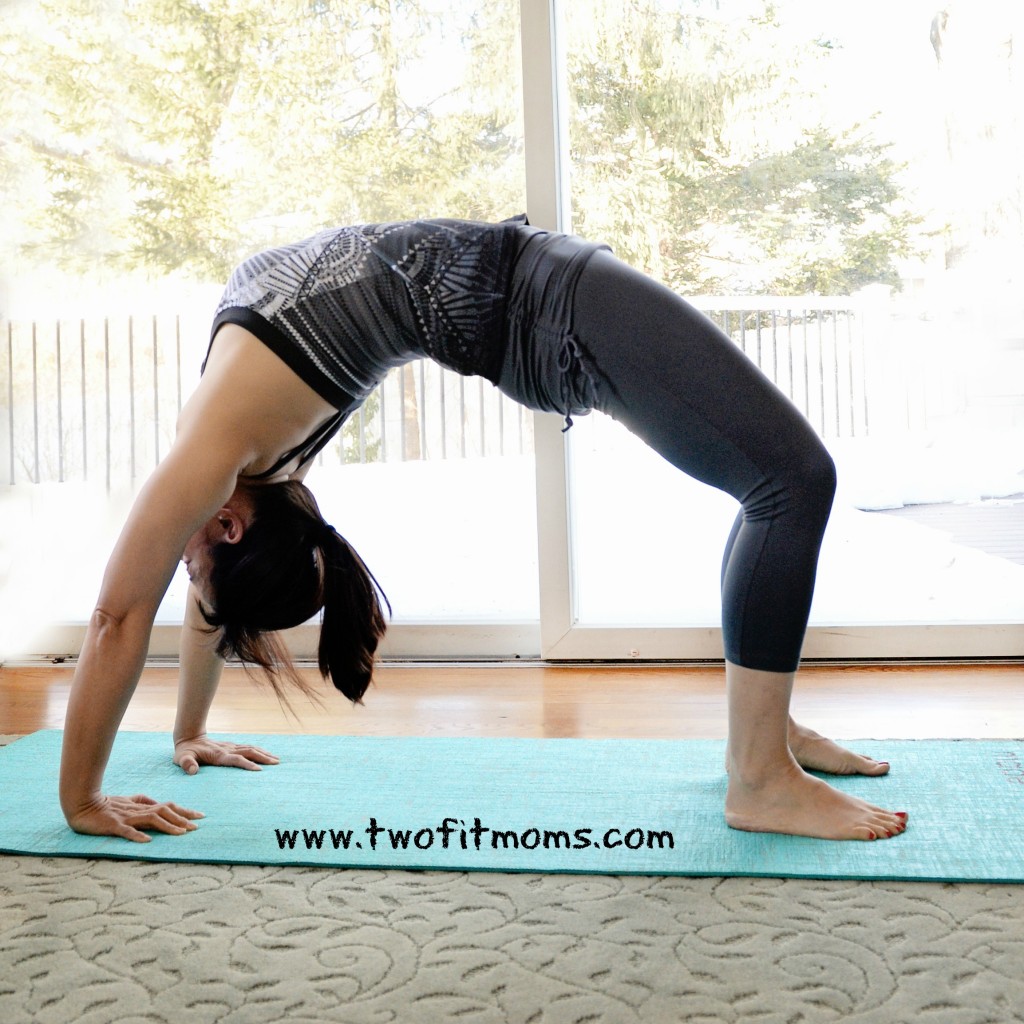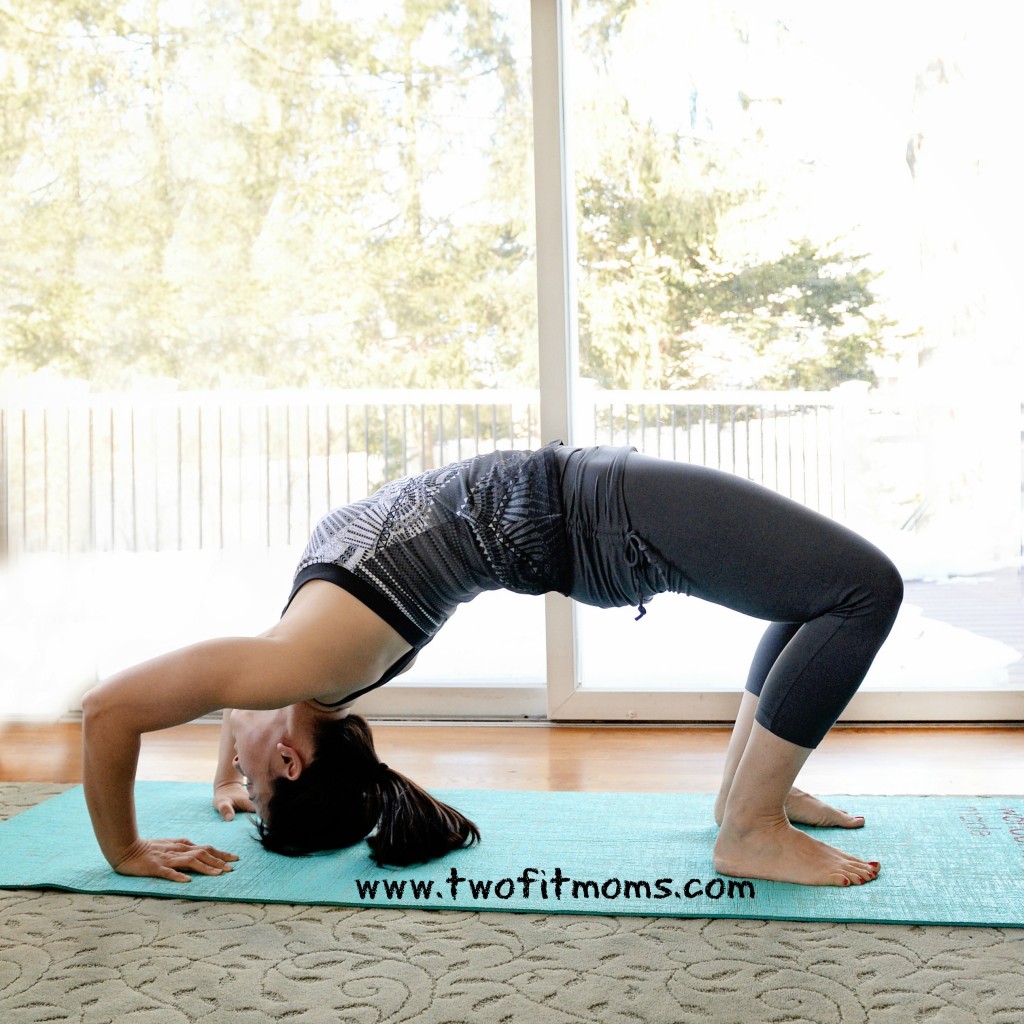
If you are ready to move your handstand practice away from the safety of a wall, you must embrace the art of falling. I call it an art because there is actually a bit of technique involved. Once you master the technique, you will not be afraid of practicing in the middle of a room. You will realize that falling out of any inversion can be a controlled transition from one pose to another. When you feel your body wavering as you balance on your hands, you will not flail around and then land flat on your back. You will be armed with a game plan—a real exit strategy. You will fall (or transition) from handstand into wheel pose.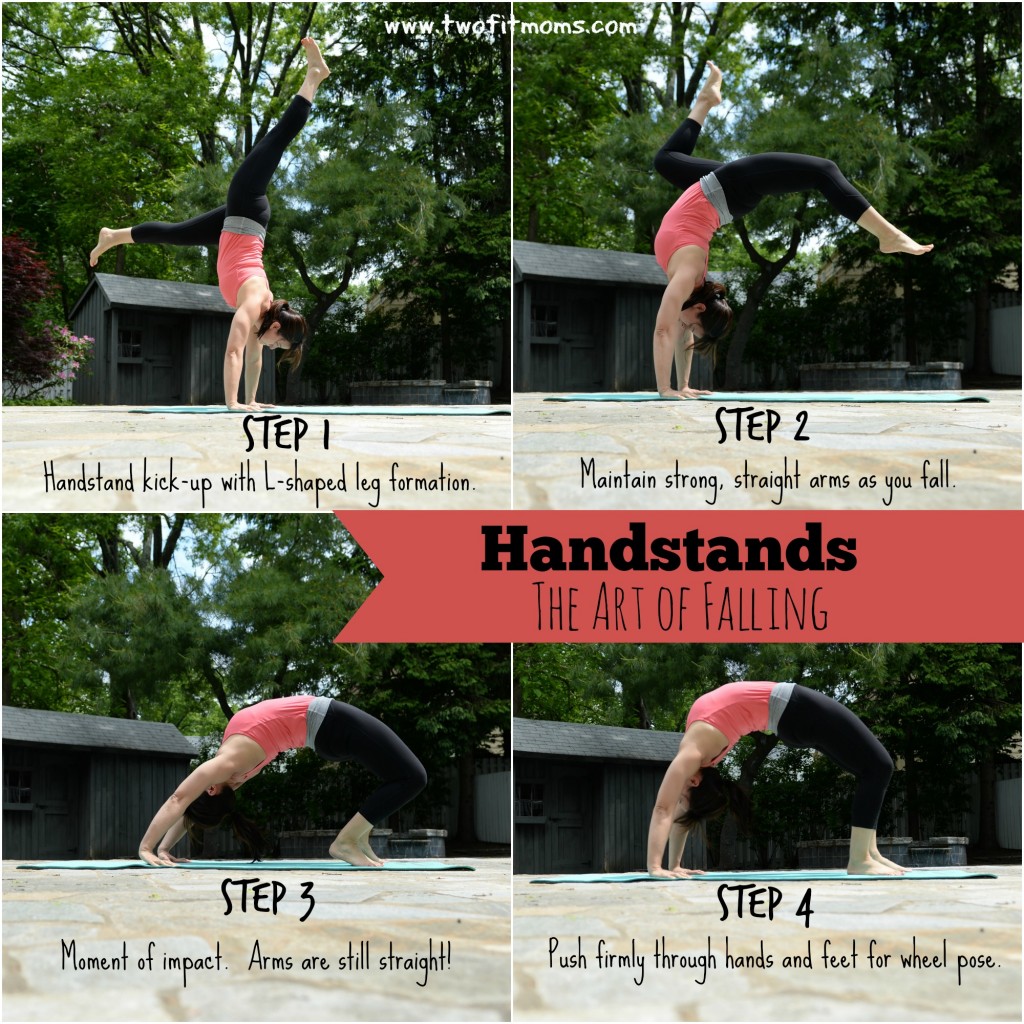
Practice Wheel Pose
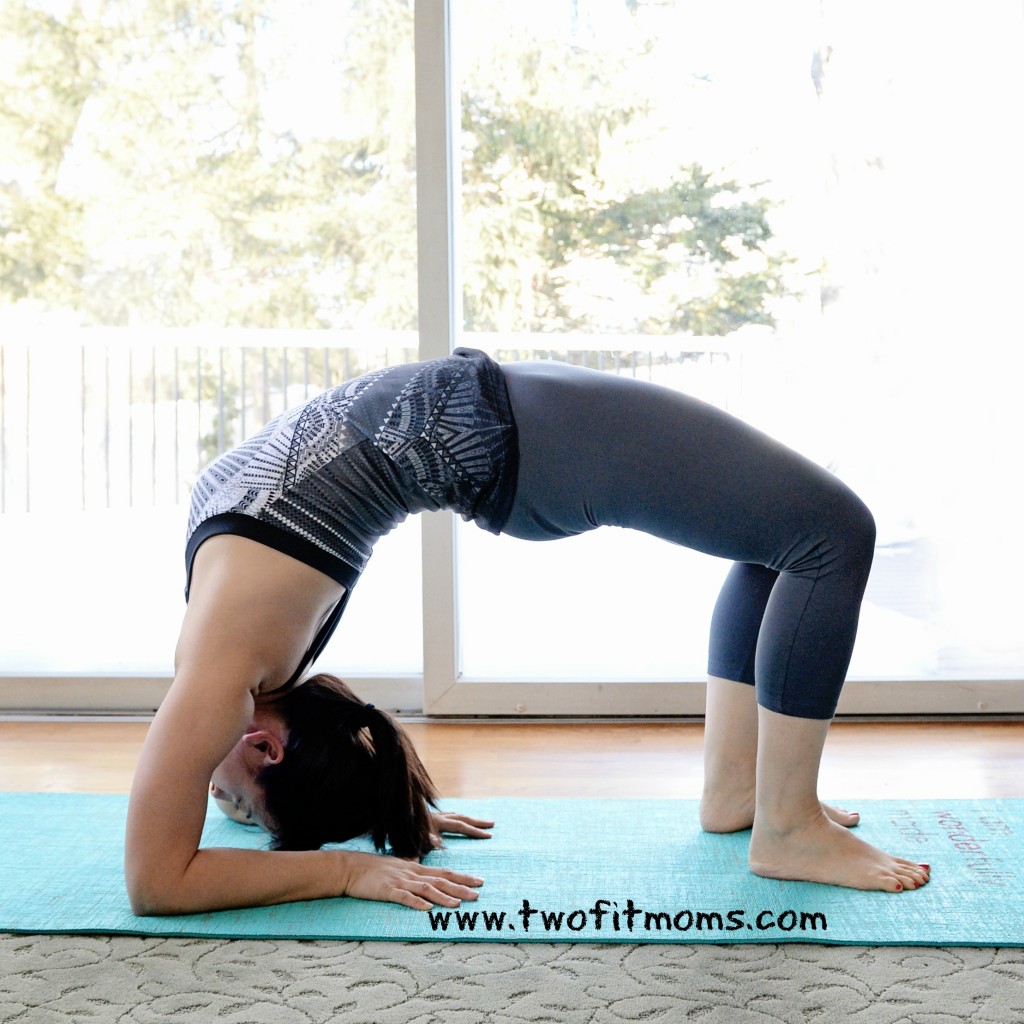
Before moving your handstands away from the wall, you MUST be very comfortable in wheel pose. You will be falling into this deep backbend from a height, so you certainly don’t want to fall into this pose if you are uncomfortable or feel any strain at all when you lift into wheel from the floor. Please review the proper form for wheel pose HERE.
If you cannot do this pose with ease, continue to practice your handstands with a wall. Every day, you can continue to work on your backbends and heart/shoulder opening stretches until wheel pose is no longer a struggle.
At this point, if you are uncomfortable with wheel pose, you may be wondering if there are other alternatives to exiting a handstand. Yes, there are other options, but I don’t like teaching them. Falling into a cartwheel, for example, is a very popular exit strategy from handstand, but it doesn’t make sense for beginners. As a recent beginner myself, I know that once you begin to lose your balance in a handstand, you do not have enough control to do anything but fall straight back. Attempting to do anything else (like lift one hand to cartwheel to the side) is dangerous and could result in injury. Trust this process. If wheel pose is difficult, keep practicing your backbends each day. Soon enough, you will be practicing handstands in the middle of the room, and you will stay safe because your hands will be rooted in one spot and remain there for the duration of any fall/transition.
Practice the Transition
Make sure you are warmed up before practicing this transition. Kick up into any variation of handstand that feels stable, and when you begin to lose your balance, don’t fight the natural momentum. The inclination will be to fall straight back, and that is what you will do.
The most important step in this transition is to maintain straight arms the entire time. If you bend your elbows during the fall, you might hit your head or land flat on your back. Just think—strong, straight arms. Repeat it over and over in your mind. One way to stay strong is to grip your mat firmly with your fingertips. By maintaining an engaged feeling in the tips of your fingers, you will be reminded to engage the entire length of your arms by staying strong and straight.
If You are Scared…
Kicking up into handstand in the middle of a room and then falling back into wheel requires a huge leap of faith. You must believe that you have the strength in your arms, the flexibility in your back, and the overall balance necessary to land on your feet in wheel pose. If you are not convinced of your own ability to do this, don’t be discouraged. You can practice transitioning into wheel from handstand WITH the safety of a wall.
To begin, lie down on your back with your knees bent, the soles of your feet flat on the ground, and the tips of your toes against a wall. Review your form before continuing—make sure that your heels are as close to your bottom as possible. Bend your elbows, and bring your hands alongside your ears, with your fingers pointed toward your body. You are now set up on the floor as if you were going to lift into wheel pose with your toes against a wall. Take note of where your hands are relative to the wall. THIS will be your starting point for your handstand practice. No need to lift into wheel pose right now. Go ahead and stand up, and place your hands down onto this starting point that you just determined. Kick up into handstand, and when you lose your balance, allow your legs to fall against the wall. Keep your arms strong and straight, and begin to walk your feet down the wall onto the floor into wheel pose. Repeat this exercise as many times as necessary to become accustomed to the feeling of transitioning from handstand to wheel. Once you feel confident, go ahead and try the transition in the middle of the room.
Stay safe, believe in yourself, and enjoy the process.
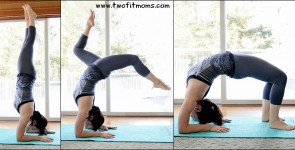
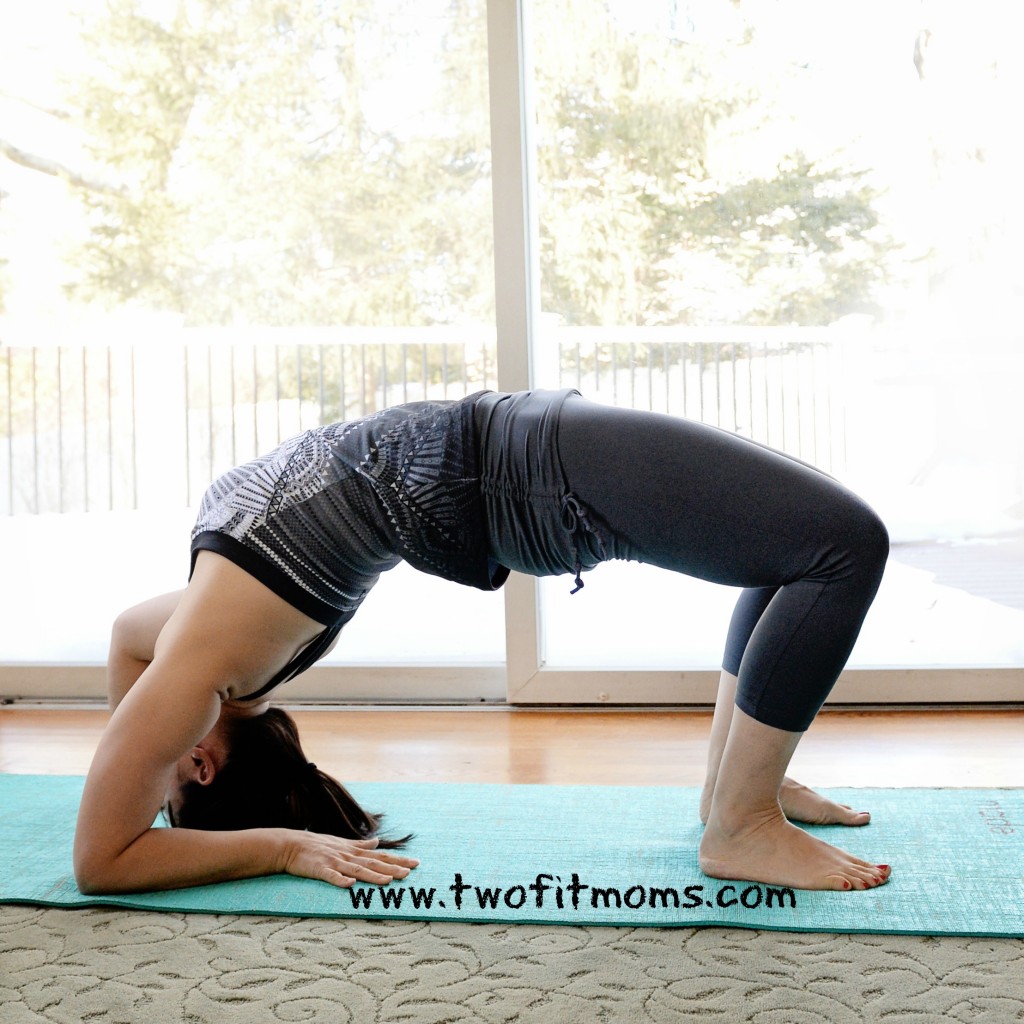
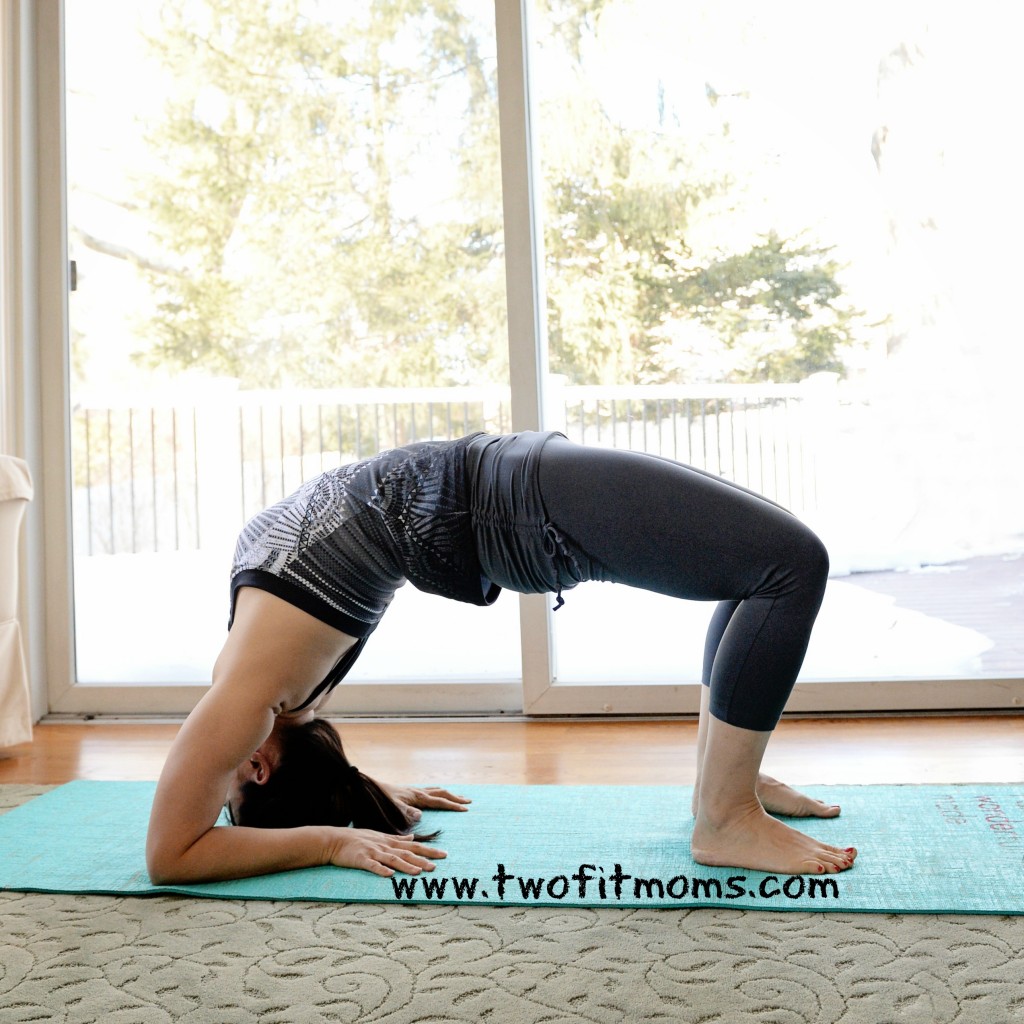
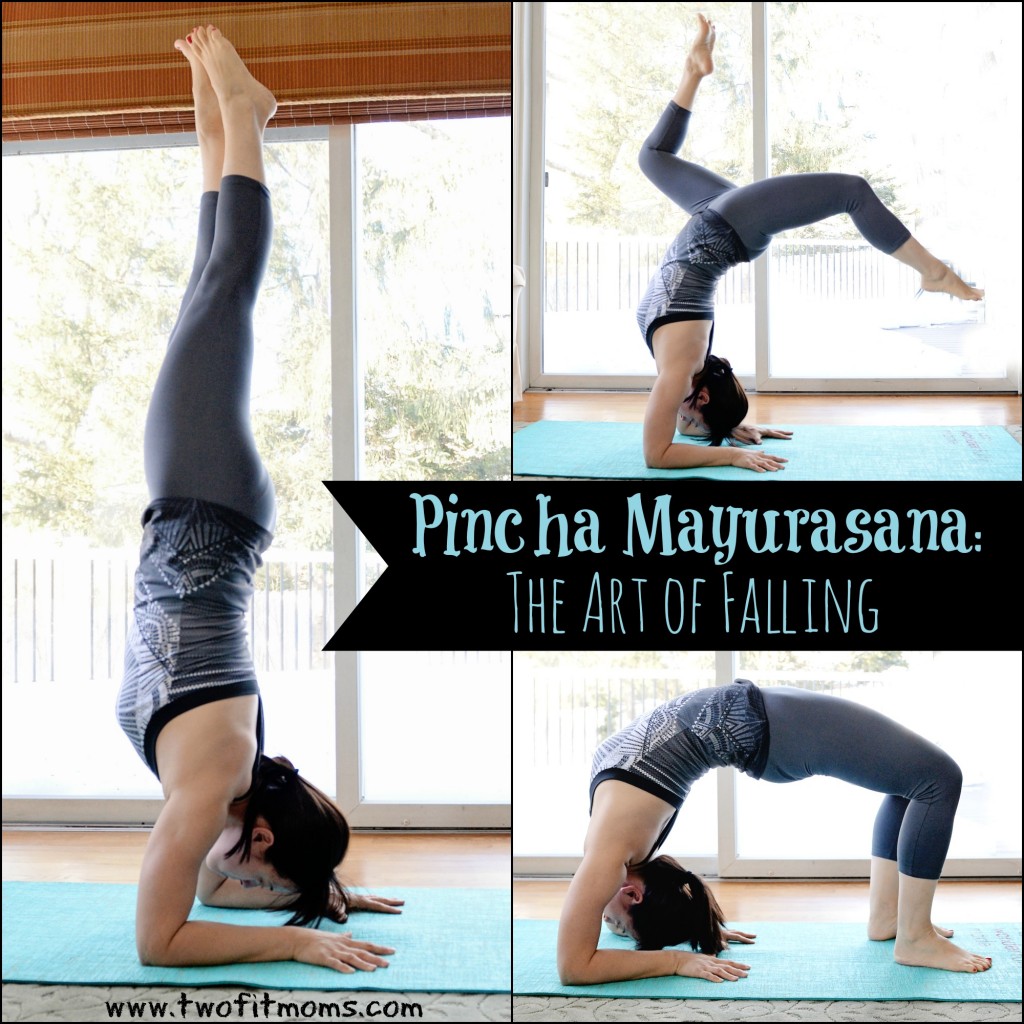 actually a skill, and today, I will show you how to turn your fall out of forearmstand into a controlled transition.