Tag: tips

  • 5 Steps Towards Making Your Dream a Reality

    5 Steps Towards Making Your Dream a Reality

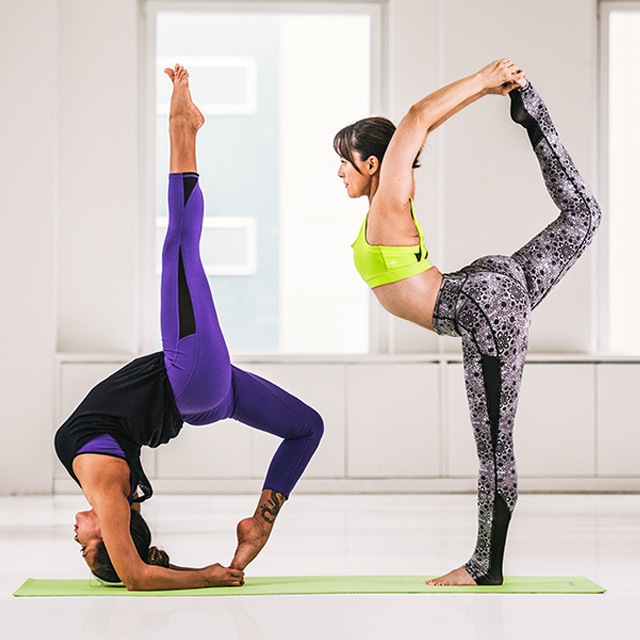
    Four years ago, we began sharing our love of yoga on Instagram by posting snapshots and picture tutorials of some of our favorite poses. With young kids at home, we rarely made it out to attend classes at yoga studios, but we loved to practice at home. We had a passion for connecting with others and sharing whatever we learned on our mats, so we posted photos often and helped build a virtual yoga community. We hoped to be able to reach a larger audience one day, and seeing that dream come true through our relationship with Gaiam has been a surreal experience.
    TFM-74_IG
    Last month, we realized another one of our dreams as we launched the Two Fit Moms apparel line with Gaiam.

    We want YOU to dream big too! So, in keeping with this theme, here are five things that we believe have helped us, and will help you, as you set on your path towards making your dreams a reality.

    Think Positively: You need to believe it in order to achieve it, so the first thing on your list should be to create a positive affirmation. If you don’t believe in you, no one else will.  Create your own personal mantra that you come back to time and again – especially when your faith in you falters. Consider starting and ending your day with this mantra. “I am strong, I am confident, I can achieve my dreams.”

    Fake It, Until You Make It: You need to walk the walk and talk the talk – even if you don’t believe it at first. If your goal is to run a marathon one day, start playing the part of an athlete! Even if you are out of shape, you can start eating well, drinking water instead of sweetened beverages and committing to a daily walk. You need to believe in your dream, in your ability to achieve it, and you may need to adjust your mind and your actions in order to realize it. Live your mantra.

    Be Resilient: Recognize that your dreams may change, they may take longer to achieve, they may require more work, or a partner or more resources. Being open to change and able to adapt to it will be important. Things don’t always work out the way we would like, so being able to land on your feet is key.

    Ask for Help: Much of achieving a dream rests on you, but don’t be foolish. Ask for help. Look for guidance from others who may have insight or experience that would be helpful and valuable to you.

    Return the Favor: Don’t take your opportunities for granted. Remember where you came from, be modest, be thankful and give back. Be a source of inspiration, and share your experience so that you can encourage others to start on their path to achieving their own dreams.


  • Why Naked is Better

    Why Naked is Better

    A few years ago, I had a fabulous pink bikini that fit well and felt great. Yesterday, I put that same bathing suit on, and I noticed that my skin bulged around the elastic. I felt lumpy and bumpy and became quite critical of myself as I stared at my reflection in the bathroom mirror.

    Here’s an interesting point— I don’t remember the last time I passed judgment on my naked body. I only began judging my body yesterday afternoon when it was clothed in a swimsuit. Without the constraints of clothing, there was no pinching or squeezing or reason to doubt myself. It was only when I shifted the framework and added the constraint of clothing that my thoughts became negative.

    This got me thinking—How freeing it would be to just enjoy the stripped down version of EVERYTHING in life—without a framework for comparison.

    Think about it: You feel good about your accomplishments…until you shift your framework and begin comparing those accomplishments to someone else’s. You feel great about your morning run…until you realize that it took you four minutes longer to run the same route that you ran last week. You feel great about your body until you try to squeeze it into skinny jeans. If only we could always just enjoy life as it hits us, in its raw, naked form, without judgment, WE WOULD BE FREE!

    Here are some tips to free yourself:

    -Life is too short for ill-fitting clothes that make you feel like crap. Have you gained a few pounds? Fine. It happens, and you’ll deal with it, but there’s no reason to walk around feeling self-conscious. You should feel confident because you are worthy. Buy a few items that fit well and make you feel like the rock star that you are.

    -Try going for a run, going for a bike ride, or doing whatever it is that you like to do as part of your fitness regimen, and do it without timing yourself. Jog until you don’t feel like it anymore. Slow down if you want to. Speed up if that feels good. Lift some weights without counting reps. Elevate your heart rate for as long as it feels invigorating, and then stop. Of course you should challenge yourself and set goals, but once in a while, strip it down to the basics: Enjoy moving your body just because you can.

    “Keep your eyes on your own paper.” Did every elementary school teacher say that before a test? At the end of the day, when you glance at someone else’s work, you just end up cheating yourself. Stop comparing. Your life experience is yours and no one else’s. Don’t take the joy and pride out of your accomplishments because the guy next to you seems to have done more.

    Practice yoga in solitude. This idea is an extension of the “keep-your-eyes-on-your-own-paper” theme. The energy of a yoga class is amazing, and you shouldn’t give it up, but too often, we are distracted by the abilities of those around us. We begin to judge our own yoga skills and wonder if we are strong enough or flexible enough to keep up. By practicing alone, you will learn to keep your eyes on your own mat and build a practice that you love, without negative judgement.


  • Overcoming Perfectionism

    Overcoming Perfectionism

    Today, I looked out the window and decided that it was going to rain. And then the sun came out, and I decided that it wasn’t going to rain anymore. And then it rained again. And then it stopped. And then it started again. (It’s actually a bit humorous, now that I’m re-reading what I’ve typed here.)

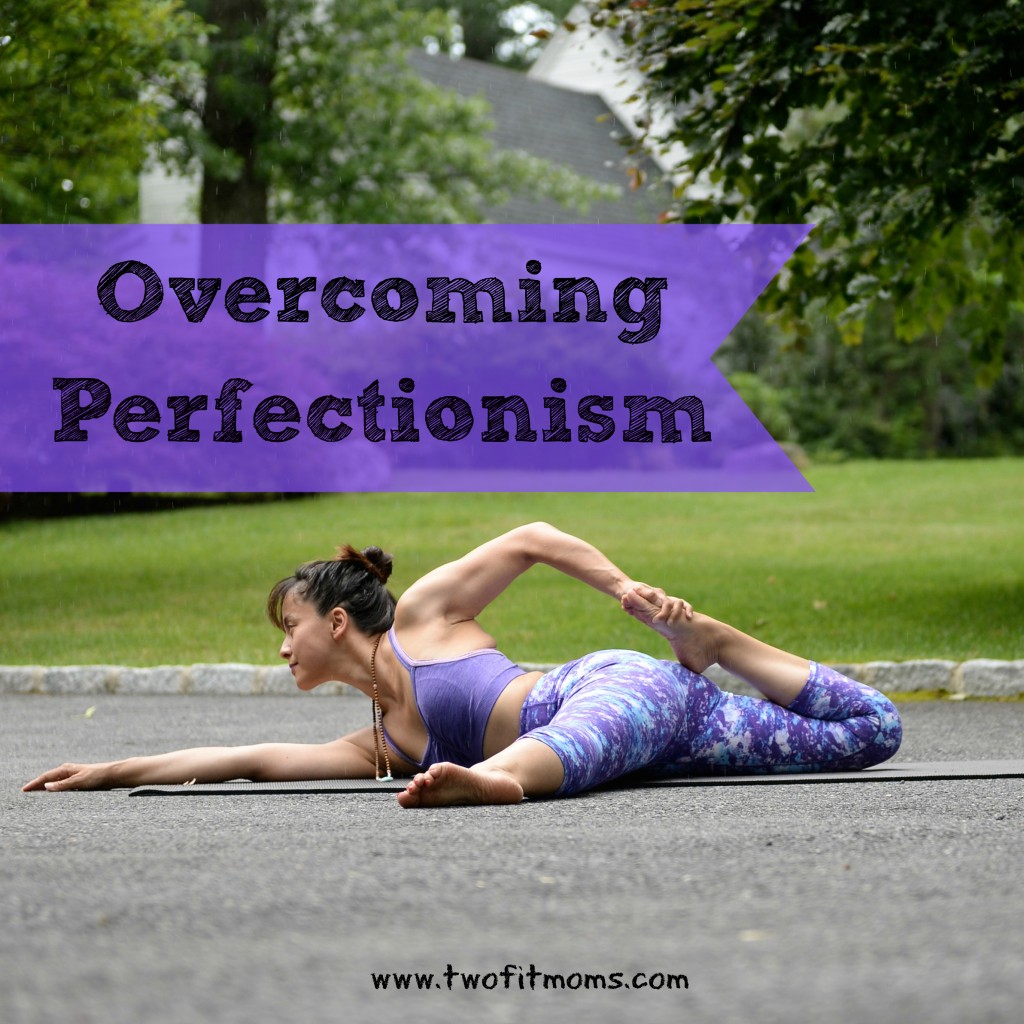
    I stuck my head out the front door to check the temperature. It was hot and humid…typical summer weather in New Jersey, and perfect for stretching and yoga. I briefly considered going outside to practice in the heat, but I changed my mind when I looked up at the sky and saw dark clouds. Conditions weren’t perfect, and I could imagine slipping on my mat in the rain, and hurting myself. Who needs an injury on top of the searing pain that I already have in multiple joints?OvercomingPerfectionism

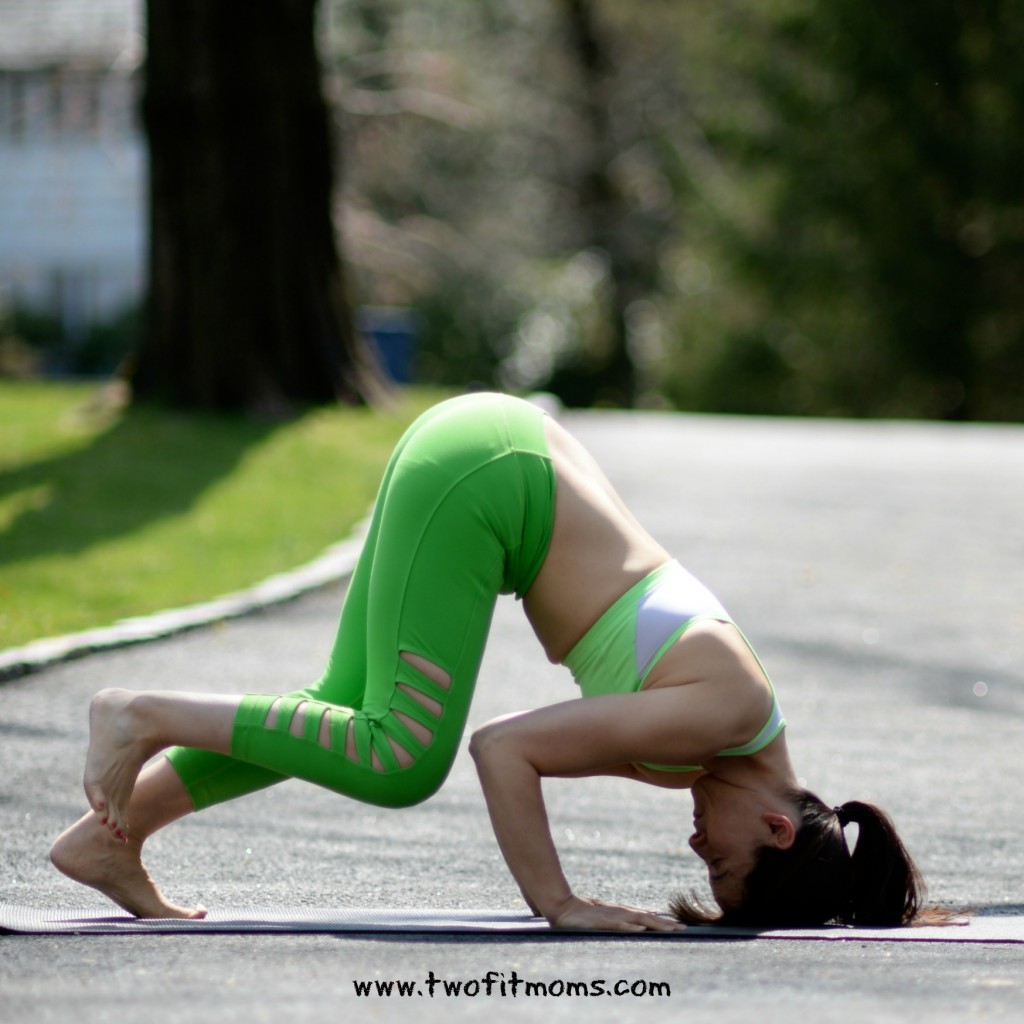
    I looked outside again. The sun was shining and the rain stopped. This was getting absurd. This time, I decided to head out to my driveway to practice. I started with a few rounds of sun salutations, some hamstring openers, a quick flow, and then I rolled onto my side, and got into one of my favorite yin yoga poses (Cat Pulling its Tail Pose), and I settled in for four minutes. Not even 30-seconds into the pose, the sky opened up, and it started to rain. I lifted my head (as you can see in the photo) and looked around. Yes…yes, it was raining. And that was really all I had to say about that. I put my head back down onto my upper arm and continued to stretch. The world was not ending, and I got through my practice in the rain.

    So, what does this story have to do with you? Well, I’m guessing that I can’t be alone in this— I waste vast amounts of time, waiting for conditions to be perfect before taking action. I am reminded today that conditions don’t have to be perfect to take action. It’s so easy to get bogged down and remain stagnant while waiting for all of the right circumstances to fall into place.

    Stop waiting for conditions to be perfect!

    Stop placing expectations on how things SHOULD be.

    Learn to act today, embracing what IS.

    You can thrive in the current environment, and you don’t have to wait another minute, waiting for the stars to align.

    Today, I expended unnecessary mental energy, trying to decide whether I should practice outside. All along, the answer was yes, I should practice outside, and once I’m out there, I’ll know how to adjust my plan if necessary. No, it wasn’t perfect, but I got something done.

    Ask yourself if you’re holding yourself back in some part of your life because you are waiting for perfection.


    -When it comes to your diet, are you giving up on healthy eating for the rest of the day because you “messed up” at breakfast and ate three doughnuts? Are you waiting for tomorrow to start over because you need a clean slate? Why do you need to wait for conditions to be perfect? Can you overcome your desire for perfection and just get started right now?

    -When it comes to exercise, are you skipping it altogether because you only have 15 minutes? Have you convinced yourself that a full hour is the ideal workout length, and 15 minutes isn’t worth your while? Ask yourself why you need this perfect amount of time to workout. Can’t you begin to make a difference in your life with 15 minutes a day?


    Life is rarely perfect. Usually, I allocate a solid block of time to write for this website. I don’t whip up my articles in 30 minutes, so if I happen to be very busy or traveling, the articles don’t happen. I spend a ridiculous amount of time trying to convey my thoughts with the right words. The perfect words.

    Today, I don’t have that kind of time to spend on the website, but in the spirit of overcoming my own issues with perfectionism, I’m going to go ahead and post this piece in its rough, unedited form.

    I had two choices when I came inside out of the rain: I could quickly type up these thoughts and share them with you (even though the article is far from perfect), or I could skip writing altogether. In the end, I’m glad I chose to write.

  • Struggle Management

    Struggle Management

    I have been very public about my own wellness journey and the struggles that I have encountered along the way. I’ve posted articles about my diet, my meditation practice, my first experience with acupuncture, and all sorts of other topics that relate to my health. I’ve even posted a bunch of tips to consider after being diagnosed with an illness. What I haven’t done is discuss how I’ve dealt with the emotional toll of being diagnosed with a medical condition. It’s a disconcerting and frightening time, especially at the beginning. Even the most level-headed person can fall into the trap of imagining worst case scenarios and horrific outcomes. It’s not a good place to be. It is far better to be in a place of hope and positivity, and that is the goal—to make your way to an emotionally comfortable place following a medical diagnosis or any kind of life struggle.StruggleManagement

    Your struggle may not be an illness— Maybe you’ve lost your job, or maybe you work three jobs as a single parent to make ends meet. Maybe you’re caring for a sick relative, or maybe you’re overwhelmed at work or stuck in a job that you dislike. Whatever your struggle is, I’m confident that you can manage your way through the muck and live a fulfilling life that feels purposeful and worthwhile.

    Here are my top tips for helping you navigate the choppy waters. This is how I’ve dealt with all of the major struggles that I’ve faced in life, and I hope you can find inspiration here to continue moving forward.


    1. Determine what good can arise from the situation. This is a tough one, but I believe it’s a necessary step in overcoming any challenging circumstance. You might have been dealt a terrible hand, but you need to play it. Your situation may be painful and seem insurmountable right now. It might be difficult to imagine anything good coming out of the struggle, but try to make a list. Can there be any purpose in the pain? Will this struggle help you prioritize what is truly important in life? Will you live each day with more clarity and purpose because you are being faced with this struggle? Will you be able to advocate for others with a strong voice as a result of facing this situation yourself? Will your struggle force you to slow down and find beauty in simple everyday acts? Will you overhaul destructive habits and adopt a healthier lifestyle as a result of your struggle? Will you help your family become stronger as a result of them witnessing your strength during this trying time? Make a list, and see that goodness can flow right out of a not-so-good situation.


    1. Maintain a positive attitude. This tip goes hand-in-hand with the previous tip. You must change your thinking. Once you can find purpose in your struggle, or at least something positive that might arise as a result of your struggle, it becomes easier to stay upbeat. Yes, you need to mourn whatever it is that you’ve lost (your good health, a family member, your life savings, your job, etc), but you can’t stay in a deep dark place forever. You have a choice to send positive energy or negative energy out into the world, and I know that you can keep it positive. Remind yourself often that you are strong and capable. Remind yourself that the mind is a powerful tool. You can convince yourself that you are too tired and too weak to overcome your circumstance or you can create a positive environment and talk yourself right into a better mindset where you feel empowered. The choice is yours, and it is up to you to make the right choice.


    1. Take control of your health. There is so much that we cannot control about our health, but fortunately, there is a tremendous amount that we can control. Don’t allow a medical diagnosis to crush your spirit. Don’t give up on your body. Do some research and get inspired by natural remedies and foods that can help you feel better. Regardless of the nature of your current life struggle, you can change your diet, implement a daily exercise program, and begin a regular meditation practice to lower stress levels. You can reduce systemic inflammation, boost your immune system, strengthen your bones and muscles, improve the quality of your skin, and generally feel much better than you’d otherwise feel if you gave no thought to your health habits. Get on the wellness bandwagon. You won’t regret it.


    1. Help someone else. When you hit rock bottom, it’s hard to think about helping someone else. After all, how can you help someone else if you can barely figure out how to help yourself? I understand, and I get it. But I also know that the tendency during a personal struggle is to focus on me, me, me. Yes, it’s warranted, but it’s also healthy to focus on something else that is worthwhile, and something that will also give you a greater perspective on life. Maybe you won’t have the time to volunteer at the local shelter or organize a fundraiser, and that’s ok… but you’re not off the hook. Figure out another way to be of service to someone else. This may be as simple as joining a support group and sharing your experience with someone else going through the same struggle. Sharing your experience and providing your own unique perspective can be inspiring and helpful to someone else.


    1. Sleep. What can I say? I didn’t believe it for a long time, but a good night of sleep can do a lot to transform your state of mind. Feeling blue? Exhausted? Too overwhelmed to even call a friend? Go to bed, and make sure to get plenty of rest. Healing on many levels occurs overnight. It will all seem a bit more manageable in the morning.


  • 10 Simple Tips to Raise an Active Family

    10 Simple Tips to Raise an Active Family

    Now that the school year has ended, the kids are home, and the temptation to sit in front of the TV watching cartoons all day is great. It’s unbelievable that active, energetic children can turn into couch potatoes so quickly. The good news is that this is easily reversible. Children have a natural inclination to want to move, jump, fidget, skip and dance. Playing outside, swimming, running races and riding bikes are all forms of exercise, and kids looks forward to all of it. It’s all fun and games in their eyes.TipsforActiveFamily

    The key to raising an active family is to set a positive example as active parents, to surround your children with opportunities to be active, and to harness your children’s natural playful spirit.

    Here are a few of our tips to help you raise an active family. You can do this on a financial budget of any size!

    1. Limit your kids’ time in front of the TV.  One simple way to reduce TV-watching time is to pre-record your kids’ favorite shows. When it is time to watch a show, you can quickly fast forward through the commercials and cut back on the time that they are in front of the screen. We also recommend setting aside a specific time of day to watch TV. Pick a time that doesn’t interfere with physical activity—Maybe an hour before bed or an hour early in the morning before breakfast.


    1. Set a good example. Let your kids see you exercising. If you disappear for each of your workout sessions, your kids are not seeing you being active. Don’t cancel your gym membership, but make it a point to do some form of exercise at home that your kids can witness.   Pushups, sit-ups, squats and yoga are all great examples of effective exercises that are doable right in your living room.


    1. Get active with your kids. Children get a kick out of seeing their parents playing, and it encourages them to join in. I have my own jump rope in the garage. When I take it out and start jumping in the driveway, the kids run and get their jump ropes, too. It’s just not possible for them to stand and observe. The urge to move is too great, and they join right in.


    1. Make it a daily habit. Being active doesn’t mean that you must commit to long five-mile runs or day-long bicycle rides with your kids. You can raise an active family just by making it a habit to move every day. A ten-minute game of tag counts as movement!


    1. Create a fun environment at home that encourages activity. Set up a volleyball net in your yard. Install a basketball hoop outdoors. If you don’t have the budget to install any sort of nets or goals, just keep a few different balls on hand in a large bucket. Kick a soccer ball around after dinner or play catch. The idea is that if you build it, they will come. Go ahead and create an inviting area for play.


    1. Keep a ball/frisbee in your car. Be prepared for spontaneous fun! You never know when you might run across a large grassy field that is perfect for an impromptu game of catch, kickball or frisbee.


    1. Blend inactivity with activity. Think about all of the inactive things that you do with your kids regularly, and find a way to make some of those activities more active. For example, instead of driving to the ice cream shop after dinner, walk there. Instead of parking your car right in front of the movie theater, park on the other side of the mall/parking lot.


    1. Research your town’s recreational activities/programs. There are plenty of summer camps, private swimming clubs and sports camps that run all summer long, but if that’s not in your budget, contact your town to find inexpensive or even free activities for your kids. Playgrounds are free, some local zoos have free admission days, state parks offer great hiking trails, and some local bowling alleys offer free bowling for kids all summer long.


    1. Build movement into their chores. This will obviously depend on the age of your children, but even little ones are happy to help rake leaves in the fall, plant flowers in the spring, and pull weeds in the summer. Older children can drag the garbage cans to the corner, get the mail from the mailbox each day, scrub bathtubs, etc. Allow your children to build a sense of responsibility while also moving their bodies and staying active.


    1. Encourage your kids to get outside every day. With the exception of a few days a year that are dangerously cold or hot, your kids can dress appropriately and do just fine outdoors. What do they do once they get out there? Well, it’s a strange phenomenon, but they always find something to do.


  • 75 Tips for Your Wellness Journey

    75 Tips for Your Wellness Journey

    Wellness is not just about the weights you lift or the food you eat or the number staring back at you on the scale. Wellness is a state of being that reflects your health in various areas of your life— food, fitness, flexibility, sleep, spirituality, relationships, etc. In order to inspire you to continue on your lifelong wellness journey, we have created a list of 75 tips to help you live a healthy life. Enjoy!

    75Tips

    1. Automate your breakfast. Think of a few different healthy breakfasts that you enjoy, and plan to eat one of those pre-selected meal ideas each day. By doing this, you will always start the day on the right foot.


    1. Exercise, even if you only have 10-15 minutes. Baby steps count and add up over time.


    1. Limit your TV watching time to 1 hour per day.


    1. Cook your own food, take-out less.


    1. Wash, chop and store your vegetables in the refrigerator so that they are ready to eat. Healthy meals are much easier to create when all of the prep work is done ahead of time.


    1. Commit Sun Salutation A to memory so you always have a portable yoga sequence.


    1. Develop a relationship with a doctor when you are healthy and feeling well. If you become sick, you will be grateful to have a healthcare professional that already knows who you are.


    1. Get up from your desk once an hour to move or stretch.


    1. Keep an extra pair of sneakers in the trunk of your car so you always have an option to go for a quick power walk.


    1. Set a daily intention. Move through each day with purpose.


    1. Carry your own pen— especially during flu season.


    1. Get enough sleep.


    1. Shop the perimeter of the supermarket for fresh, whole foods.


    1. Look for foods in their most natural form. (Veggies instead of veggie chips; fruit instead of fruit juice)


    1. Replace all sweetened beverages with unsweetened tea or fruit-infused water.


    1. Create a positive affirmations practice. You ARE on a healthy path. You ARE worth the effort.


    1. Schedule your exercise session the way you’d schedule an appointment. Take it seriously, and don’t cancel!


    1. Turn off all text notifications on your phone to increase productivity and create more free time in your day.


    1. Eliminate refined sugar and flour from your diet.


    1. Start a meditation practice to lower stress levels.


    1. Get some fresh air, even if the weather isn’t ideal. It’s amazing what it can do to change your mood and clear your mind.


    1. Do something for yourself each day that is purely for pleasure. Maybe it’s a hot bath, or maybe it’s curling up with a good book. Just find something that brings you joy, and do it.


    1. Set a cut-off time each evening for electronics. Unplug from it all, and wind down. It will still be there tomorrow!


    1. De-clutter your bedroom to create a peaceful environment for sleep.


    1. Eat mindfully— sit down at a table to eat your meals. Focus on your food, not on your phone, computer or TV.


    1. Keep a food journal if you find yourself mindlessly eating throughout the day. If you must commit it to paper, you will feel accountable.


    1. Call a friend. Make an effort to keep in touch with the people that you care about. You need a strong support system.


    1. Find time to give thanks for all of the good things in your life. Maybe even start a gratitude journal.


    1. Get the most out of your day by making a to-do list. Live intentionally!


    1. Take care of your skin. Wash, moisturize, and protect it with sunscreen.


    1. Take photographs to track your progress. It doesn’t matter if you’re on a yoga journey, a weight loss journey, or a muscle-building journey. It’s hard to see the changes on a day-to-day basis, but weekly photographs will help you record the progress.


    1. Don’t forget to floss your teeth.


    1. When eating out, share an entrée or choose an appetizer as your main meal. Portion sizes tend to be large at restaurants.


    1. Chew your food thoroughly. Digestion begins in the mouth!


    1. Stop obsessing over the number on the scale. You already know when you’ve been eating well and taking care of yourself. You don’t need a machine to confirm what you already know.


    1. Get familiar with the Clean 15 and Dirty Dozen so you can make smart decisions in the supermarket.


    1. Adopt an active lifestyle. Going to the gym is just a small fraction of the day. It matters how you live when you’re not officially exercising. Take the stairs. Go for walks. Park your car in the back of the lot.


    1. Cut out the processed food/snacks from your diet.


    1. Listen to your body, and don’t ignore the signals. Sometimes, your body will tell you to move, other times it will tell you to sleep, or heal, or even see a doctor.


    1. Try different types of workout programs to keep your exercise regimen fresh and interesting.


    1. Wake up at the same time each day to stabilize your circadian rhythm.


    1. Find a fitness/yoga/wellness support system on social media. A community of like-minded people will keep you inspired.


    1. Use a cold-pressed oil (such as olive oil) to prepare meals. If you plan to use canola oil, make sure it’s organic and expeller-pressed. Many canola oil products have been bleached, deodorized and extracted with chemical solvents.


    1. If you have a chocolate craving, choose a small piece of good quality, dark chocolate (greater than 70% cacao) instead of milk chocolate.


    1. For optimal gut health, include fermented foods in your diet, which have a probiotic effect: miso, natto, sauerkraut, tempeh, natto, kimchi, etc.


    1. Choose wild-caught fish over factory-farmed fish.


    1. Reduce your caffeine intake, particularly in the afternoon and evening when it can affect your ability to fall asleep at night.


    1. Challenge your mind. Stay sharp.


    1. Get out of your comfort zone. Try something that scares you a little. How about a handstand?


    1. Save sweets for special occasions—maybe as a treat on Friday night or at a gathering or event. If you must have dessert every night, choose fruit.


    1. Check your bedroom for lit-up digital displays on alarm clocks and electronics.  Keep these displays covered at night, as the small amount of light thrown off by these devices can affect the quality of your sleep.


    1. Make portion control easier by eating off of smaller plates.


    1. Each time you shop, buy a vegetable that you don’t usually choose at the grocery store. Gain exposure to nutrients and flavors that you typically don’t get!


    1. Take your shoes off at home to avoid tracking in pesticides, fertilizers, allergens and germs.


    1. If you carry a purse, keep it off of kitchen counters, dining tables, and other food preparation areas. The bottoms of purses are often places that harbor bacteria, as a result of being placed on floors of public places.


    1. For natural remedies for a number of minor ailments, consider using essential oils instead of over-the-counter pills.


    1. Get a massage.


    1. Looking for natural relief from allergies or sinus problems? Try rinsing your nasal passages with a Neti pot.


    1. Wash your hands often to avoid getting colds.


    1. If you don’t have time to put on your workout gear, do a few sets of push-ups.


    1. Practice deep breathing techniques to alleviate stress.


    1. Carry your own healthy snacks from home rather than shopping at the convenience store when you are famished.


    1. Listen to a Yoga Nidra guided meditation to experience deep relaxation and stress relief.


    1. For the greatest nutritional benefits, replace whole grain products with actual whole grains (ie, barley, whole oat groats, brown rice, millet).


    1. Ramp up the number of green vegetables in your diet by making green smoothies in the morning.


    1. Read fitness and wellness blogs or subscribe to a couple of health magazines to stay motivated and inspired.


    1. If you train hard, remember to include a day of rest. Rest does not mean that you have to give up all forms of activity. Try a restorative yoga class or go for a leisurely walk.


    1. Find a workout buddy that will keep you accountable. Even if you’d rather exercise alone, find a friend that you can text or e-mail each day with a workout update. Having to report to someone on a daily basis will help you stay on track.


    1. If you are intimidated to attend a group fitness class or a group yoga class, hire a personal trainer or a yoga instructor to work with you for a few sessions.


    1. Good health is easiest to achieve when everybody is on board. Include your family in your wellness journey. Allow your children to help you prepare a healthy meal. Encourage your family to join you for yoga, biking, jogging, etc.


    1. Practice the Confucian teaching of “Hara hachi bu” and eat until you are 80% full. The goal is to be satisfied, but not stuffed to the gills.


    1. Create a playlist of music that motivates you to move your body.


    1. If you don’t have time to exercise at a gym or yoga studio, invest in a few good exercise DVDs or an online membership to take fitness/yoga classes.


    1. When you don’t feel like exercising, tell yourself that you can stop after 10 minutes. Chances are, you won’t stop once you get started.


    1. Consistency matters. Your wellness journey will reflect what you do on a regular basis, not what you do once in a while. Commit to just a couple of healthy lifestyle changes first, and make sure you can incorporate them into your life before adding more changes.


  • 5 Tips to Consider After Being Diagnosed with an Illness

    5 Tips to Consider After Being Diagnosed with an Illness

    Those of you who have been following me on Instagram know that I’ve been on a long-term healing journey for a mysterious autoimmune condition.

    Three and a half years ago, I gathered multiple opinions for acute roaming pain in my tendons and ligaments— severe pain that would strike without warning and then disappear randomly without a trace. I had blood tests, x-rays, and MRIs. I met with two rheumatologists, a sports medicine doctor, physical therapists, a podiatrist (to assess damage in my hips and feet) and a general practitioner. I was not lazy with my medical care. Based on my blood work and clinical findings, these bright professionals with years of experience each came to the conclusion that I had an autoimmune disease. The treatment for such an illness was pain management and immune-suppressing drugs. None of these drugs were mild.Extreme close-up of medical pills and syringe on white background

    Rather than turning to medications that had a long list of side effects, I turned to a macrobiotic diet to heal and suppress symptoms. I found a macrobiotic counselor who suggested a strict healing diet, and I found tremendous success after just four months.  I never had to take any of the strong medications that are typically prescribed for rheumatological issues, and for the most part, I’ve felt very good.

    I started noticing a change in my health this past September when my daughter was admitted to the hospital for a kidney transplant. The palm of my left hand started to hurt while I was in that hospital room with my daughter, and the pain has not subsided in the months since.

    Within a few weeks of receiving a new kidney, my daughter rejected the kidney, and we found ourselves back in the hospital, living a nightmare. It was at that time that my right knee began to hurt, and I started to have trouble walking.

    A couple of months later, my right wrist began to hurt, and I’m now at a point where I can’t put much weight onto either of my hands without feeling excruciating pain.

    Stress is an unbelievable force. It can change your body chemistry and trigger illness. No matter how strict I became with my diet, I could not find healing. After a few months of struggling to heal on my own, I contacted my macrobiotic counselor. She was very firm with me. She reminded me that she always thought that something else was going on in my body. Based on the principals of oriental diagnosis, she examined me and maintained that she continues to think that I have Lyme disease or some kind of parasite. I reminded her that three years ago, I had asked both of my rheumatologists for Lyme testing, and they both refused. They told me that Lyme is the most over tested disease that rheumatologists see, and that they had no basis for testing me.

    My macrobiotic counselor told me to start searching for a new doctor and to keep searching until I could find one that would agree to testing. Four weeks ago, I found an integrative doctor who agreed to help. I had extensive blood tests to check for Lyme disease and the co-infections (parasites) that often travel with the infected tick.

    One week ago, I received my results, and my macrobiotic counselor was right. I can’t ignore that I DO have antibodies that are suggestive of an autoimmune condition, but perhaps the formation of those antibodies was triggered by being bitten by an infected tick. I am now starting a long course of two different types of antibiotics. I have been warned that this could take quite a while to heal, but I am patient. After all, I’ve been patient for the past 3.5 years as I harbored these parasites in my body without any medical intervention. I can continue to be patient.

    Let me tell you what I have learned from this experience that may help you if you’ve been diagnosed with an illness or are currently searching for answers about your own medical condition.

    Always seek multiple opinions from the best doctors when dealing with a serious medical condition that requires treatment.

    Once you have your multiple opinions, don’t assume that your multiple opinions (even if they are in agreement) are 100 percent correct. Always leave the door open to other possibilities.

    Search for a good doctor that practices integrative medicine and combines the best of western medicine and alternative therapies. Remember that not everything that heals in this world is found under the roof of a hospital. Take the help from medications when necessary, but keep in mind that healing and cures don’t always appear in the form of a pill or a syringe. Don’t underestimate the power of the body to heal itself with natural remedies.

    Find the discipline within yourself to try a natural healing plan. But don’t forgo the experienced care of a physician! Work alongside your medical team. Do everything in your power to strengthen your body. Cut the sugar. Cut the processed foods. Start loading up on greens and sea vegetables and fermented foods. Strengthen your gut, and strengthen your immune system. I adopted a strict macrobiotic diet, and by doing so, not only did I heal from unimaginable pain, but I also eliminated a bunch of other smaller issues (like debilitating seasonal allergies that plagued me each spring for 15 years.)

    Don’t allow your gut feeling to be drowned out by your doctors. In hindsight, I realize that I had a gut feeling. There was a reason why I was asking each doctor for Lyme testing. I allowed that inner voice to be drowned out by doctors because I valued their experience much more than I valued my gut feeling. Be your own greatest advocate. Insist on the tests you want to see. Offer to pay for them yourself, if necessary. Or keep looking for a doctor who is willing to explore your ideas and theories. They may not pan out, but you will feel much better after covering all of the bases.

  • Eliminate the Struggle in Tripod Egg Headstand

    Eliminate the Struggle in Tripod Egg Headstand

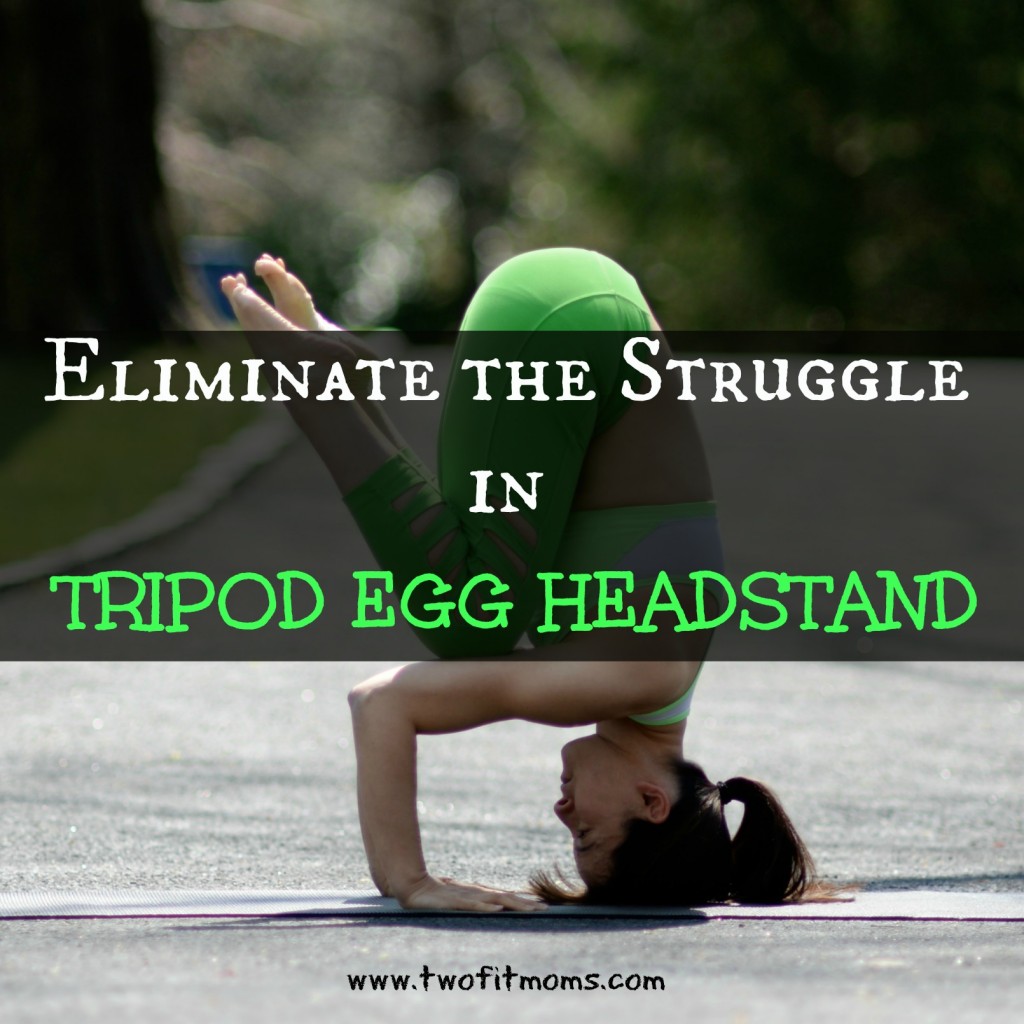
    Have you tried our Tripod Egg Headstand tutorial without much success?  Are you stumped as to why you are unable to get into this inversion?  If so, this article may shed some light on the topic and help you re-focus your efforts.

    There are many elements that play into the perfect headstand— core strength, neck stability, concentration, balance, hand placement, head placement, etc. The list of factors is surprisingly long, but if I had to pick just one factor that determines whether or not a beginner can successfully perform a Tripod Egg Headstand, I would have to say… HAMSTRING FLEXIBILITY!

    TripodEggBannerThat’s right— the tightness (or looseness) in the backs of the legs. Does that surprise you? It might. Most people rarely make the connection between hamstrings and headstands, but the connection is real. If you are struggling to climb into a Tripod Egg, your hamstrings may be the issue.
    Let me explain.

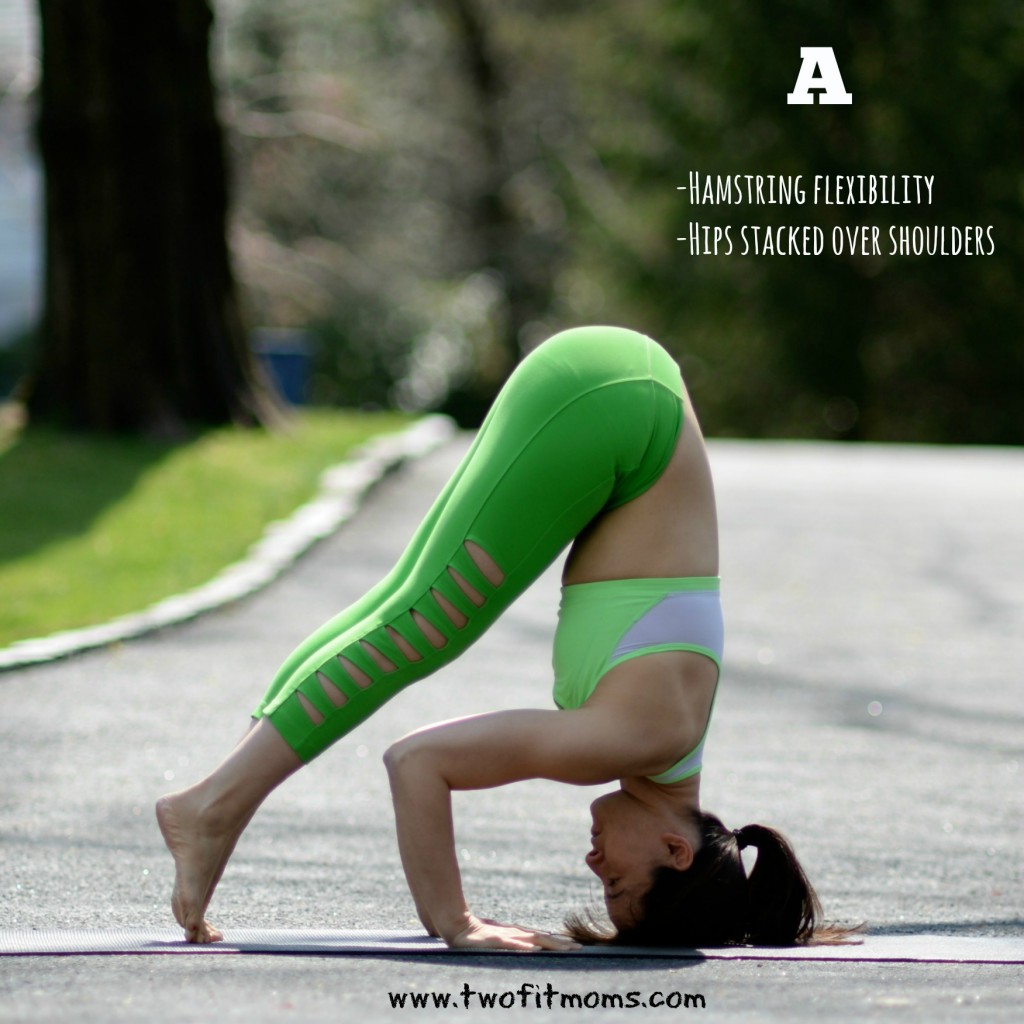
    Take a look at photo A below. No, it’s not really a headstand…I haven’t taken flight just yet, but this posture basically looks like a headstand with my feet still resting on the mat. In fact, if you only look at my arms, head and torso and use your hand to cover my legs in this photo, you’ll probably think that I am balancing in a headstand.  The reason why this image resembles a headstand is because my hips are stacked right above my shoulders. Hip stacking is what makes it possible to easily perform a Tripod Egg headstand. How does one stack the hips over the shoulders? By walking the feet toward the elbows— a task that requires hamstring flexibility. Walking the feet toward the elbows may feel effortless to someone with loose hamstrings, but it will feel very difficult to someone with limited hamstring flexibility.

    HamstringsLooseText

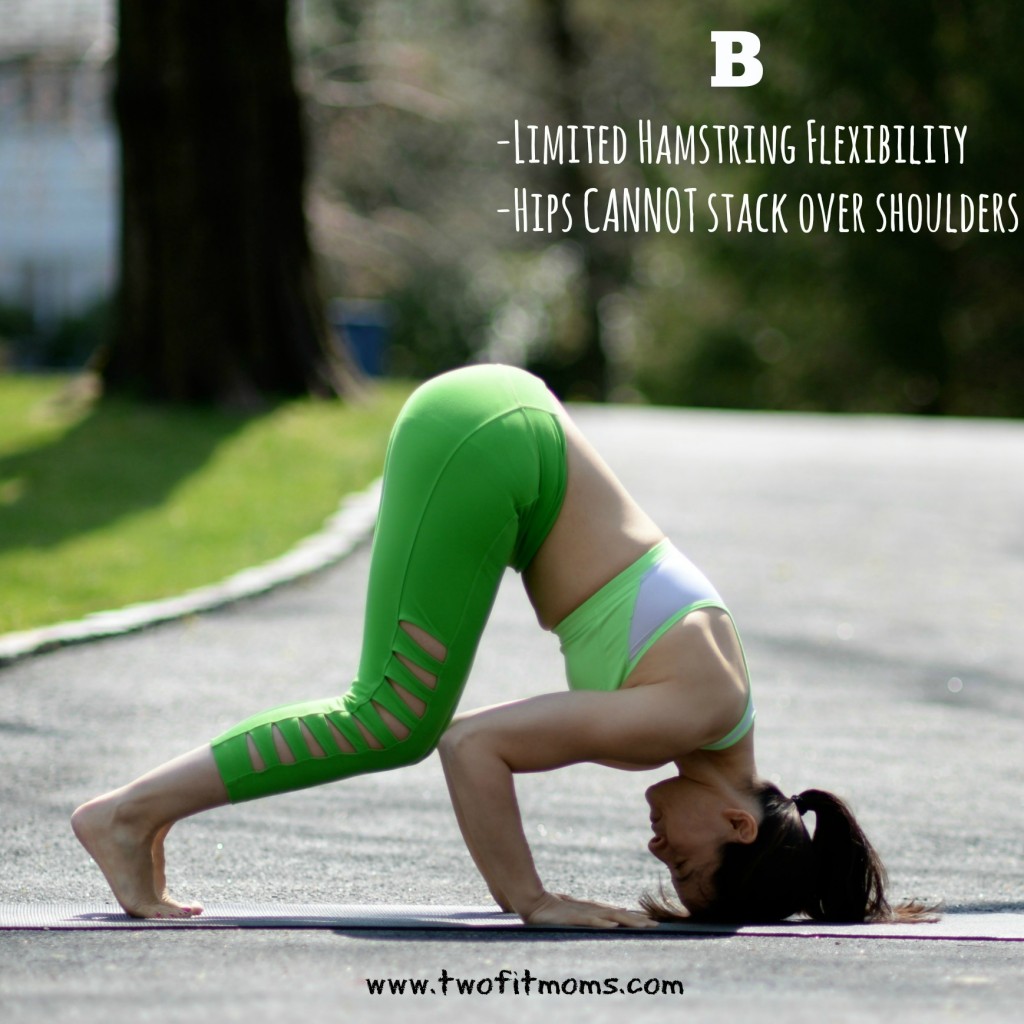
    Take a look at photo B where I simulate a case of tight hamstrings. My knees are bent, and as a result, I am unable to stack my hips over my shoulders. If you draw an imaginary vertical line through my hips, you will easily see that my hips are not even close to being aligned over my shoulders. So now we have this important realization: Without hamstring flexibility, hip stacking doesn’t happen.

    HamstringsTightText

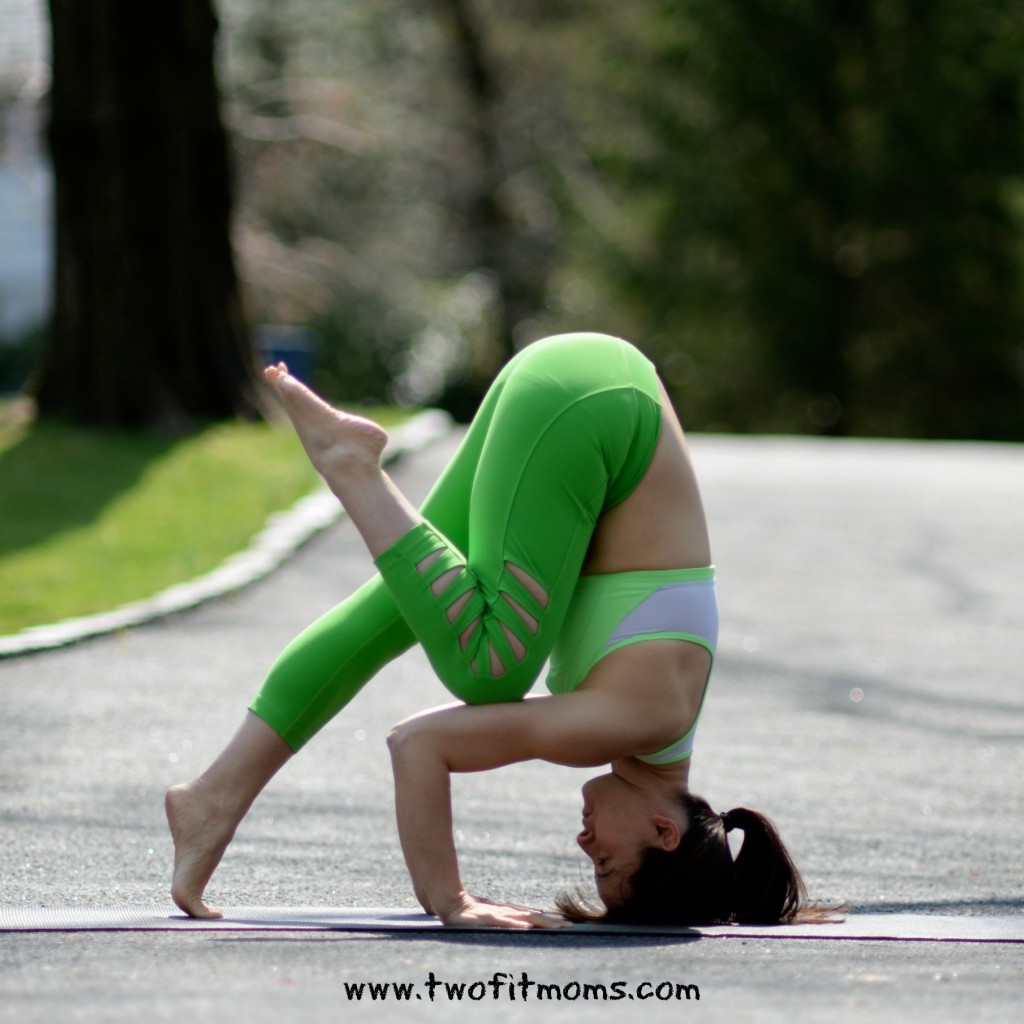
    Assuming I have plenty of flexibility in my hamstrings, I can stack my hips and easily place my right knee onto my right tricep.  Take a look at this next photo and compare it to photo A above.  Yes, I have to engage my core to lift my knee, but I don’t have to change anything else about my posture. My body is already aligned and ready to go. This posture is possible because of the hip stacking.  And in turn, the hip stacking is possible because of the hamstring flexibility. The final motion of lifting the left knee onto the left tricep doesn’t require much additional effort once the hips are stacked and the first knee is in place.

    OneLegBentTFM

    By now, you see the importance of having loose hamstrings, but let’s go through one final illustration.  In the photo below, I am simulating a scenario where my hamstrings are tight, and I am attempting to put my knee onto my tricep.  With tight hamstrings, I cannot straighten my legs.  If I cannot straighten my legs, I cannot stack my hips.  Consequently, it’s not even possible to get my knee onto the back of my arm.  My knee is actually BELOW the level of my tricep.  Even if by some strange miracle, I could crunch my body and round my back in such a way to allow the knee to rest on the tricep, what are the chances of balancing with both knees on both triceps if the hips are not aligned over the shoulders?  Slim to none, and slim just left town.

    TightHamstringAttemptTFM

    If you are struggling with your Tripod Egg, and you don’t know why, I encourage you to set this inversion goal aside for a little while and focus on gaining more hamstring flexibility. Once you make progress, re-visit the inversion. I bet you’ll notice quite a difference!

    If you are looking for suggestions on improving your hamstring flexibility, we can help!  Please warm up with a few rounds of Sun Salutations, and practice these hamstring stretches on a daily basis. If you own a yoga strap, give this stretch a try, too.  Good luck!


  • 3 Tips to Increase Your Productivity

    3 Tips to Increase Your Productivity

    Some days, I feel like I work, move and hustle continuously, but when I finally get into bed at night and mentally review what I’ve accomplished, I have nothing to show for it. I know I’m not lazy, and I know I’ve been sitting at my desk working, so where did I lose all of my precious hours of productivity? Well, this is a bit embarrassing to admit, but I think I know the answer. My hours were lost to my iPhone.Productivity

    I don’t mean that I surf the web for hours or get caught up in video games. Not even close. I probably don’t even spend more than 10-15 minutes at a time on my phone, but I’ve found that even a 30-second break to respond to a text, to mindlessly scroll through photos, or to check for new e-mails is long enough to break my concentration. Once the concentration is broken, it’s a process to re-immerse myself into my work.

    Here’s a quick illustration of this point:

    As an experiment, I placed my phone, face up, right next to me on the table as I began to write this post. After 40 minutes, I assessed my productivity. I wrote ONE paragraph. FORTY minutes to write four sentences! Geez…Yes, I happen to be a slow writer, but I’m not that slow.

    The problem with having my iPhone next to me at all times is that it is a constant distraction—even after minimizing what I thought were the obvious distractions.

    Let’s take a look at my current efforts to minimize phone distractions:

    -My phone settings are configured so that all social media notifications are turned off.

    -My text message notifications are on, but they are completely silent as they flash across my phone screen.

    -Even my phone’s ringer is turned to silent mode and only buzzes for incoming calls.

    Despite this effort, my phone still affects my productivity.

    Here’s what happened during the 40 minutes that I was supposedly writing:

    -I received 21 text messages and read all of them as they arrived.

    -I responded to 4 of those messages.

    -I checked my e-mail once.

    -I checked my notification feed on Facebook once.

    Each item on the above list probably took less than two to three minutes to address, but the end effect was not just a loss of two to three minutes of productivity.

    The smart phone is such an amazing feat of technology, allowing me to travel and work and stay connected at all times, but it is a double-edged sword. This small device that acts as my phone, mini-computer, family photo album, public library, television, instant messaging service, etc, constantly calls for my attention and gives me the constant stream of information and stimulation that I crave. And of course, the more I give in, the more I crave additional information and stimulation. (Hence, the constant checking of the phone.)

    I know I can’t be alone in this experience, and I know I can’t be the only one that is fed up with disappointing days of low productivity.

    Here’s an idea: Let’s reclaim our days and be more effective with the time that we are given. This is my latest challenge to bring an increased sense of peace and mental clarity to my life. I hope you will join me! In an effort to limit distractions and maximize effectiveness and productivity, I will implement the following three changes in my life:

    Reduce Frequency of E-mail Sessions to Three Times Daily
    No more frequent e-mail checks through out the day. I am in the bad habit of turning to my inbox all day long—when I am bored, having writer’s block, waiting for a document to print, etc. Instead of continuing with this disruptive activity, I will set aside three specific times during the work day (no less than four hours apart) to check e-mail. While I respond to e-mail, I will focus on that task for no more than 30 minutes. At the end of 30 minutes, I will close my mail until the next allotted time.

    Disable All Notifications on Phone
    I will turn off ALL notifications on my phone— including text message notifications. Going forward, I will only check text messages during my planned breaks. The only interruption that will be allowed is the ring or vibration for incoming phone calls. I will not worry about urgent texts—there’s no such thing. If there is a true emergency, someone will pick up the phone and call me.

    Treat Social Media as a Hobby
    Think about your hobbies. Think about what they are and when you participate. No one pulls out a sewing machine to sew for ten minutes every hour. No one stops working to play tennis for ten minutes every hour. As a hobby, there is a special block of time set aside to enjoy it fully. To work well in my life, I think that social media needs to be compartmentalized, just like a hobby. I don’t want to whittle away at my potentially productive blocks of time with a few minutes of mindless scrolling every half hour. Instead, I will set aside two periods of time each day to connect with friends and family on my personal social media accounts. No more three-minute Facebook breaks that disrupt the work flow. I’m done with that. If social media is going to be a hobby, it’s going to be treated like a hobby.

  • 7 Tips for A Restful Night and a Productive Tomorrow

    7 Tips for A Restful Night and a Productive Tomorrow

    Anyone who has young children realizes the importance of a bedtime routine. My kids, in particular, require a warm bath, cozy pajamas, story time, a lullabye and a prayer. If I get lazy and skip the lullabye, my younger child will get out of bed and remind me to sing. RestfulNightThe ritual is ingrained and promotes feelings of being settled. These feelings of comfort then lead to a peaceful slumber. I’m not sure why so many adults have abandoned the idea of a bedtime routine when it’s obvious that it works so well for children! Today, I am encouraging you to bring back the bedtime routine. I am a big believer that my actions each night are essential for me to sleep well and to perform at my highest level the next day.

    So…here are my suggestions to promote a restful night of sleep and a productive day tomorrow.

    1. Lay out tomorrow’s exercise clothing. You have enough to do each morning without having the added task of selecting your exercise outfit. Besides—your brain may not be working quickly in the early morning hours, so take care of this task now. If you are packing a gym bag, fill it with everything you need, and put it by the door. If you are practicing yoga at home, roll out your mat and place your strap and blocks nearby. Setting out your clothes and yoga mat doesn’t guarantee that you will exercise, but it facilitates the possibility. By removing obstacles and by picking out your clothes, you are setting a much stronger intention to move your body than if you just make a soft commitment by saying “I will exercise tomorrow”.

    2. Plan your breakfast. Start tomorrow on the right foot by knowing exactly how you will be fueling your body when you wake up. If you leave it all to fate, you may find yourself skipping breakfast altogether or gulping down a huge bucket of coffee with a handful of cereal. A few minutes of planning at night can make all the difference in how you start your day. Start thinking. Are you going to make a smoothie? Great! Maybe you want to wash and chop the fruits and vegetables that you plan on putting into that smoothie. If you’re really ambitious, you may even want to pre-load your blender, and refrigerate it. You can prepare as little or as much as you would like. The idea is to have a plan.

    3. Count your blessings. It’s so easy to get caught up in the stress of the day and to be overwhelmed with responsibilities and thoughts of everything that went wrong. Go to bed on a positive note by setting aside a few moments to be grateful. A gratitude journal or even just a mental list of everything good in your life is a wonderful practice to begin.

    4. Remove Physical Clutter. Particularly in the kitchen! No one wants to wake up in the morning and face a sink full of dishes or a breakfast table cluttered with mail and crumbs from yesterday’s dinner. Set aside 10-15 minutes to straighten up. No, I’m not asking you to pull out the vacuum or de-grease your stovetop. I’m talking about going to bed with the dishes put away, the toys off the floor, and the table/counters clear! Physical clutter weighs on the mind and the soul. Trust me, you will sleep better knowing that your house is tidy, and you will wake up feeling motivated to prepare breakfast on uncluttered, clean counters in your kitchen.

    5. Remove Mental Clutter. The goal here is to clear your mind by setting tomorrow’s intentions on paper. Make a list of everything you want to accomplish tomorrow. If your mind is racing with all of the items on your to-do list, it will be difficult to fall asleep. Feel free to make your list as detailed or as simple as you would like. Personally, I love the feeling of satisfaction that I get from crossing completed items off of my to-do list, so I am happy to include very obvious tasks, such as “floss teeth” or “exercise”. Make sure to include all of your personal errands that need to be done the next day, as well as all of your work-related responsibilities/projects that need to be tackled.

    6. Create a short ritual that is soothing. Everyone will have a different idea of what feels soothing, so see what works for you! My personal ritual is to brew a cup of herbal tea, rub lavender oil onto my chest, listen to soft music and get into bed with a book. Your own ritual may include journaling, meditating and a warm cup of cashew milk. Think about what makes you feel at peace, and do that.

    7. Stop checking Instagram. Now you KNOW how much I love Instagram. BUT (and this is a BIG but), you can waste hours of your day and night. It’s such a wonderful escape to scroll through your feed and see beautiful photos of people you’ve never met and places you’ve never seen, but your phone and these images are stimulating. Trust me—I’ve kept myself up way past my bedtime by checking Instagram one last time. Don’t do it. It will be there tomorrow. Just go to bed. You have an empire to build in the morning.