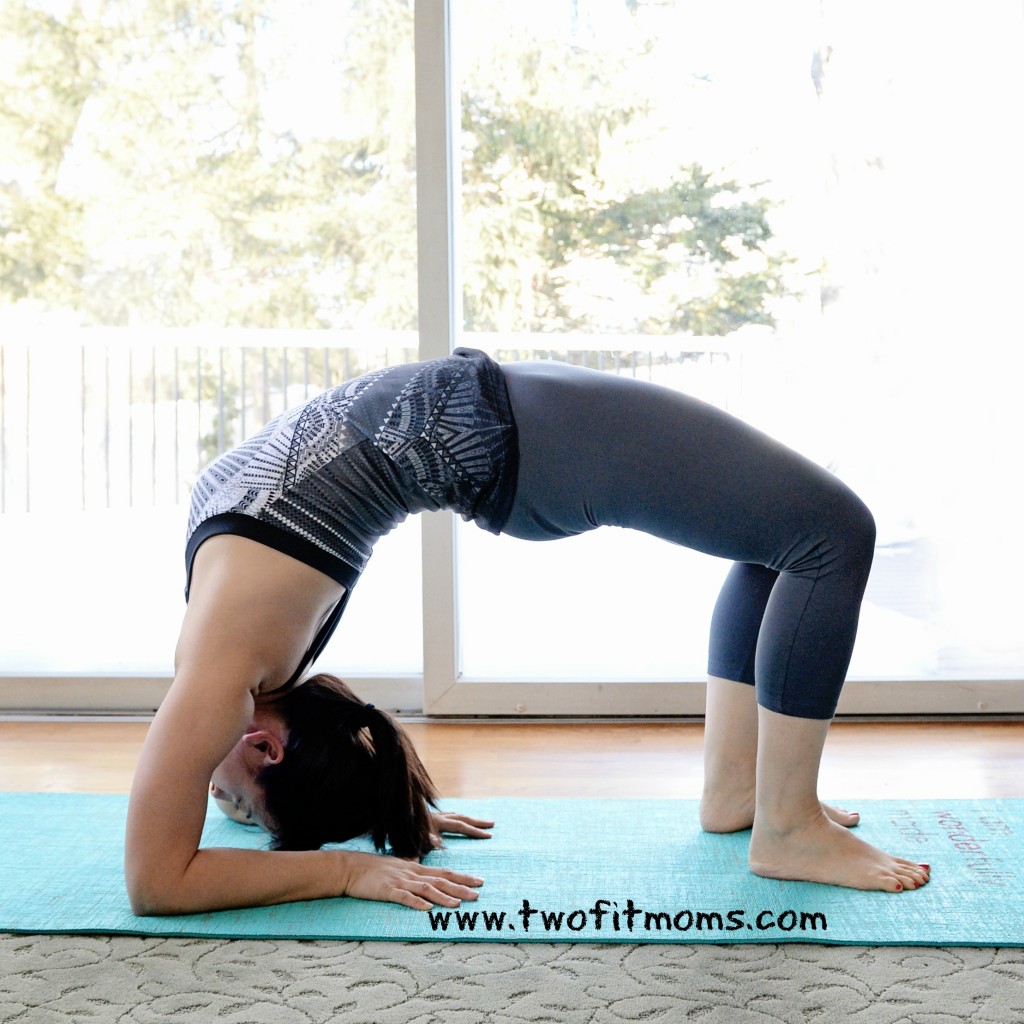
Tag: backbend

  • 4 Ways to Challenge & Enhance Your Practice with Yoga Blocks

    4 Ways to Challenge & Enhance Your Practice with Yoga Blocks

    If you think yoga blocks are just for beginners that can’t touch their toes or for injured yoga practitioners that can’t sit between their heels in hero pose, think again. There are plenty of ways to get creative and use your blocks to deepen your practice in a challenging, fun way. Here are four suggestions:

    Twist & Tap
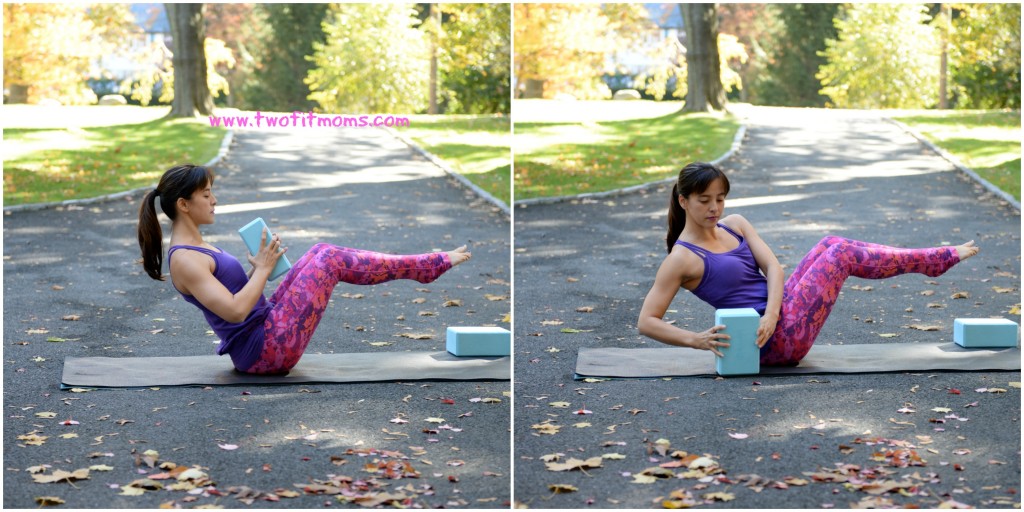
    Fire up your core in boat pose by holding a yoga block. Slowly twist from the lower belly to the right, tap the block on the ground to the right, and untwist your torso, coming back to center. Begin to twist to the left, tap the block on the ground to the left, and come back to center. Consider that to be one repetition. Keep your core engaged, your chest lifted, and avoid collapsing into your belly and rounding the back. The shins can remain parallel to the ground throughout the exercise, or you can extend your legs straight for a more intense variation. Work up to 12-15 repetitions.TwistAndTap
    Chest & Tricep Opener
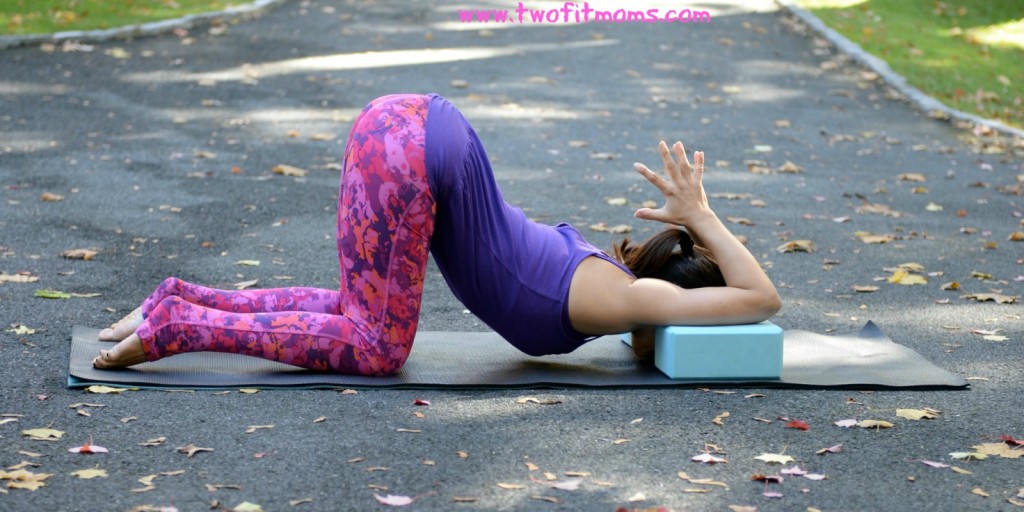
    Place two yoga blocks on the ground, shoulder width apart. Kneel on the mat, and rest your elbows and triceps on the blocks. Keep your hips stacked over the knees, and begin to sink your chest toward the ground as you bring your hands together in prayer over your head. This pose is very much like puppy pose with the added benefit of a deep tricep stretch. Hold this pose for 5 to 10 breaths, sinking your chest lower with each breath.ChestTricepOpener
    Squeeze a Block in Inversions
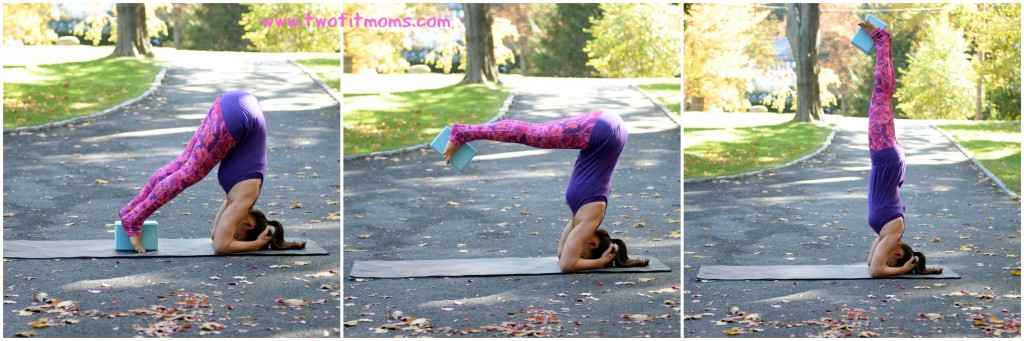
    If your eyes glaze over when you hear your yoga teacher talking about internally rotating the thighs and hips while performing inversions, no need to worry. This exercise will solidify the concept in your mind, and you won’t forget anytime soon. By squeezing a yoga block between your feet as you slowly lift into an inversion, not only will you train your core muscles, but you will also automatically create a slight internal rotation in your legs that will help you stabilize and build strength. Go ahead and try this exercise with any inversion of your choice.HeadstandCollage
    Relaxing, Deep Backbend
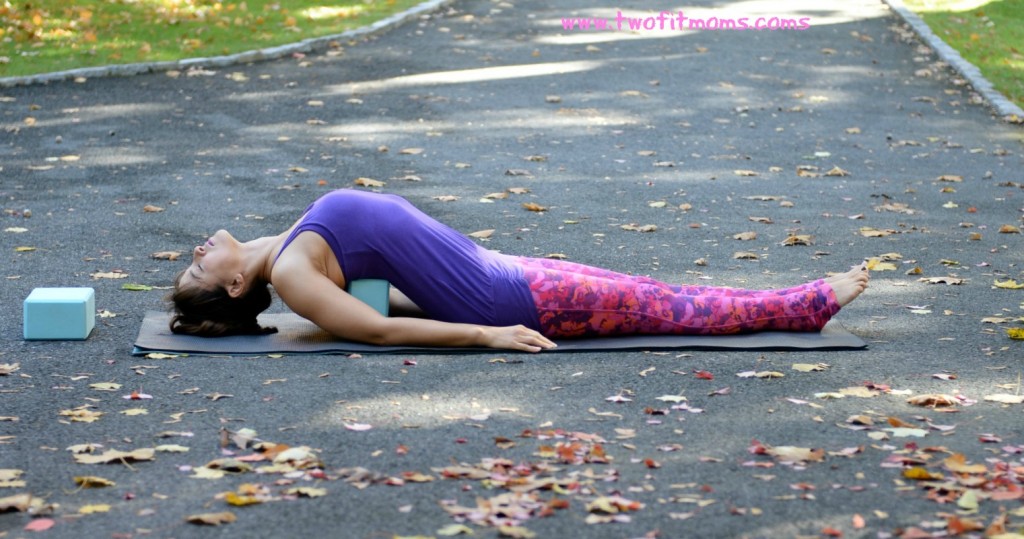
    In my own personal practice, I’ve found this to be the single most effective stretch for the upper back and chest. If you are looking to deepen your backbend practice, it’s so important to stretch in various ways to help create an even backbend through your lower, middle and upper back. Place a block underneath your shoulder blades as you lie on the ground. If you tend to be very tight across the chest and back, start out by placing the block on shortest height. Breathe for 5-10 breaths before turning the block so that it’s resting in its next tallest orientation. Again, breathe for 5-10 breaths, and allow the chest and back to open up bit by bit. Finally, if your flexibility allows, turn the block to its highest orientation, and lie across the block for another 5-10 breaths. Try placing a second block under your head like a pillow for more support.UpperBackOpener
  • Introduction to Dropbacks

    Introduction to Dropbacks

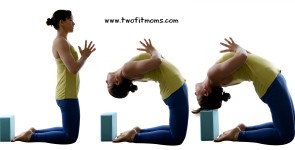
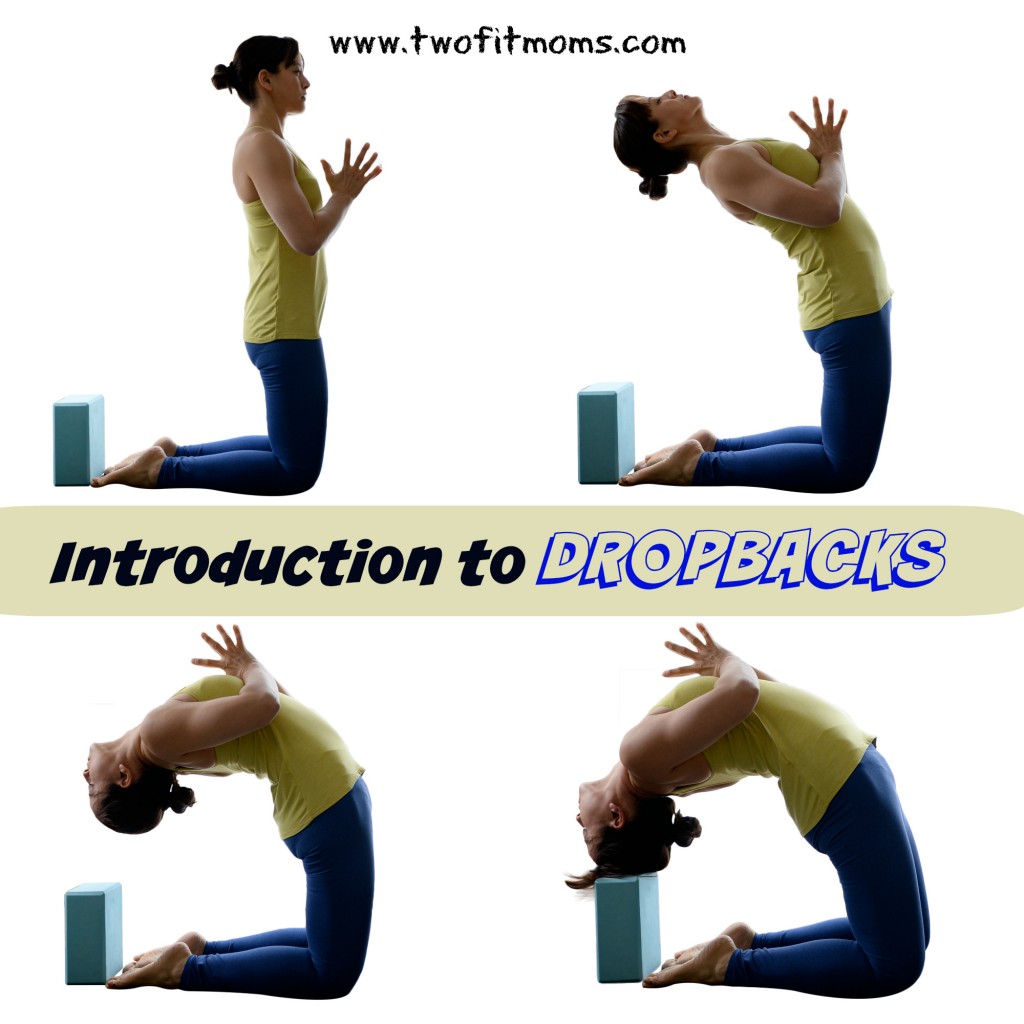
    I originally created this four-step photo tutorial for my Instagram account, but I decided today that it was worthwhile to also post it to the website. I am always looking for new and creative ways to use my yoga blocks. Here is an unconventional, but very useful way to deepen your practice with a bit of help from a block.IntrotoDropbacks

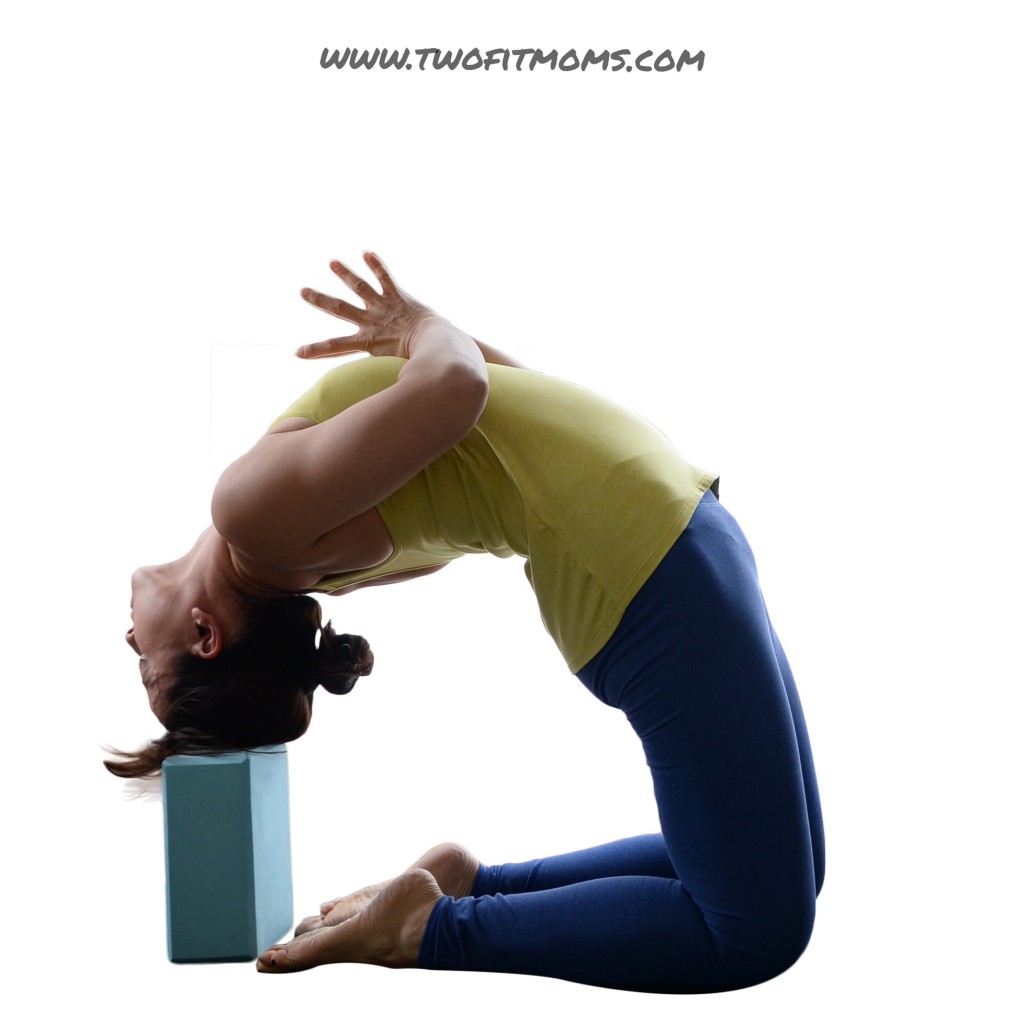
    Dropping back into any kind of backbend can be terrifying the first time. Trust me, I get it. I’ve had visions of splitting my head open, and of course, breaking my neck. Hopefully, this post will alleviate some of your fears. Rather than starting with a traditional yoga dropback, which begins in a standing position and ends in wheel pose, I recommend starting a bit closer to the ground with a camel dropback.

    If you freak out half way through the tutorial, you can simply reach your hands to the mat on either side of you. Not a big deal. This tutorial will help you build confidence at YOUR pace.

    In my own experience, I’ve found it to be much more of an accessible feat to drop back if the process is broken down into baby steps. Rather than starting with the goal of dropping your head onto the mat, let’s work with a block and drop back onto that.

    Step 1
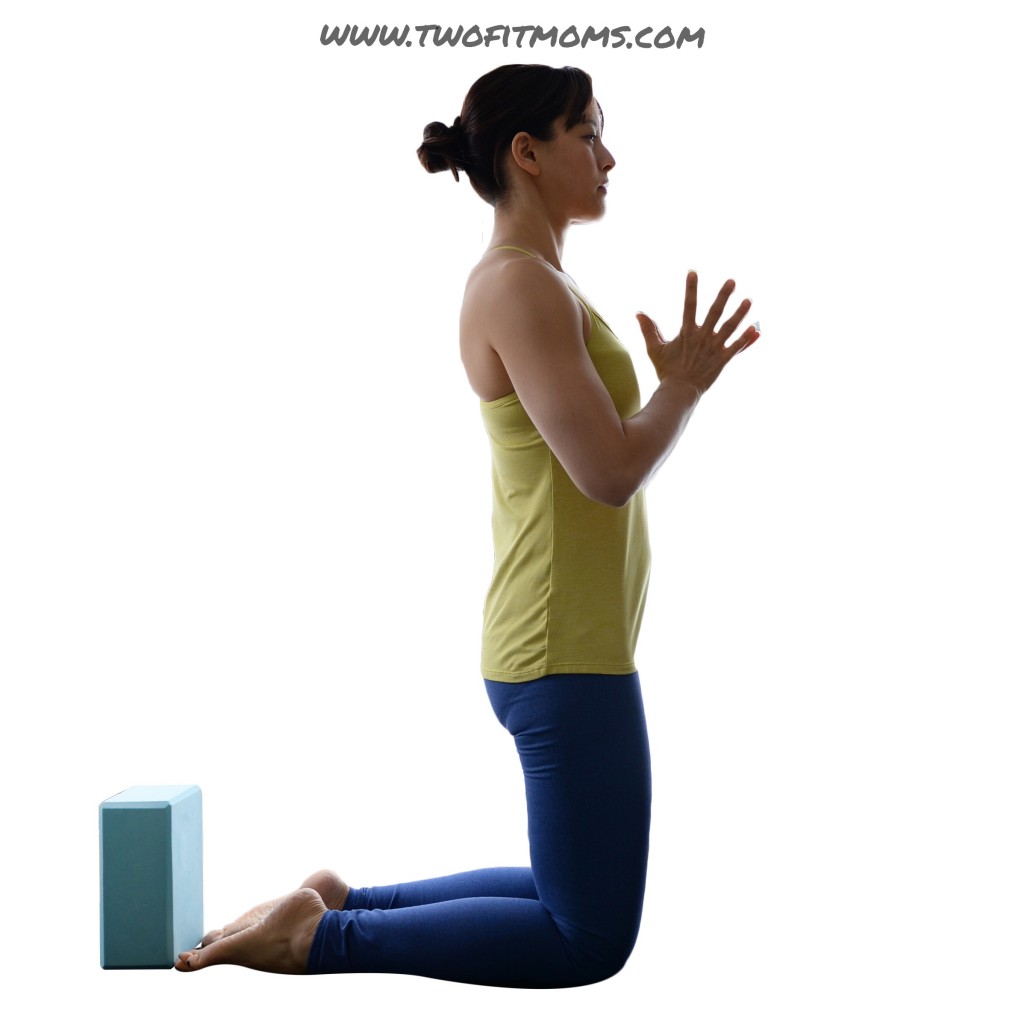
    Flip a block to its tallest orientation, and place it against your toes as you kneel on your mat. Bring your palms together in front of your heart.Step1wm

    Steps 2 and 3
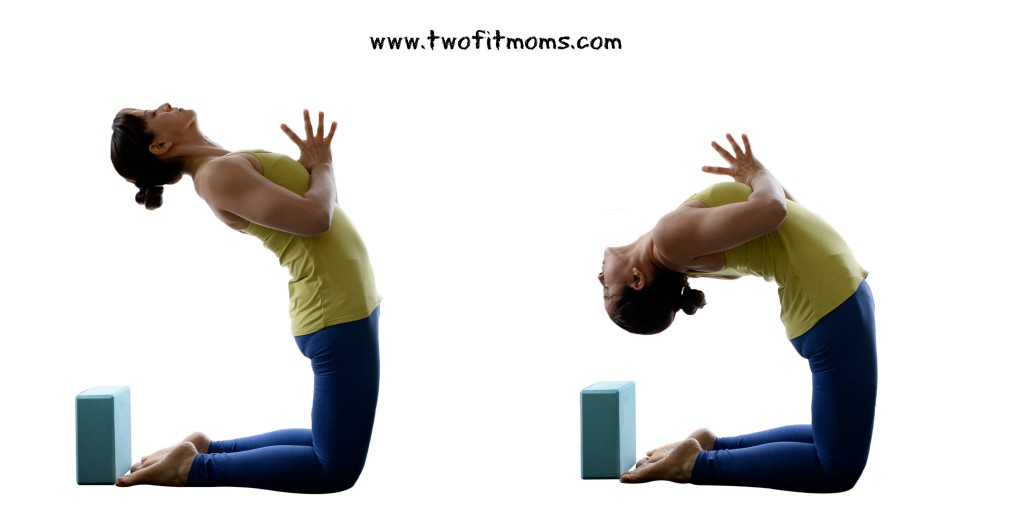
    Slowly begin to push your hips forward, and find strength in your legs, as you lift your chest toward the sky and bend back. Be mindful of your breath—it’s so easy to forget to breathe while backbending. Inhale and exhale deeply through your nose.
    Steps2and3

    Step 4
    Gently place the top of your head onto your block. If the block is currently beyond your reach, start with a higher surface—maybe a stool with a cushion. See if you can hold this position for a few deep breaths. To exit the pose, engage the core, engage the thighs, and slowly rise back to a kneeling position.Step4wm

    You CAN overcome your fear of dropbacks, one step at a time. Once you become comfortable with the block at its highest orientation, go ahead and flip the block onto one of its other edges to practice a deeper dropback. Let us know how you do.


  • #YogaWithTFM November Challenge!

    #YogaWithTFM November Challenge!

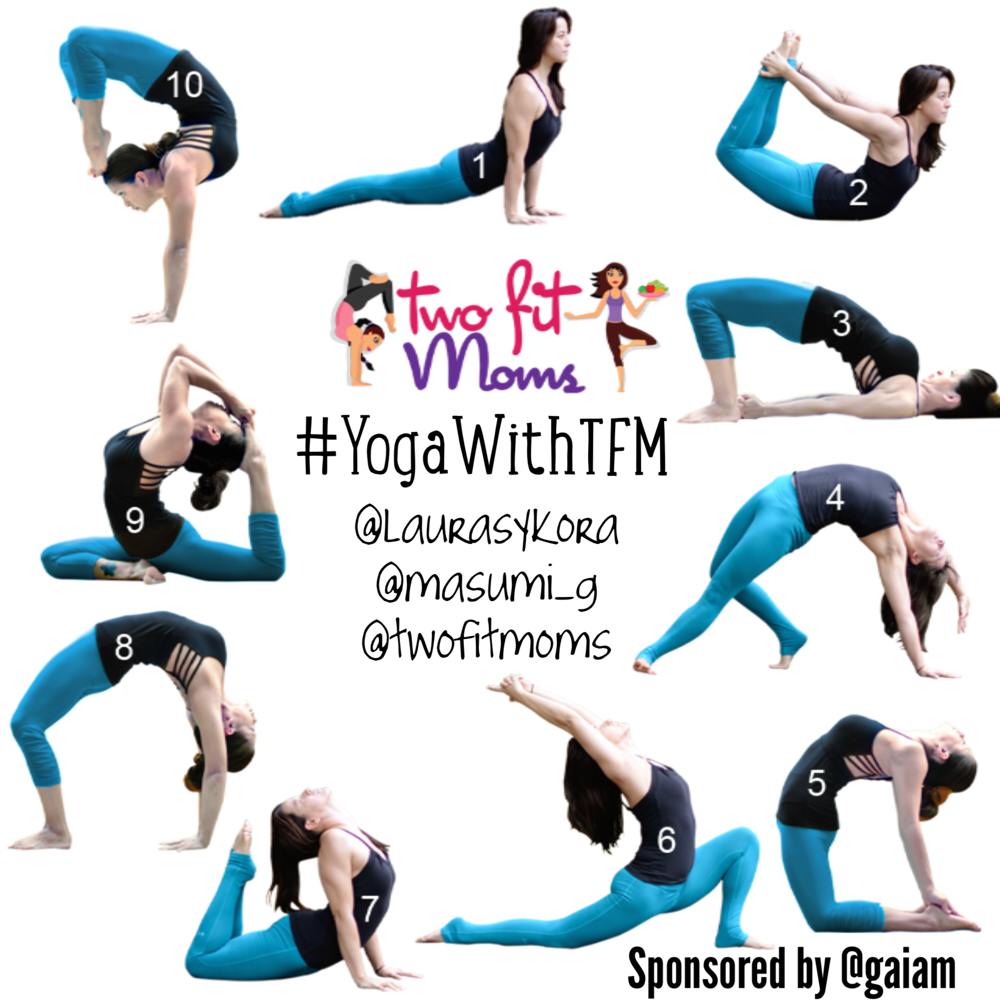
    Our November yoga challenge has not yet been announced on Instagram, but we wanted to give our @TwoFitMoms followers a sneak peak of what’s to come next month. Here are the 10 poses we will be covering starting on November 1.

    NovChallengeAnnouncment

    Welcome to our #YogaWithTFM November Challenge, sponsored by Gaiam! This month’s focus will be on backbends. As always, this challenge will be open to all levels, and modifications will be given each day on our website.


    Be sure to follow @TwoFitMoms, @laurasykora, @masumi_g and @gaiam on Instagram, and remember to always use the #YogaWithTFM hashtag when posting challenge photos.


    Need help preparing for this challenge?  Check out our Backbends practice available for purchase here.

  • Handstands:  The Art of Falling

    Handstands: The Art of Falling

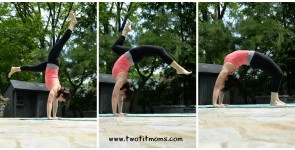
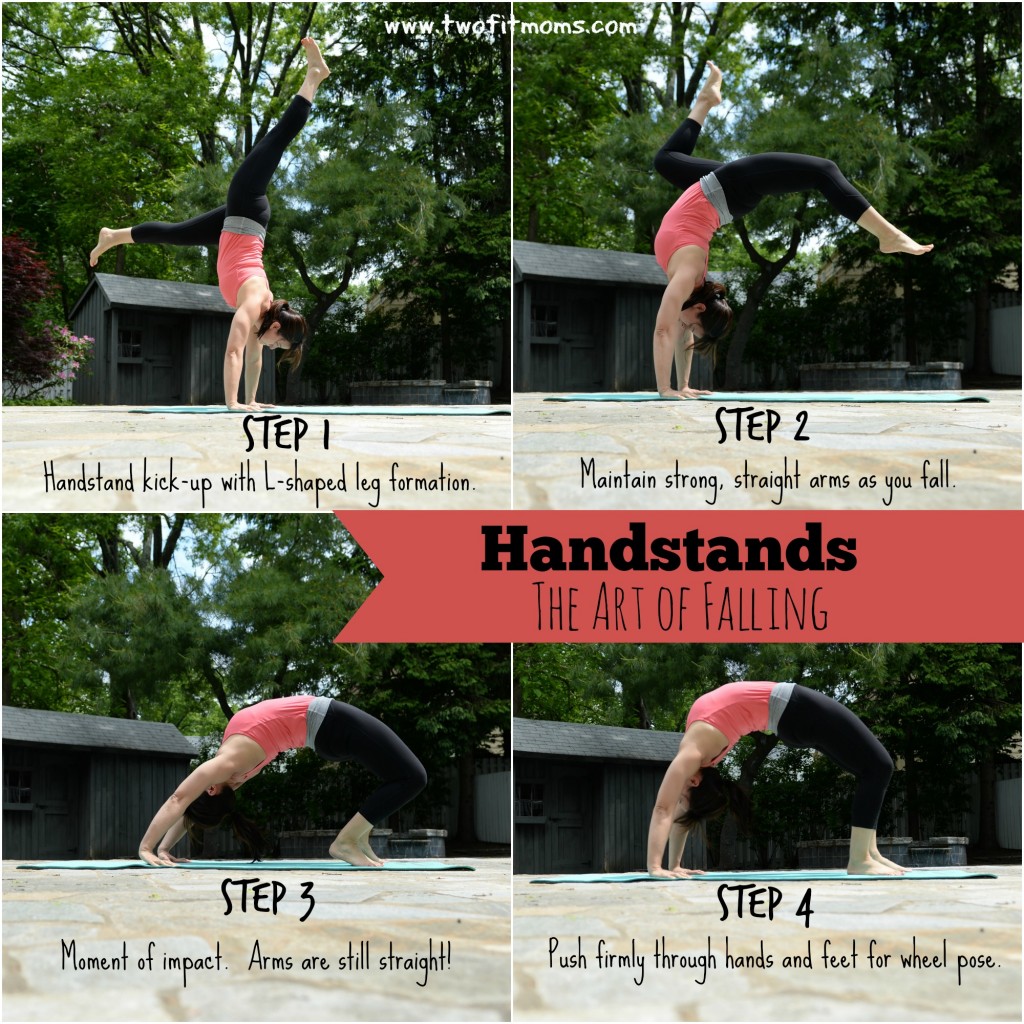
    If you are ready to move your handstand practice away from the safety of a wall, you must embrace the art of falling.  I call it an art because there is actually a bit of technique involved. Once you master the technique, you will not be afraid of practicing in the middle of a room.  You will realize that falling out of any inversion can be a controlled transition from one pose to another.  When you feel your body wavering as you balance on your hands, you will not flail around and then land flat on your back.  You will be armed with a game plan—a real exit strategy.  You will fall (or transition) from handstand into wheel pose.TheArtofFalling

    Practice Wheel Pose
    Before moving your handstands away from the wall, you MUST be very comfortable in wheel pose.  You will be falling into this deep backbend from a height, so you certainly don’t want to fall into this pose if you are uncomfortable or feel any strain at all when you lift into wheel from the floor.  Please review the proper form for wheel pose HERE.

    If you cannot do this pose with ease, continue to practice your handstands with a wall.  Every day, you can continue to work on your backbends and heart/shoulder opening stretches until wheel pose is no longer a struggle.

    At this point, if you are uncomfortable with wheel pose, you may be wondering if there are other alternatives to exiting a handstand.  Yes, there are other options, but I don’t like teaching them.  Falling into a cartwheel, for example, is a very popular exit strategy from handstand, but it doesn’t make sense for beginners.  As a recent beginner myself, I know that once you begin to lose your balance in a handstand, you do not have enough control to do anything but fall straight back.  Attempting to do anything else (like lift one hand to cartwheel to the side) is dangerous and could result in injury.  Trust this process.  If wheel pose is difficult, keep practicing your backbends each day.  Soon enough, you will be practicing handstands in the middle of the room, and you will stay safe because your hands will be rooted in one spot and remain there for the duration of any fall/transition.

    Practice the Transition
    Make sure you are warmed up before practicing this transition.  Kick up into any variation of handstand that feels stable, and when you begin to lose your balance, don’t fight the natural momentum.  The inclination will be to fall straight back, and that is what you will do.

    The most important step in this transition is to maintain straight arms the entire time.  If you bend your elbows during the fall, you might hit your head or land flat on your back.  Just think—strong, straight arms.  Repeat it over and over in your mind.  One way to stay strong is to grip your mat firmly with your fingertips.  By maintaining an engaged feeling in the tips of your fingers, you will be reminded to engage the entire length of your arms by staying strong and straight.

    If You are Scared…
    Kicking up into handstand in the middle of a room and then falling back into wheel requires a huge leap of faith.  You must believe that you have the strength in your arms, the flexibility in your back, and the overall balance necessary to land on your feet in wheel pose.  If you are not convinced of your own ability to do this, don’t be discouraged.  You can practice transitioning into wheel from handstand WITH the safety of a wall.

    To begin, lie down on your back with your knees bent, the soles of your feet flat on the ground, and the tips of your toes against a wall. Review your form before continuing—make sure that your heels are as close to your bottom as possible.  Bend your elbows, and bring your hands alongside your ears, with your fingers pointed toward your body.  You are now set up on the floor as if you were going to lift into wheel pose with your toes against a wall.  Take note of where your hands are relative to the wall.  THIS will be your starting point for your handstand practice.  No need to lift into wheel pose right now.  Go ahead and stand up, and place your hands down onto this starting point that you just determined.  Kick up into handstand, and when you lose your balance, allow your legs to fall against the wall.  Keep your arms strong and straight, and begin to walk your feet down the wall onto the floor into wheel pose.  Repeat this exercise as many times as necessary to become accustomed to the feeling of transitioning from handstand to wheel.  Once you feel confident, go ahead and try the transition in the middle of the room.

    Stay safe, believe in yourself, and enjoy the process.

  • You Can Be a Mermaid!

    You Can Be a Mermaid!

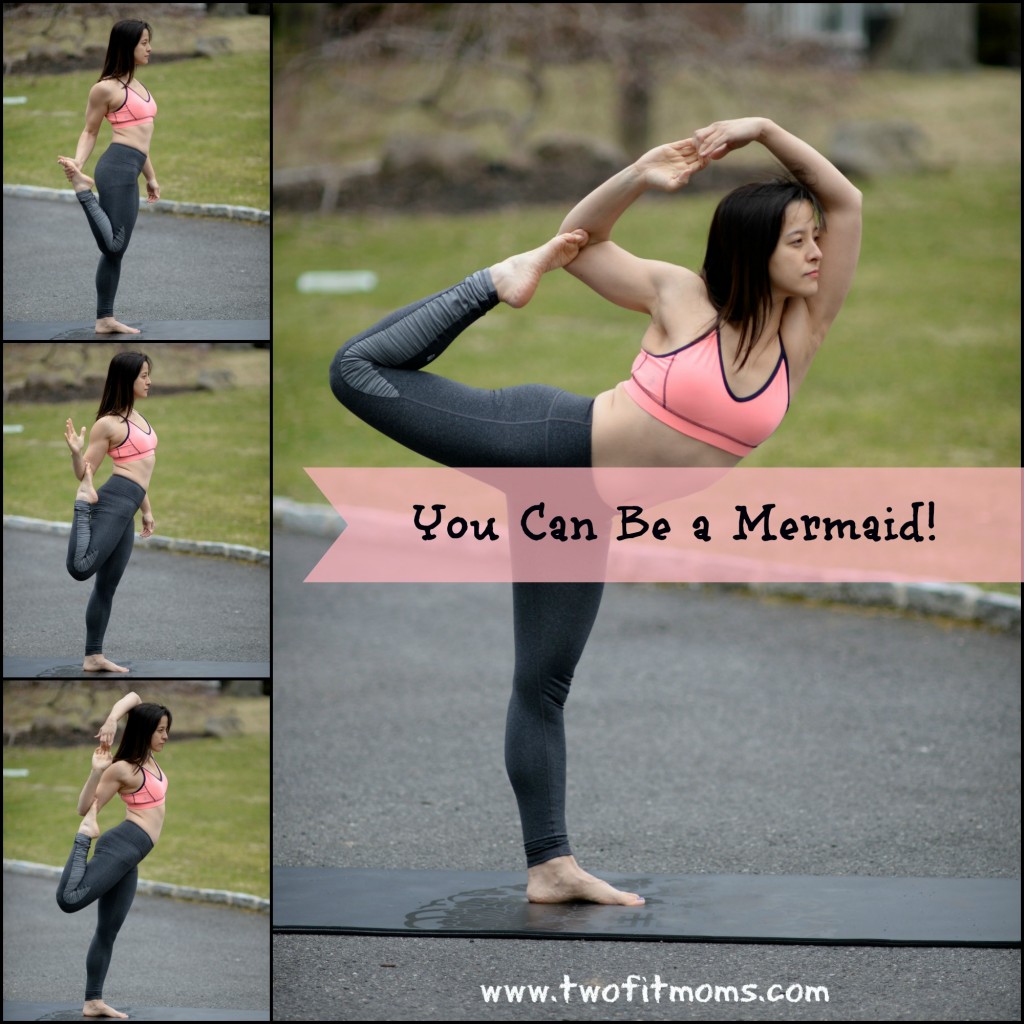
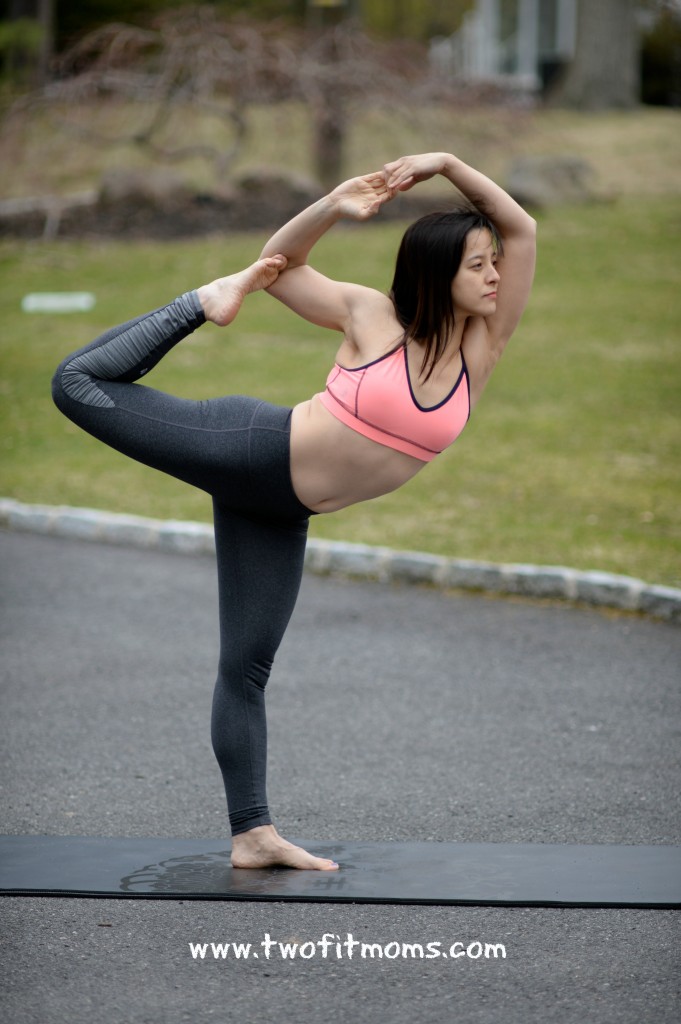
    YouCanBeAMermaidI still remember the first time I saw a photo of standing mermaid pose. I was scrolling through my Instagram feed, and I paused to look at this interesting posture. It appeared to be some kind of dancer pose variation, but I had never seen anything like it before. I had to try it!
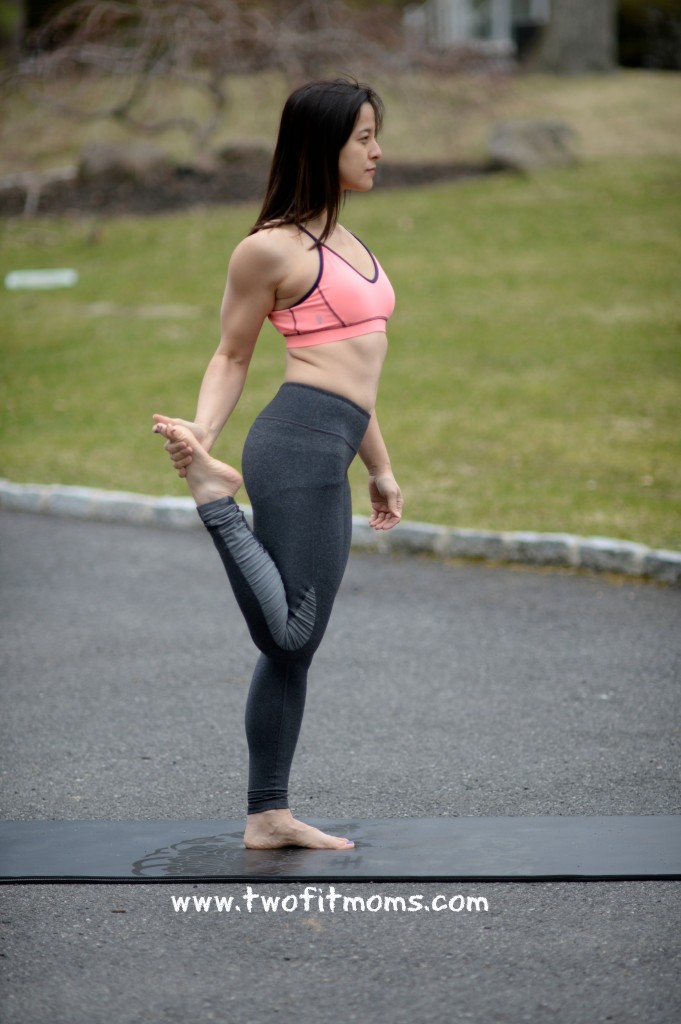
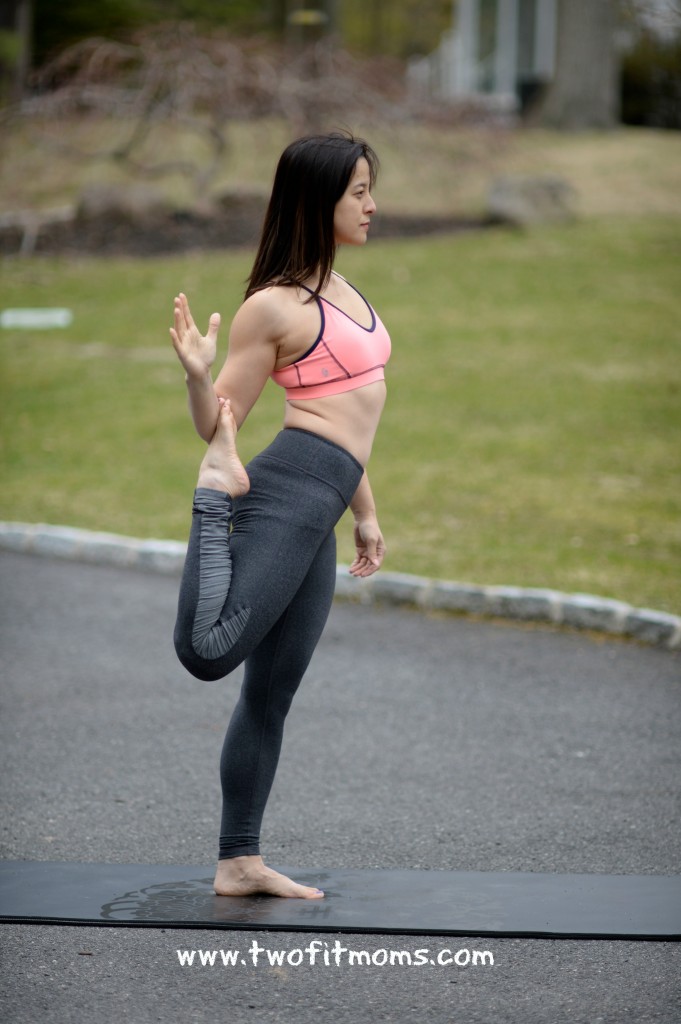
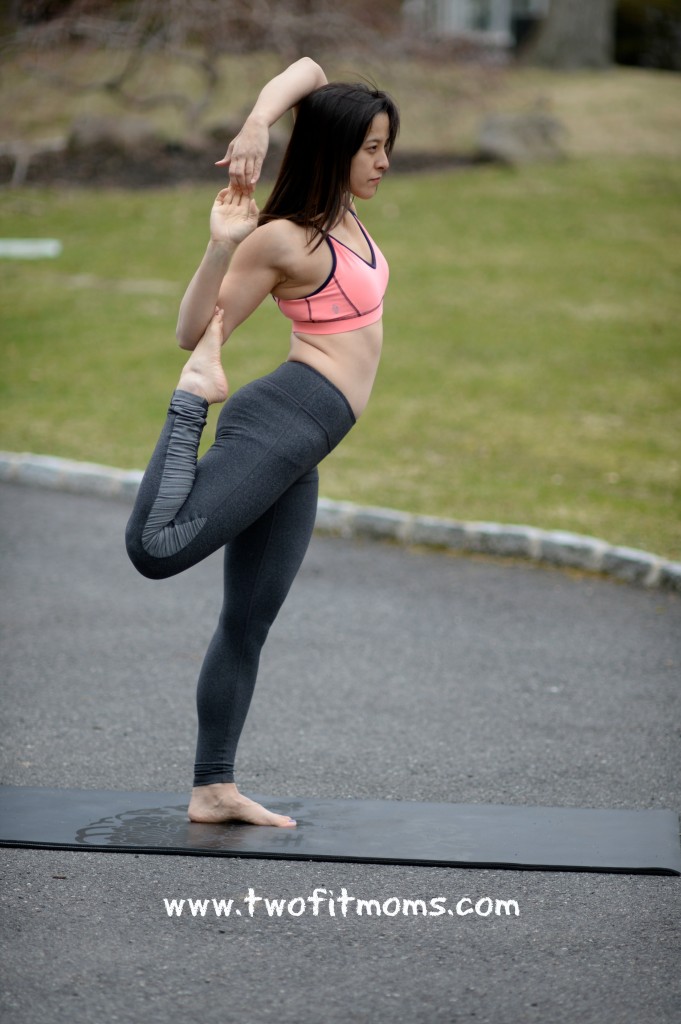
    If only I had a video of what followed. What a disaster. Without any instruction, I had absolutely no idea how to get my foot lifted into the air and into the inner elbow crease of my arm. I tied a strap around my foot and did all sorts of crazy moves to see if I could raise my foot into the proper position. Ultimately, I gave up on my strap and realized that it was a much simpler process than I thought. In order to save you some time and aggravation, I will walk you through each step of getting into standing mermaid pose.

    Please keep in mind that mermaid poses of any kind are binding poses. The fingertips of both hands clasp (or bind) together, resulting in a deeper stretch than if the hands remained apart. The purpose of a bind is to intensify a stretch and deepen a posture. In a mermaid bind, your chest, back and shoulders will feel the intensity of the stretch. If you do not have a strong backbend practice, you should consider modifying your mermaid pose by skipping the bind altogether and focusing on keeping the top of your foot pressed into the crook of your arm. Once you improve your flexibility and notice some progression in your backbends, you can re-visit the bind.

    Step 1
    Begin to shift your weight into your left foot. Bend your right knee, and reach back with your right hand, palm facing up. Place the top of your foot into the palm of your hand.
    Step1
    Step 2
    Begin to slide the top of your foot down the length of your forearm until the top of your foot is sitting in the inner elbow crease of your arm.
    Step2
    Step 3
    Extend your left arm up toward the sky, bend your elbow, and see if your fingertips can clasp. If you feel any discomfort in your back, stop at this point.
    Step3
    Step 4
    Begin to press the top of your foot into the crease of your arm and lift your leg higher as you lean your torso forward to maintain your balance.
    Step4

  • Transition into Wild Thing

    Transition into Wild Thing

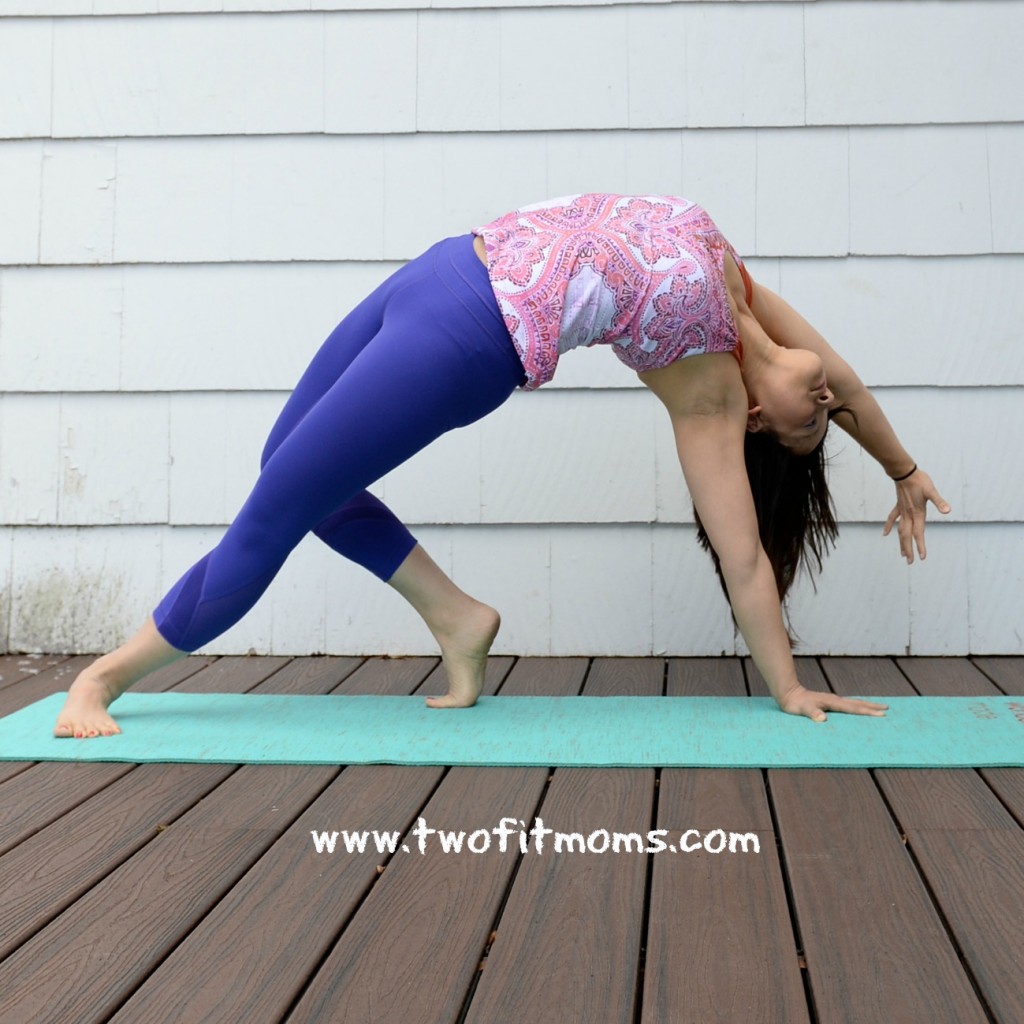
    One of my favorite backbending poses in yoga is Wild Thing, or Camatkarasana. The reason why I love it so much is that in order to get into the pose, you transition through a couple of my favorite stretches: downward facing dog and three-legged dog with an open hip. Not only do you reap the benefits of stretching out the entire front body with the backbend, but you also get a great hamstring stretch and hip-opener on your way into wild thing.

    Step 1
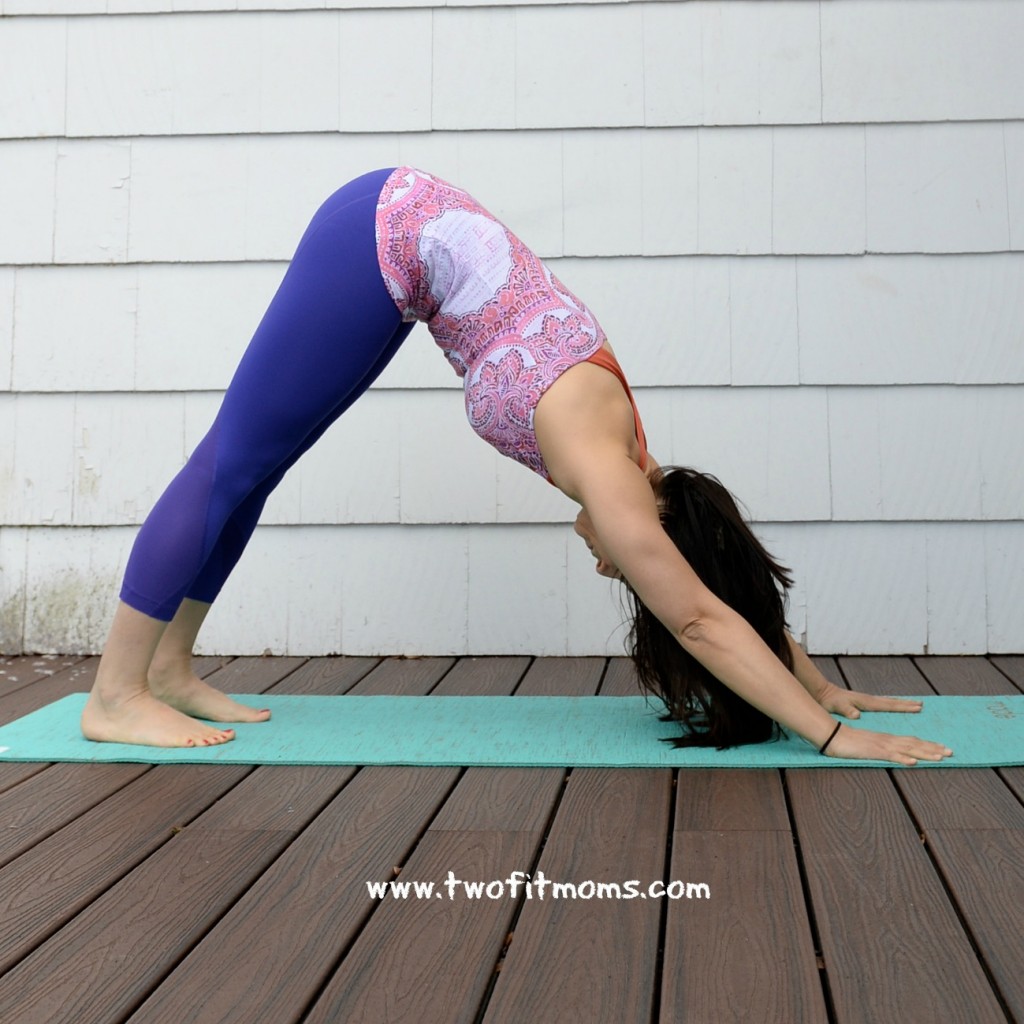
    Begin in downward facing dog. If you are unsure about the placement of your hands and feet for downward facing dog, start out in plank pose (top of a push-up). Make sure that your hands are directly stacked under your shoulders, and your feet are about hip width apart. The term “hip-width” refers to the distance between your two hip bones, and NOT the distance between the outer edges of your hips. From plank pose, lift your hips back and up into the air so that your body looks like an upside down V. Take 3 to 5 deep breaths in this pose, enjoying the stretch in your hamstrings, chest and shoulders.
    Step1

    Step 2
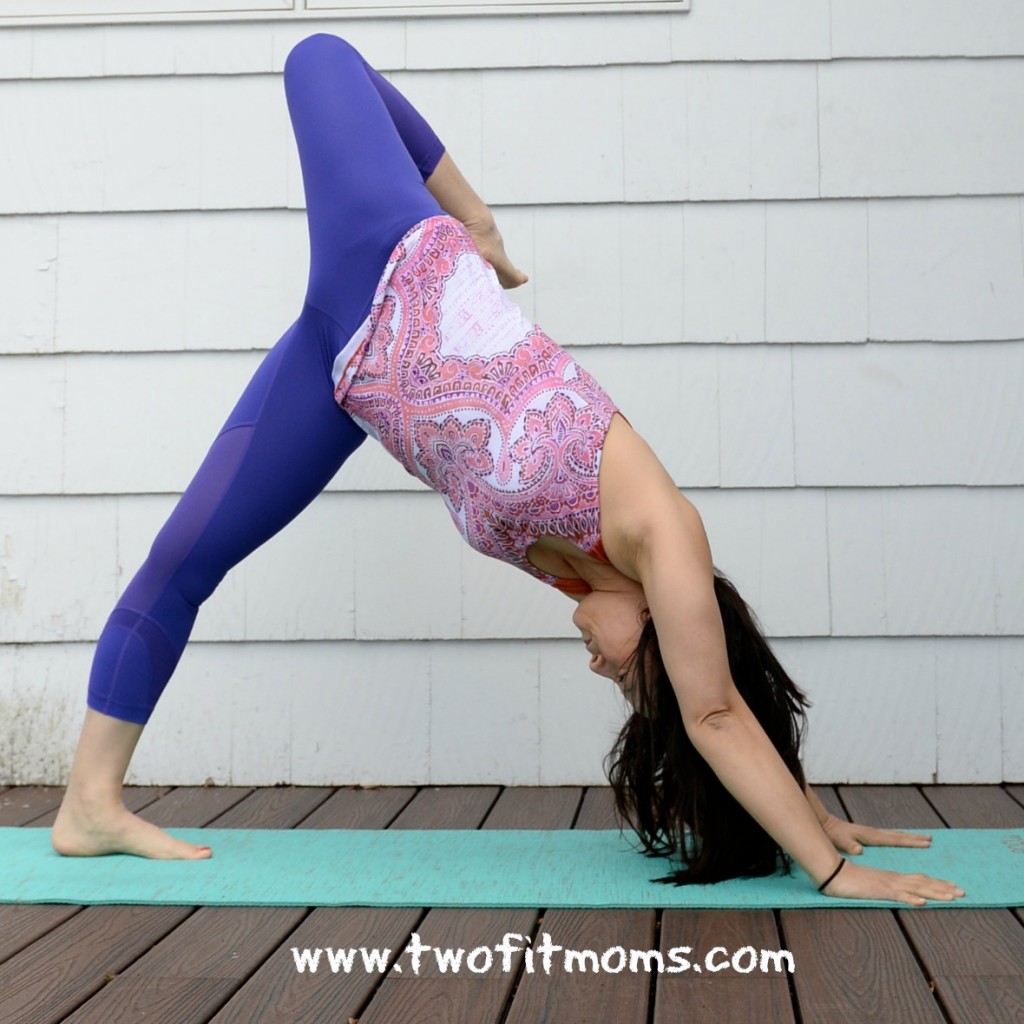
    Raise your right leg high into the air, stack your right hip over your left hip, and bend your right knee. Be mindful to keep an even amount of weight in both hands, and do not allow your weight to collapse into your left shoulder. Shoulders should be even. Take 3 to 5 deep breaths in this pose, and enjoy the hip stretch.
    Step2

    Step 3
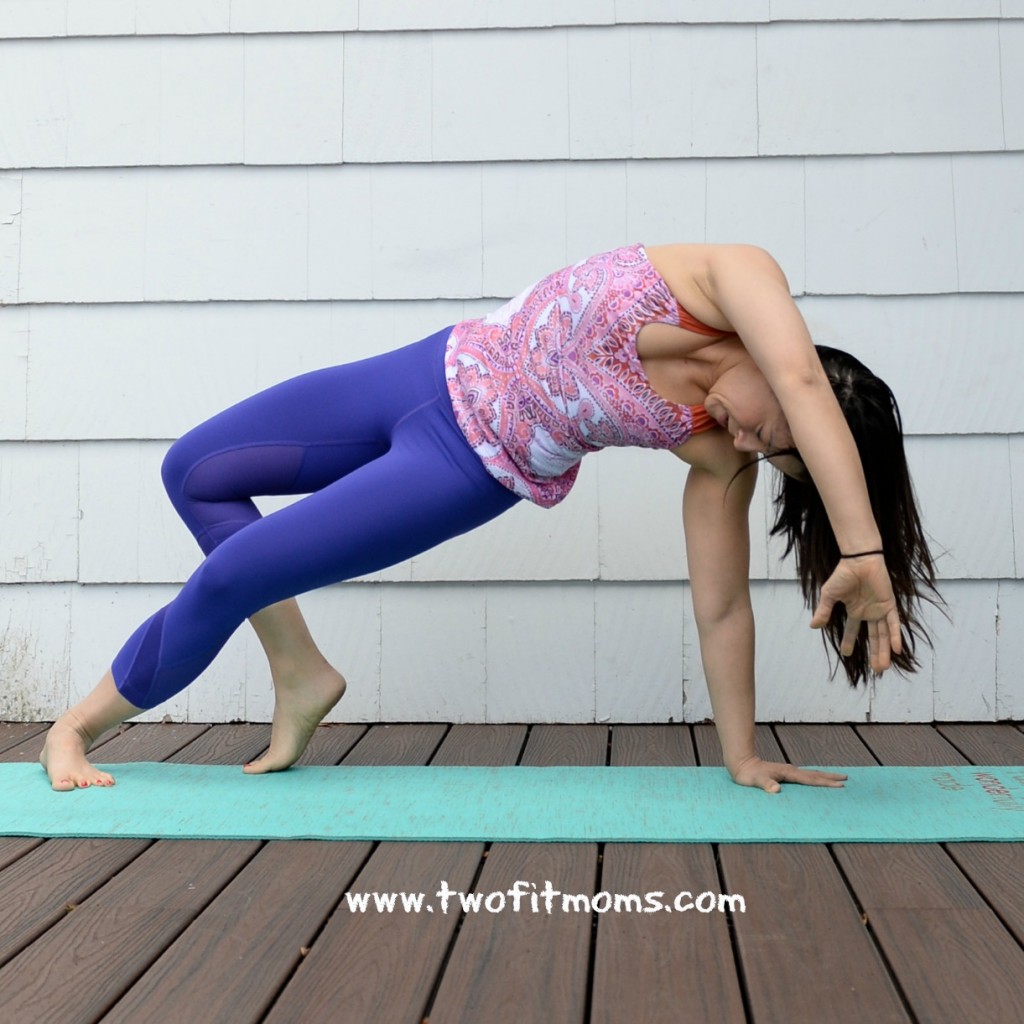
    Slowly lower the ball of your right foot to the ground behind your left leg. Your right hand will simultaneously begin to lift from the mat.
    Step3

    Step 4
    Push firmly into the mat with both feet, as you lift your hips toward the sky and reach back behind you with your right hand. Keep your chest and hips lifted, and remember to breathe evenly through your nose. Hold this pose for 5 breaths (about 30 seconds), and repeat on the other side.
    Step4

  • Pincha Mayurasana:  The Art of Falling

    Pincha Mayurasana: The Art of Falling

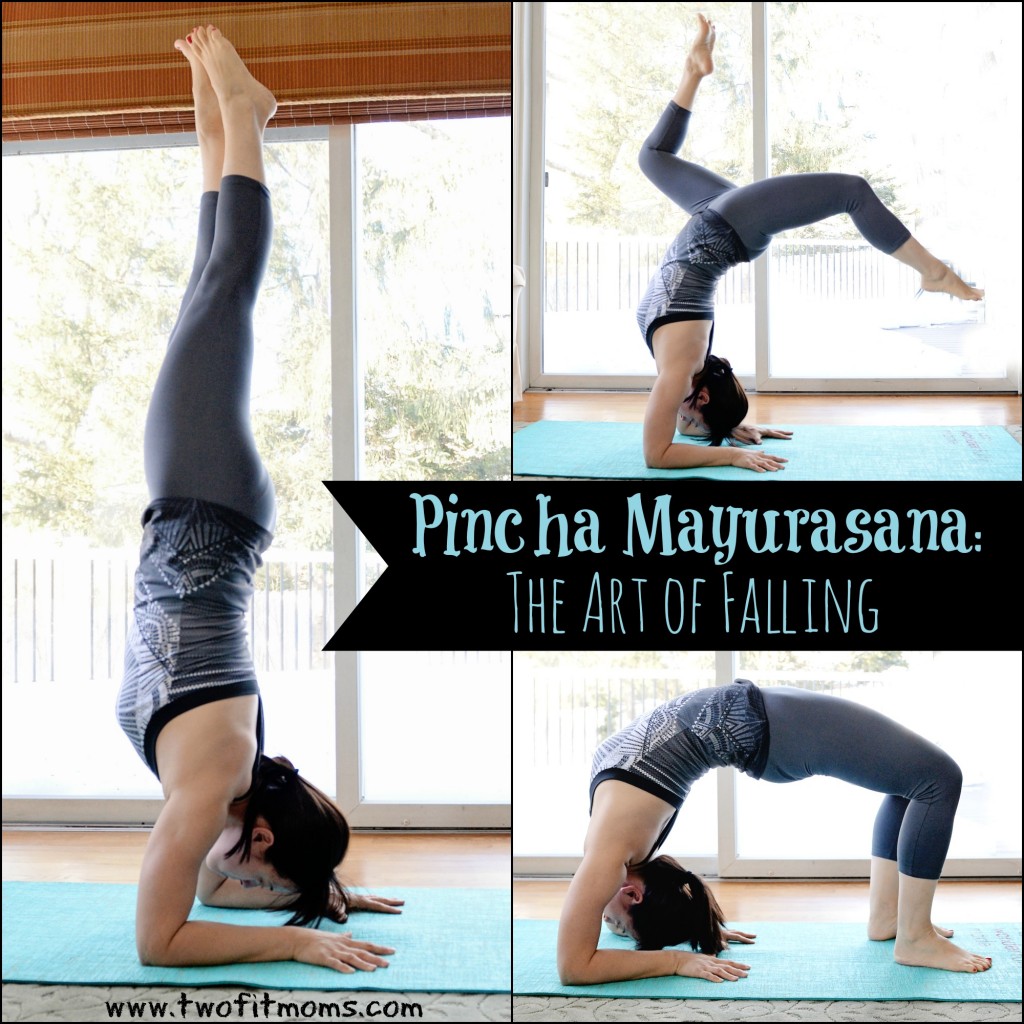
    If you’ve recently added Pincha Mayurasana (forearmstand) to your inversion practice, you may be wondering when or if you should move away from the safety of a wall.  As a general rule, you should NEVER move your inversion practice away from the wall until you have perfected your exit strategy.

    Falling flat onto your back and injuring yourself is NOT an exit strategy.  Falling safely out of an inversion is FallingFromPinchaactually a skill, and today, I will show you how to turn your fall out of forearmstand into a controlled transition.
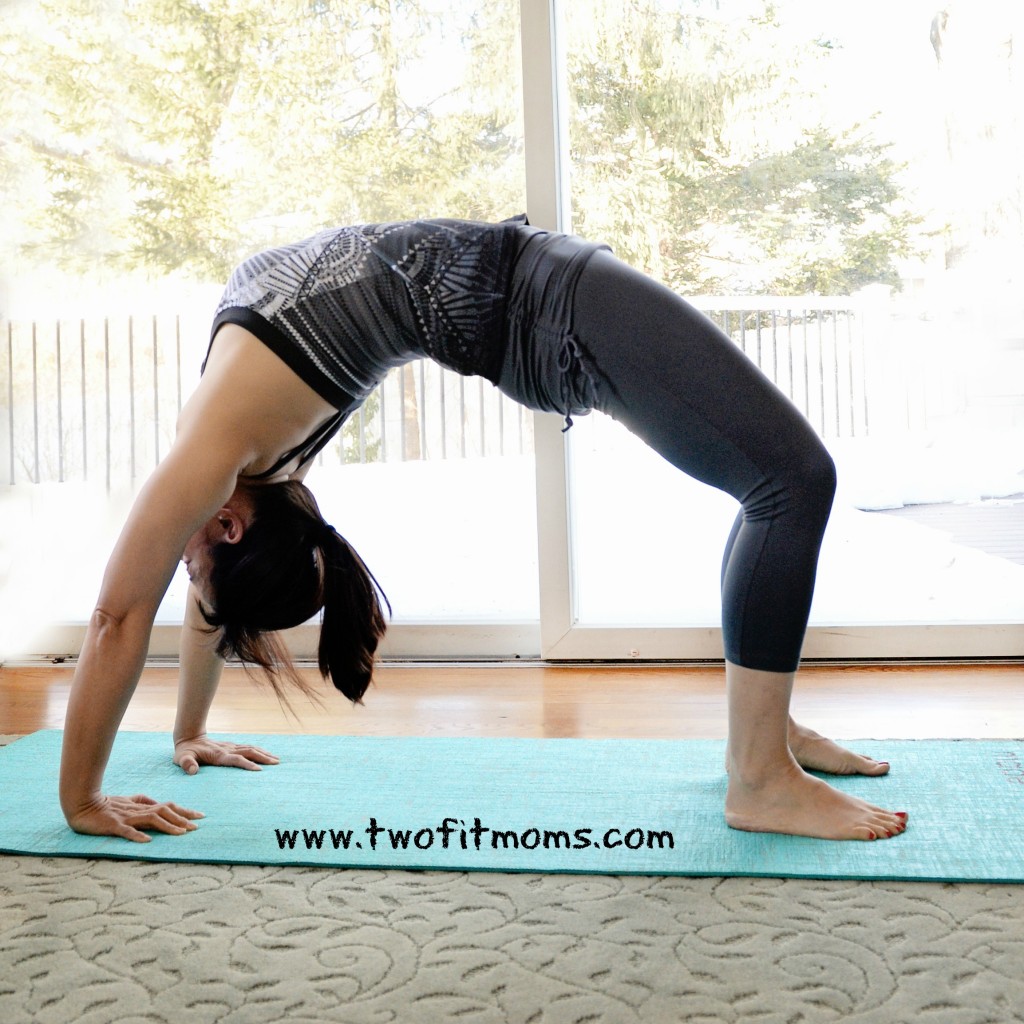
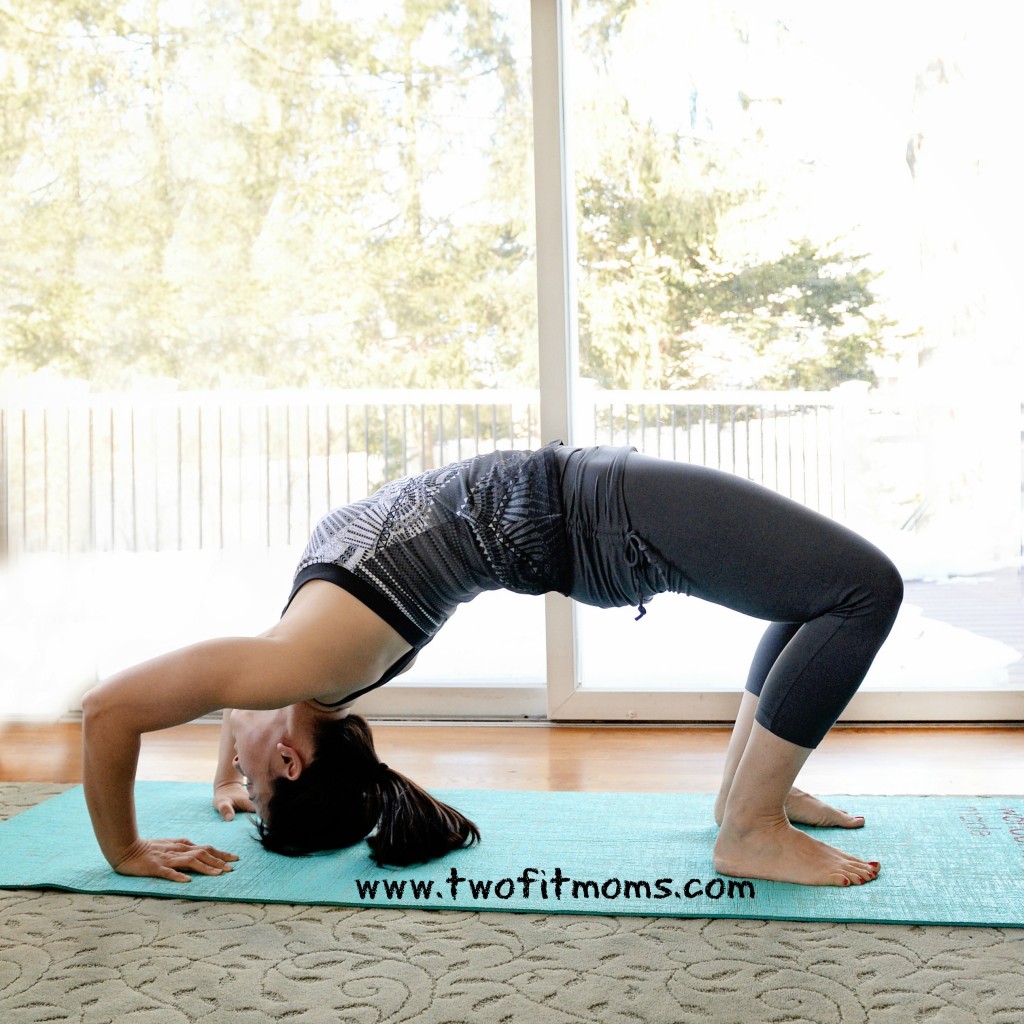
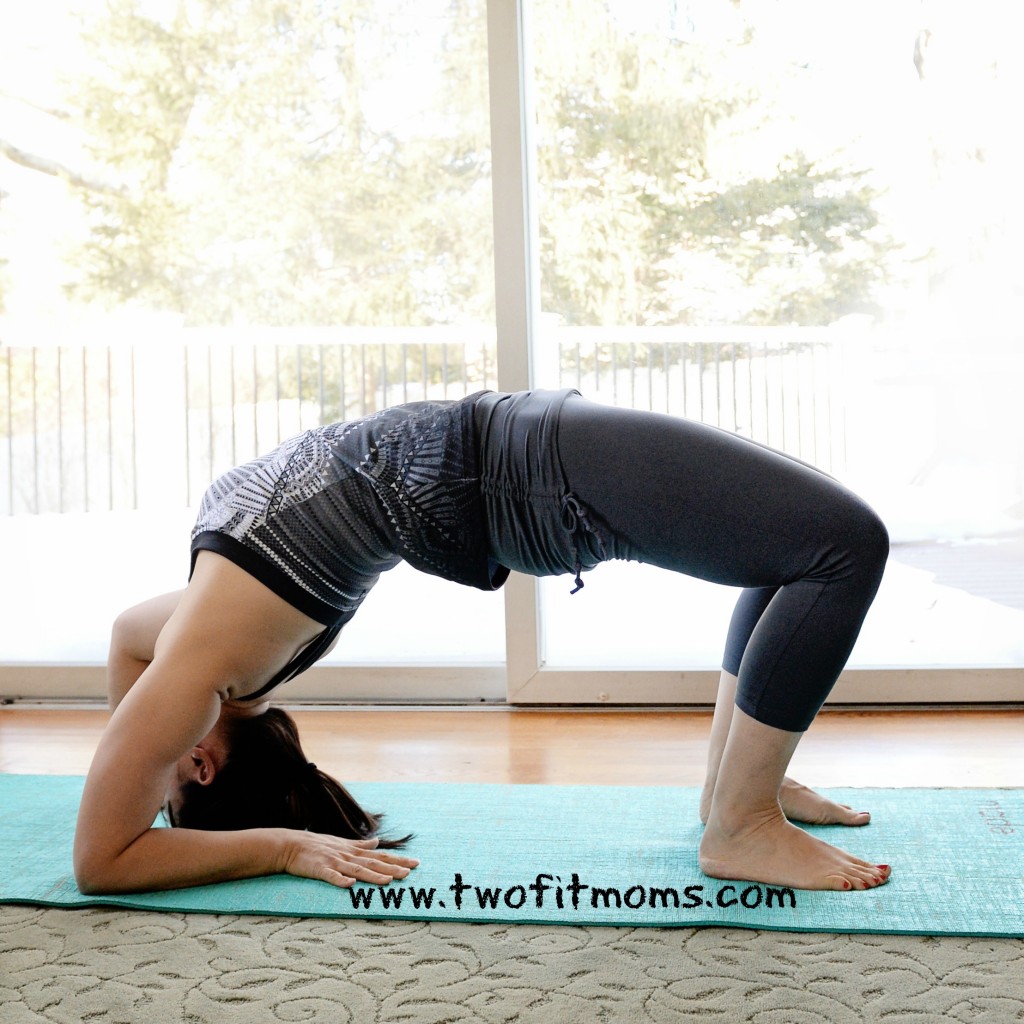
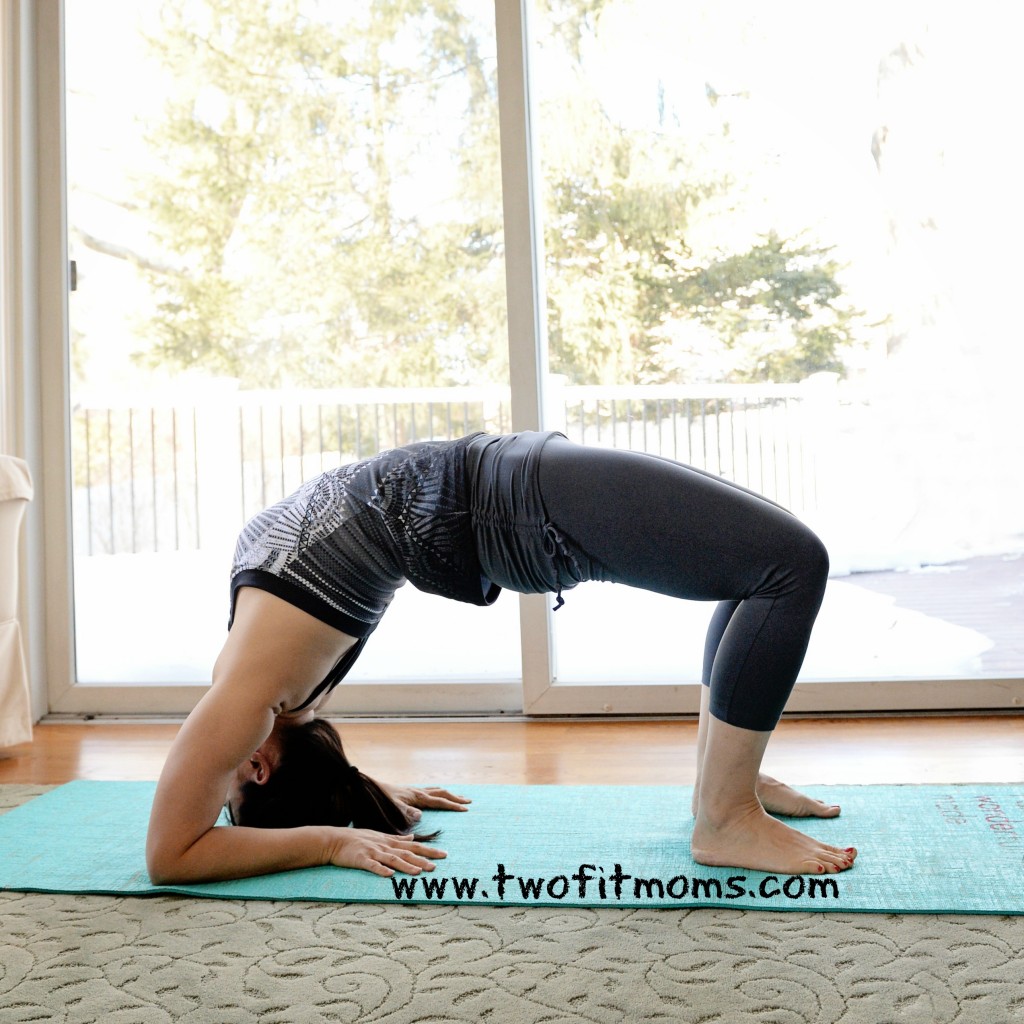
    The goal?  Forearmstand into forearm wheel.  Yes, forearm wheel is a deep pose requiring flexibility, but once you master this pose and this transition, you will practice in the middle of the room without fear.

    Getting into Forearm Wheel
    The first step in perfecting this transition is to practice the final pose:  forearm wheel.

    Step 1
    Lie on your back, with your knees bent and feet flat on the floor. Place your palms onto the mat on either side of your head with your fingers pointing toward your feet.  Press through your hands and feet and gently lift up onto the crown of your head for a breath or two.  Continue to press through your hands and feet, lifting your head from the floor. Straighten both arms and lift your hips toward the sky for wheel pose.  If you are unable to do wheel pose, please continue to practice your forearmstands against a wall and re-visit this article at a future date.  Being comfortable with your backbends is essential for this exit strategy.
    WheelPose
    Step 2
    Slowly bend your elbows and gently lower the top of your head to the mat. Keep your elbows stacked above your wrists and your chest lifted.
    LowerOnToHead
    Step 3
    Slowly lower yourself onto one forearm.  If the stretch feels too intense, stop.
    WheelOneArmDown
    Step 4
    If your back is not straining, lower yourself onto the other forearm.
    WheelBothArmsDown
    Step 5
    Press down firmly through your forearms and lift your chest to raise your head off the mat.
    ForearmWheel
    If you are unable to do this forearm backbend with ease, then please continue practicing your forearmstands with a wall.  Falling into a deep backbend from a height is potentially harmful until your flexibility improves.  Each day, make it a point to work on your backbends and to open up your chest, shoulders and hip flexors.  The sooner you become comfortable in your backbend practice, the sooner you will become free from the wall.

    Practicing the Transition
    Now that you’ve mastered the forearm wheel, let’s practice falling into it.  Make sure you are thoroughly warmed up before attempting.  When you begin to lose your balance in your forearmstand, your natural inclination is to simply tip over.  Work with that natural momentum, and do not try to fall to the side or to lift your forearms from the ground.  Keep your forearms firmly rooted into your mat, with your elbows stacked right under your shoulders.  Do not collapse into your arms!  If you stay strong through your shoulders and arms, your legs will touch down, your head will never touch the mat, and you will be in a forearm backbend.

    Remember:
    Keep your inversion practice at the wall until you perfect your exit strategy.  Perfecting an exit strategy, however, may take a great deal of time.  Do not get discouraged.  Your yoga practice is not a race, and it is here to serve you through your lifetime.  Practicing your inversions with a wall is FINE.  Be prudent and use a wall if your body is not quite ready for the exit strategy presented here in this article.  Good luck!