Category: Arm Balance

  • 10 Reasons I Do Instagram Yoga Challenges

    10 Reasons I Do Instagram Yoga Challenges

    Over the past year, Laura and I have been very active in the Instagram yoga community.  We’ve hosted some of the very first yoga challenges offered on Instagram, and we continue to remain active in hosting and participating in challenges today.

    Since our early days of posting very detailed step-by-step picture tutorials, we’ve watched thousands of people connect and grow a virtual Instagram yoga community just by attempting the GrasshopperPrepdaily pose of the day and posting a photo of their attempt to a designated hashtag.  What an overwhelmingly positive experience to watch Instagram yogis grow, inspire, and BE inspired!
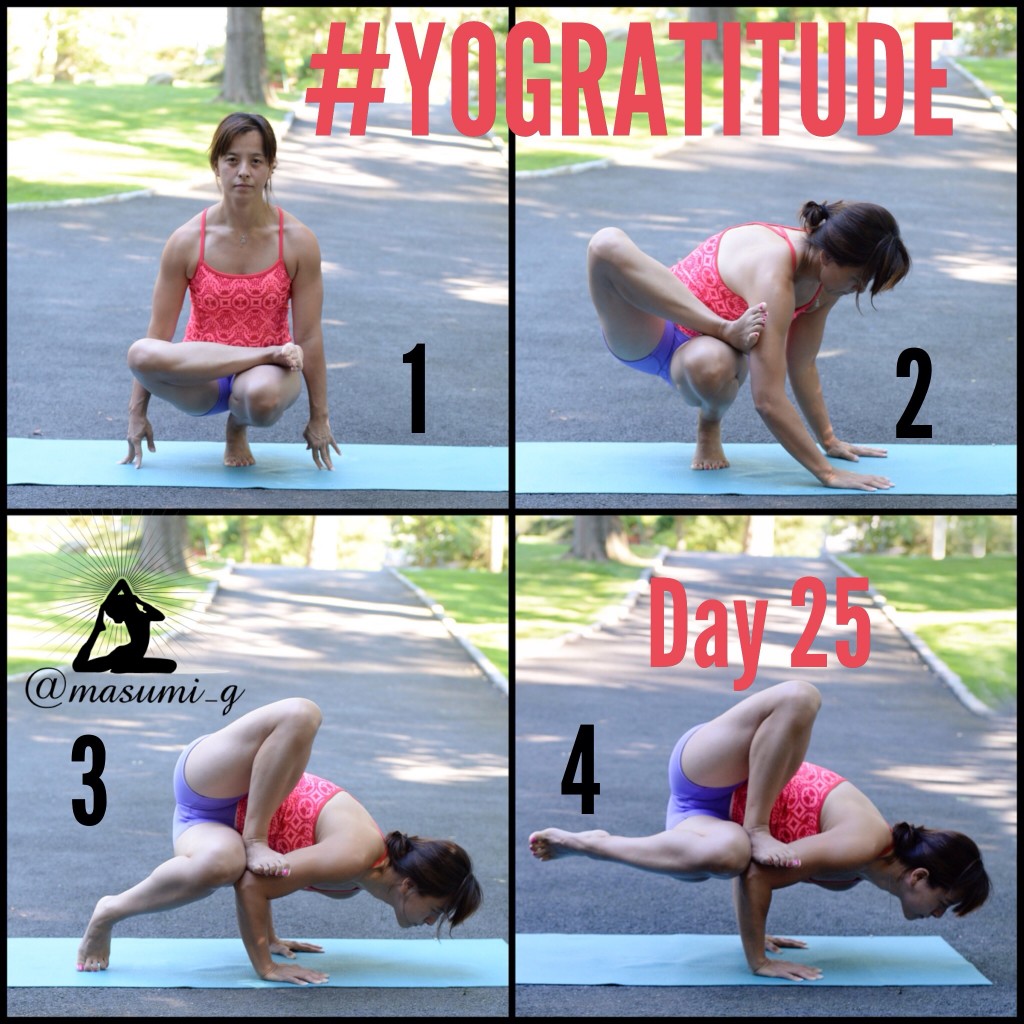
    If you have not yet given a challenge a try, I suggest that you pick one and get involved today.  Here are my top reasons for participating each month.

    It Creates a Daily Habit
    A daily yoga challenge makes you commit to a daily practice.  Let’s be honest—it’s hard to commit to a daily hour-long yoga session.  We are all tired and busy, but, I assure you that it feels much less overwhelming if we believe that we just need to stretch and warm up for one yoga pose.  This is a great way to take baby steps toward a longer more meaningful daily practice.  Get in the habit of rolling out your mat daily by participating in a challenge.

    It’s Fun
    Everyone loves a good challenge.  I still remember the first time I saw a photo of an arm balance pose on Instagram.  It looked incredible.  How was it even possible to balance in that way?!!!  I was fascinated and excited to get on my mat and try.  Perfecting the pose was not the goal.  The goal was to try, and practice, grow and play.  As adults, we rarely play.  Practicing new yoga poses each day awakens our inner child, and it’s just downright FUN.

    It’s Free
    Do I have to say more?  It’s free.  Free instruction, free participation, free fun, and often, you can even score a free prize!  Not everyone has the money to take a yoga class in a studio.  By participating in an Instagram yoga challenge, you can get your yoga fix without shelling out the big bucks.
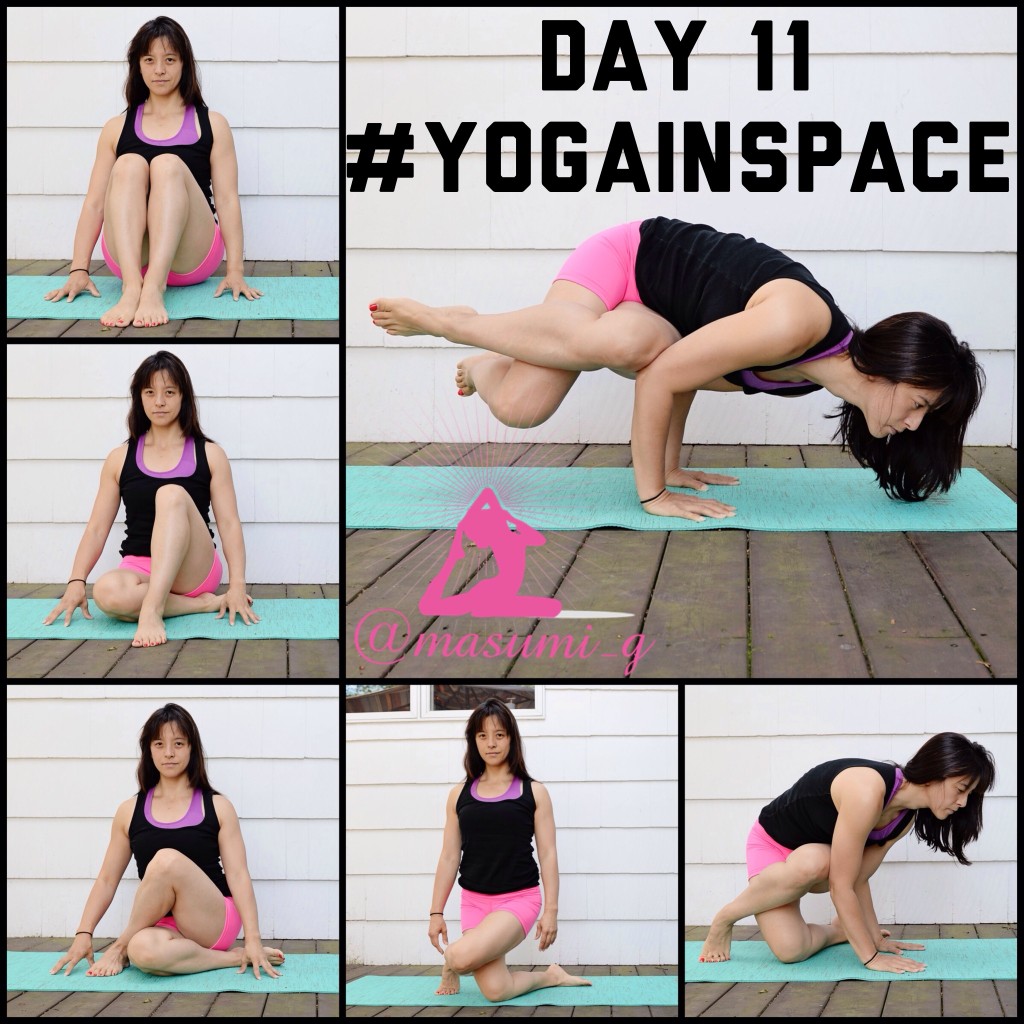
    SideCrowIt’s Inspiring
    It’s incredibly inspiring to look through a yoga challenge hashtag and see thousands of yogis from all walks of life doing the same pose.  These yogis are different ages, races, sizes and nationalities, but they have all come together to participate and grow in their practice.  Seeing a yogi that is twice your age is inspiring.  Seeing a parent and child together attempting a pose is inspiring.  Seeing yogis that are overcoming sickness and pain by using yoga as a healing tool is inspiring.  All of this inspiration will make you want to come back day after day and practice with the Instagram community.

    It Can Be Done from Home
    Some people don’t have the money to take a yoga class, and others don’t have the time to take a class.  As a mother of young children, it takes a village for me to be able to leave my house to do basic things—like shop for groceries or get a haircut.  Traveling to a yoga studio does not happen often, and it doesn’t happen without planning in advance for babysitters.  By getting involved with Instagram challenges, I can practice at home whenever it’s convenient—even if that means taking photos of poses at midnight.

    It Documents Your Journey
    For better or for worse, if you participate in a daily Instagram yoga challenge, you will have a visual record of each pose that you attempt.  In the beginning, seeing your poor form or lack of flexibility may be discouraging, but as time passes, you will be grateful for these photos.  It amazes me to look back at my old yoga photos and see how far I’ve come in my practice.  My posture, flexibility, strength and form have improved dramatically, and I am aware of the progress that I’ve made over weeks or months.

    It’s a Great Way to Meet Yoga Friends
    The Instagram yoga community is an amazingly supportive group.  Everyone is encouraging and supportive, and that is a great kind of environment to learn and grow in your practice.  When you join an Instagram yoga challenge, you get the feeling that you are a part of something greater than yourself.  As soon as you join a challenge, you are no longer alone.  You have joined a movement, and it feels amazing to get caught up in the positive energy and practice (virtually) alongside your new Instagram yogi friends.
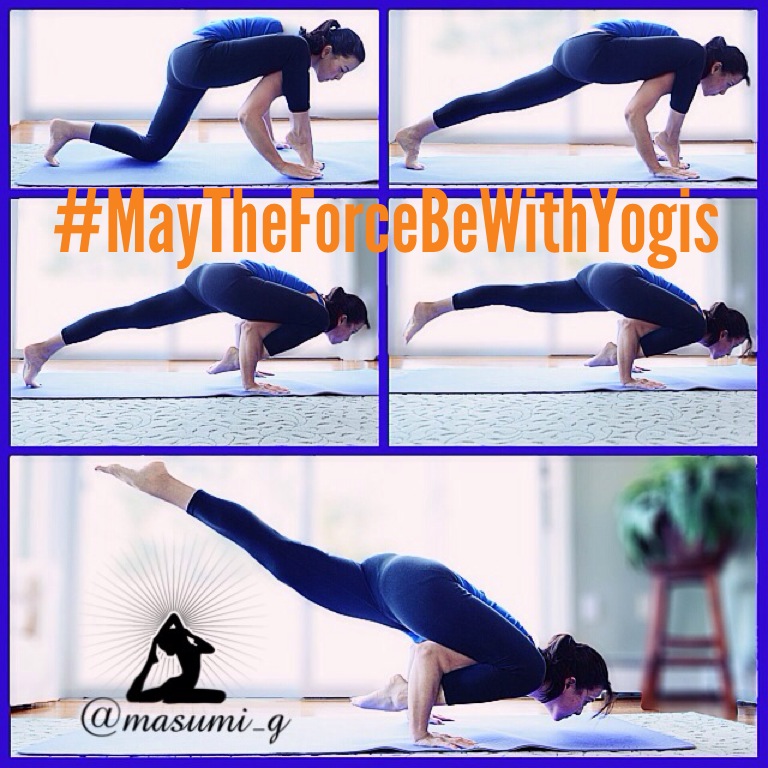
    FlyingLizardIt Creates a Well-Rounded Practice
    We all have our strengths.  We all also have our weaknesses.  I’ve found that when I practice yoga on my own, I have a tendency to work on poses that come easily to me, and I avoid working on the poses that target my weaker/less flexible body parts.  The wonderful thing about Instagram yoga challenges is that the pose of the day forces you to work on body parts that you might otherwise completely avoid.  If the challenge pose is a backbend, you will work on backbends, even if you dislike them.  If the challenge pose is a deep hamstring stretch, you will spend time stretching the backs of your legs.  I’ve found this aspect of the challenges to be very beneficial.  Rather than focusing on just the poses that I enjoy, I also work diligently on the poses that I don’t enjoy so much.  By doing this, I’ve become much more well-rounded in my practice than I otherwise would be.

    It Exposes You to Different Types of Yoga
    I used to think that there was one type of yoga—the kind where you sit with your hands in prayer and maybe do a warrior 1 pose from time to time.  The idea of doing yoga used to bore me to tears.  I had no idea that yoga could be a challenging, sweat-inducing workout.  There is a type of yoga for everyone, and the world of Instagram yoga has opened my eyes to it all.  Who knew that yoga could include inversions like headstands and handstands or arm balances that tested your strength, balance and flexibility?  Take a look through all of the available challenges this month and you will see how much variety yoga has to offer.
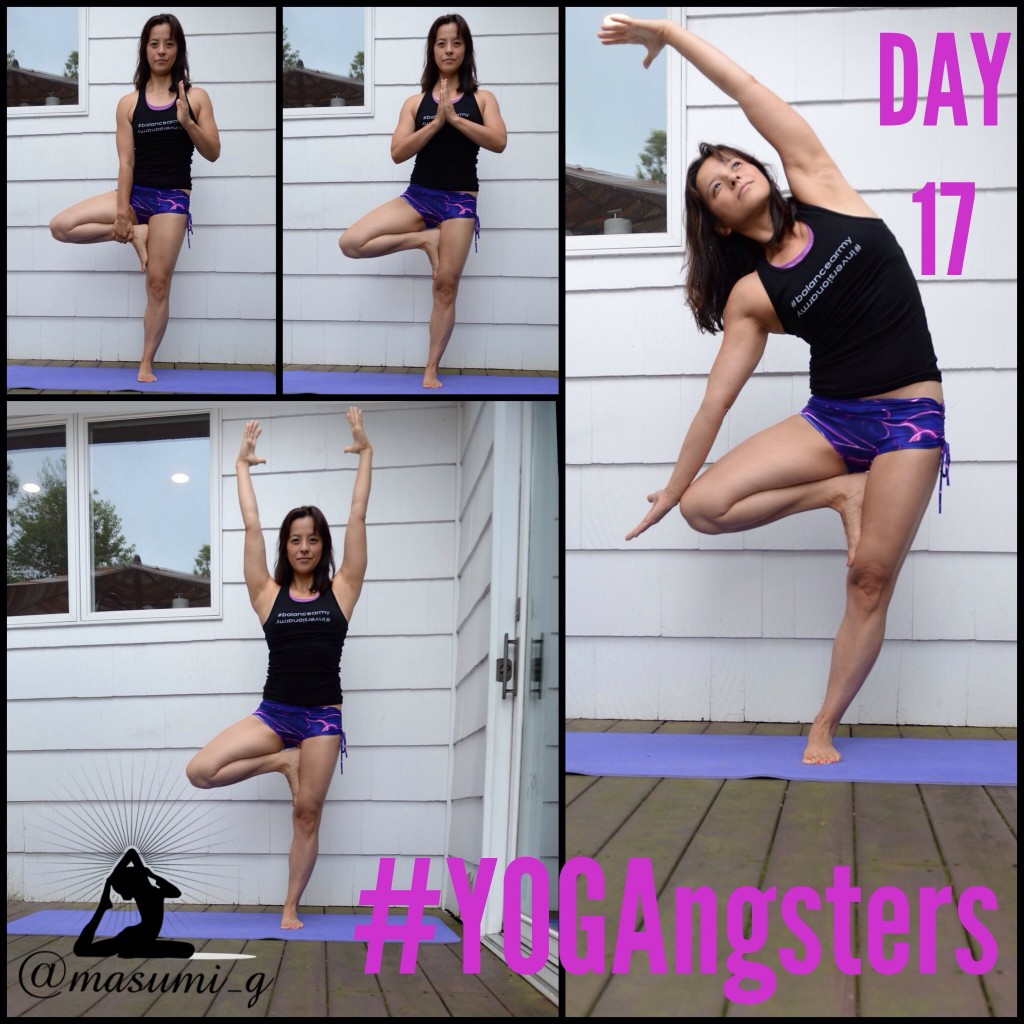
    TreeEnjoy the Non-Physical Benefits of Yoga
    If you join an Instagram yoga challenge and you’ve never tried yoga before, you might start out just enjoying the physical benefits of the poses.  That’s definitely the experience I had.  I would stretch, strengthen, sweat, take a photo of the pose of the day, and move on with my life.  Over time, however, I’ve noticed that my body has loosened up to the point where my practice has truly become a moving meditation.  I can find peace in each pose, as the poses become more accessible.    I am now able to focus on the present moment as I’m living it, and THIS is an invaluable skill on and off the mat.
  • Parsva Bakasana

    Parsva Bakasana

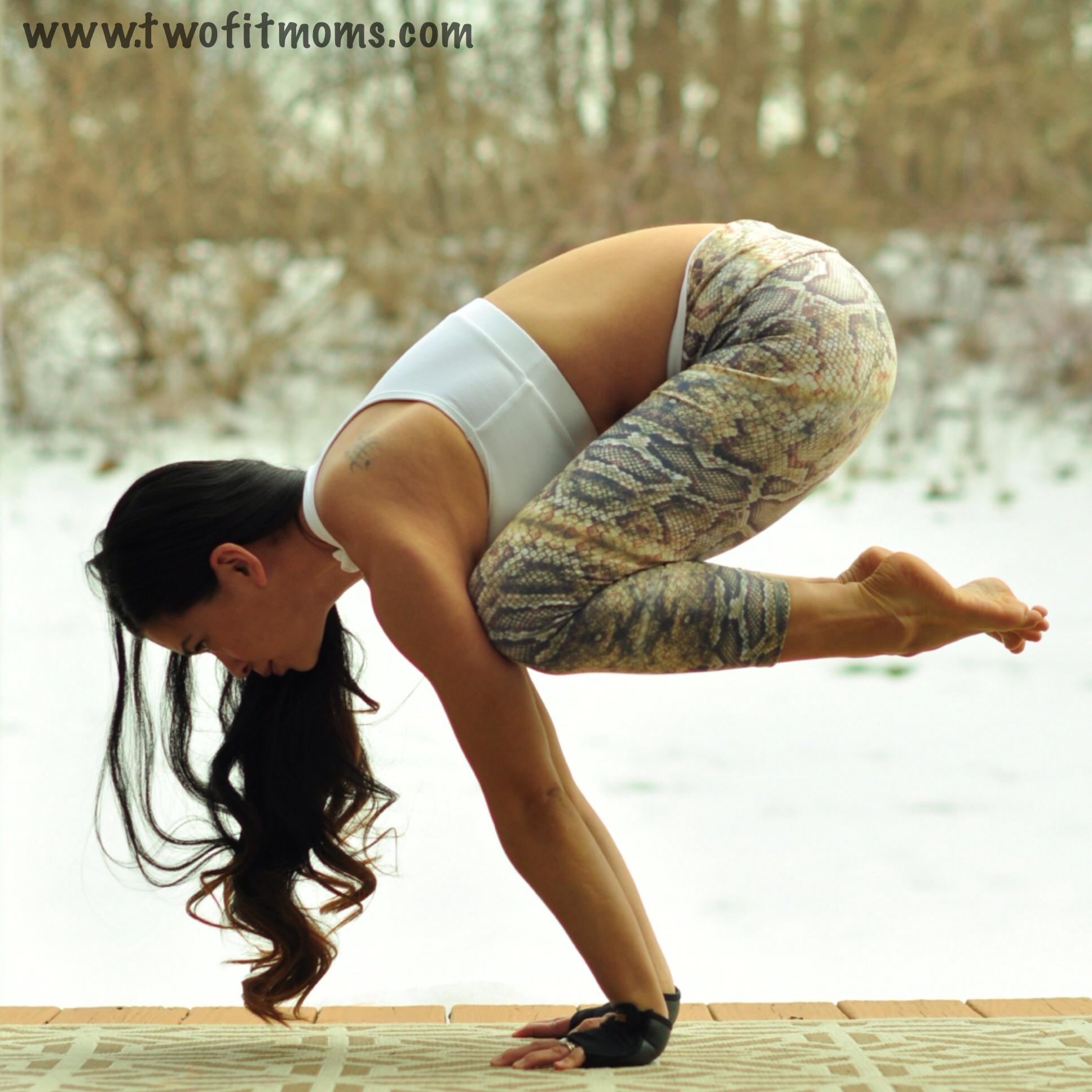
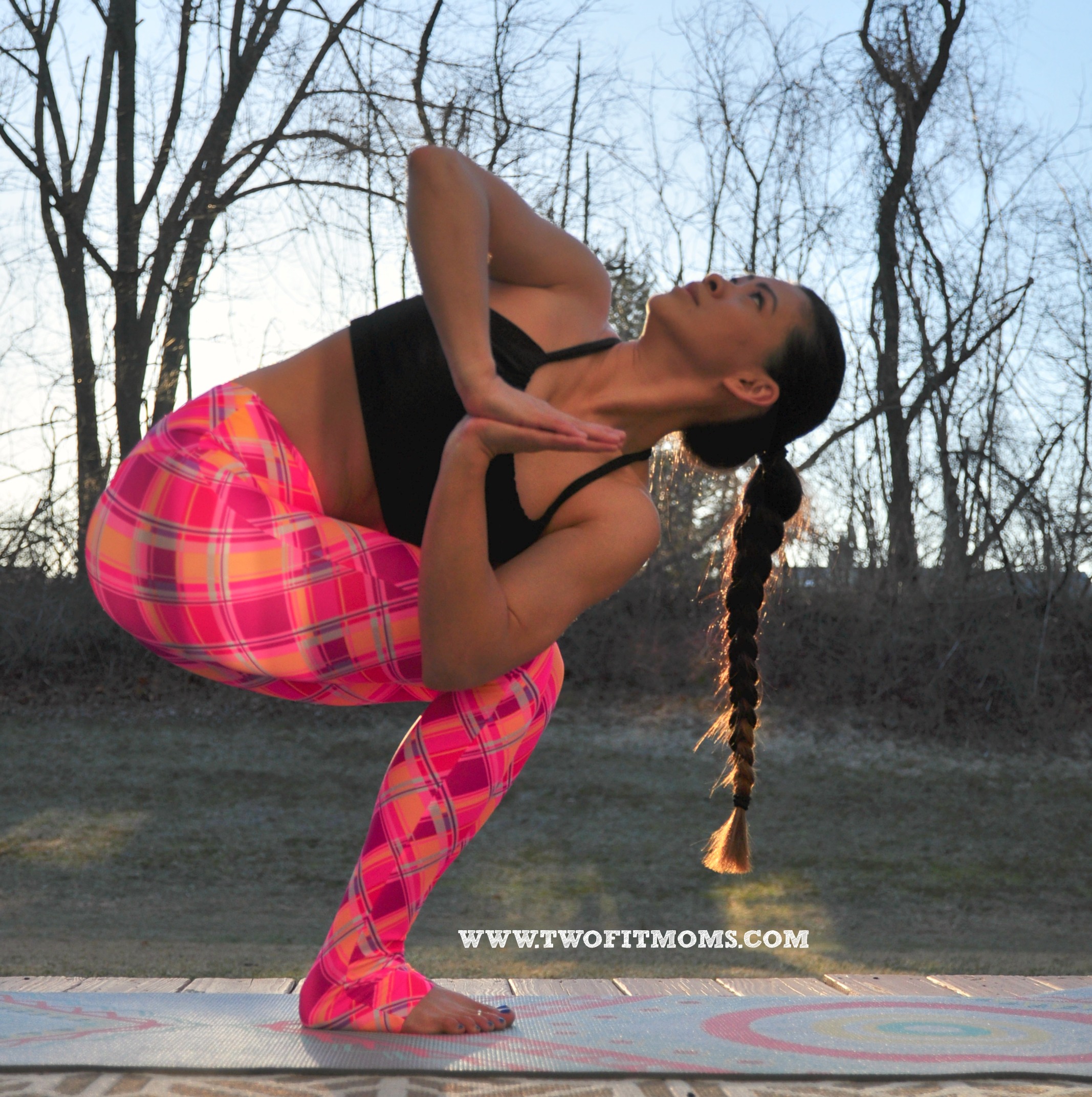
    Twist, twist, twist! Parsva Bakasana, or Side Crane/Crow, can be a huge challenge for some yogis. Just like Bakasana, this pose requires flexibility, and the more flexibility you have the better! So, don’t be ashamed if you need some help. Use a block to perch on and a strap to keep your elbows in towards your body.


    Step 1: Warm up with a twist

    Begin by standing at the top of your mat, feet together or hip width distance apart. On an inhale, sweep the arms up overhead as you bend your knees and come into Chair Pose. Weight shifts slightly towards your heels…you should be able to lift up your toes! Take 5 deeps breaths.

    Bring your hands in prayer at heart center. On an exhale, twist over to the right, hooking the left elbow to the outside of your right thigh for Revolved Chair Pose. Try to work the left armpit down toward your thigh as your hands press actively together. Your right shoulder will pull slightly back. Try your best to keep your knees in line with each other and your hands at heart center. Take 5 deep breaths then release and twist to the opposite side. Take a forward fold once you have completed this on both sides.

    001

    Step 2: Find your birdie perch!

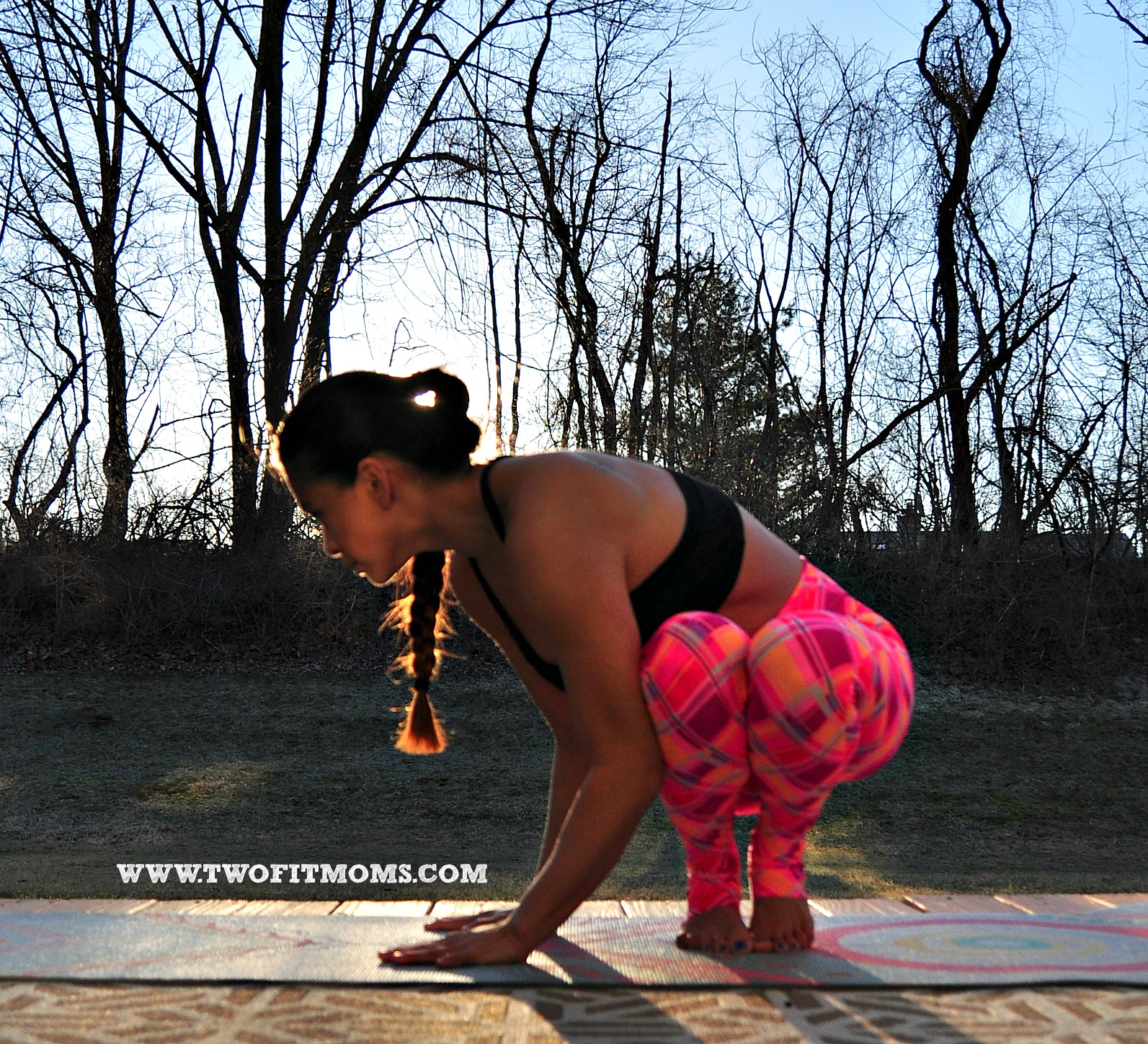
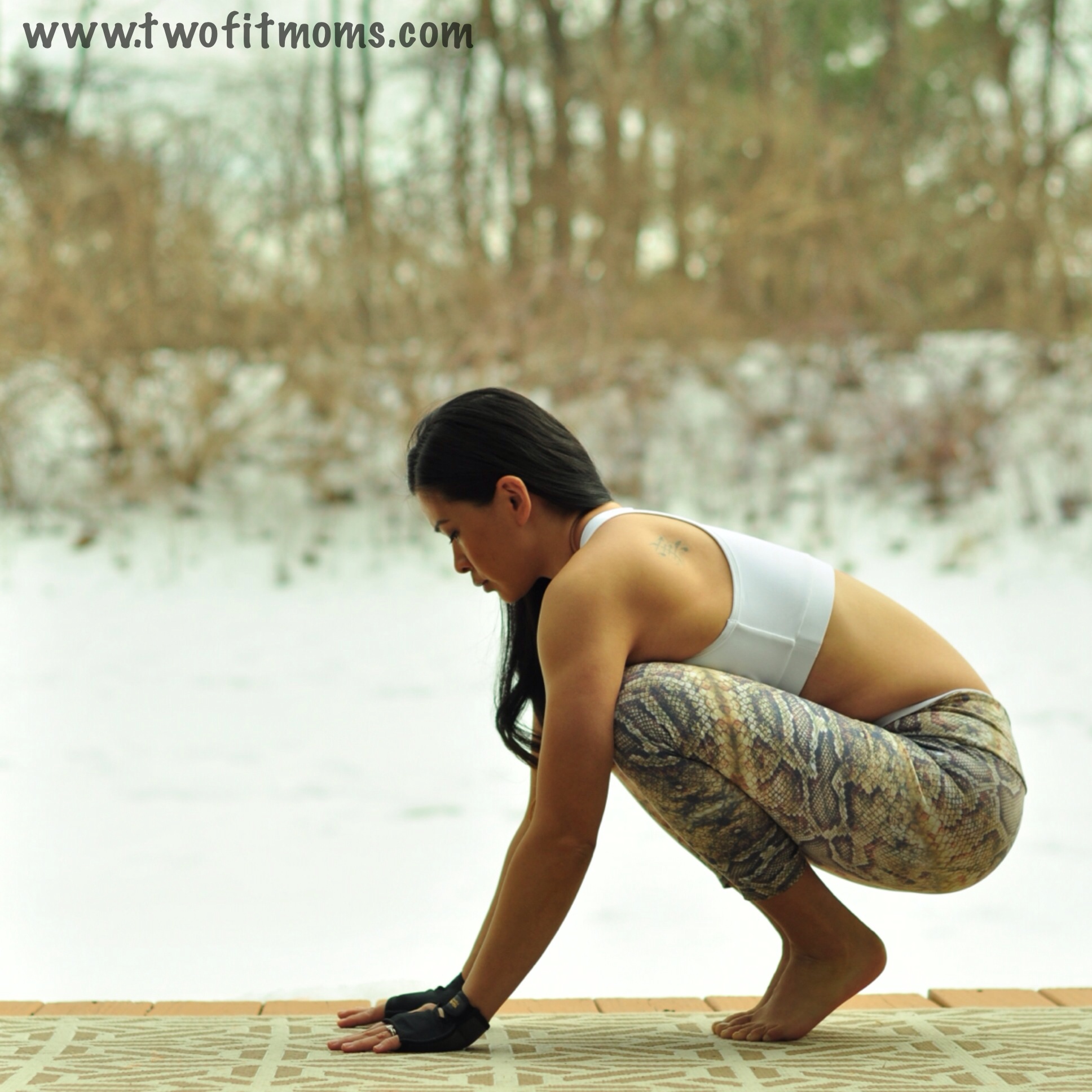
    Start off in your Revolved Chair Pose. Slowly start to lower your bottom down, coming onto the balls of the feet and bringing your hands down onto your mat. Remember to stay twisted!  If you have trouble here, grab a block and stand on it.  That little bit of added height will help you get your hands onto your mat.

    Spread your fingers and suction the palms of your hands onto your mat. Keep your elbows squeezing in. The outside of your right thigh will be alongside your left tricep.  Your right hip will be between your hands. Take a moment to adjust…working the right thigh up toward the left armpit.

    002

    Step 3: Almost ready for lift off!

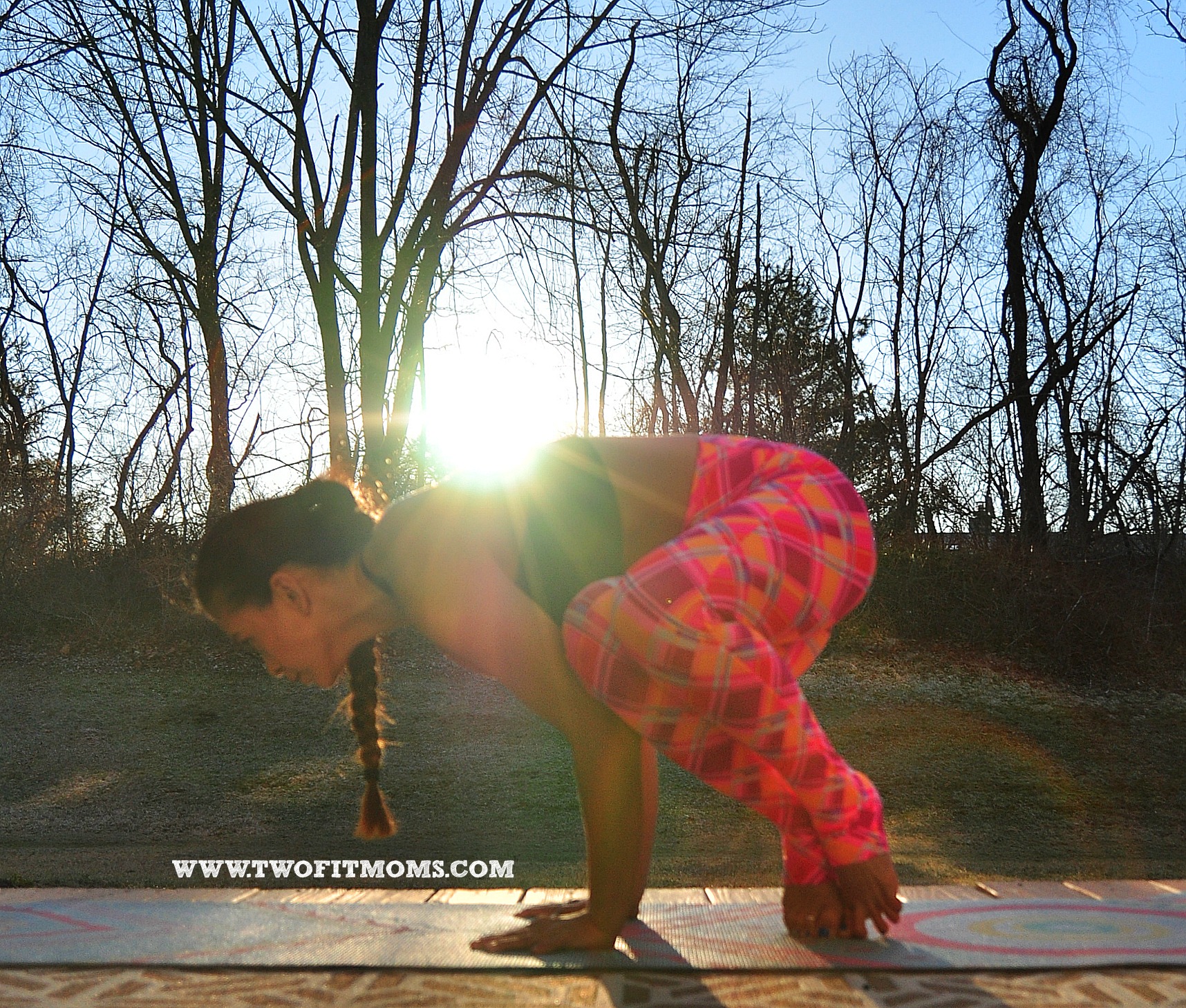
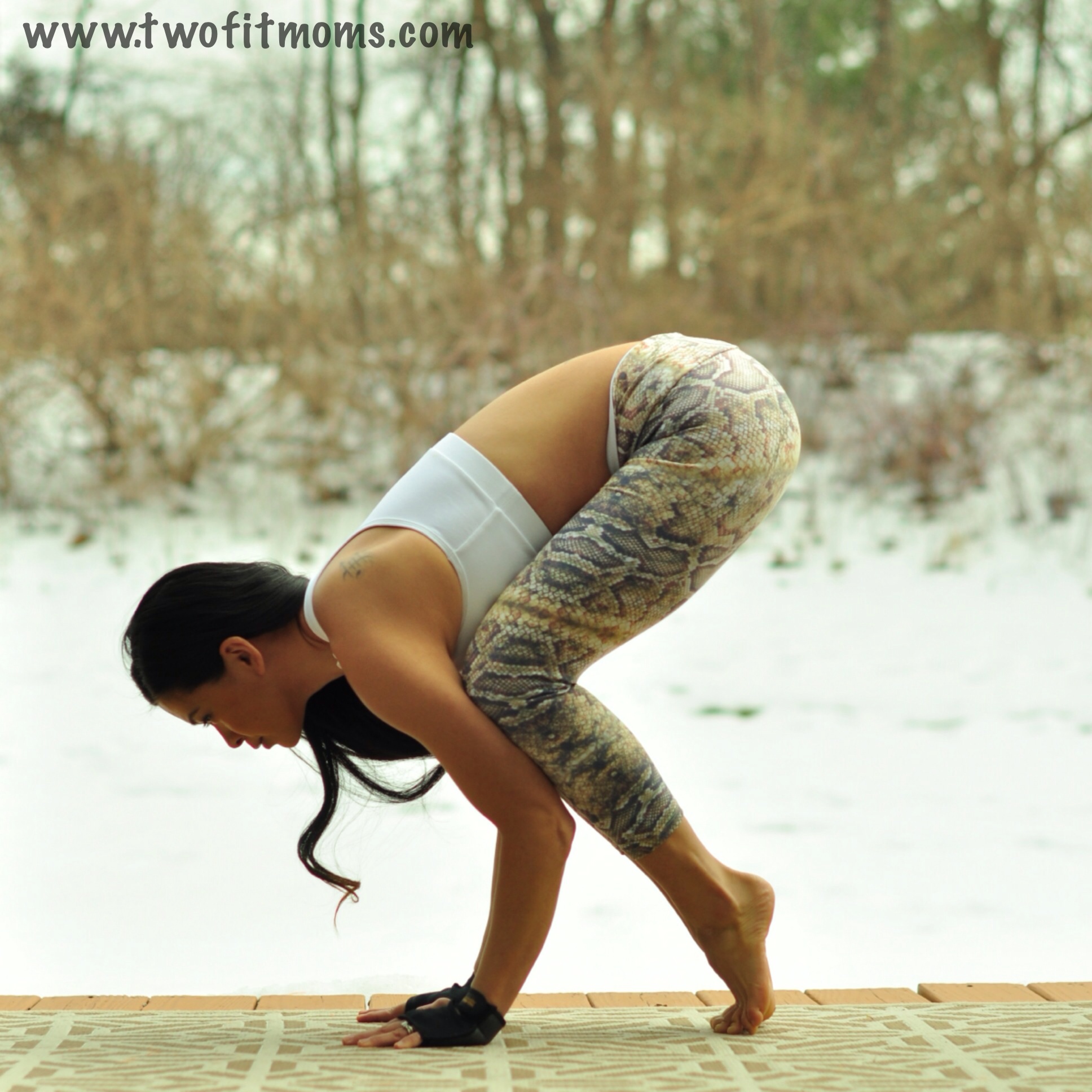
    From your little birdie perch, slowly start to lift your bottom up as you lean forward and bend your arms. Think Chaturanga Dandasana arms…so squeeze in your elbows! Gaze forward and try to keep your shoulders square.

    003

     Step 4: Start to take off!

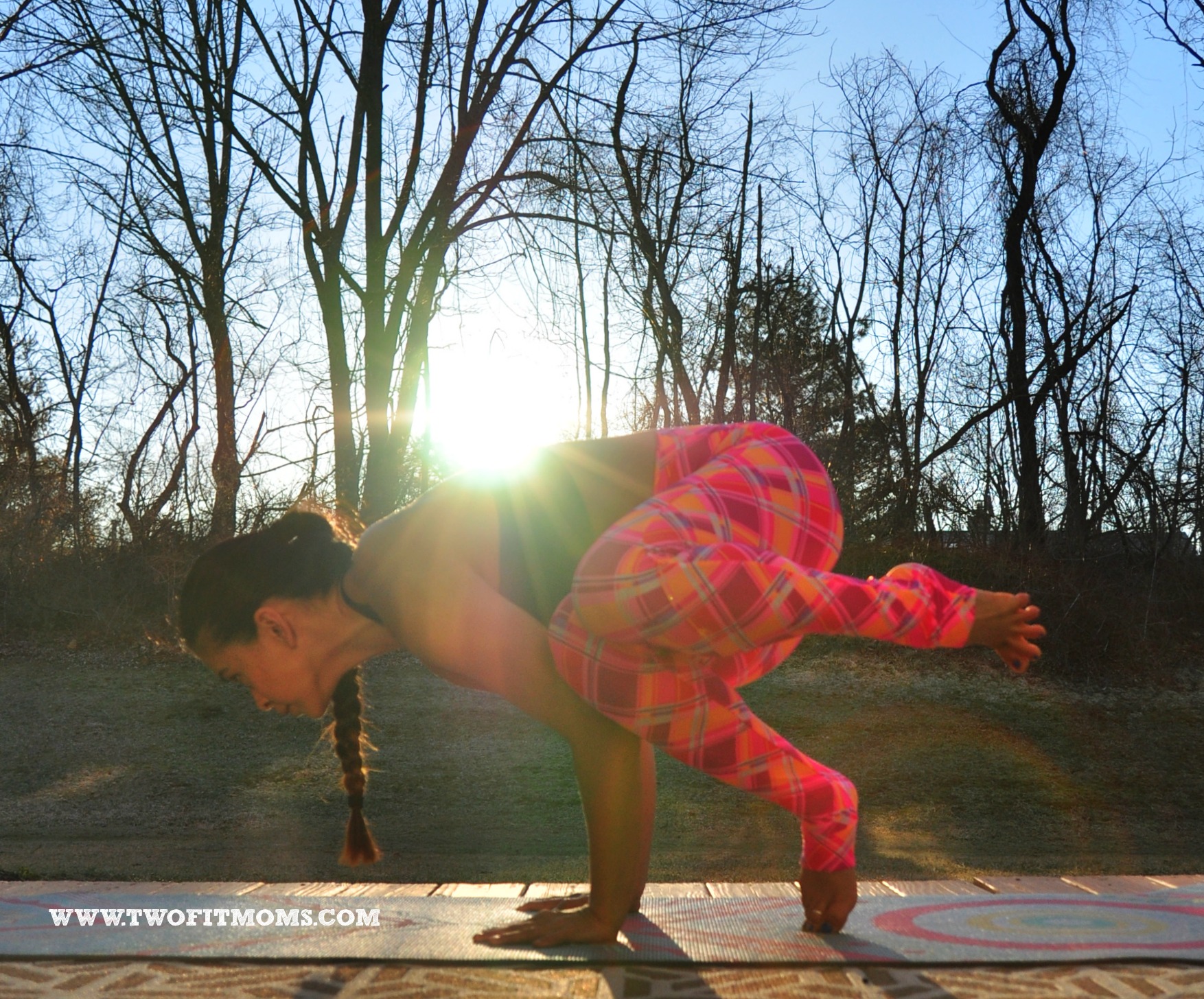
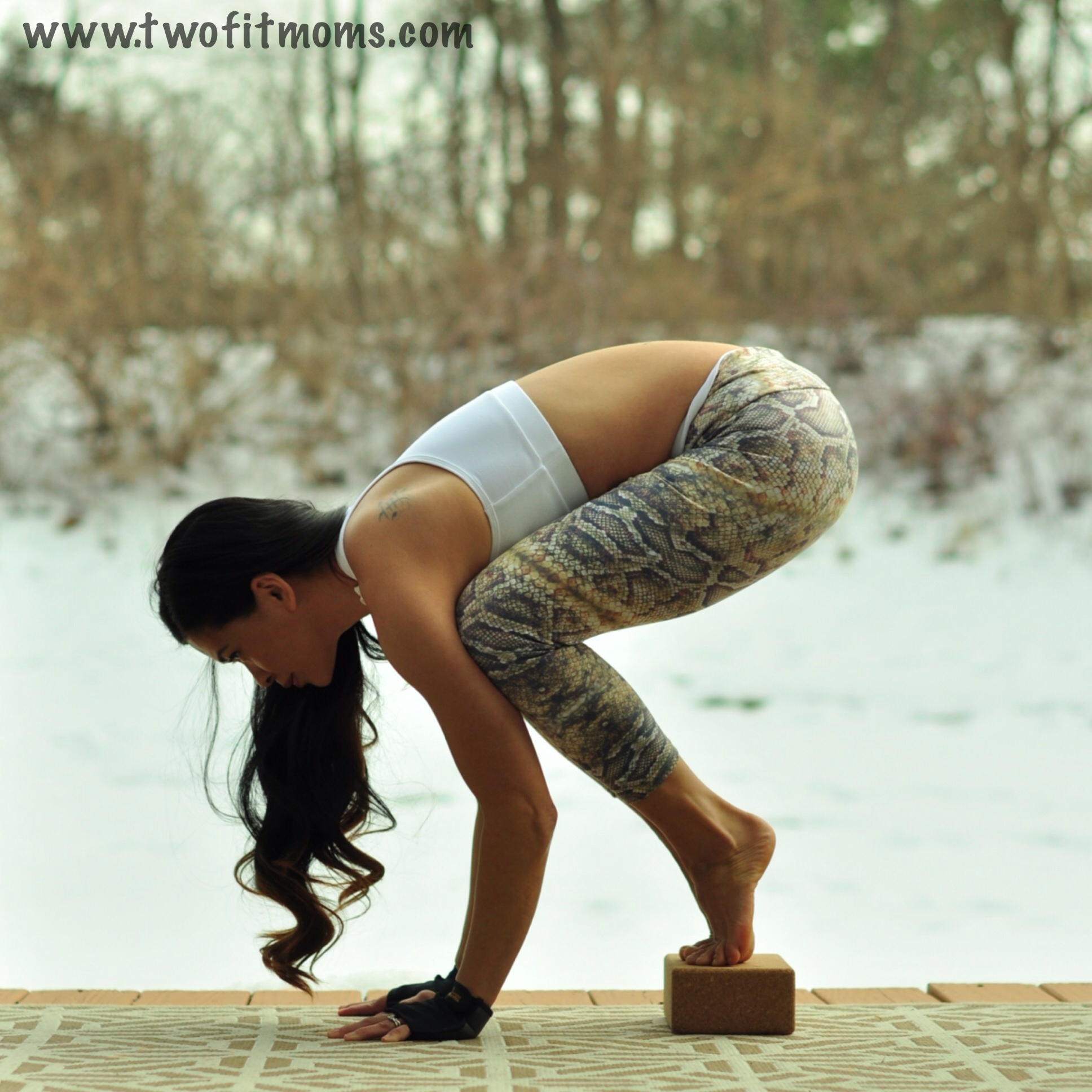
    Keeping your gaze forward, elbows squeezing in, shoulders square…attempt to lift up the top foot.

    004

    Step 5: Take Flight!

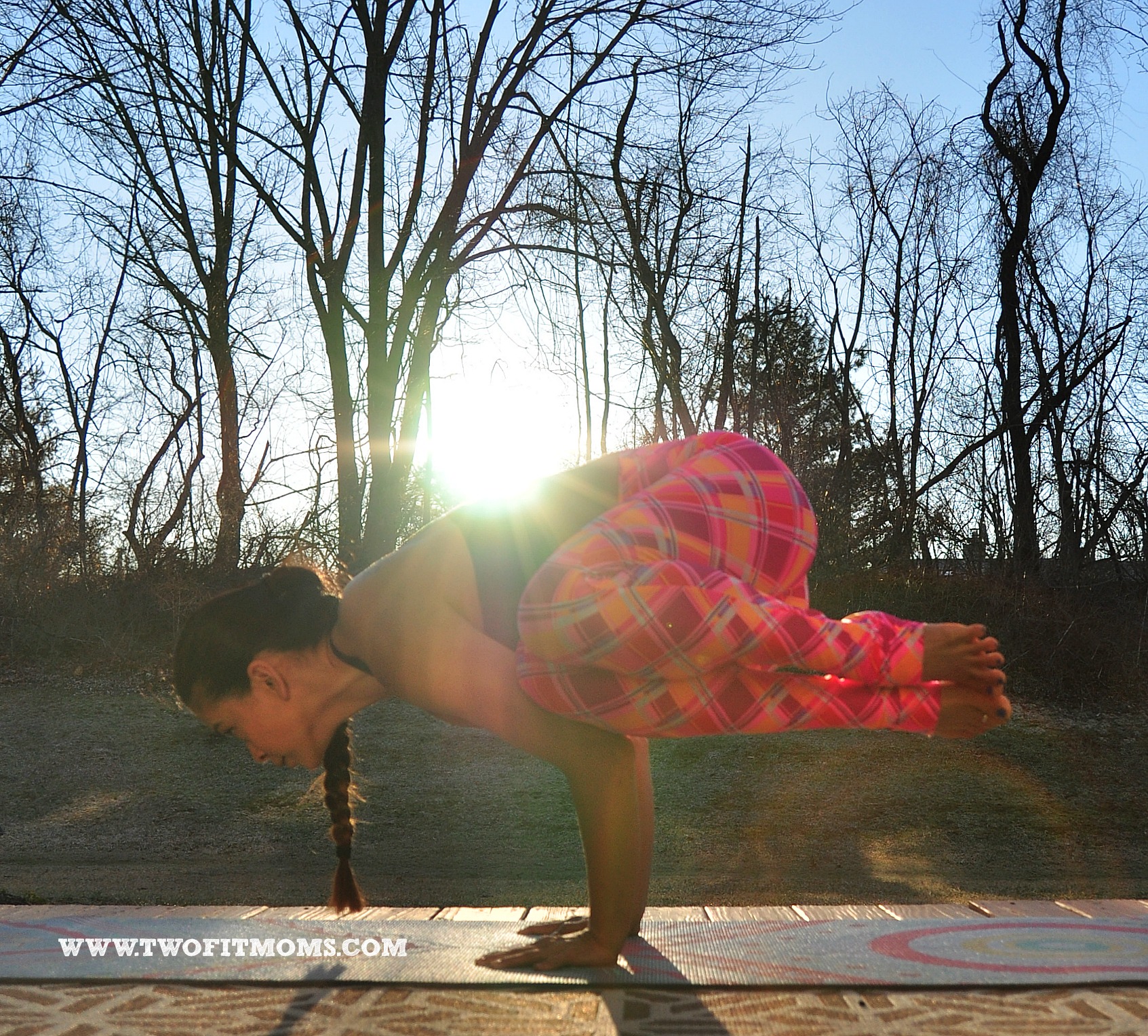
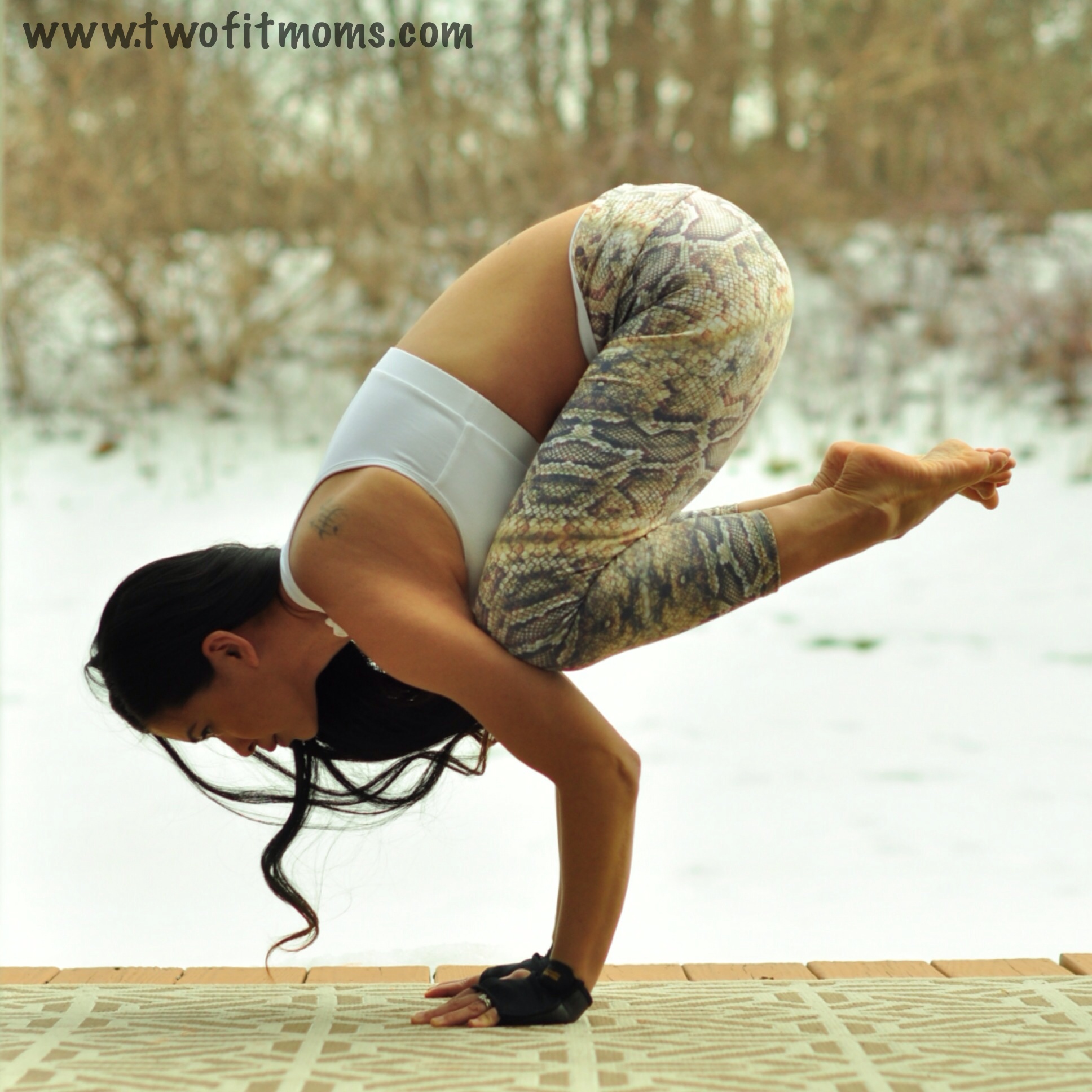
    Only when you are ready…try to bring the bottom foot up to meet the top foot and take flight! Squeeze your thighs together, engage your core. If you can, hold the pose for 5-8 breaths before coming back down.

    ***Modification #1:  Place a block, longways, either under your forehead or your chest to give added support. This will allow you to feel what this arm balance is like with both feet lifted!

    ***Modification #2:  Allow your right hip to rest on top of your right tricep so you are balancing your weight between both arms.

    005

    Advanced Option: Straight Arms

    006

    Have fun and be safe!

    XOXO

    Blog Signature


  • Quest for the Press 101: Toe Taps

    Quest for the Press 101: Toe Taps

    My quest to press into a handstand probably started around eight months ago. “Pressing” is when you can place your hands onto the ground and float your legs up into a handstand…No kicking required! There is no science to pressing into a handstand, and everyone’s experience is unique. I am going to show you how I learned — hopefully it will help you!

    The only prerequisite is that you MUST have a solid Bakasana practice. You can view my tutorial for this particular asana here.

    Step 1: Start in Bakasana

    Key points to remember in Bakasana…Fingers should be spread wide to help grip the mat. Hands are shoulder width apart. Elbows and knees squeeze in toward the midline.  Upper back rounds to avoid “dumping” into your arms and making the pose feel heavy. Navel pulls in toward your spine to activate the core.
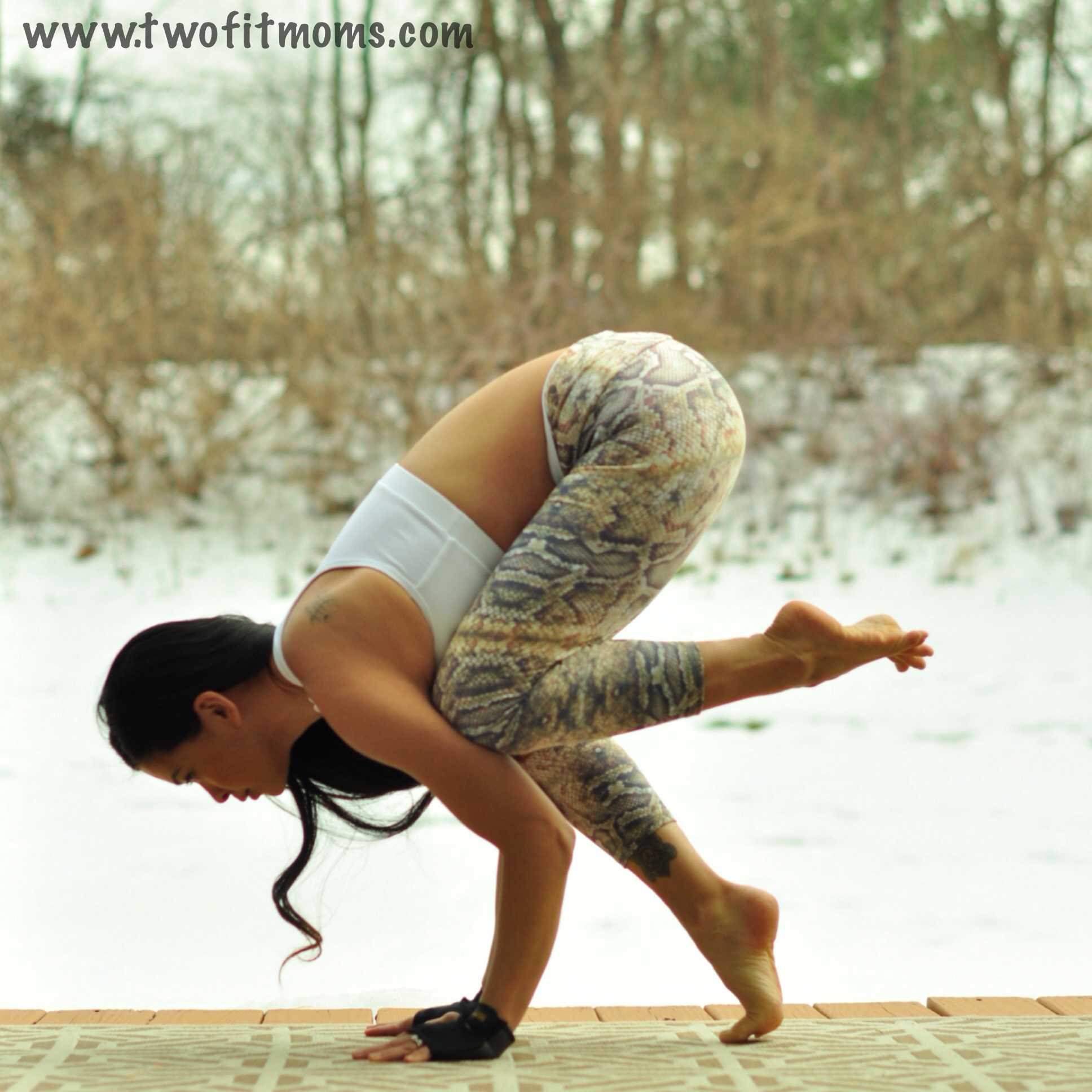
    Photo Feb 27, 8 56 45 AM

    Step 2: Flex the feet

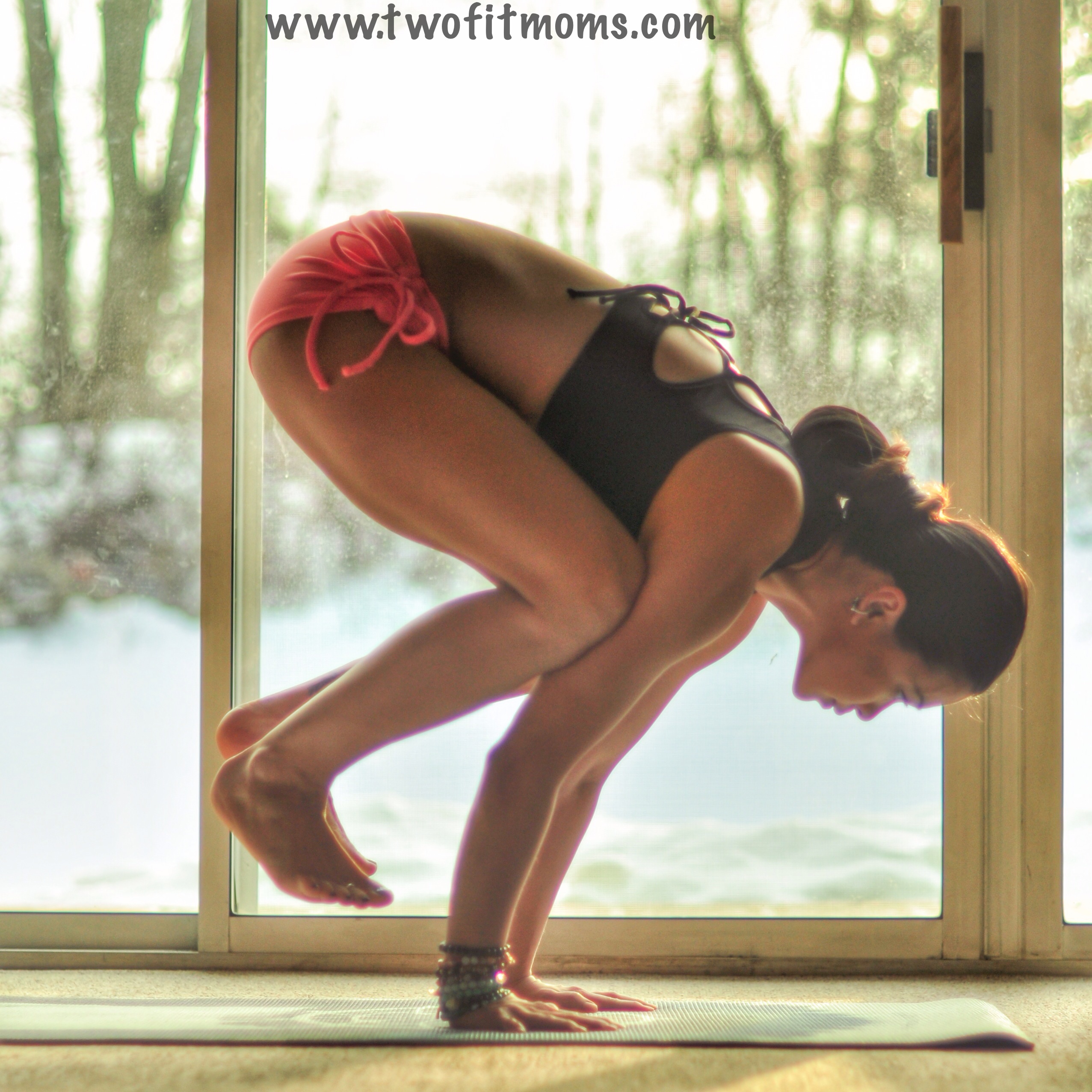
    Flex both feet so your toes point down towards your mat.  Using your core to keep the knees on your arms, slowly start to shift forward slightly as you bring your toes toward your wrists. You may only get an inch or two down before you fall… That’s Okay! Try again!

    As you move your feet down, concentrate on rounding the upper back and squeezing your arms in. If your arms begin to open out, try using a strap.  Measure the loop shoulder width in length and place the strap just above your elbows.

    Photo Feb 27, 8 56 47 AM

    Step 3: The toes have landed!

    Eventually, your toes will touch your wrists! Once you get to this point, try to hold them there for as long as possible.  Not only will this build arm strength, but it will build your core strength as well!  You will begin to feel your deep ab muscles engage. These are the ones that will eventually help lift you up.

    Photo Feb 27, 8 56 49 AM

    Step 4: Lift up!

    Once you can hold your toes to your wrists for a few breaths, you can try lifting your bottom up towards the sky and taking the knees off of your arms to hover. To do so, actively push your toes into your wrists and engage your core (Uddiyana Bandha). Press actively into your mat using your fingers for grip. Start out by trying to lift your butt higher! If that goes well, then try to straighten the legs. Proceed slowly and with patience.

    Photo Feb 27, 8 56 53 AM

    As always… Have FUN and be SAFE!

    XOXO

    Blog Signature

  • Baby Bakasana

    Baby Bakasana

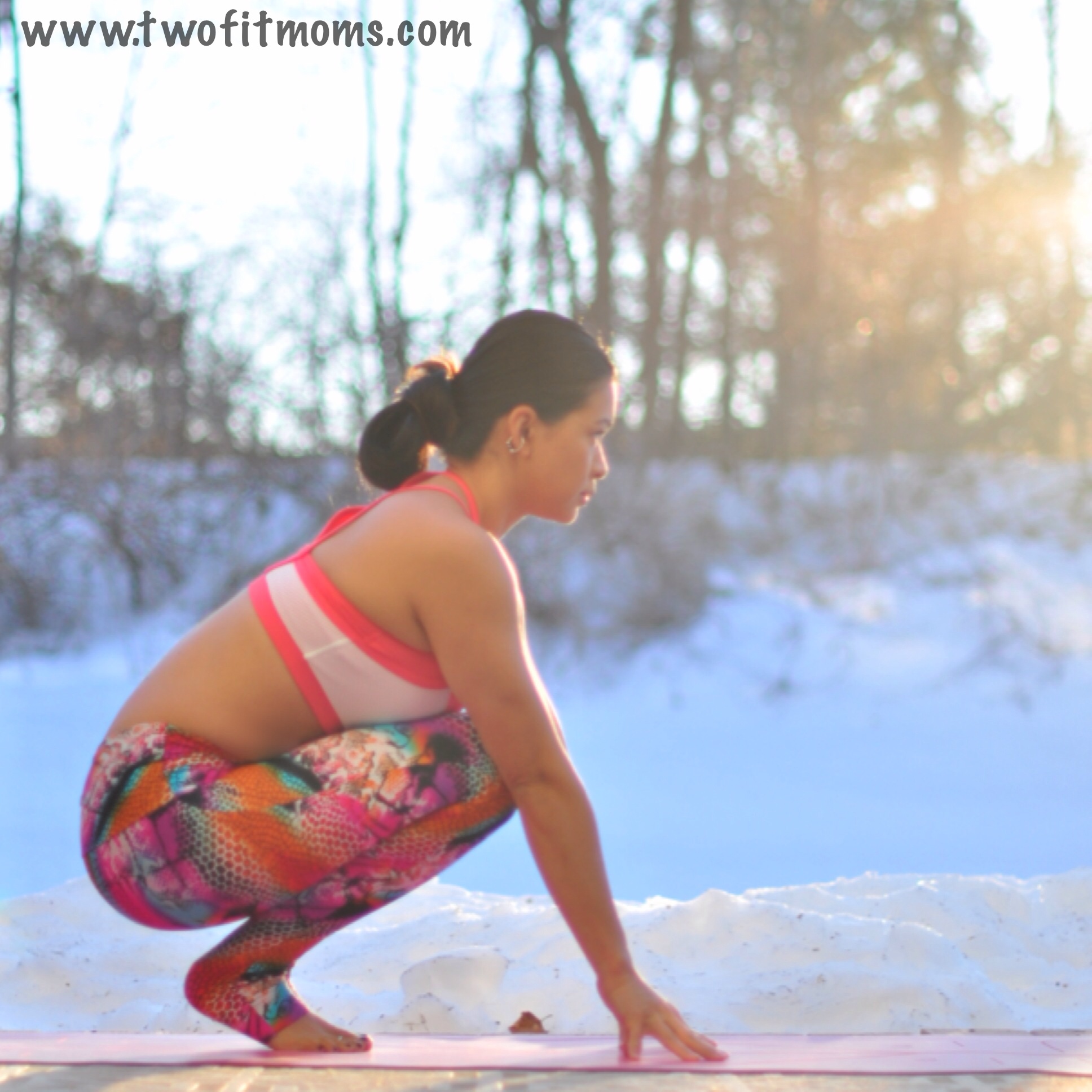
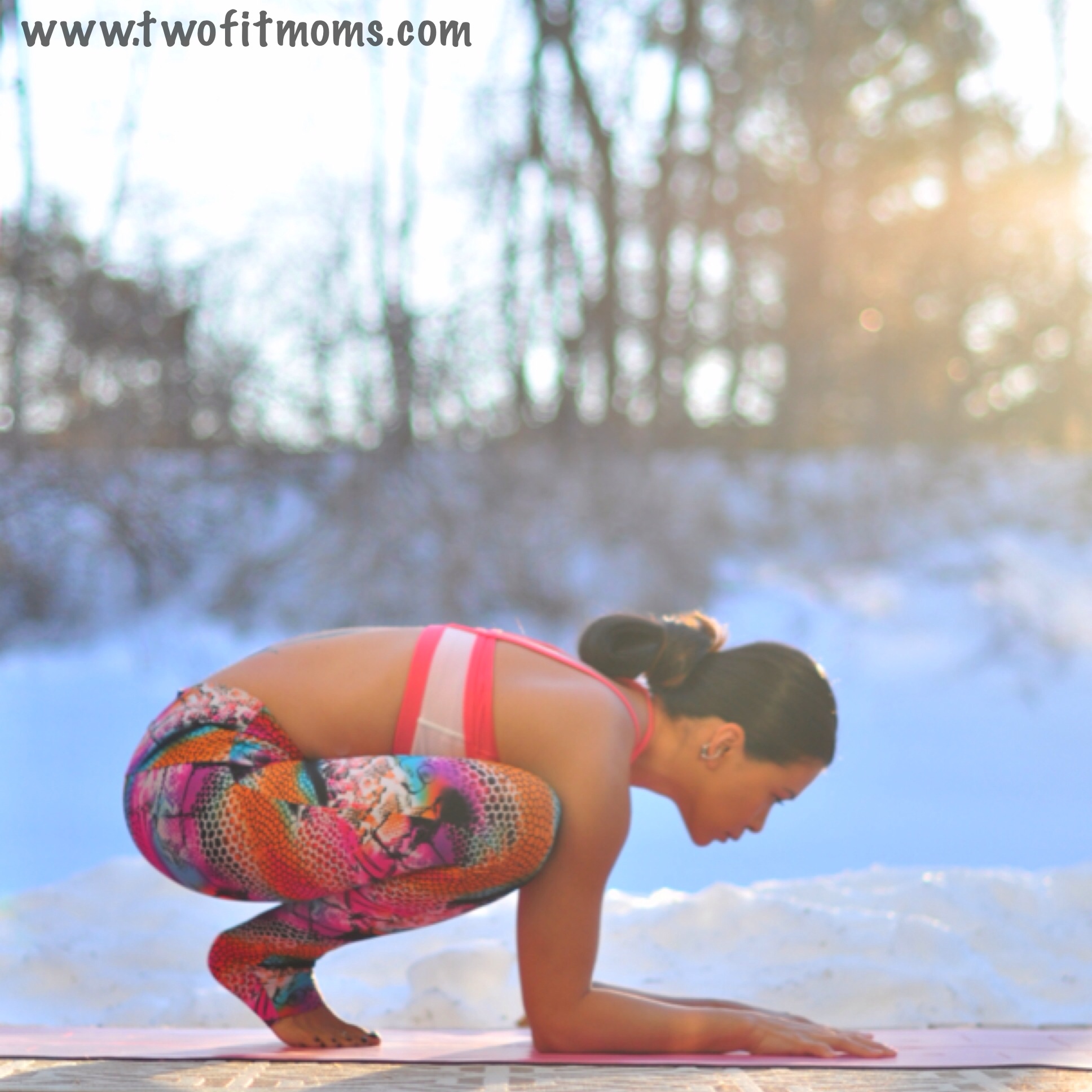
    Baby Bakasana is the world’s smallest arm balance. And although it may look pretty simple, this little gem of a pose can be pretty tough. Moving the shoulders past the elbows can be difficult. The trick to this pose is to round the upper back to help resist the urge to dump into the arms.

    Step 1: Take a squat

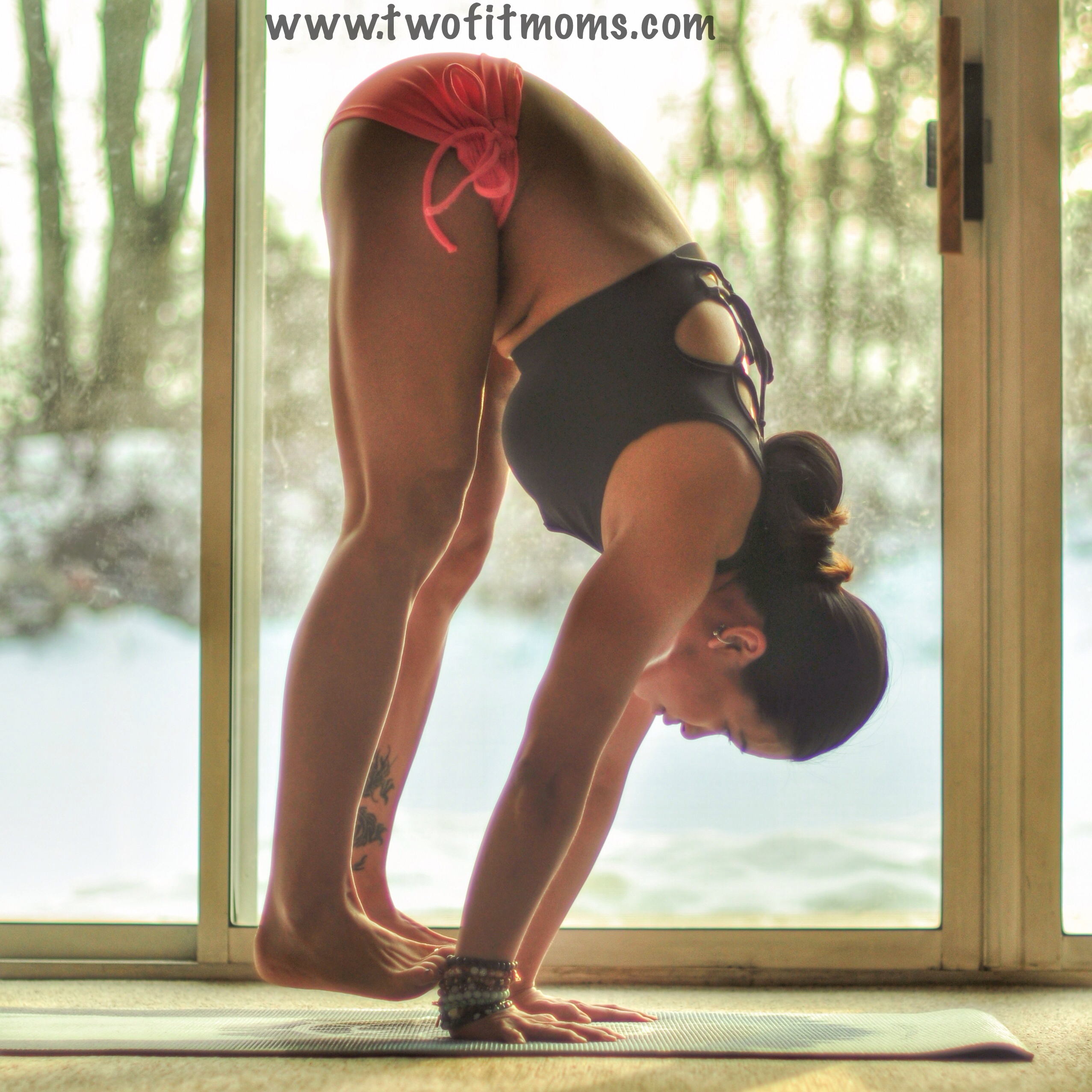
    From standing, bend your knees and squat down coming onto the balls of your feet. Bring your fingertips to your mat.

    Photo Feb 24, 11 40 55 AM

     Step 2: Drop on down

    Separate your knees and make your way onto your forearms. Forearms should be parallel and at shoulder width distance apart. Spread your fingers wide to create a solid base. Your knees will be just outside of your triceps and should hug in.

    Photo Feb 24, 11 41 07 AM

    Step 3: Lift it up

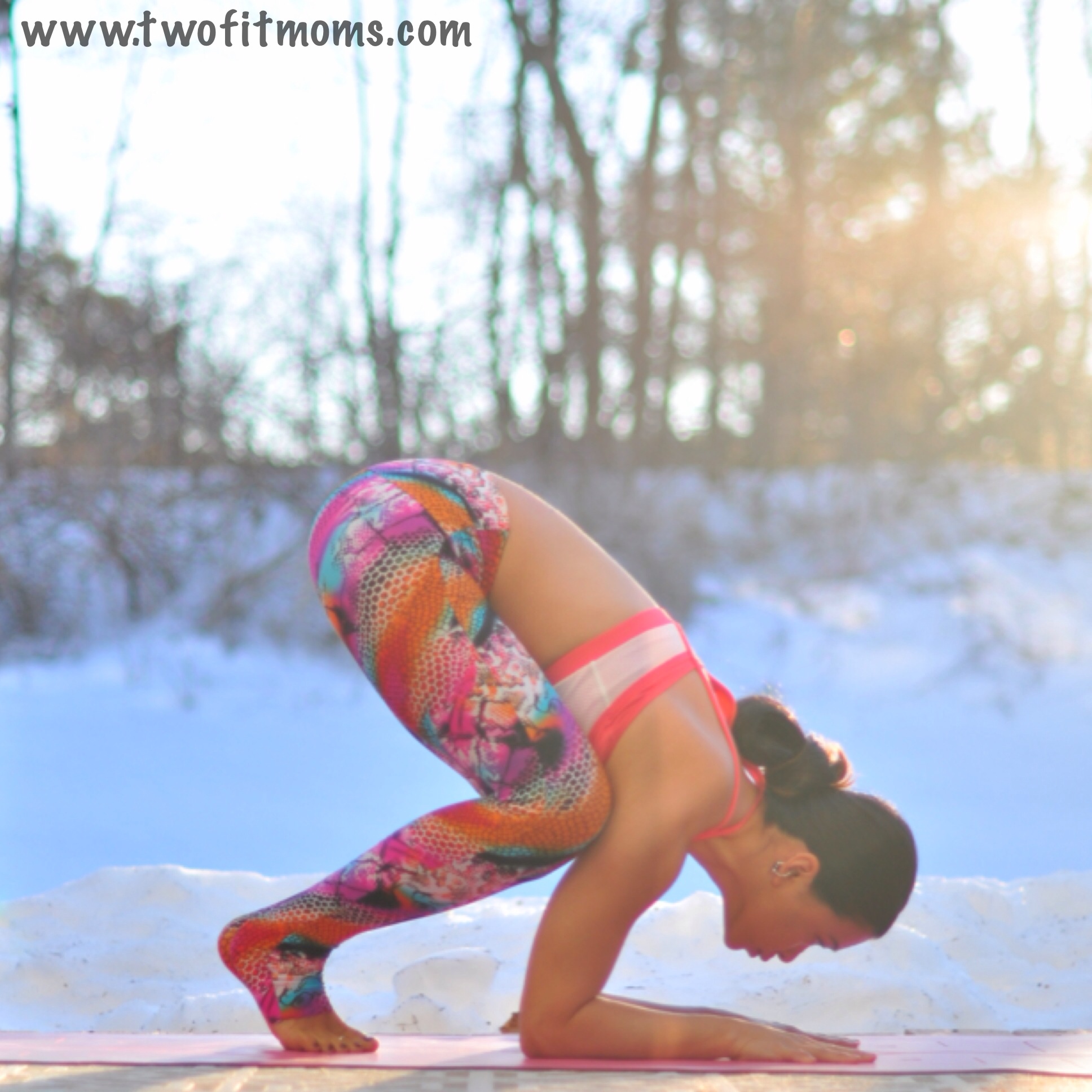
    Keeping your gaze slightly past your fingertips and the knees squeezing in, slowly start to raise your buttasana up. You can adjust and place your knees directly onto your triceps or keep them slightly wider. As you rise up, start to lean forward bringing your face closer to your mat and shoulders past your elbows. Round your upper back and start to hug the shoulders in; stay here and take a few breaths.

    Photo Feb 24, 11 41 21 AM

    Step 4: Baby step

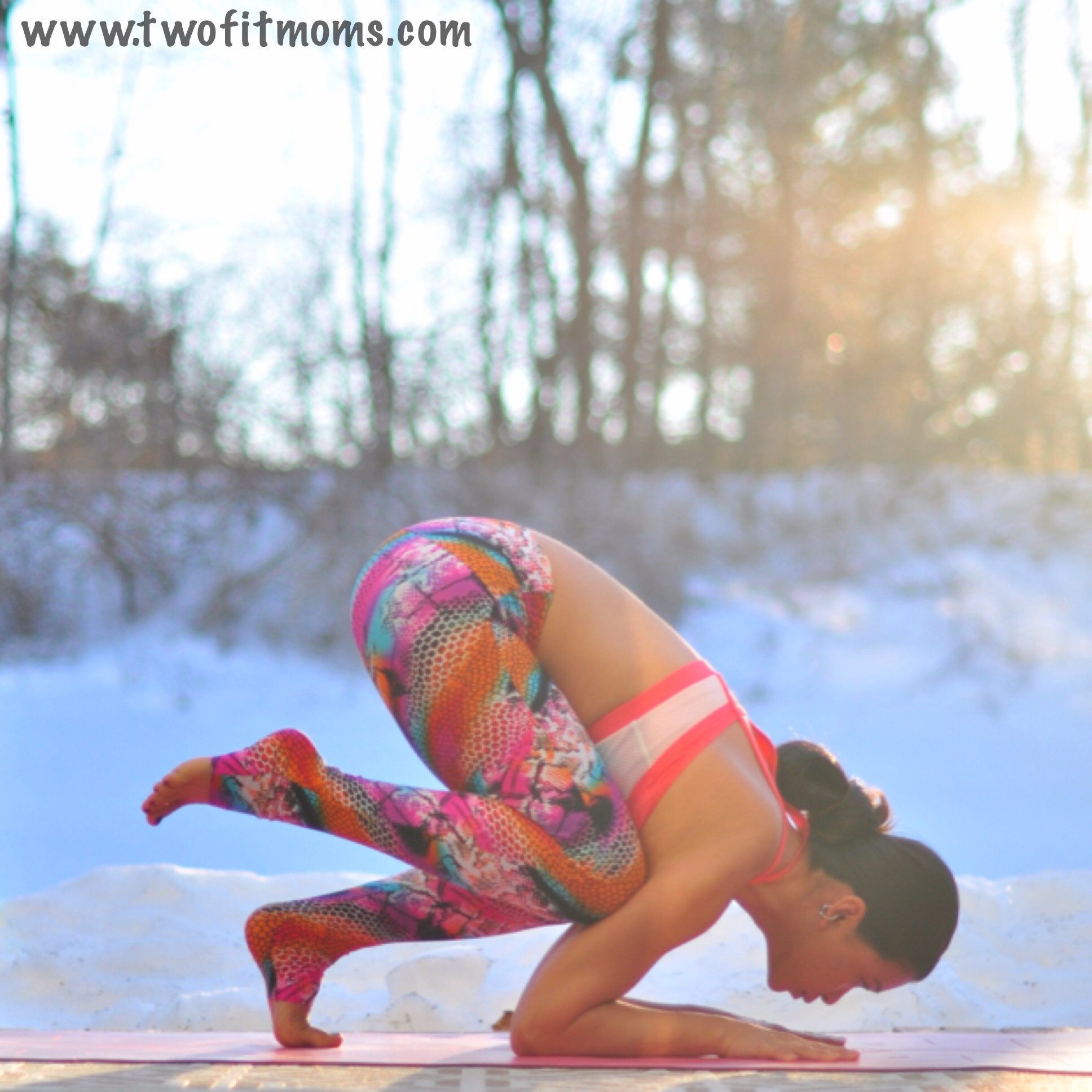
    Shift your weight and face even further toward your mat and slowly pick up a foot.  Hug the heel of your foot in towards your bottom.  Continue to round your upper back and squeeze in so you do not collapse!

    Photo Feb 24, 11 41 34 AM

    Step 5: Take flight!

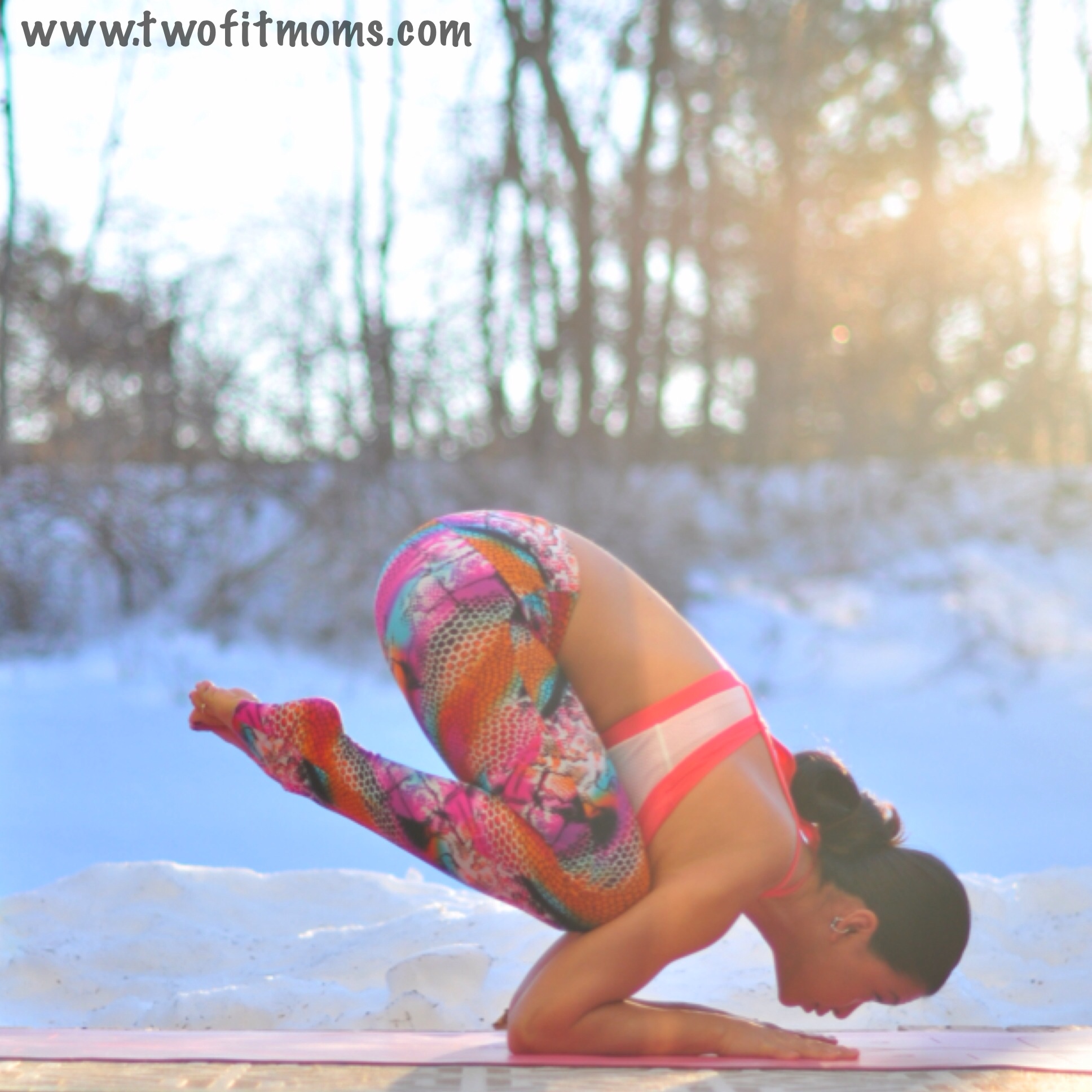
    Round and squeeze…round and squeeze…round and squeeze! Maybe pick the second foot up towards your bottom to get your Baby Bakasana to take flight!

    Hold for five to eight breaths and slowly release down.

    Photo Feb 24, 11 41 58 AM

    Advanced Option

    Please only try this if you have a solid Pincha Mayurasana practice. Take this super slow if you have never attempted this…and expect to fall! I know I did when I started. Do not be discouraged if you cannot do this!

    From Pincha Mayurasana or Forearmstand, slowly bend your knees. Actively press into your forearms and hands as you move your knees into your torso. As you descend, your shoulders will start to move past your elbows and your face will move closer to your mat. Arms and shoulders hug in to maintain a solid base for your knees to land. The key to this transition is engaging the core and bandhas…which we discussed in my last post. As gently as you can, bring the knees down onto your triceps into Baby Bakasana!

    [KGVID poster=”http://www.twofitmoms.com/wp-content/uploads/2014/02/Video-Feb-24-12-56-23-PM_thumb11.jpg” width=”960″ height=”540″]http://www.twofitmoms.com/wp-content/uploads/2014/02/Video-Feb-24-12-56-23-PM.mov[/KGVID]

    XOXO

    Blog Signature

  • Eka Hasta Bhujasana

    Eka Hasta Bhujasana

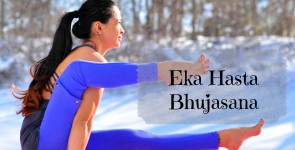
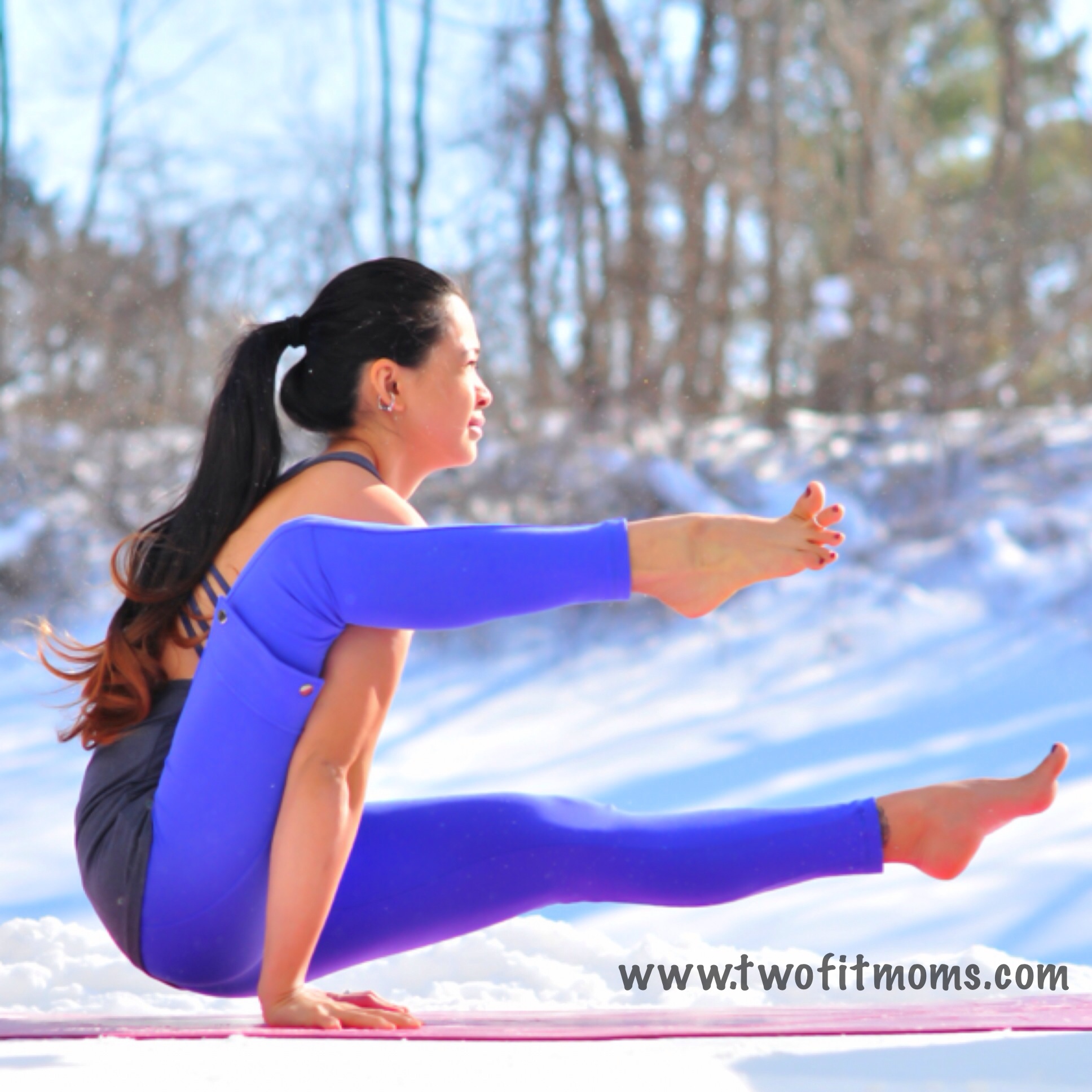
    Eka Hasta Bhujasana, or One-Leg-Over-Arm Balance, is another great intro to balancing on your hands.  It helps build strength in your arms and core which are essential in all of your arm balances and inversions. Feel free to have blocks nearby if you cannot get your hands flat on your mat.  Let’s break it down!

    Step 1: Warm up!

    I always start my practice with about 5-10 Sun Salutions to get my body moving.  Feel free to warm up anyway that you would like! This pose does require a lot of hip mobility and open hamstrings, so make sure to spend some time in poses like a seat forward fold and single/double pigeon.

    Step 2: Cradle the leg

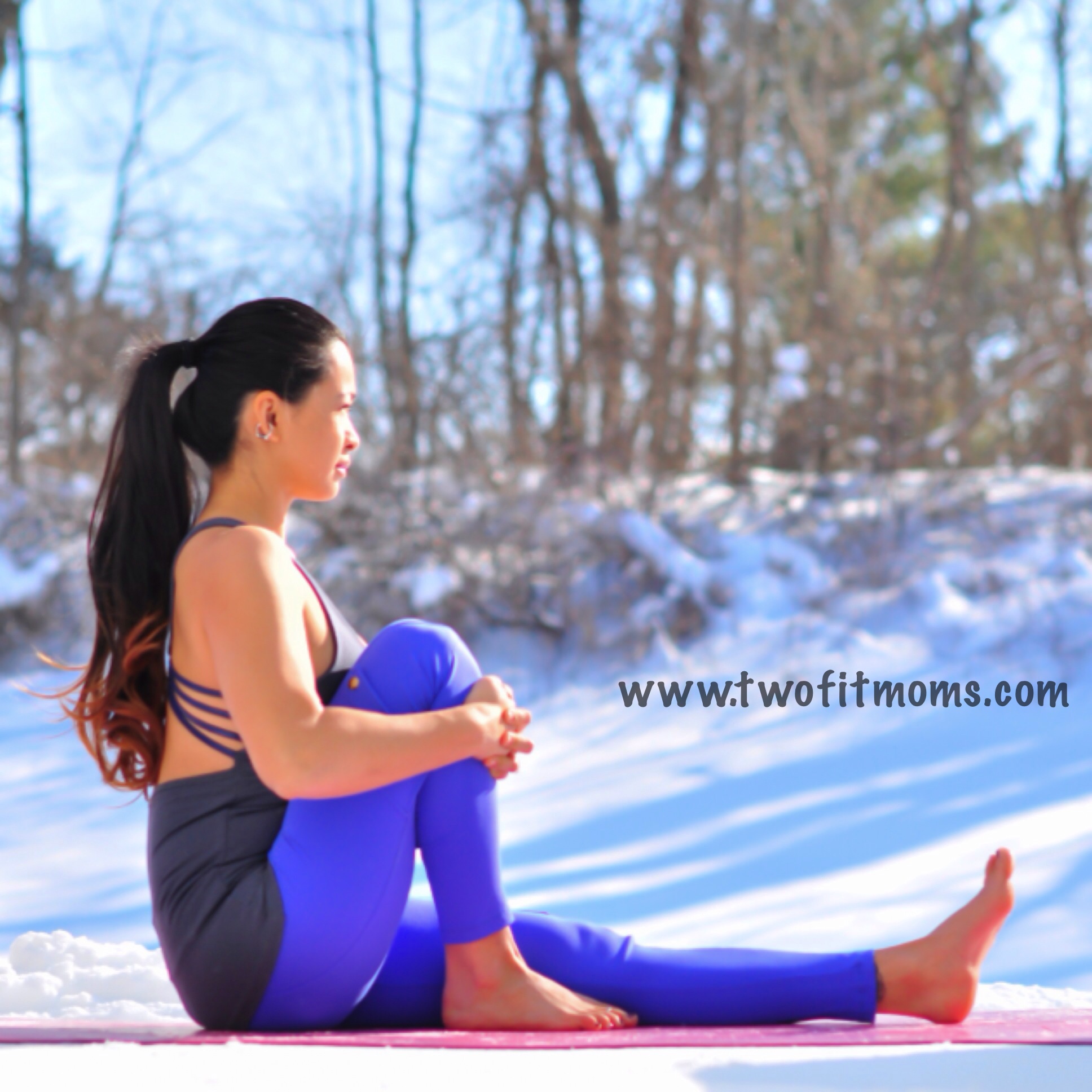
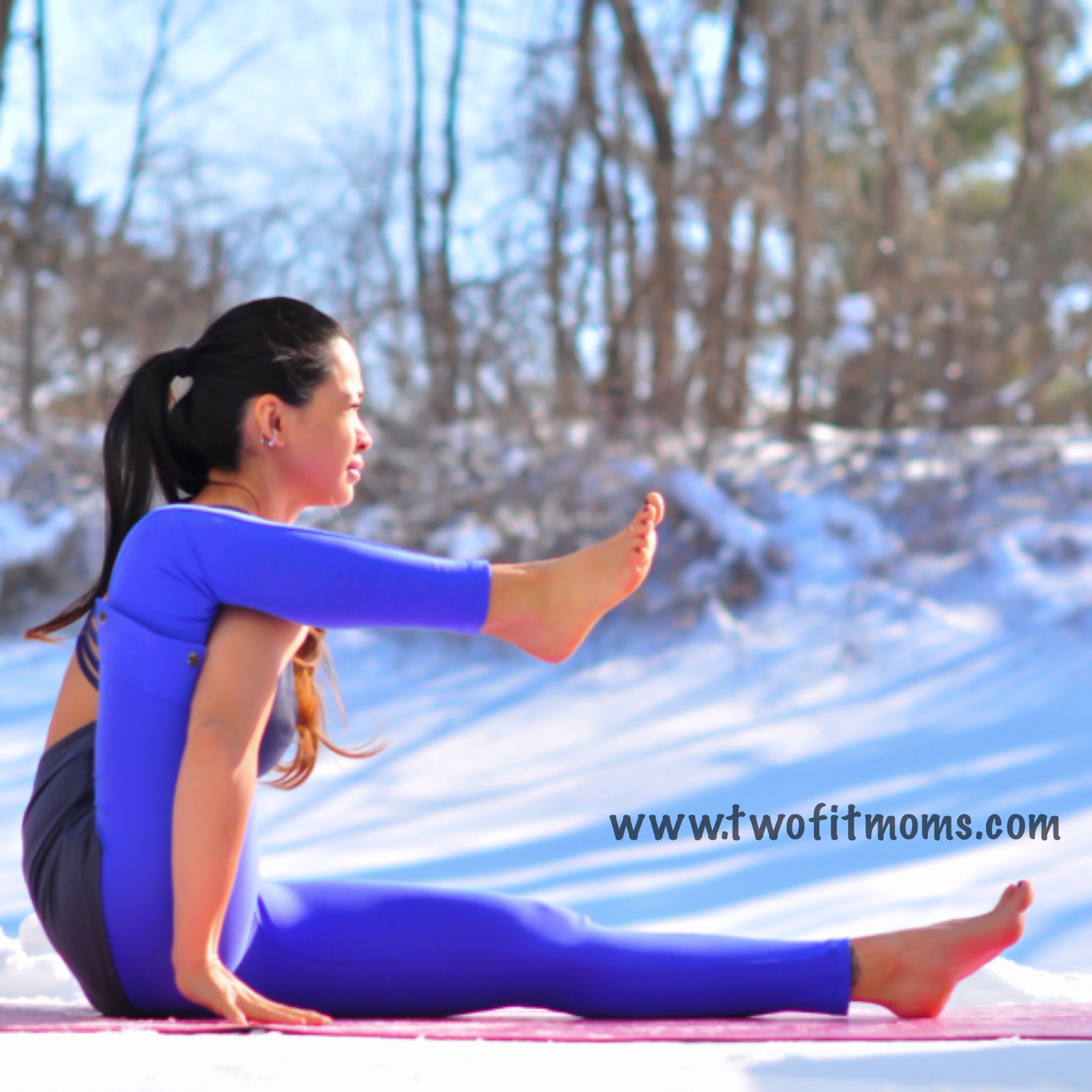
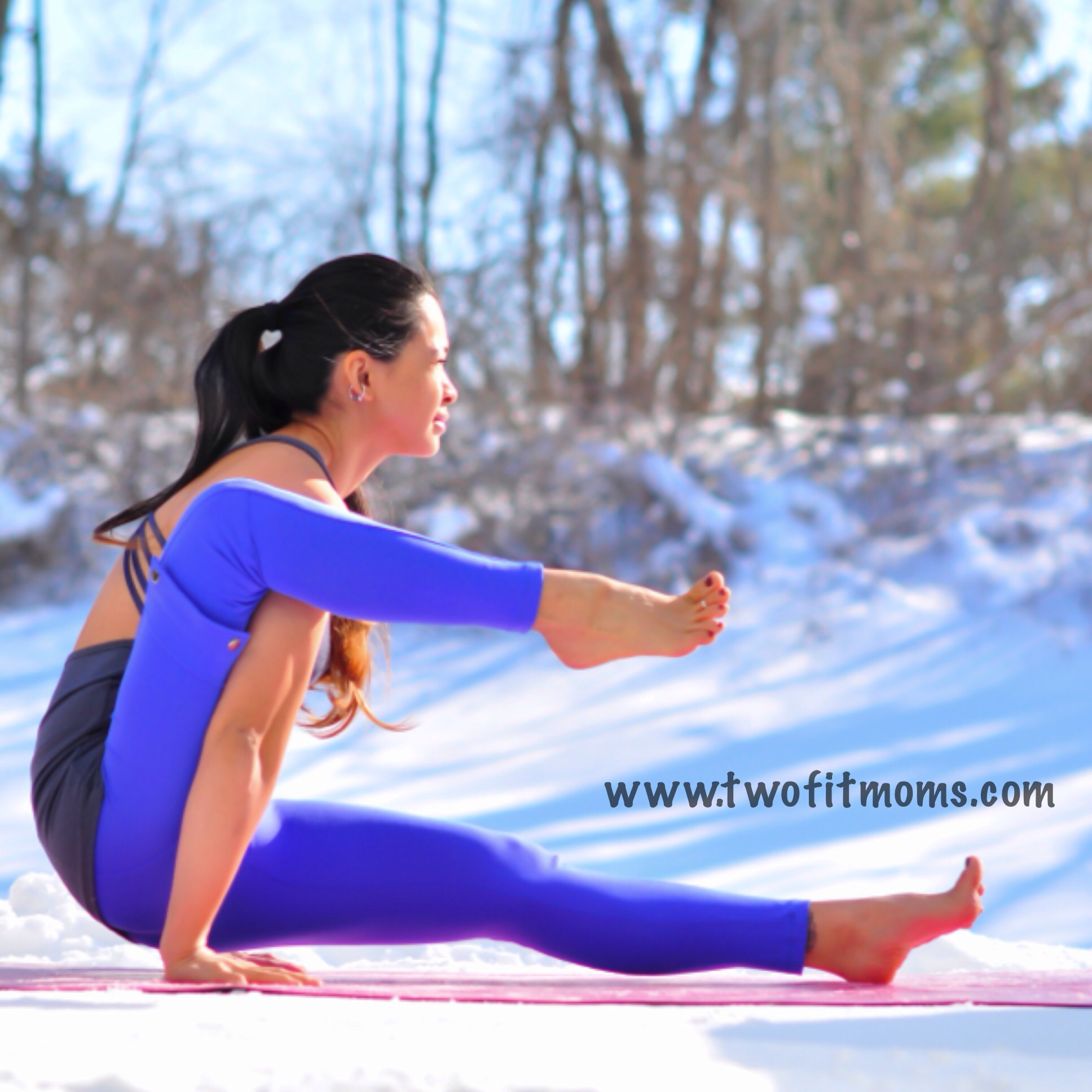
    Take a seat on your mat and extend both legs out. Bend the right knee and plant the foot down onto your mat. Slowly pick up the bent leg and hug it into your chest. With your left hand, grab the sole of your right foot and start to pull it in toward you.  The goal is to get your right shin parallel to the ground.  Option 1: Cradle your shin by taking the sole of the right foot to the inner left elbow and the outer knee to the inner right elbow as shown above.  Option 2: Use your arms like a forklift by sliding both arms under the shin to hold your leg upright. With either variation…stay here and breath for 8-10 breaths!

    Photo Feb 12, 1 23 29 PM Photo Feb 12, 1 23 51 PM

    Step 3: Backpack it!

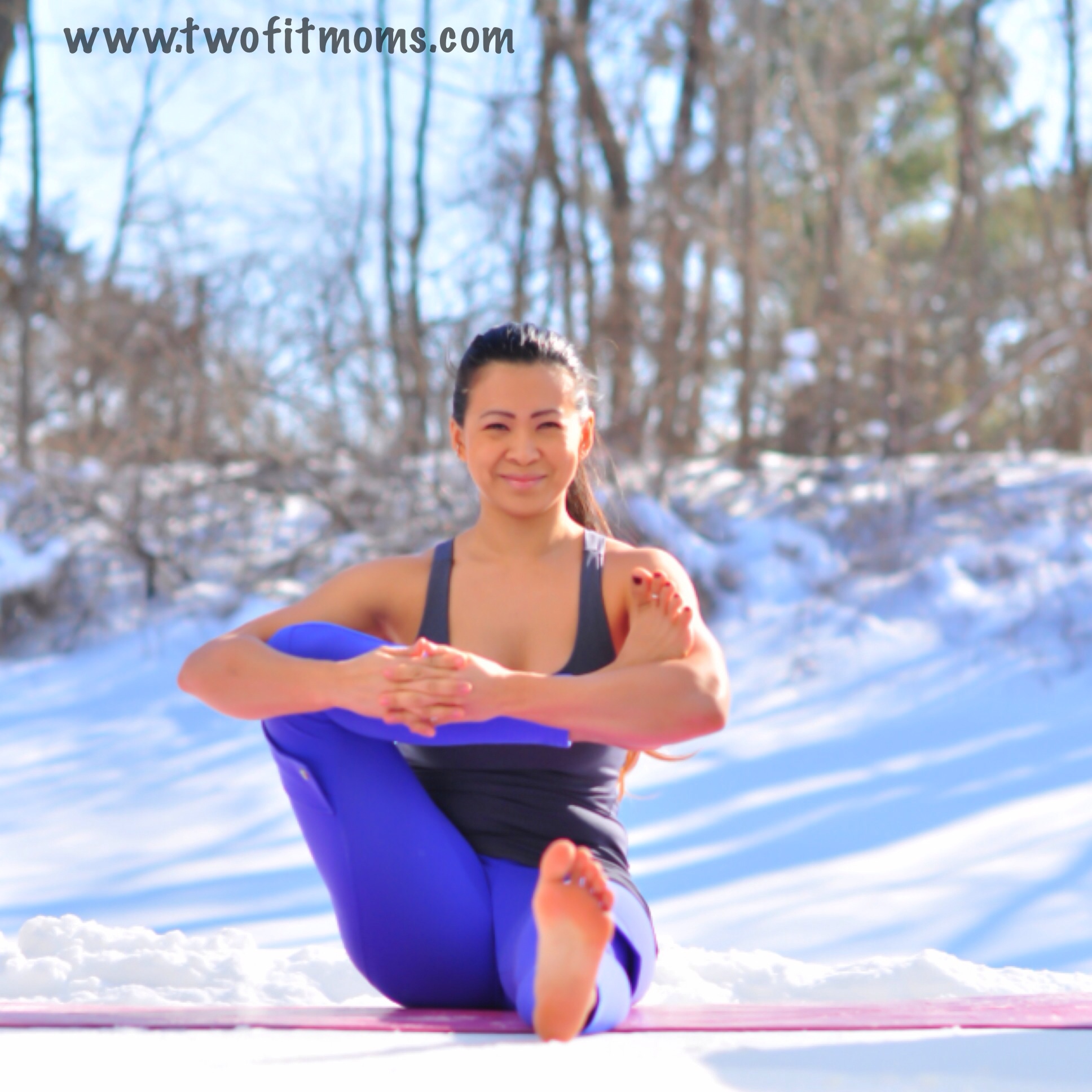
    Take the sole of the foot again with your left hand and slide the right hand under the right calf muscle. Slowly begin to work the leg out to the right, then up over the right shoulder.  Make believe you are putting on a backpack strap!

    Photo Feb 12, 1 24 10 PM

    Step 4: Clamp it down

    Once you have worked your leg as high up the arm/shoulder as your flexibility allows, clamp the leg down so it stays. Place your hands down onto your mat next to your hips. If you cannot get your hands flat, use your blocks to bring the ground up to you! Engage both legs by flointing or pointing the toes.

    Photo Feb 12, 1 24 26 PM

    Step 5: Start the lift

    You can play around with either lifting the left foot up or lifting the buttasana up.  Try both! Feel your core engage. Try to hold your option for five breaths.

    Photo Feb 12, 1 24 42 PM

    Step 6: Full expression

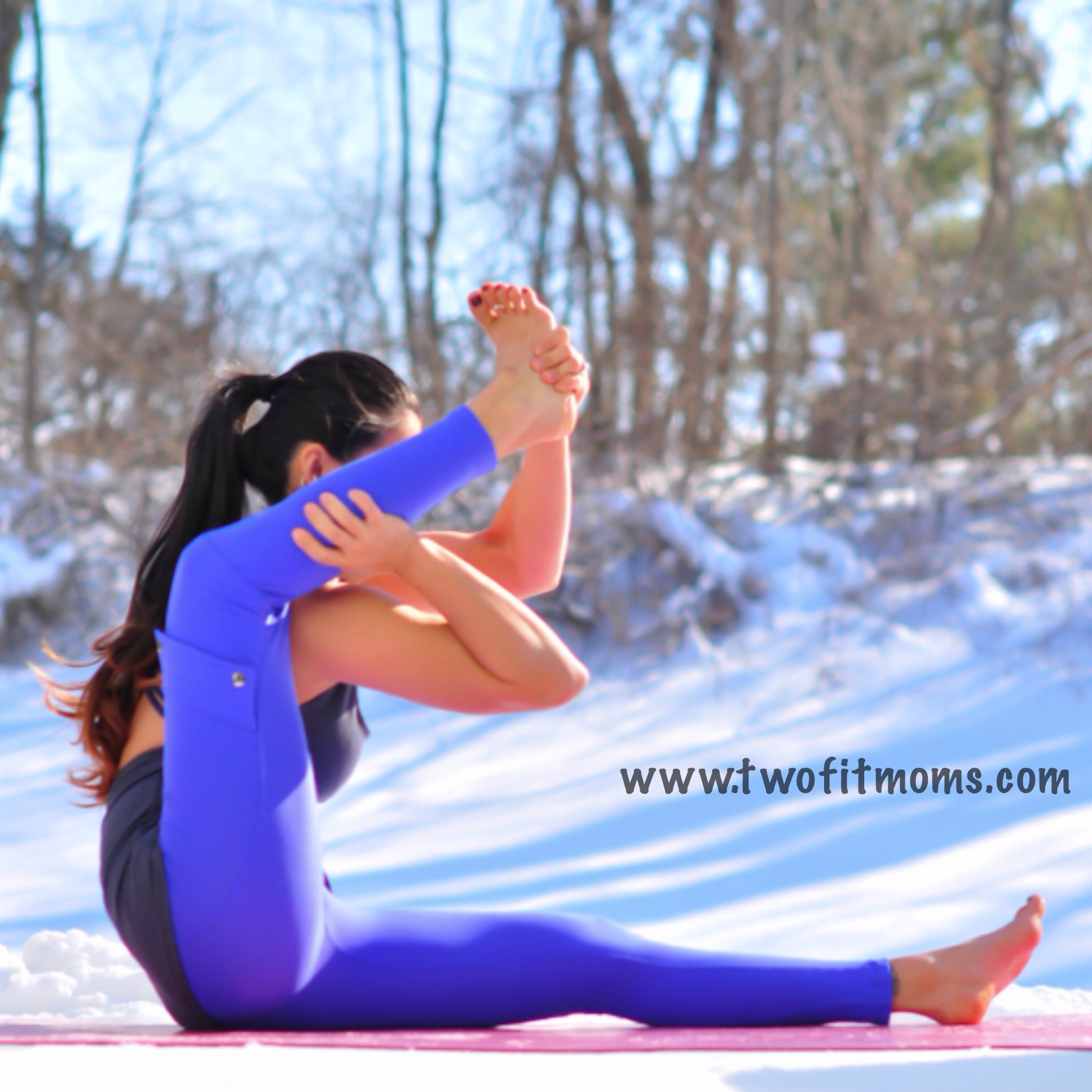
    Work your leg up over your arm/shoulder and plant your hands firmly onto your mat. Using a bit of momentum, take a deep breath in and lift the leg off of the ground. On the exhale, lean slightly forward and, keeping the leg lifted, try to lift your bottom up as well. Keep the upper back rounding and arms squeezing in toward the midline.  Continue to clamp down the leg over the arm/shoulder. Press firmly into the ground and keep your gaze forward.  Hold for a few breaths if possible and release.

    Don’t forget to work the other side!

    Photo Feb 12, 1 24 57 PM

    XOXO

    Blog Signature


  • Bakasana: Time to Get Your Crow On!

    Bakasana: Time to Get Your Crow On!

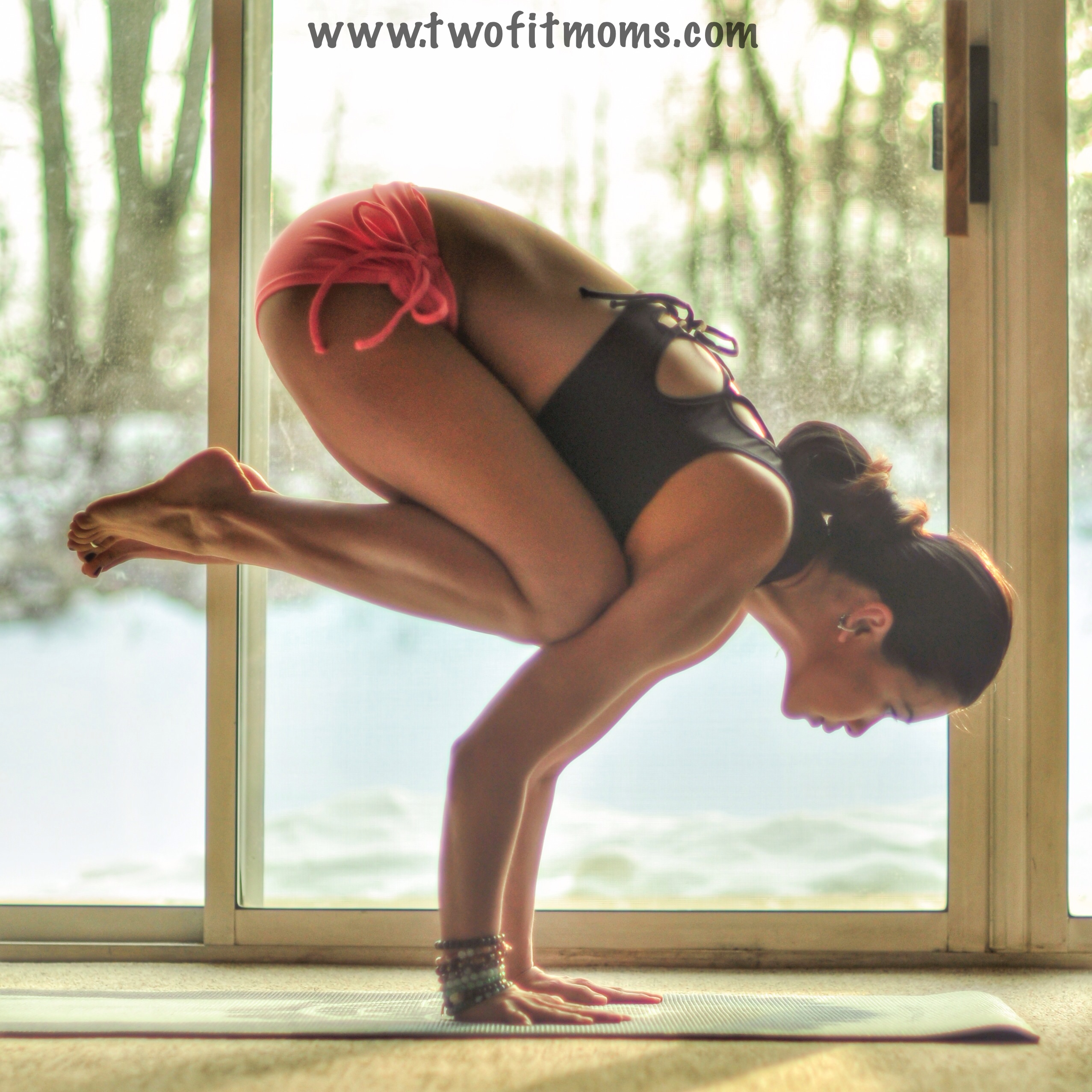
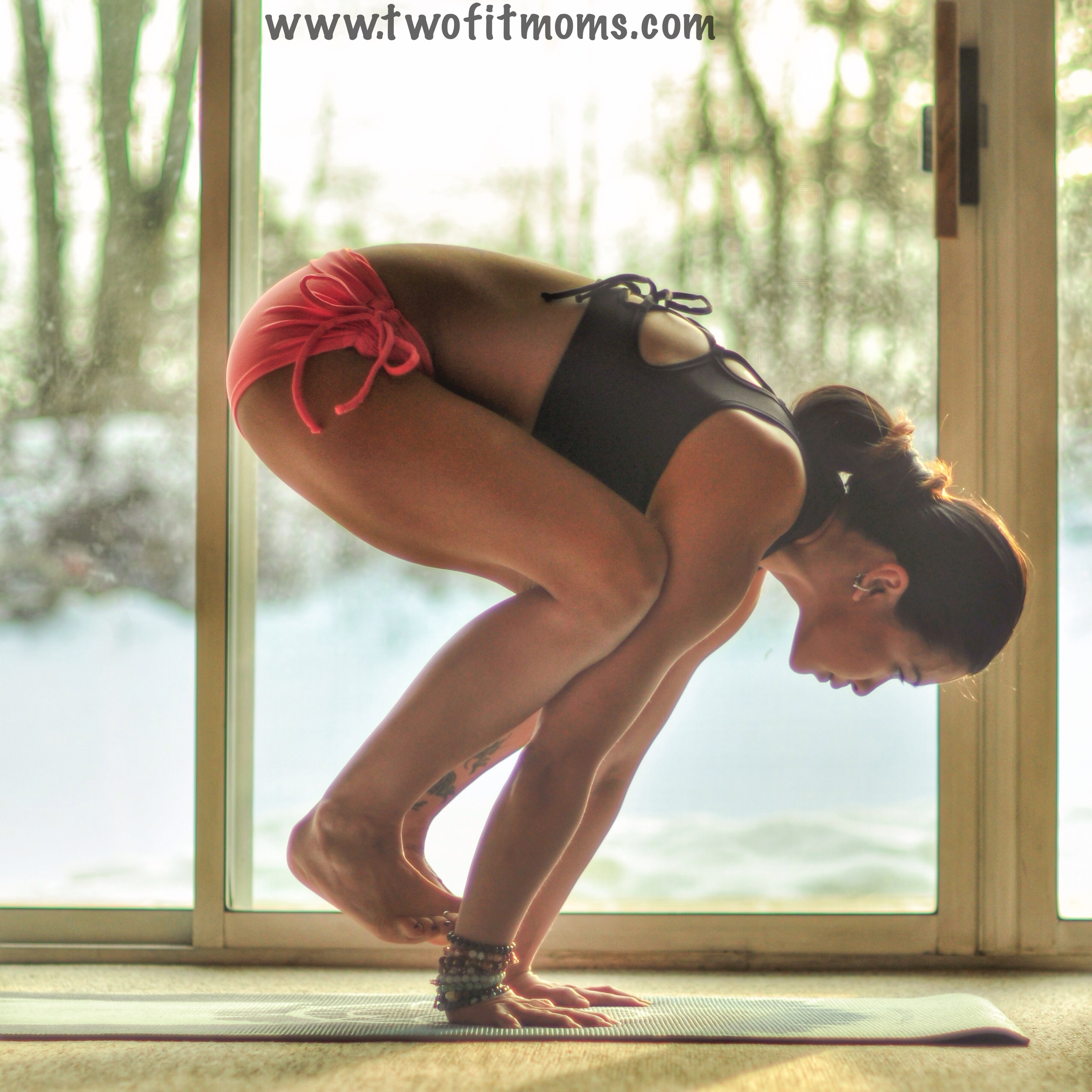
    Bakasana, or Crow Pose, is usually the first arm balance you will learn on your yoga journey. Hamstring flexibility and core strength are key elements to any arm balance. Make sure you have a block nearby if you have tight hamstrings and a pillow if this is your first time attempting this pose.

    Step 1: Block or no block…

    Photo Feb 05, 2 50 39 PM

    Start off by standing on your mat with feet and legs together. Slowly bend the legs, come up onto the balls of your feet, and squat down bringing your fingertips onto your mat. Separate your knees and plant your hands flat onto your mat so they are shoulder width apart. Your hands can be directly in front of your knees or knees can be slightly wider to the outside of your arms. Fingers are spread wide, index fingers parallel, biceps are externally rotating so that the elbows squeeze in. If any part of this is difficult for you, try standing on a block. The added height will help get your hands flat and knees up into your armpits.  If this is your first time, you can also set a pillow up in front of your hands in case you fall forward.

    Step 2: Lift the buttasana

    Photo Feb 05, 2 50 52 PM Photo Feb 05, 2 51 01 PM

    Once you plant your hands firmly on your mat, slowly start to lift your bottom as you lean forward. Elbows begin to bend while continuing to hug in toward the midline. Knees also squeeze in…Think Thighmaster! Keep your gaze forward. Begin to round your upper back and engage your abs.

    Step 3: Lift a foot

    Photo Feb 05, 2 51 11 PM

    While continuing to round the upper back, try lifting up one foot. Squeeze the heel toward your bottom, then set it back down, and repeat with the other foot.

    Step 4: Get your crow on!

    Photo Feb 05, 2 51 21 PM

    If you feel ready to continue, lift one foot off your mat. Keep your gaze forward, and slowly try to pick up the second foot to meet the first. Really round the upper back and engage the abs to take some of the weight off of your arms. If you sag down, your body will feel extremely heavy. Your elbows and thighs should continue to squeeze in; pull your heels up toward your buttasana.

    Be mindful of your movement, try not to kick or fling that second foot up. Be patient, and work your way up to being able to hold this for 5-10 breaths.

    Advanced: Now straighten your arms!

    Photo Feb 05, 2 51 31 PM

    If you can solidly hold your crow, you can start to work on straightening your arms. This can put pressure on your wrists, so please be careful and listen to your body.

    From your bent-arm bakasana, slowly start to straighten the arms while simultaneously pulling the knees up even higher into your armpits. Squeeze your elbows and thighs in! Your upper back rounds even more to release some of the weight off of your arms. Your wrists will move past 90 degrees, so be careful!

    Play around, have fun and be mindful!

    XOXO

    Blog Signature